Artwork
Tombeau de Lipsius. Pyramide. Chefren. 1880-1890
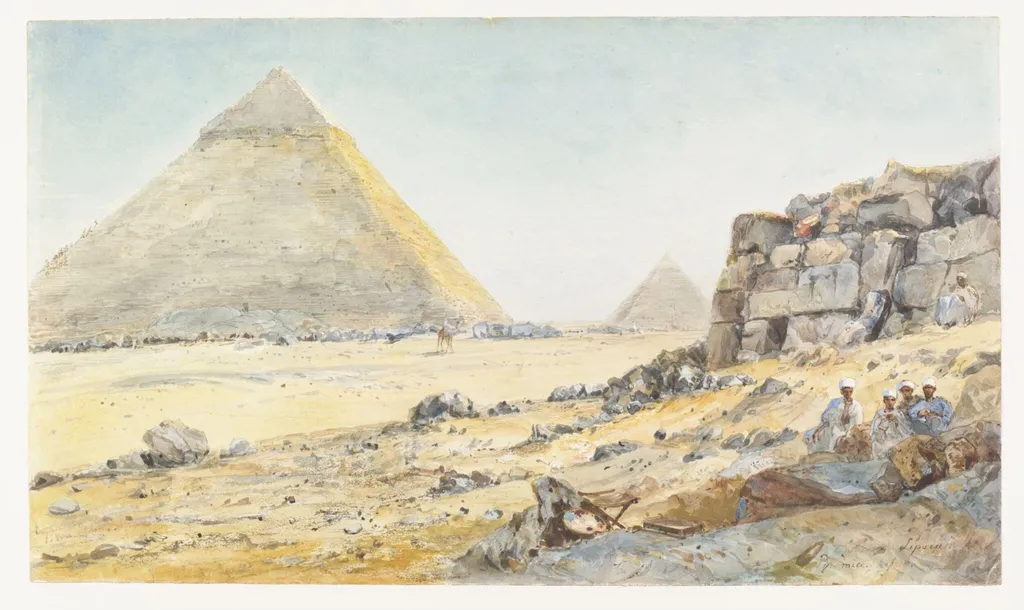
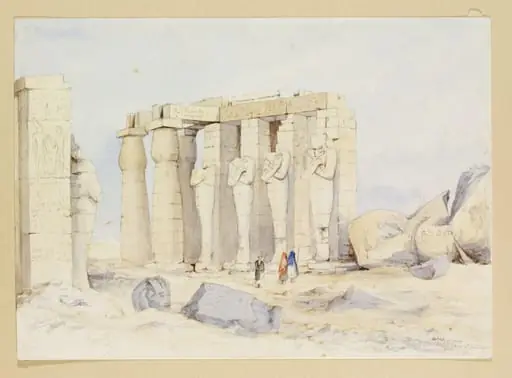
Tombeau de Lipsius. Pyramide. Chefren. 1880-1890 is a watercolor work on paper by the Aestheticist artist Pierre Henri Theodore Tetar van Elven. It dates from 1885 and is held in the collection of the Victoria and Albert Museum. Tombeau de Lipsius.
About this work
Overview
Tombeau de Lipsius. Pyramide. Chefren is a watercolour created by Pierre Henri Theodore Tetar van Elven between 1880 and 1890, depicting an Egyptian desert scene with pyramids.
Subject & Meaning
The artwork focuses on a desert landscape featuring three pyramids, with Chefren's associated pyramid as the central subject, accompanied by figures in white robes, conveying a sense of human presence within an ancient, monumental setting.
Technique & Style
The watercolour combines Impressionist loose brushstrokes with Realist elements, capturing the harsh desert light and its effects through vivid, predominantly beige and yellow hues, with pronounced shadows.
History & Provenance
Previously sold at Sotheby's in March 1968 for £32, the piece is now part of the Victoria and Albert Museum's collection.
Context
Created during a period of heightened European interest in Egyptian antiquities, the work reflects 19th-century artistic interpretations of Egyptian landscapes and monuments.
Legacy
While not widely renowned as a singular landmark piece, it contributes to the broader body of 19th-century European artworks inspired by Egyptian themes, showcasing the artist's technical skill in watercolour.
Artist & collection
Artist
Pierre Henri Theodore Tetar van Elven
Dutch artist Pierre Henri Theodore Tetar van Elven painted watercolors of landmarks he saw on trips.

- Pyramids and Sphinx
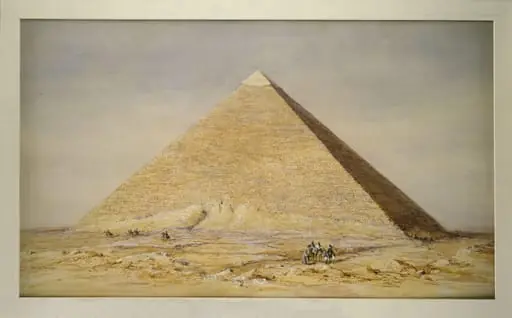 The Second Pyramid, Gizeh
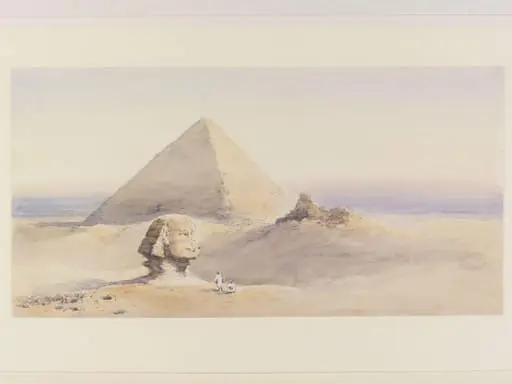 Sphinx & Great Pyramid
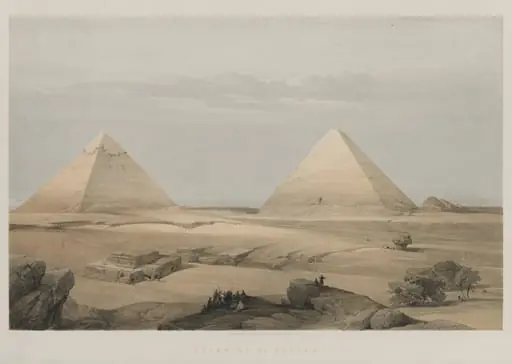 Egypt and Nubia, Volume II: Pyramids of Geezeh
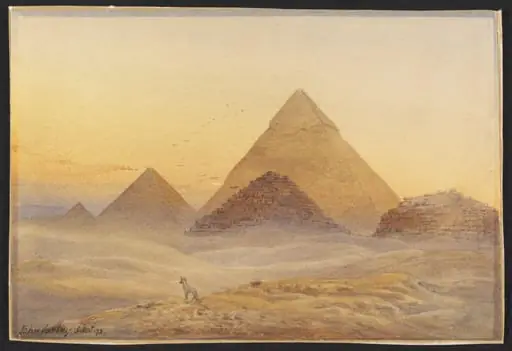 Pyramids at Giza
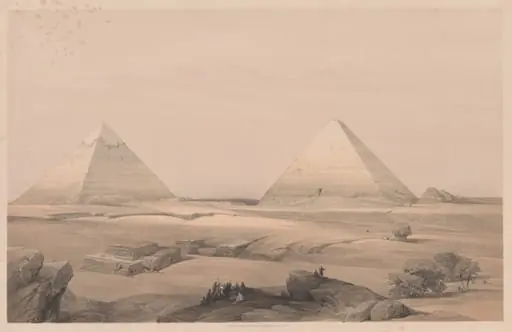 Egypt and Nubia: Volume I - No. 3, Pyramids of Gizeh
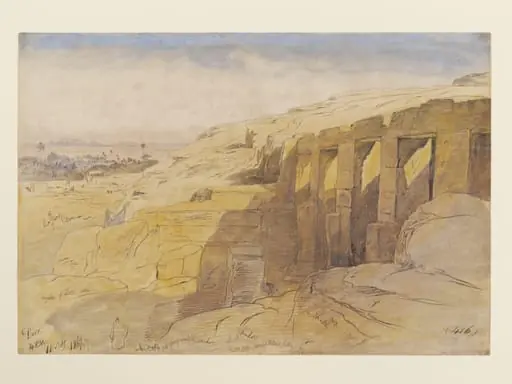 Temple at Derr, Nubia, Egypt
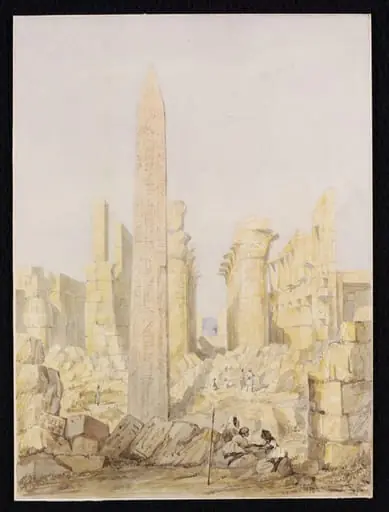 Great Temple. Karnac. Thebes
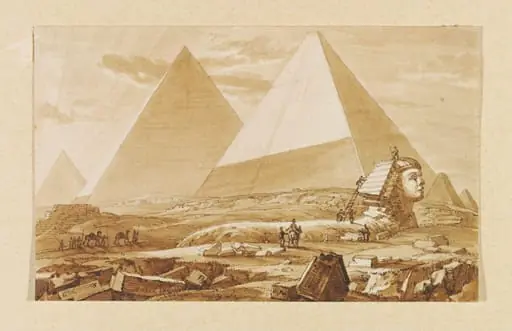 Pyramids and Sphinx - Sun setting
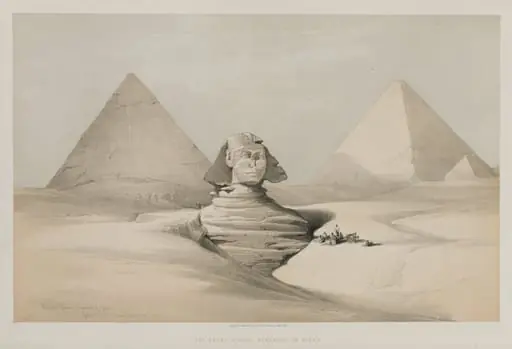 Egypt and Nubia, Volume I: The Great Sphinx, Pyramids of Gezeeh
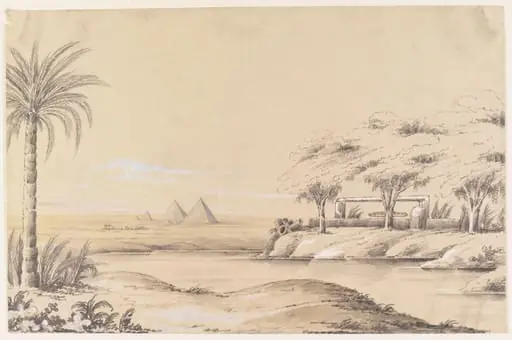 Pyramids of Geezeh. Egypt
 Osiride columns broken statue of Rameses II Memnonium Thebes