Artwork
Berglandschap in Voreppe, Dauphiné
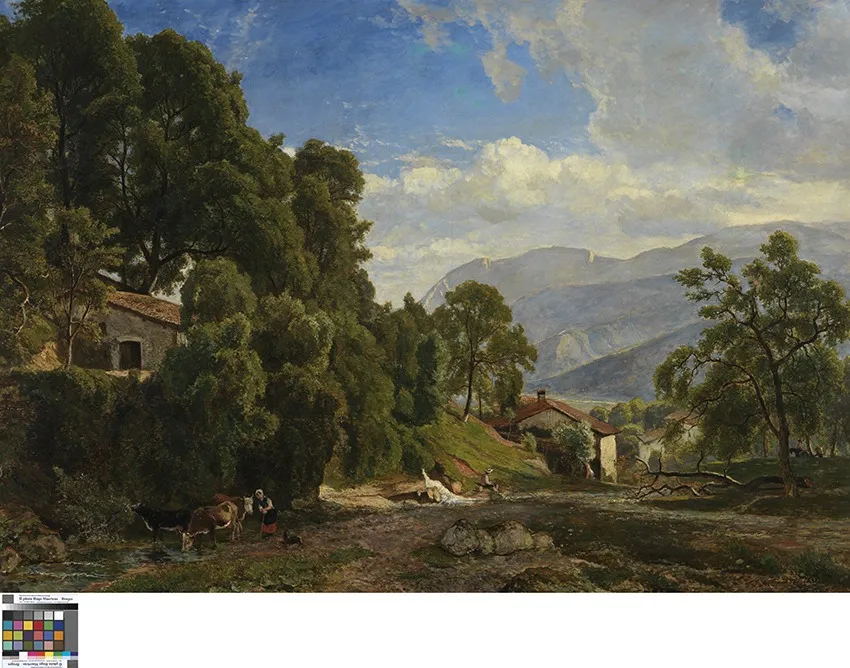
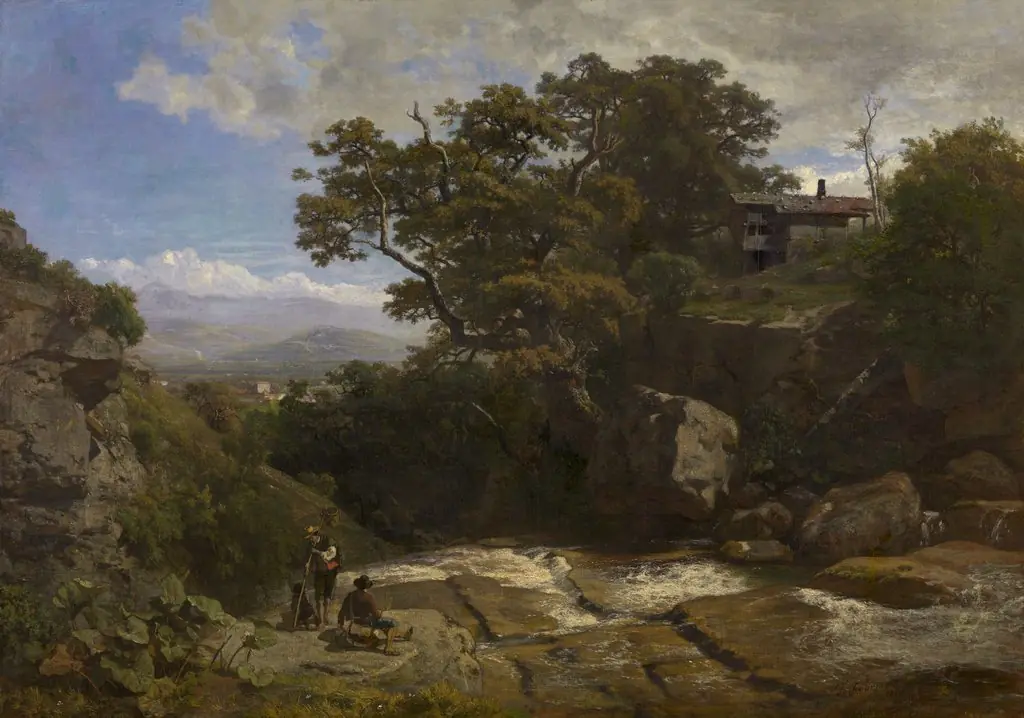
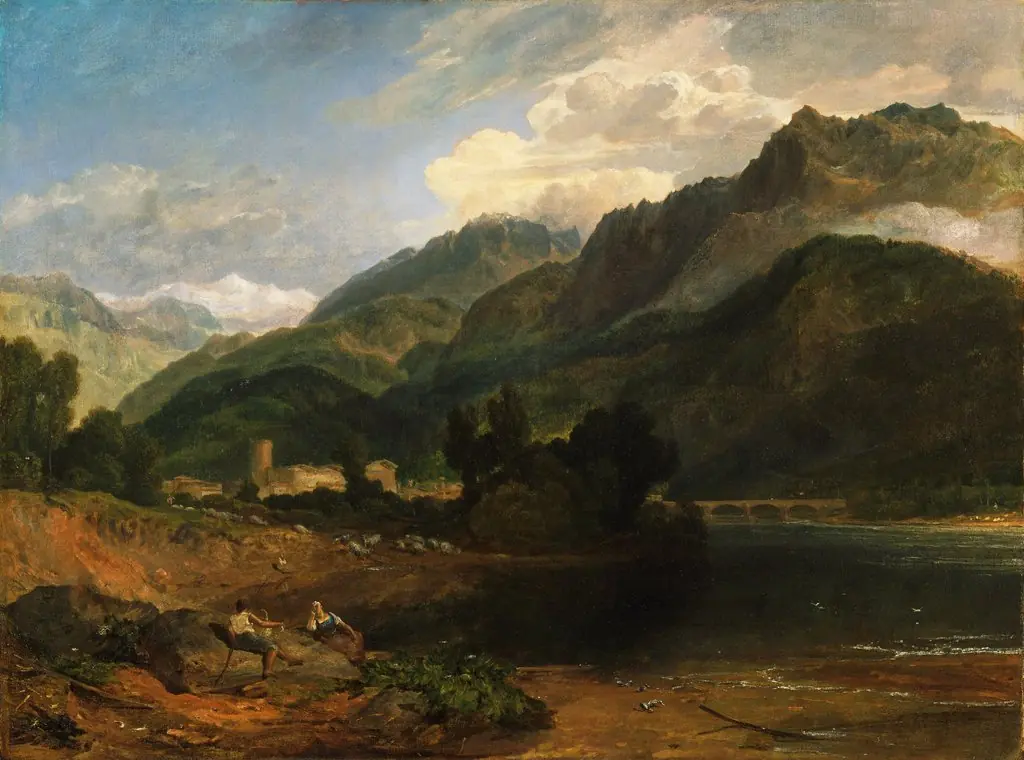
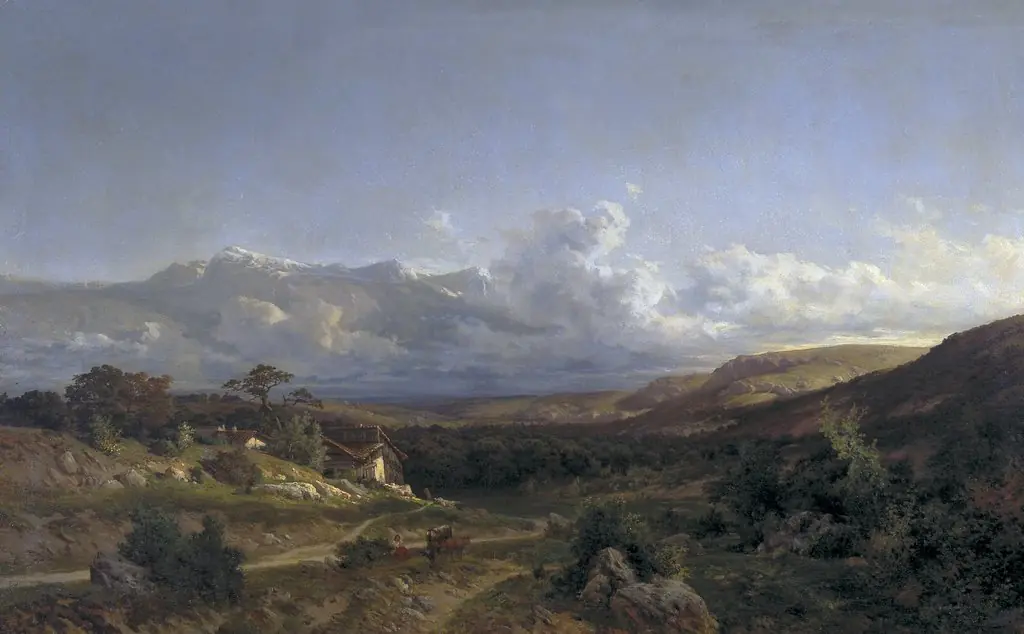
Berglandschap in Voreppe, Dauphiné is an oil painting by the Barbizon school artist Théodore Fourmois. It dates from 1850 and is held in the collection of the Groeningemuseum.
About this work
Subject & Meaning
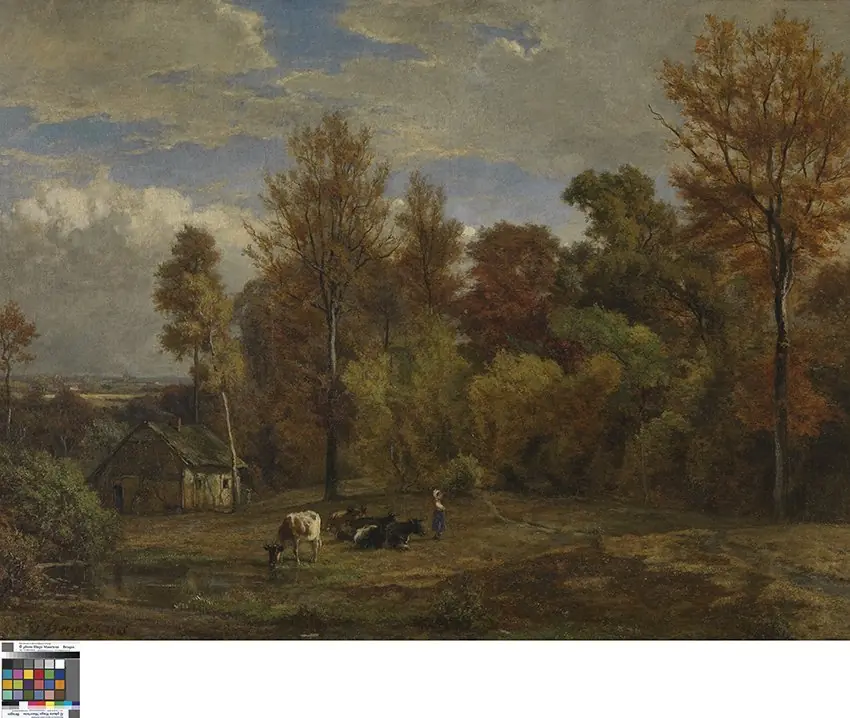
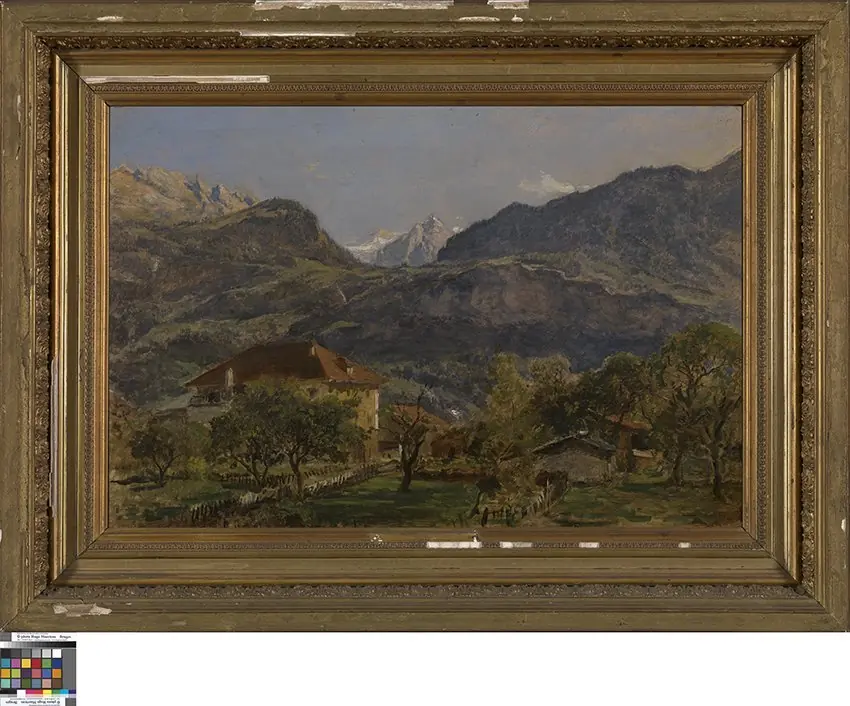
The work depicts a mountainous landscape near Voreppe in the Dauphiné region, characterized by steep terrain and dense vegetation.
The work depicts a mountainous landscape near Voreppe in the Dauphiné region, characterized by steep terrain and dense vegetation. A herder tends cattle in a clearing, while a modest house nestled among trees anchors the composition. The inclusion of cattle and herder suggests an emphasis on rural life and pastoral harmony with the natural environment.
The scene likely represents the rugged beauty and everyday life of the Dauphiné highlands in the mid-nineteenth century, aligning with the Barbizon School’s interest in depicting nature and rural labor. The painting’s focus on an unidealized, lived-in landscape underscores a documentary impulse, capturing the region’s topography and local customs without overt symbolism.
Technique & Style
The work is painted in oil on canvas, executed in 1850 by Théodore Fourmois.
Handling emphasizes atmospheric recession through layered, translucent glazes over a darker underdrawing, with softly blended foliage and distant mountains dissolved into a luminous haze. Subtle impasto accents define the trunks of foreground trees, while the sky is rendered with delicate scumbles to suggest cloud movement. The composition is anchored by a winding path leading the eye into the valley, where cattle and a herder appear as punctuating figures rather than detailed protagonists.
Formal qualities align with mid-nineteenth-century Belgian landscape tradition: a balanced yet open structure, muted greens and ochres modulated by cool blues, and a subdued palette that privileges tonal harmony over dramatic contrast.
History & Provenance
The landscape painting titled Berglandschap in Voreppe, Dauphiné was created by Théodore Fourmois in 1850. Executed in oil on canvas, the work measures 80 cm in height and 115 cm in width. The piece is currently held in the collection of the Groeningemuseum.
While the specific commission details and the complete chain of ownership prior to its museum acquisition are not detailed in the available records, the work is definitively dated to the year 1850.
The painting Berglandschap in Voreppe, Dauphiné is held in the collection of the Groeningemuseum. Created in 1850, the work depicts a landscape scene featuring mountains, trees, and cattle within the Dauphiné region. The provided sources confirm its current location and association with this specific institution but do not list a specific inventory number or detail any past exhibitions.
Legacy
The painting has been part of the Groeningemuseum's collection since its acquisition, where it is recognized as a representative example of 19th-century French landscape art. Its depiction of the Voreppe terrain in the Dauphiné region has contributed to scholarly discussions on regional topography in French art of the period, though no major subsequent movements are directly linked to its imagery. The work remains on public view in Gallery 106, preserving its visibility within the museum's permanent displays.
Overview
Berglandschap in Voreppe, Dauphiné is a painting by Théodore Fourmois, a Belgian artist active in the mid-19th century. Created around 1850, it is an oil-on-canvas work depicting a rural scene.
Artist & collection
Artist
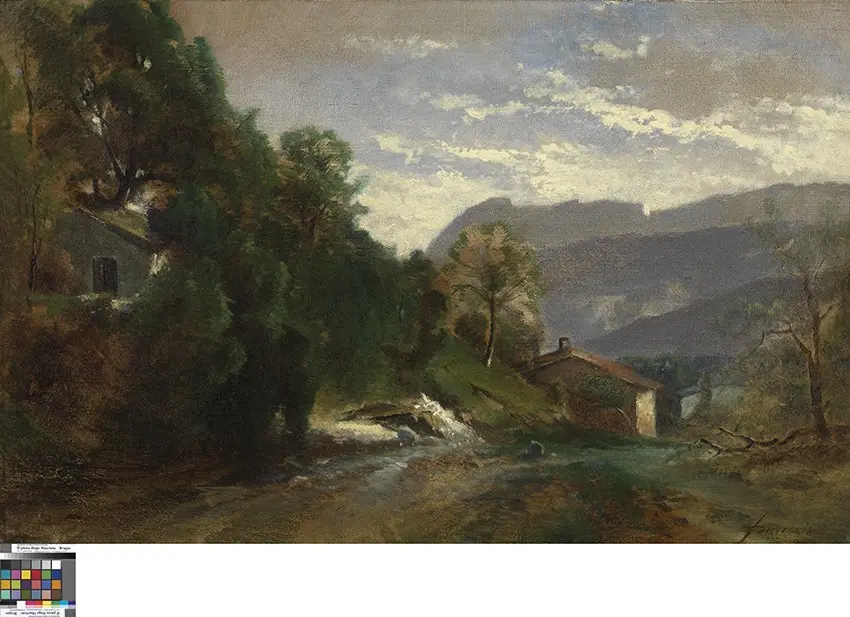
Théodore Fourmois (14 October 1814 in Presles – October 1871 in Ixelles) was a Belgian landscape painter and printmaker.