Artwork
Pendant Ornament
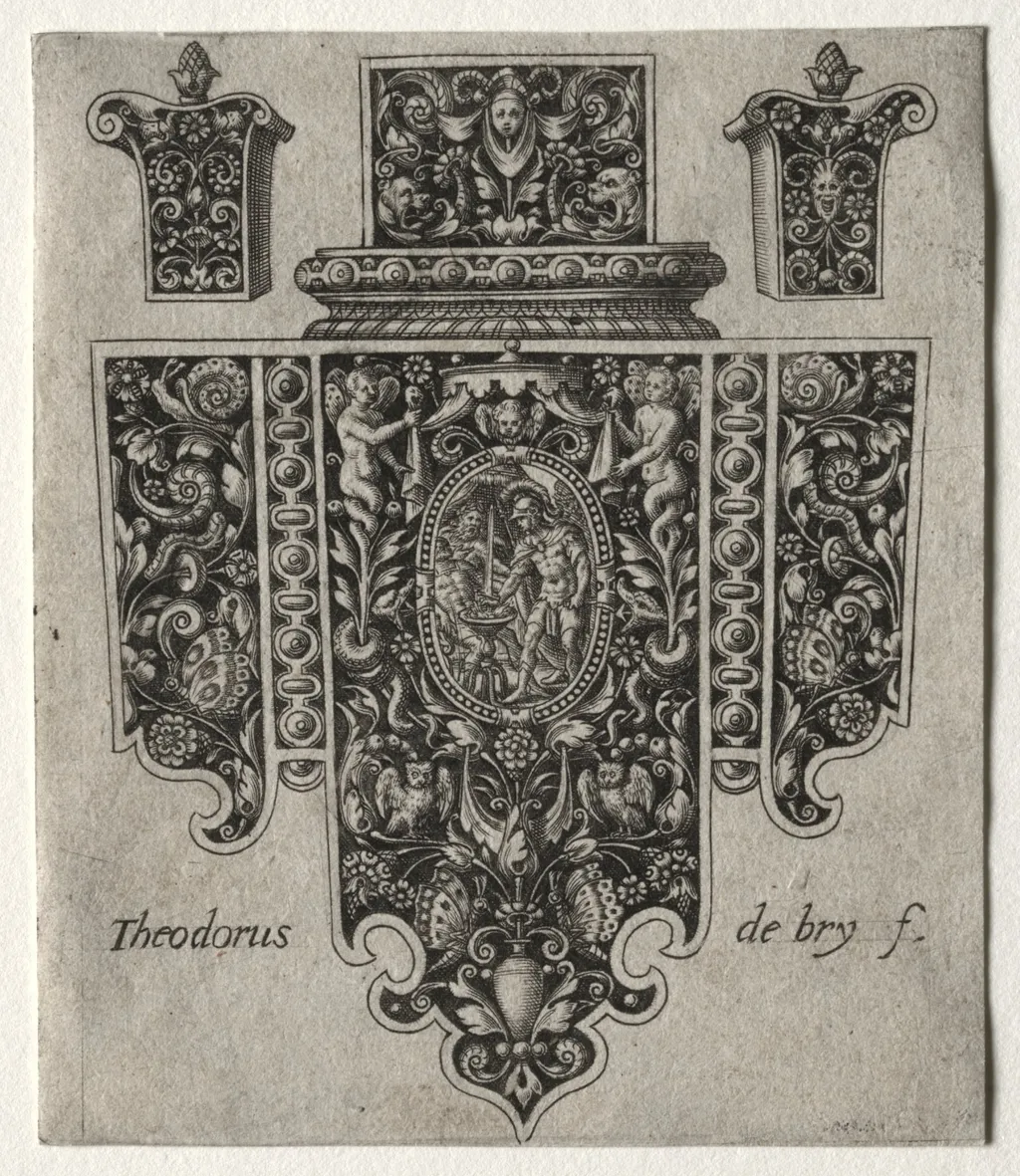
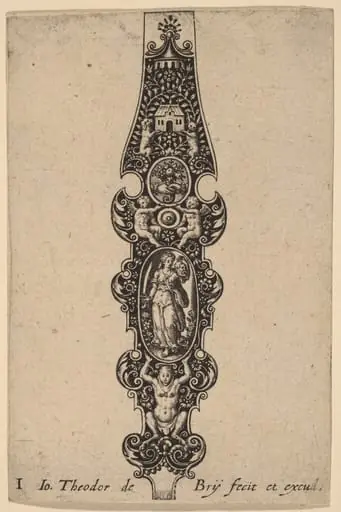
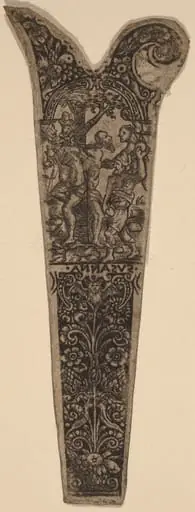
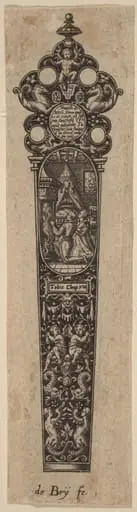
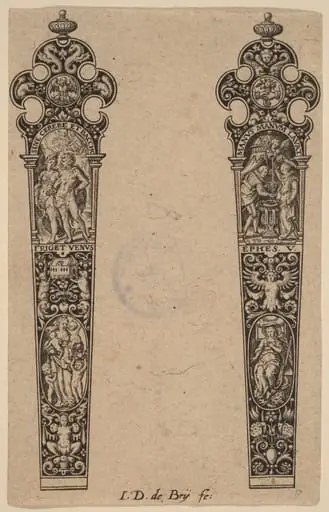
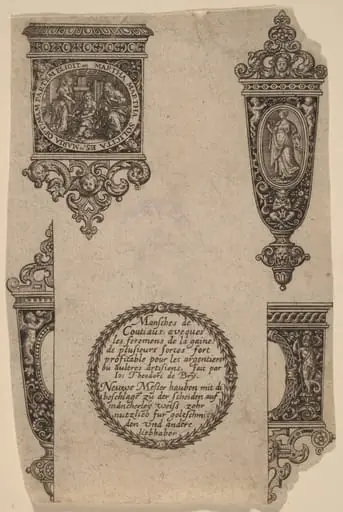
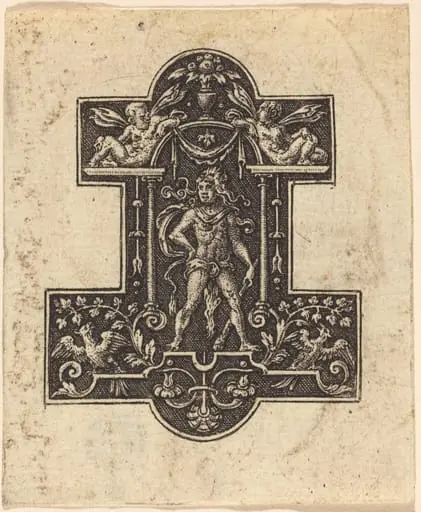
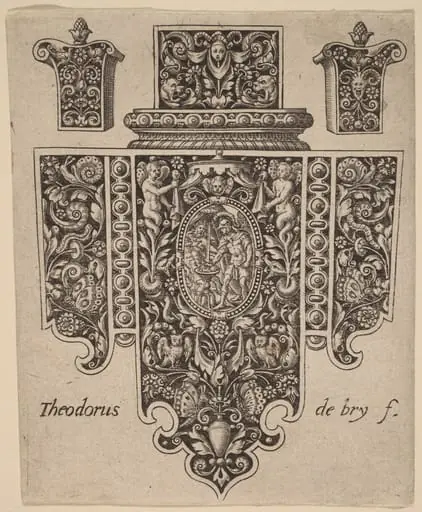
Pendant Ornament is a print by the Renaissance artist Theodor de Bry. It dates from 1590 and is held in the collection of the Cleveland Museum of Art.
- Accession no.
- 1927.360
- Credit line
- Gift of The Print Club of Cleveland
About this work
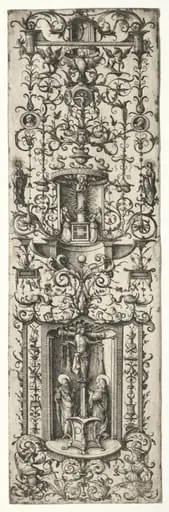
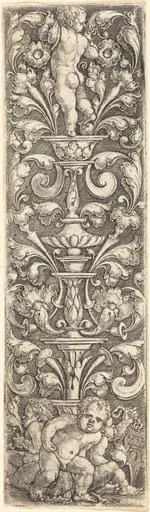
Around the edges are tall, narrow panels filled with more decorative patterns, like vines and scrolls.
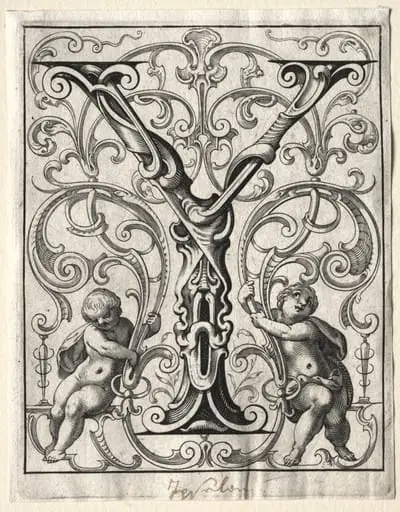
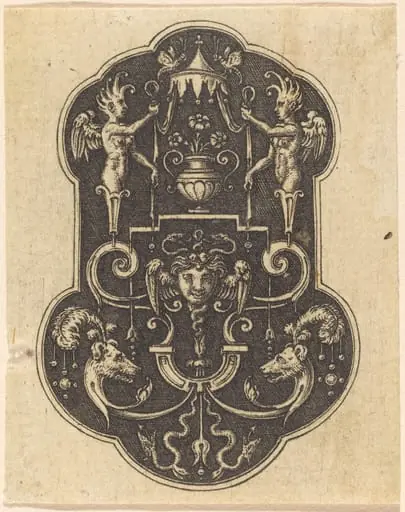
This print shows a black-and-white design with lots of swirling lines and shapes. At the center is a circle with a scene of people and animals inside it. Around the edges are tall, narrow panels filled with more decorative patterns, like vines and scrolls. The top has a small building with two figures on it.
The name "Theodorus de bry f." is written at the bottom, which means this was made by Theodor de Bry. His work often mixed detailed drawings with stories.
Next, check out Theodor de Bry (Flemish, 1528–1598) to see more of his prints.
Overview
Created in 1590 by Theodor de Bry, this pendant ornament is a finely engraved print that exemplifies his dual expertise as a metalworker and printmaker. Though originally designed as a decorative object, it functions as a standalone graphic composition. De Bry, who relocated from the Southern Netherlands to Frankfurt due to religious persecution, produced this piece during his prolific years in the German city, where he refined his technique in intricate line work and symbolic design.
Subject & Meaning
At the center of the design, a circular medallion depicts figures and animals in a compact narrative scene, possibly referencing natural or mythological themes common in Renaissance ornamentation. Surrounding it are vertical panels filled with scrolling vines and ornamental motifs, suggesting harmony between nature and human artifice. The small structure at the top, with two figures, may allude to a sacred or civic space, reinforcing the ornament’s symbolic depth without explicit religious or political messaging.
Technique & Style
De Bry employed fine-line engraving to achieve remarkable detail in the swirling patterns and delicate textures. The black-and-white medium emphasizes contrast and precision, typical of his workshop’s approach to reproductive prints. The composition balances symmetry and fluidity, with the central motif framed by rhythmic, elongated borders. His technique reflects training in goldsmithing, where clarity and craftsmanship were paramount, even in non-functional designs.
History & Provenance
Produced in Frankfurt, where de Bry settled after fleeing religious conflict in the Low Countries, this piece emerged from his broader output of engraved illustrations. While many of his works documented colonial expeditions, this ornament belongs to a lesser-known category of decorative prints made for private collectors or as models for metalworkers. Its survival suggests it was valued as both art and artisanal reference, though its exact original ownership remains undocumented.
Context
In late 16th-century Europe, engraved ornaments like this were circulated among artisans and patrons as templates for jewelry, furniture, and architectural details. De Bry’s position as a publisher of illustrated travel accounts placed him at the intersection of exploration and craft. This pendant reflects a broader trend in Northern Mannerism, where intricate, symbolic decoration merged with emerging print culture, making fine design accessible beyond elite workshops.
Legacy
Though not as widely studied as his American expedition illustrations, this ornament illustrates de Bry’s versatility and influence on decorative arts. His engraving style, characterized by precision and narrative density, became a model for subsequent generations of printmakers and goldsmiths. The piece endures as evidence of how artistic skill transcended medium, bridging the gap between fine art and applied design in early modern Europe.
Own this work as a print
Artist & collection
Artist
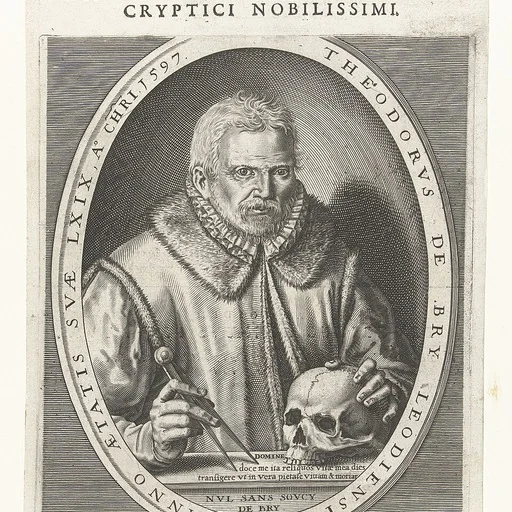
Theodor de Bry (also Theodorus de Bry; 1528 – 27 March 1598) was a Walloon engraver, goldsmith, editor and publisher, famous for his depictions of early European expeditions to the Americas.