Artwork
Căpițe de fân
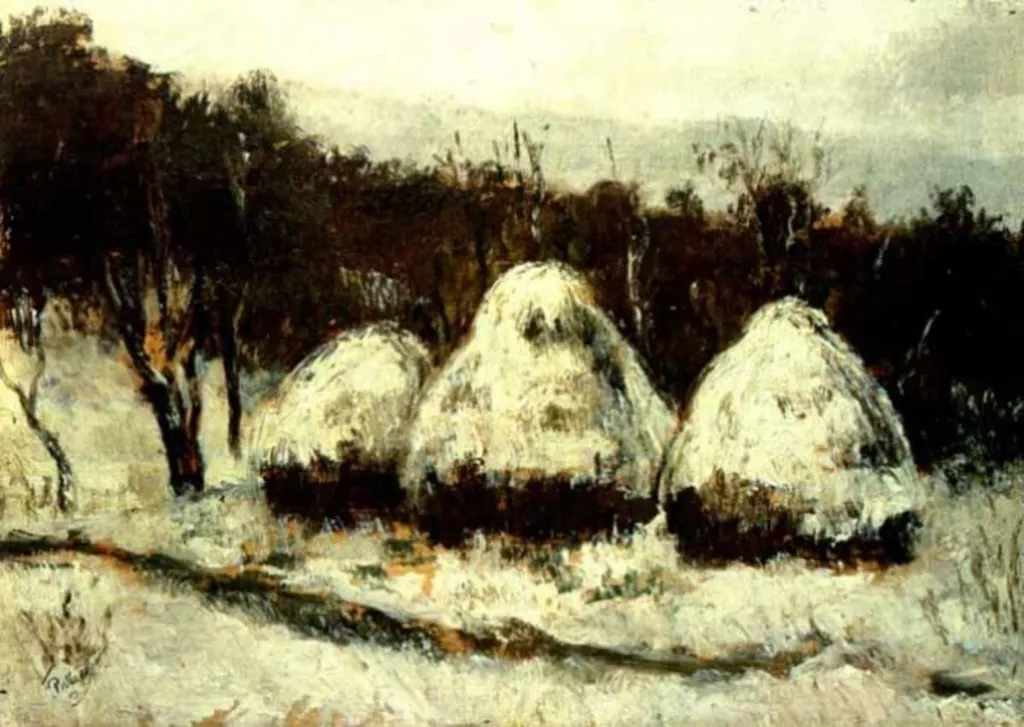
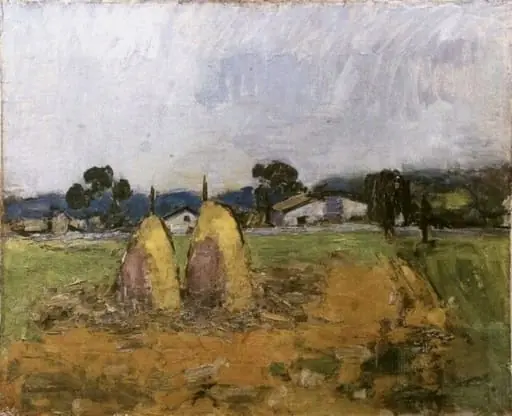
Căpițe de fân is an unspecified painting by Theodor Pallady. It is held in the collection of the National Museum of Art of Romania. This work presents a quiet rural scene centered on three stacked hay bales, rendered with subtle tonal variations.
About this work
Overview
The muted palette of browns, grays, and beiges reinforces a sense of calm, avoiding dramatic contrast in favor of atmospheric restraint.
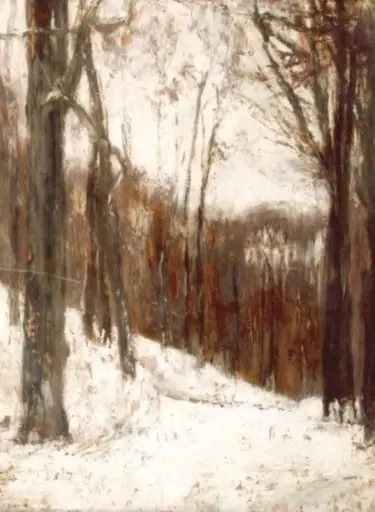
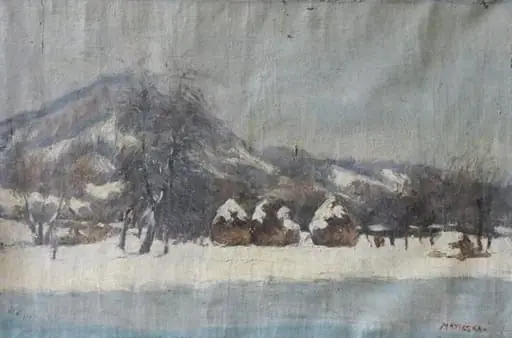
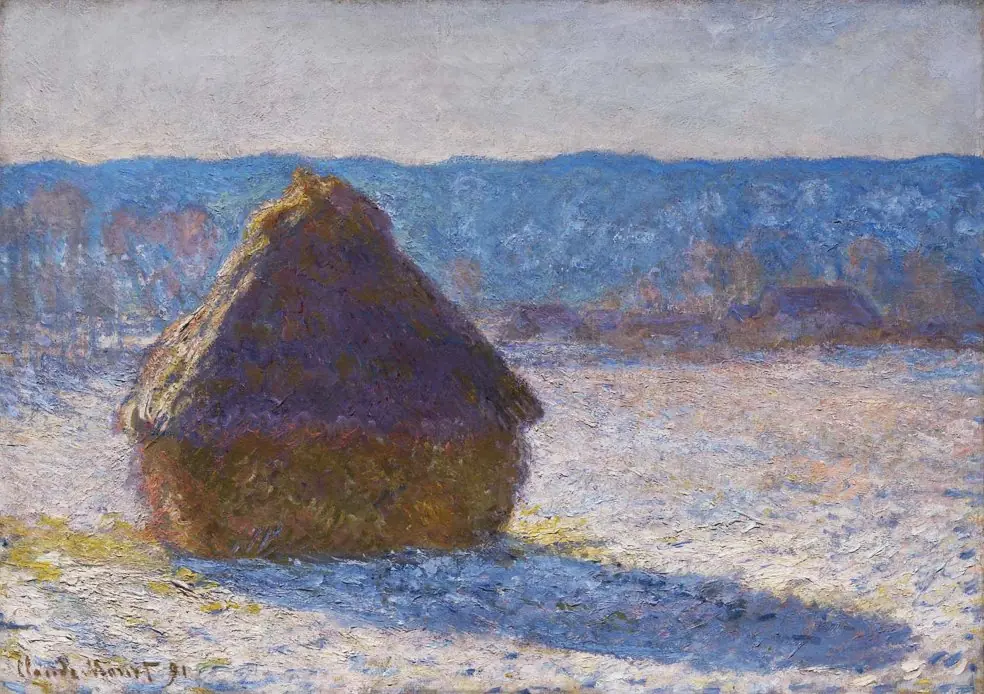
This work presents a quiet rural scene centered on three stacked hay bales, rendered with subtle tonal variations. The composition is sparse, emphasizing stillness and solitude. A line of bare trees forms a distant horizon, while soft shadows anchor the forms to the ground.
The muted palette of browns, grays, and beiges reinforces a sense of calm, avoiding dramatic contrast in favor of atmospheric restraint.
Subject & Meaning
The haystacks, common in agricultural landscapes, are depicted without human presence, suggesting an unobserved moment in the cycle of rural labor. Their solidity contrasts with the skeletal trees, hinting at seasonal transition. The absence of figures invites reflection on time, labor, and the quiet endurance of the land, rather than narrative or symbolism.
Technique & Style
The artist employs chiaroscuro to model the hay bales with gentle gradations of light and shadow, creating volume without harsh outlines. Brushwork is subdued, blending tones to achieve a hazy, atmospheric effect. The limited color range enhances the sense of winter or early spring, while the flat background avoids distraction, focusing attention on the three central forms.
History & Provenance
The painting’s origins are tied to the artist’s early engagement with rural themes, likely executed during a period of study or travel in the countryside. It was likely held in private collections before entering institutional care, though specific ownership records remain limited. Its modest scale and subject suggest it was not commissioned but produced as a personal study.
Context
Created during a time when many artists turned to rural life as an antidote to industrialization, this work aligns with a broader trend of quiet landscape observation. Unlike romanticized depictions of the countryside, it avoids idealization, instead capturing the unadorned geometry of farm storage and the subdued light of overcast days.
Legacy
Though not widely exhibited, the painting contributes to a body of work that redefined landscape as a space for introspection rather than spectacle. Its restrained approach influenced later artists seeking to convey emotion through tonal harmony and minimal composition, establishing a quiet precedent in regional art traditions.
Artist & collection