Artwork
Governor George Clinton
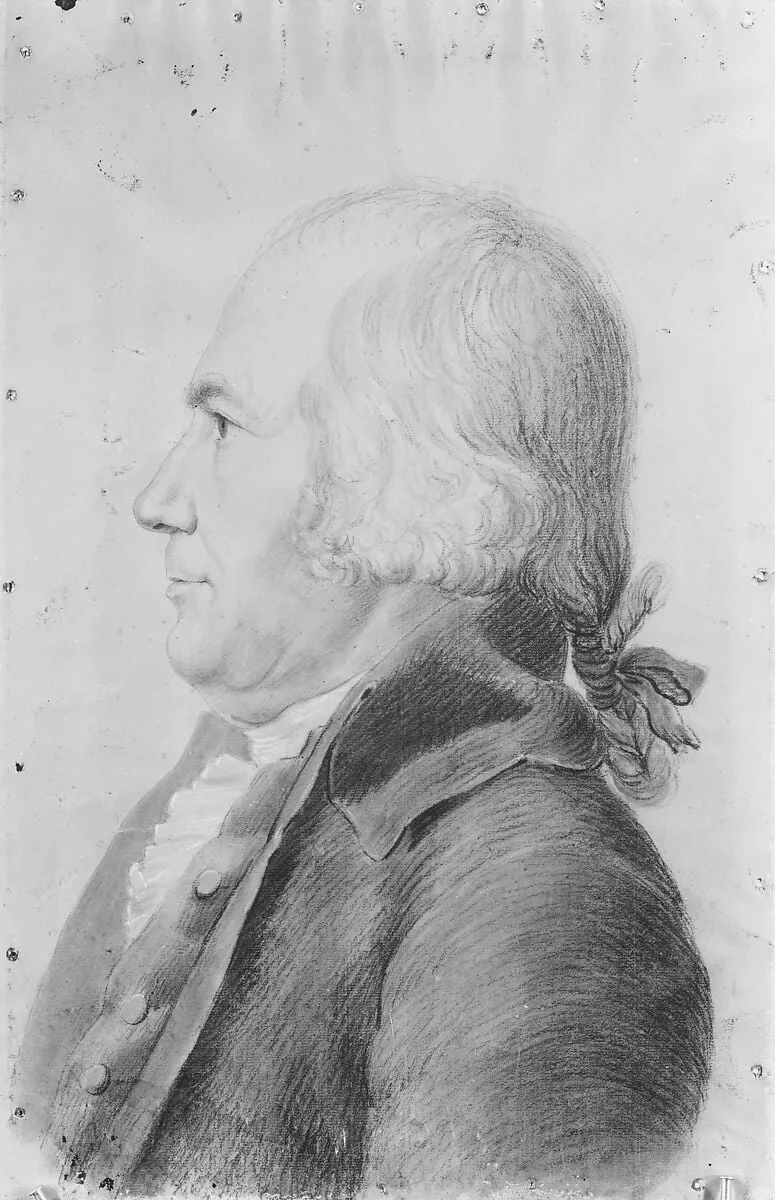
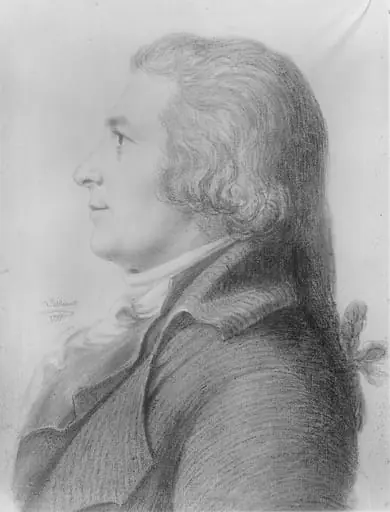
Governor George Clinton is a gouache drawing by the Romanticist artist Thomas Bluget De Valdenuit. It dates from 1797 and is held in the collection of the Metropolitan Museum of Art. Created in 1797, this portrait depicts George Clinton, the first governor of New York and a prominent figure in the early American republic.
About this work
Subject & Meaning
The medium, conté crayon, charcoal, and white chalk on prepared paper, supports subtle modeling of the face and wig, heightening the sense of presence.
The drawing portrays George Clinton, who served as Governor of New York and later as Vice President of the United States. Rendered in profile, the portrait adheres to the conventions of late eighteenth-century civic portraiture, in which a strict side view conveyed dignity, authority, and impartiality. The choice of profile format deliberately echoes the imagery of classical coins and medals, lending the sitter the gravitas of an ancient statesman and aligning him with the republican ideals of the new American nation.
The medium, conté crayon, charcoal, and white chalk on prepared paper, supports subtle modeling of the face and wig, heightening the sense of presence. By depicting Clinton in this restrained, emblematic manner, De Valdenuit presents him less as an individual likeness than as a symbol of executive leadership during the early republic.
Technique & Style
Created in 1797, the portrait of Governor George Clinton by Thomas Bluget De Valdenuit is executed as a drawing rather than a painting, utilizing Conté crayon, charcoal, and white-chalk heightening. The artist worked on off-white laid paper that had been pre-coated with gouache, a technique that provides a smooth, opaque ground for the media. The work measures 54.6 cm in height and 36.5 cm in width.
Stylistically, the piece presents the subject in strict profile, capturing the likeness with the tonal range afforded by the combination of dark crayons and white highlights against the prepared paper surface.
History & Provenance
Governor George Clinton was created in 1797 by the French-born artist Thomas Bluget de Valdenuit. Executed in Conté crayon, charcoal, and white-chalk heightening on off-white laid paper coated with gouache, the work is a profile portrait of the former New York governor. The drawing entered the collection of the Metropolitan Museum of Art, where it is currently housed in the American Wing. No earlier ownership records or commission details are documented in the available sources.
Overview
Created in 1797, this portrait depicts George Clinton, the first governor of New York and a prominent figure in the early American republic. Executed by Charles Balthazar Julien Févret de Saint-Mémin, the work is a profile bust rendered in Conté crayon, charcoal, and white-chalk heightening on off-white laid paper coated with gouache. The composition relies on the physiognotrace, a mechanical tracing device invented by Jean-Guillaume Moitte, which allowed Saint-Mémin to capture the sitter's silhouette with precise geometric accuracy.
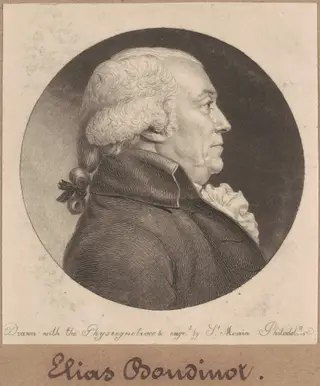
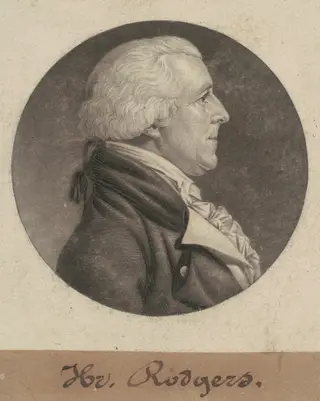
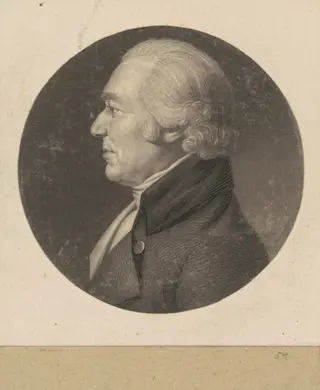
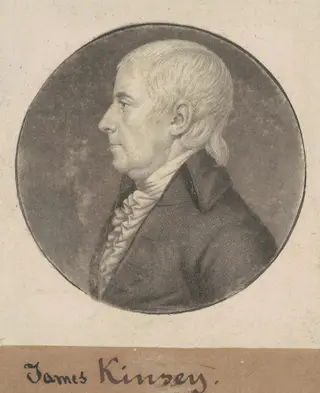
The resulting image features a sharp, hook-nosed profile with tightly curled hair and a stiff coat collar, defined by soft yet exact lines that create a sense of volume and depth. This piece exemplifies Saint-Mémin's signature style during his American period, where he produced numerous likenesses of political leaders using this hybrid technique of mechanical tracing and hand-drawn shading. The work stands as a significant document of early American portraiture, bridging the gap between neoclassical idealism and the emerging democratic demand for accessible, accurate representations of public figures.
Artist & collection

Artist
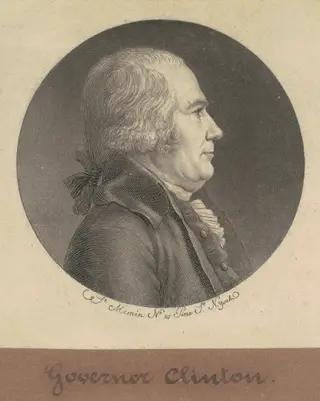
Thomas Bluget De Valdenuit (1763–1846) was an artist, born in Les Riceys.