Artwork
George Washington
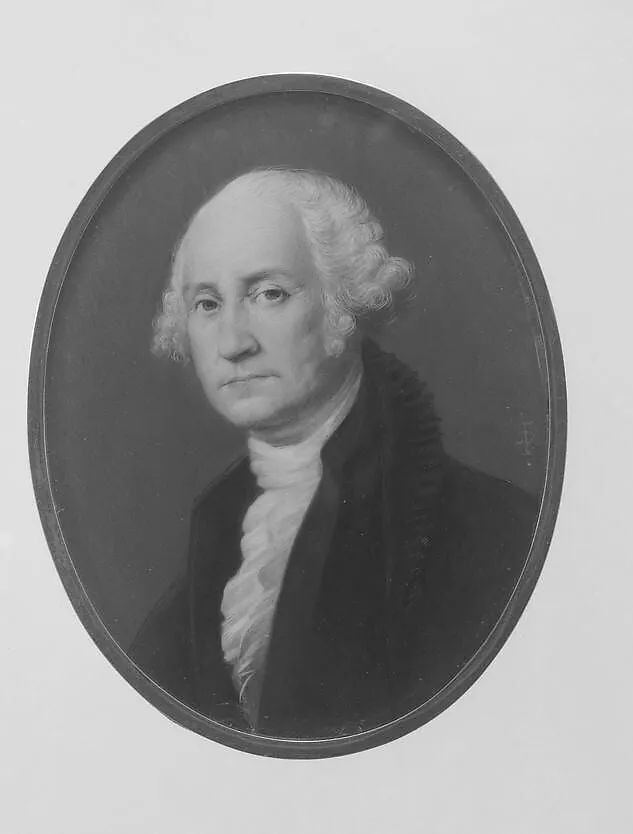
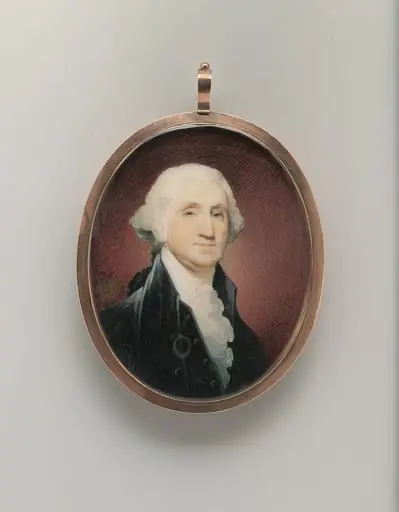
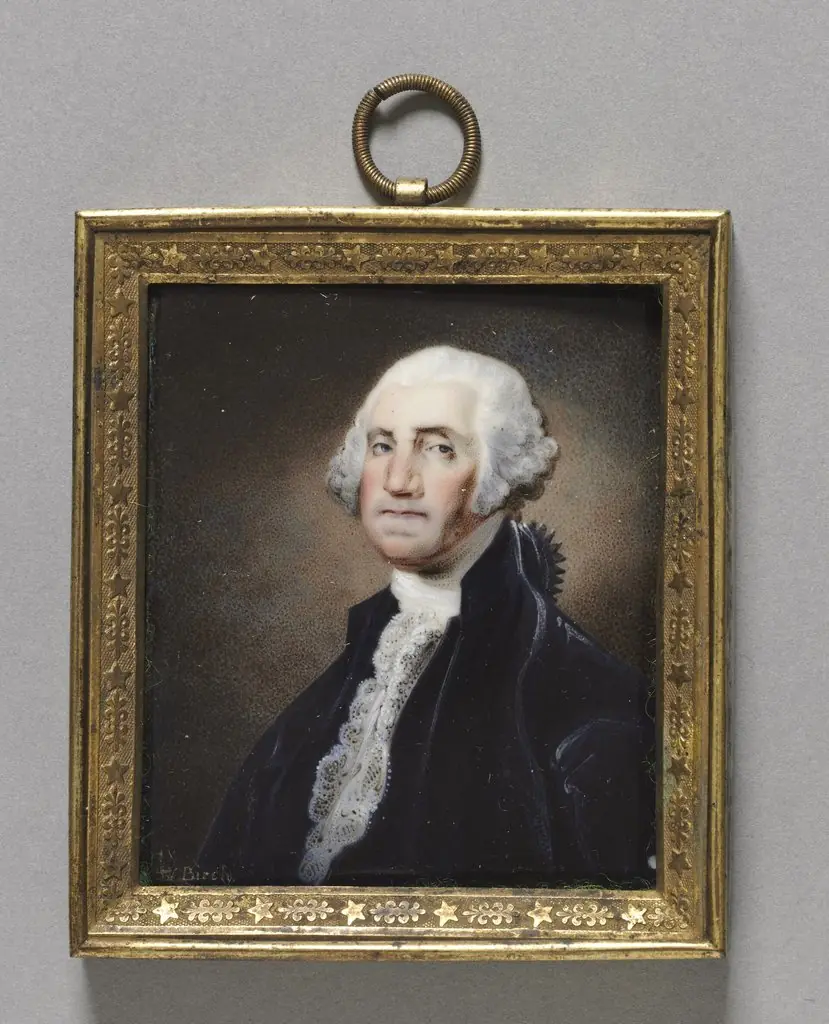
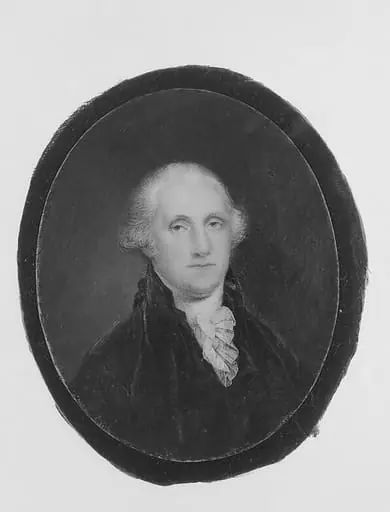
George Washington is a watercolor painting. It dates from 19 and is held in the collection of the Metropolitan Museum of Art.
About this work
Technique & Style
The composition centers on a three-quarter view of Washington, rendered with restrained detail to emphasize facial expression and costume.
The portrait employs watercolor on ivory, a miniature format associated with intimate portraiture. The handling reflects the delicate brushwork typical of watercolor, with subtle layering to model the sitter's features. The composition centers on a three-quarter view of Washington, rendered with restrained detail to emphasize facial expression and costume.
The ivory support, measuring approximately 7.3 cm in height and 5.6 cm in width, contributes to the refined, jewel-like quality of the work. Stylistically, the portrait aligns with mid-19th-century portrait miniatures, prioritizing clarity and likeness over painterly effects.
History & Provenance
The artwork depicting George Washington was created in 1850 by an unknown artist, classified as an anonymous painting. Executed as a watercolor on ivory, this portrait measures 7.3 cm in height and 5.6 cm in width. The piece is currently held within the collection of the Metropolitan Museum of Art, where it is categorized under The American Wing.
The work's inception is firmly dated to 1850, and the subject is identified as the former U.S. President, rendered in a portrait genre typical of mid-nineteenth-century American art. Specific commissioning details and the original ownership chain prior to museum acquisition are not documented in the available records.
Overview
This small, oval portrait depicts George Washington, rendered in watercolor on a piece of ivory. Sized to fit within the palm of a hand, it represents a distinct tradition of miniature painting. Unlike monumental oil portraits, this work was conceived as an intimate object, intended for personal possession and close viewing, reflecting a different approach to portraiture during its era.
Context
Miniature portraits like this one served as highly personal keepsakes, often carried by individuals or worn as jewelry. Before the advent of photography, these small-scale artworks functioned similarly to modern photographs, allowing people to keep images of loved ones or esteemed figures close at hand. Their intimate nature contrasted sharply with the public display of larger, more formal painted portraits.
Artist & collection