Artwork
Tynemouth, Northumberland
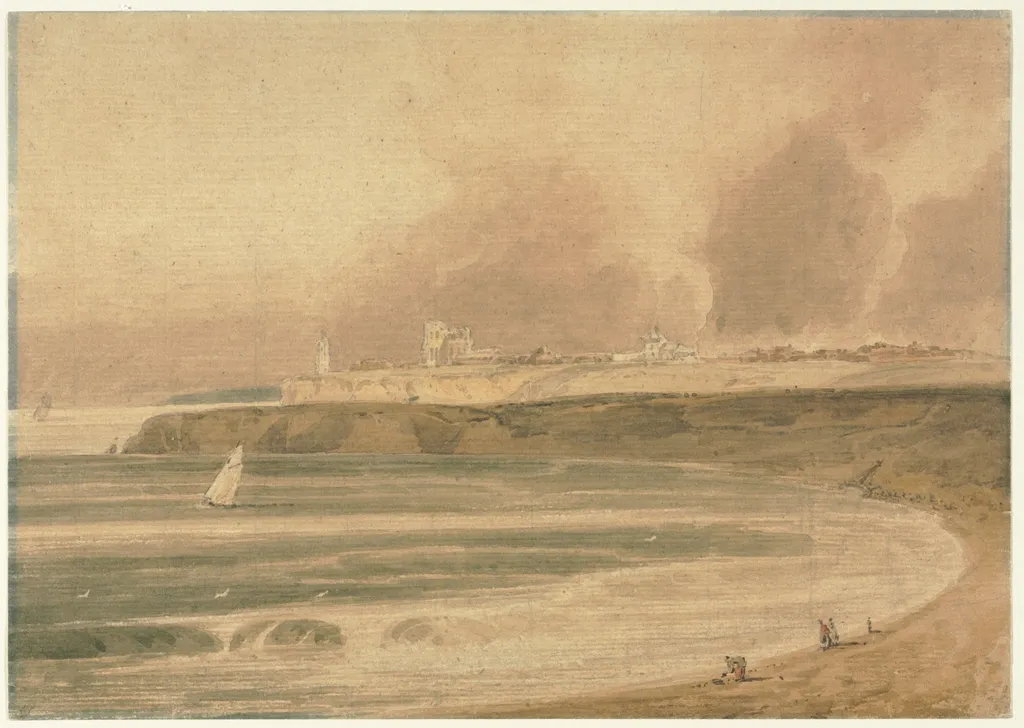
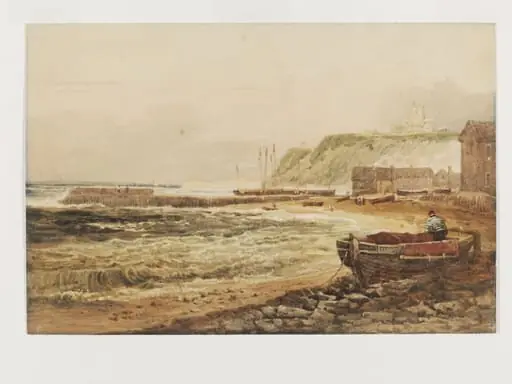
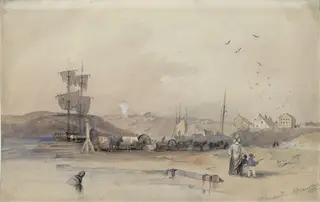
Tynemouth, Northumberland is a drawing by Thomas Girtin. It dates from 1798 and is held in the collection of the Cleveland Museum of Art.
- Accession no.
- 1940.557
- Credit line
- Bequest of James Parmelee
About this work
The artist used light brushstrokes to create a dreamy, hazy effect, blending the sky and sea together.
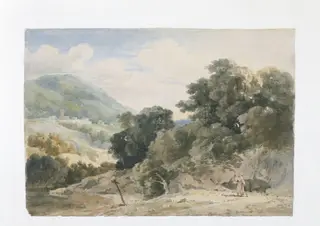
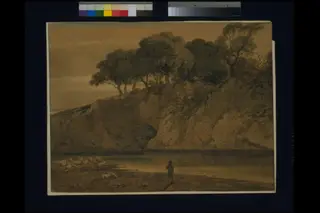
This painting shows a quiet coastal scene with soft, muted colors. In the foreground, a sandy beach meets gentle waves. A few small figures walk near the shore, and a lone sailboat drifts in calm water. In the distance, a rocky cliff rises, topped with a lighthouse and a few buildings.
The artist used light brushstrokes to create a dreamy, hazy effect, blending the sky and sea together. The colors are mostly pale greens, browns, and grays, giving it a peaceful, almost misty feel.
Next, check out Thomas Girtin (British, 1775–1802) to see more of his work.
Overview
Thomas Girtin’s watercolour of Tynemouth, Northumberland, dated around 1798, presents a tranquil coastal landscape. The composition balances a sandy shore, gentle surf, and a distant cliff crowned by a lighthouse, all rendered in a subdued palette of pale greens, browns, and grays that convey a mist‑laden atmosphere.
Subject & Meaning
The scene captures everyday activity along the beach: a few figures strolling near the water’s edge and a solitary sailboat drifting on calm seas. The inclusion of the lighthouse and modest buildings on the cliff hints at the town’s maritime character while the overall mood suggests quiet contemplation of nature’s vastness.
Technique & Style
Girtin employs light, almost translucent brushstrokes that merge sky and sea, creating a hazy, dream‑like effect. His handling of washes and delicate tonal shifts demonstrates the advanced watercolour techniques that helped raise the medium’s status in late‑18th‑century British art.
History & Provenance
Created during Girtin’s brief but influential career, the work reflects his role alongside contemporaries such as J. M. W. Turner in redefining watercolour. The drawing has remained in public collections, contributing to the artist’s posthumous reputation as a pioneering landscape painter.
Own this work as a print
Artist & collection

Artist
Thomas Girtin (18 February 1775 – 9 November 1802) was an English watercolourist and etcher. A friend and rival of J. M. W. Turner, Girtin played a key role in establishing watercolour as a reputable art form.