Artwork
Water Engine, Cold Bath, Field's Prison
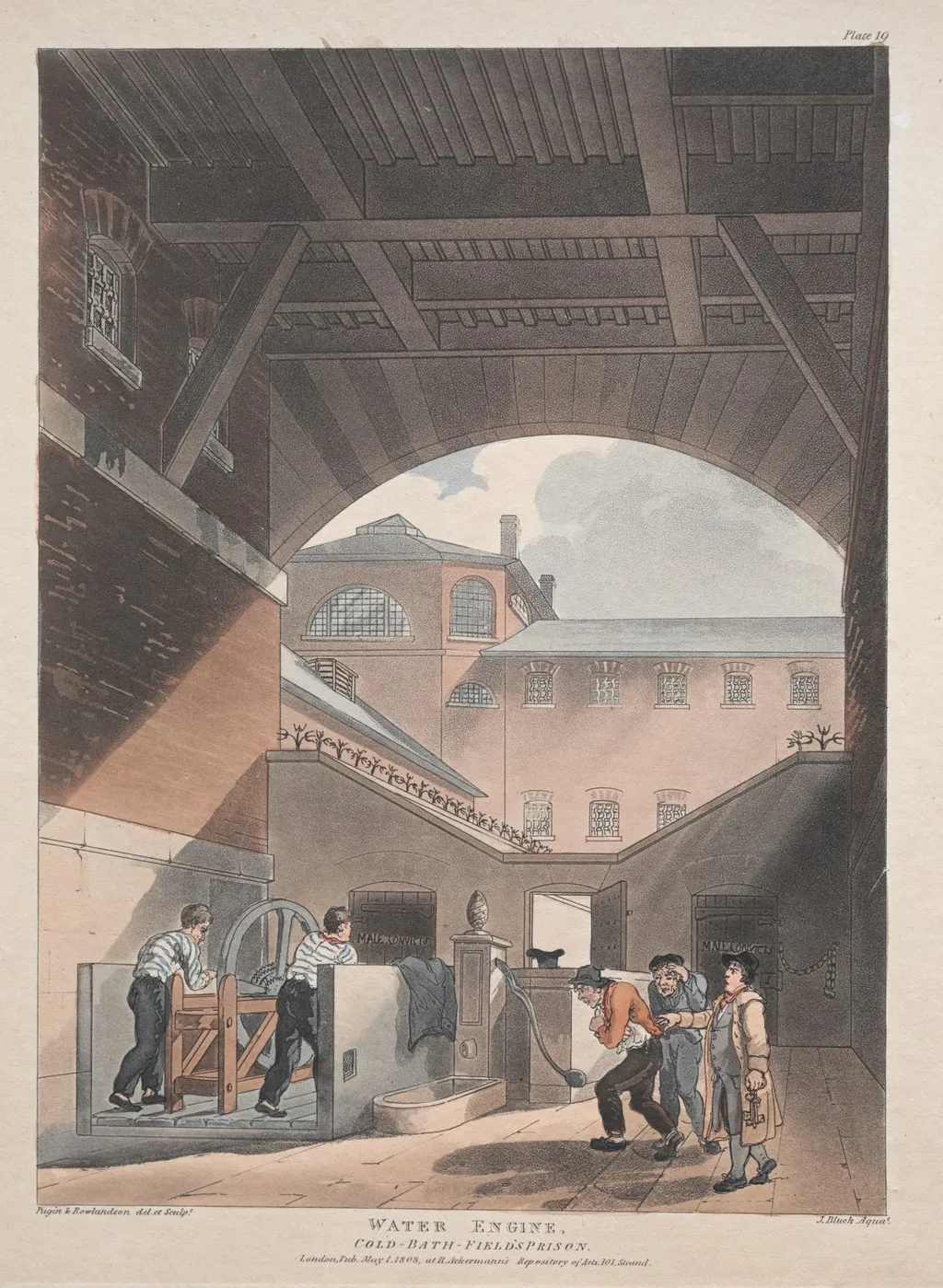
Water Engine, Cold Bath, Field's Prison is a print by the Romanticist artist Thomas Rowlandson. It dates from 1808 and is held in the collection of the Cleveland Museum of Art.
- Accession no.
- 1918.574
- Credit line
- Gift of John Smyth
About this work
Overview
Unlike his more satirical works, this piece adopts a restrained tone, focusing on the mundane realities of incarceration rather than overt humor.
Created in 1808 by Thomas Rowlandson, this print depicts a scene within Field’s Prison, a London facility for male convicts. The work belongs to a series of social commentaries produced during the Georgian era, where Rowlandson used observational detail to expose conditions in public institutions. Unlike his more satirical works, this piece adopts a restrained tone, focusing on the mundane realities of incarceration rather than overt humor.
Subject & Meaning
The print captures four prisoners engaged in routine labor around a central water pump. Their postures, leaning, scrubbing, bending, suggest exhaustion and resignation. The label 'MALE CONVICTS' on the building underscores institutional dehumanization.
The absence of guards or authority figures implies a system that relies on internalized discipline. The scene conveys quiet endurance rather than rebellion, reflecting the grim normalization of prison life.
Technique & Style
Rowlandson employed fine line engraving with subtle tonal variations to render texture and depth. The palette is dominated by muted grays and browns, with minimal blue sky adding a touch of distant hope. Chiaroscuro is used sparingly but effectively to define architectural forms and emphasize the weight of the prisoners’ labor. Details like frayed clothing and cracked brickwork are rendered with precision, reinforcing the atmosphere of decay.
History & Provenance
The print was produced during a period of growing public concern over prison conditions in England. It likely circulated among reform-minded audiences, though no record of its original commission survives. Rowlandson’s prints were often sold as individual sheets or collected in albums.
This work remained in private hands until the 19th century, later entering institutional collections as interest in social documentation grew.
Context
In early 19th-century Britain, prisons were overcrowded, underfunded, and largely unregulated. Field’s Prison, though not among the most notorious, exemplified the neglect faced by petty offenders. Rowlandson’s depiction aligns with emerging critiques from reformers like John Howard, who documented prison abuses.
The print offers a visual counterpoint to official narratives, presenting incarceration not as punishment but as a state of prolonged suffering.
Legacy
While less famous than Rowlandson’s caricatures, this print is recognized for its unembellished realism. It influenced later documentary artists who sought to portray institutional life without melodrama. Today, it serves as a primary visual source for historians studying penal reform and the everyday experiences of convicts in Georgian England, valued for its quiet authenticity over dramatic effect.
Own this work as a print
Artist & collection
Artist
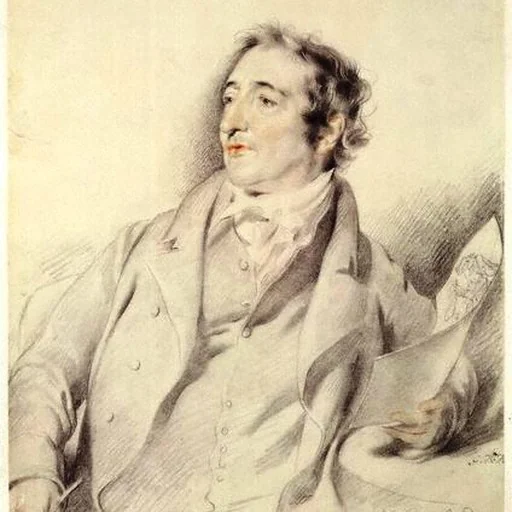
Thomas Rowlandson (; 13 July 1757 – 21 April 1827) was an English artist and caricaturist of the Georgian Era, noted for his political satire and social observation.

 Le Porte Del Dolo
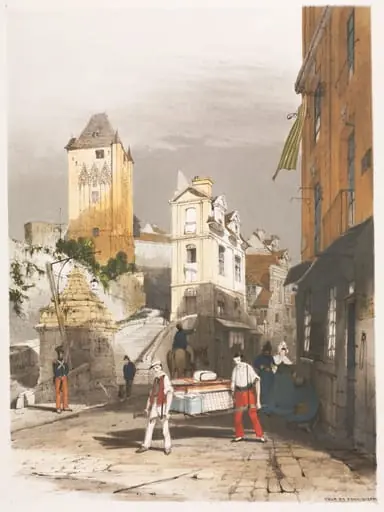 Picturesque Architecture in Paris, Ghent, Antwerp, Rouen, Etc.: Tour de Remy, Dieppe
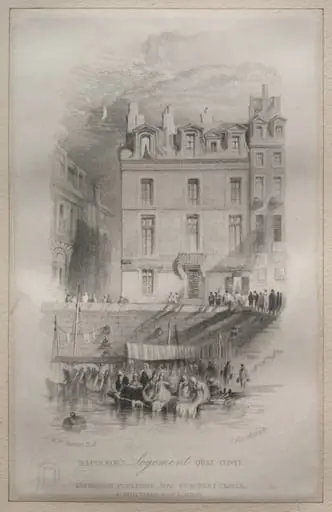 Napoleon's Logement, Quai Conti
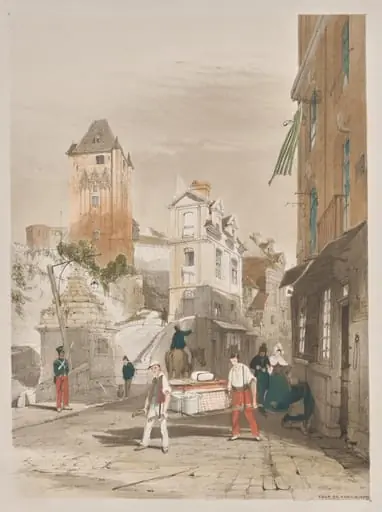 Picturesque Architecture in Paris, Ghent, Antwerp, Rouen: Tour de Remy, Dieppe, France
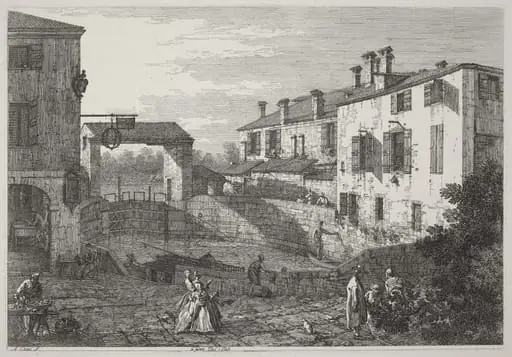 Le Porte Del Dolo
 Untitled
 H Beard Print Collection
 Views: The Canal Lock at Dolo
 English War Work: Bottling the Big Shell
 Pavillon de Flore, Tuileries