Artwork
painting
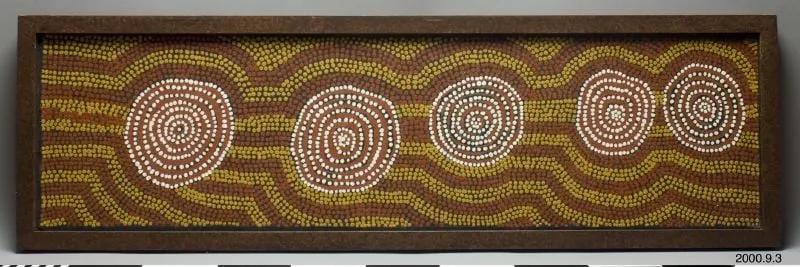
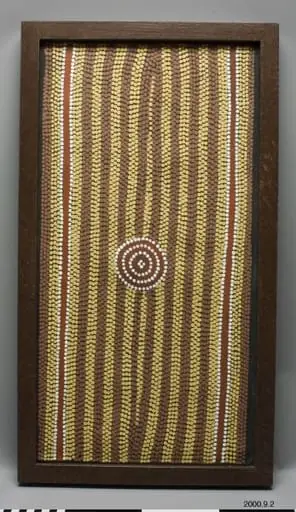
painting is a paint painting by the Australian Aboriginal Painting artist Pinta Pinta, aboriginer, pintupi Tjapanangka. It dates from 1994 and is held in the collection of the ethnographic museum.
About this work
Overview
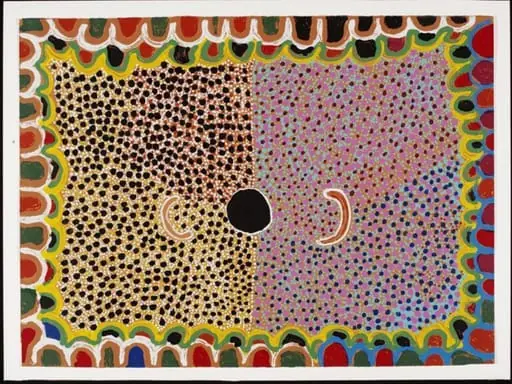
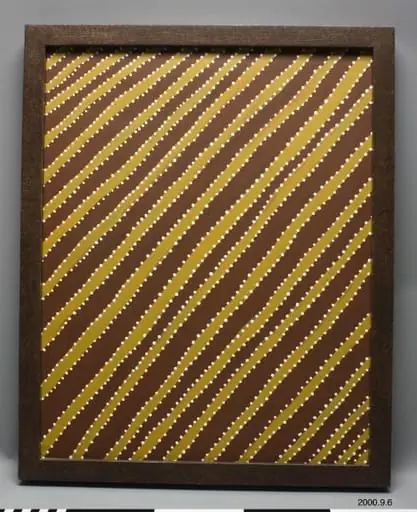
This painting, created by Pinta Pinta Tjapanangka, visually represents the Tingari Cycle, a sacred narrative from Aboriginal Australian mythology, through a composition of swirling red, black, and yellow dots and lines.
Subject & Meaning
The subject matter revolves around the travels and rituals of the Tingari Men and Women, ancestral spirits who shaped the land and established sacred sites and traditions. The painting encodes these mythological journeys and their associated rituals, reflecting the deep connection between the Tingari stories and the Australian landscape.
Technique & Style
The artwork employs a distinctive dot-and-line technique, characteristic of Western Desert Aboriginal art. This stylistic approach not only aesthetically represents the Tingari's sacred paths but also serves to convey the narrative's significance and the artist's cultural heritage.
History & Provenance
Created by Pinta Pinta Tjapanangka, the painting is part of the collection associated with Papunya Tula Artists, Alice Springs, Australia (Catalogue no. PP 940798). Further specific historical details about the artwork's creation or ownership history are not provided.
Context
This painting is rooted in the post-initiatory teachings for Aboriginal youths and underpins contemporary customs, highlighting its role in preserving and transmitting sacred knowledge across generations.
Legacy
By visually encoding the Tingari Cycle, the painting contributes to the enduring legacy of Aboriginal mythology and art, bridging ancient traditions with contemporary viewership, as evidenced by its inclusion in the Museum of Ethnography.
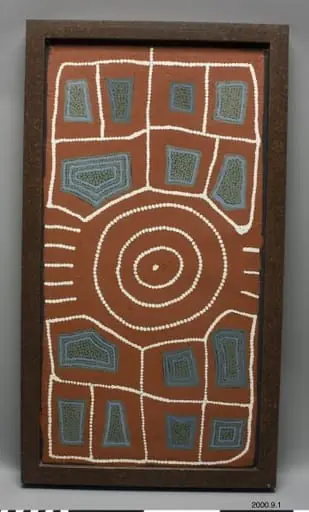
Artist & collection
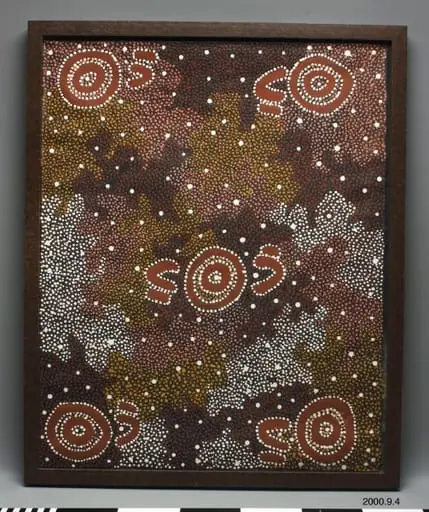 painting
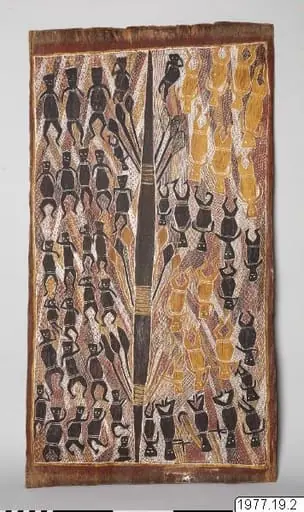
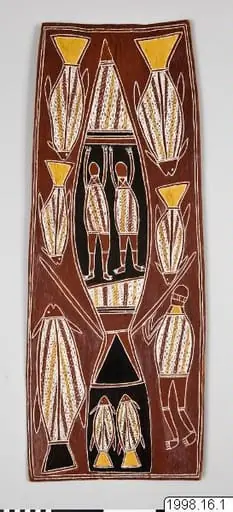 bark painting, painting, working
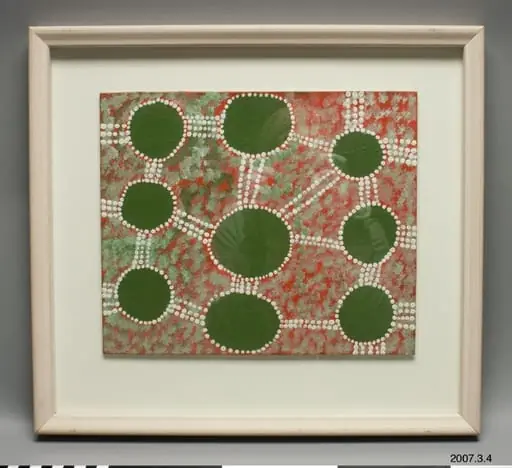 tavla, painting
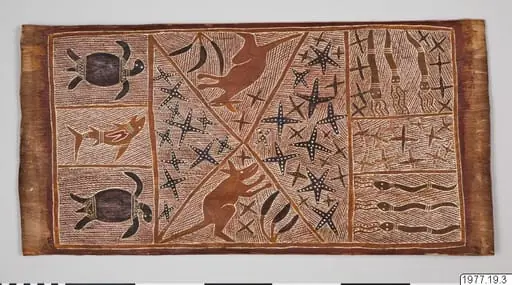 painting, painting, painting, painting, painting, painting, painting, painting, painting, painting, painting, painting, painting, painting, painting, painting, painting, painting, painting, painting, painting, painting, painting, painting, painting, painting, painting, painting, painting, painting, painting, painting, painting, painting, painting, painting, painting, painting, painting, painting, painting, painting, painting, painting, painting, painting, painting, painting, painting, painting, painting, painting, painting, painting, painting, painting and painting, painting, painting, painting, painting, painting, painting, painting, painting, painting, painting, painting, painting, painting, painting, painting, painting, painting, painting, painting, painting, painting, painting, painting, painting, painting, painting, painting, painting, painting, painting, painting, painting, painting, painting, painting, painting, painting, painting and painting, painting, painting, painting, painting, painting, painting, painting, painting, painting, painting and painting, painting, painting, painting, painting, painting, painting, painting, painting, painting, painting, painting, painting, painting, painting and painting, painting, painting, painting, painting, painting, painting, painting, painting, painting, painting, painting, painting, painting, painting, painting, painting, painting, painting, painting, painting, painting, painting, painting, painting, painting, painting, painting, painting,
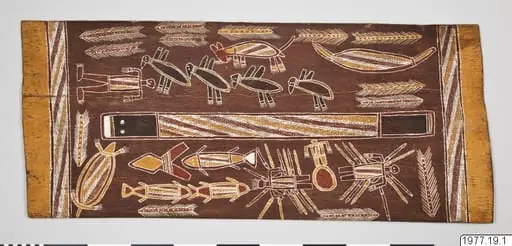 painting
 painting
 painting