Artwork
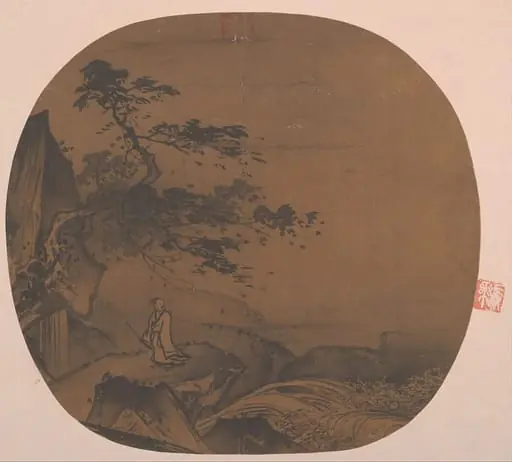
南宋 佚名 倣夏珪 觀瀑圖 團扇|Men Watching a Waterfall
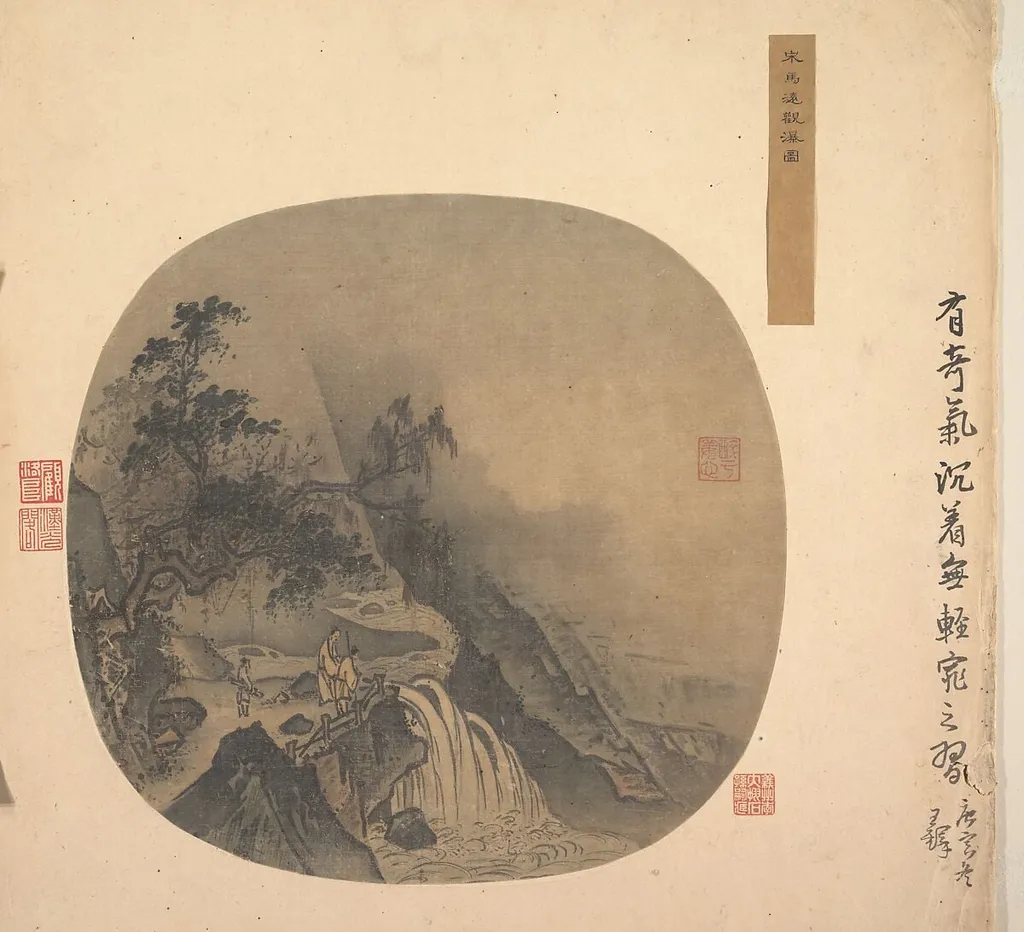
南宋 佚名 倣夏珪 觀瀑圖 團扇|Men Watching a Waterfall is an ink painting. It dates from 1249 and is held in the collection of the Metropolitan Museum of Art. This 13th-century Chinese painting, titled Men Watching a Waterfall, depicts a tranquil landscape scene.
About this work
This painting shows men watching a waterfall in a Chinese landscape. The scene is serene, with trees and rocks surrounding the waterfall. It's interesting that this artwork is from the 13th century and was created on a fan, which is a unique medium. You can learn more about this style by looking at the museum: The Metropolitan Museum of Art.
Subject & Meaning
The work depicts a landscape scene centered on a waterfall, featuring figures observing the cascading water.
The work depicts a landscape scene centered on a waterfall, featuring figures observing the cascading water. Created in 1249 by an anonymous artist in China, the painting is classified within the landscape genre. The composition focuses on the interaction between the human subjects and the natural element of the falling water, consistent with the title Men Watching a Waterfall.
While the specific symbolic intent of the figures is not detailed in the provided records, the subject matter emphasizes the observation of nature's power and beauty, a common theme in Song dynasty landscape art. The piece serves as an imitation of the style of Xia Gui, reflecting the period's engagement with earlier masters through the depiction of dramatic natural scenery.
Technique & Style
The work is executed in ink and light color on silk, mounted as a folding fan converted to an album leaf. The handling follows the 夏珪 Xia Gui manner, using abbreviated, axe-cut brushstrokes to model jagged mountain forms and a cascading waterfall rendered with swiftly modulated wet-in-wet ink washes. The composition compresses recession through stacked, diagonal rock planes that direct the eye downward toward the robed figures, whose attenuated forms and minimal setting heighten the sense of monumental scale.
The silk support retains its original fan shape, with its curved edge still visible beneath the later album mounting, and the overall condition appears stable with only minor pigment fading along the upper fan ribs.
History & Provenance
Men Watching a Waterfall is a landscape painting created in 1249 by an anonymous artist in China, executed in ink and color on silk. The work was originally fashioned as a fan before being mounted as an album leaf. Although the artist remains unidentified, the piece is stylistically noted as an imitation of the Song dynasty master Xia Gui.
The painting is currently held in the collection of the Metropolitan Museum of Art. Its physical dimensions are recorded as 29.1 centimeters in height and 27.6 centimeters in width. The specific history regarding its original commission, the identity of its first owner, or the detailed chain of custody prior to its arrival at the museum is not detailed in the available records, which focus primarily on its creation date and current location.
Context
The Southern Song fan painting attributed to an anonymous follower of Xia Gui, dated 1249, exemplifies the era’s sophisticated ink‑color landscape on silk and was likely produced in the Chinese court workshop. Its composition of a cascading waterfall, recorded in both the internal catalogue and Wikidata, reflects the persistence of waterfall imagery in Southern Song visual culture. Scholarship notes that the work’s fan format and album‑leaf mounting place it within a broader tradition of portable devotional paintings, while its presence in the Metropolitan Museum of Art underscores its significance in Western collections. The attribution to an unnamed painter highlights the prevalence of anonymous authorship in this period.
Overview
This 13th-century Chinese painting, titled Men Watching a Waterfall, depicts a tranquil landscape scene. Originally created on a circular fan, it has since been mounted as an album leaf, preserving its delicate composition. The artwork showcases a serene natural setting where human figures observe a cascading waterfall, a common motif in East Asian art that often evokes contemplation and harmony with nature.
Artist & collection

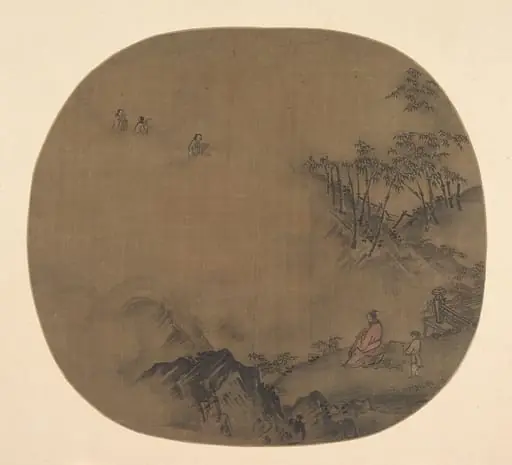 Untitled
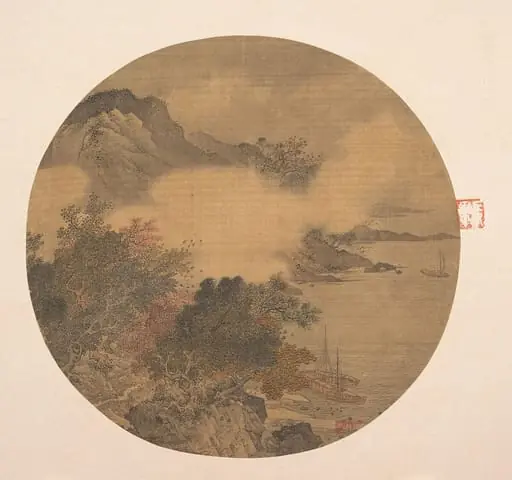 明 佚名 風雨艤舟圖 團扇|Misty Landscape
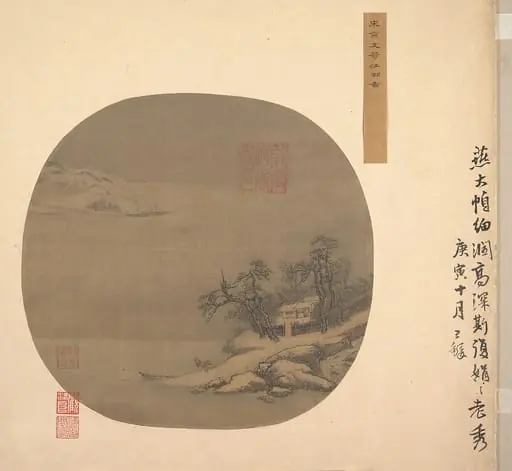 南宋 佚名 江邨圖 團扇|River Hamlet
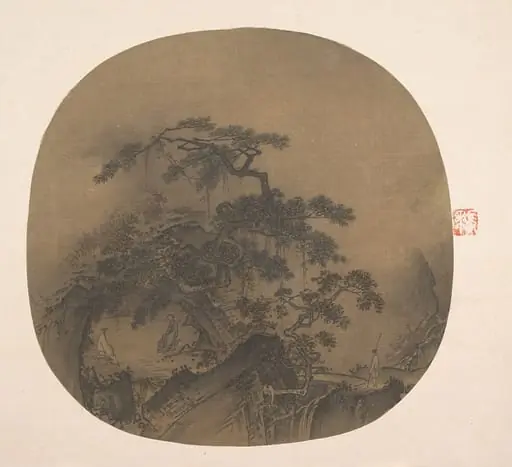 南宋 佚名 洞天論道圖 團扇|Conversation in a cave
 Untitled
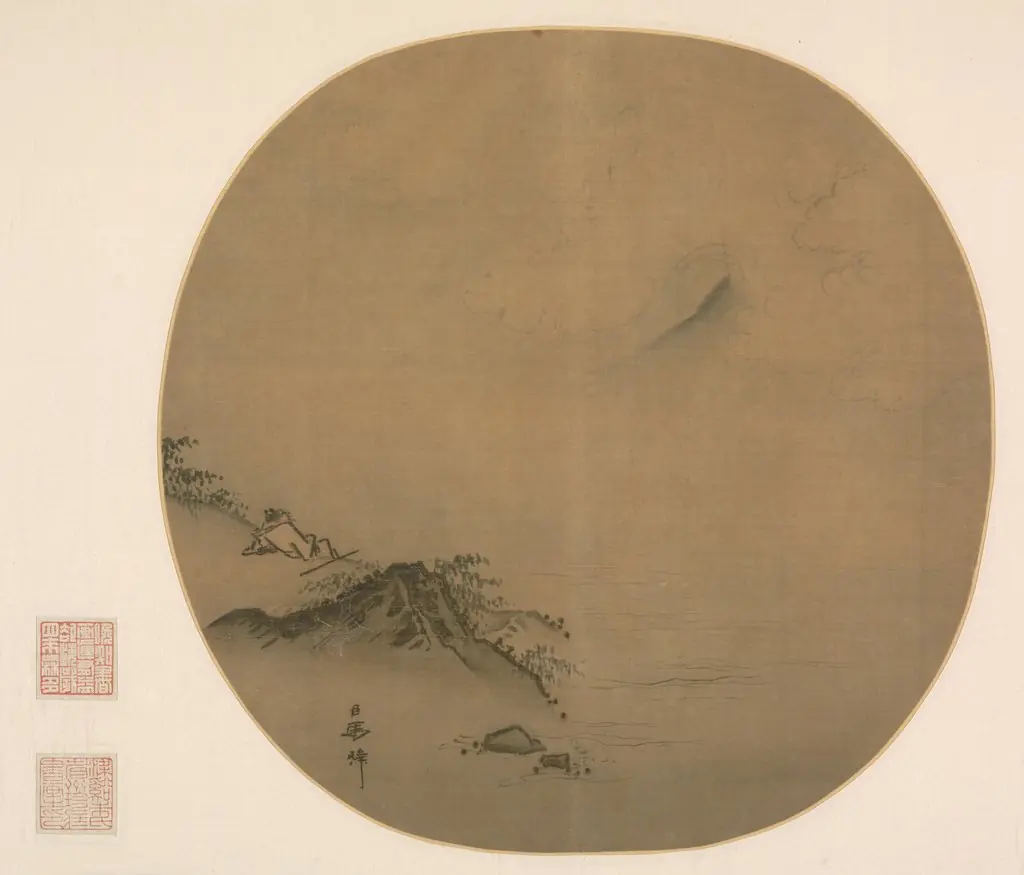 Scholar Reclining and Watching Rising Clouds, Poem by Wang Wei
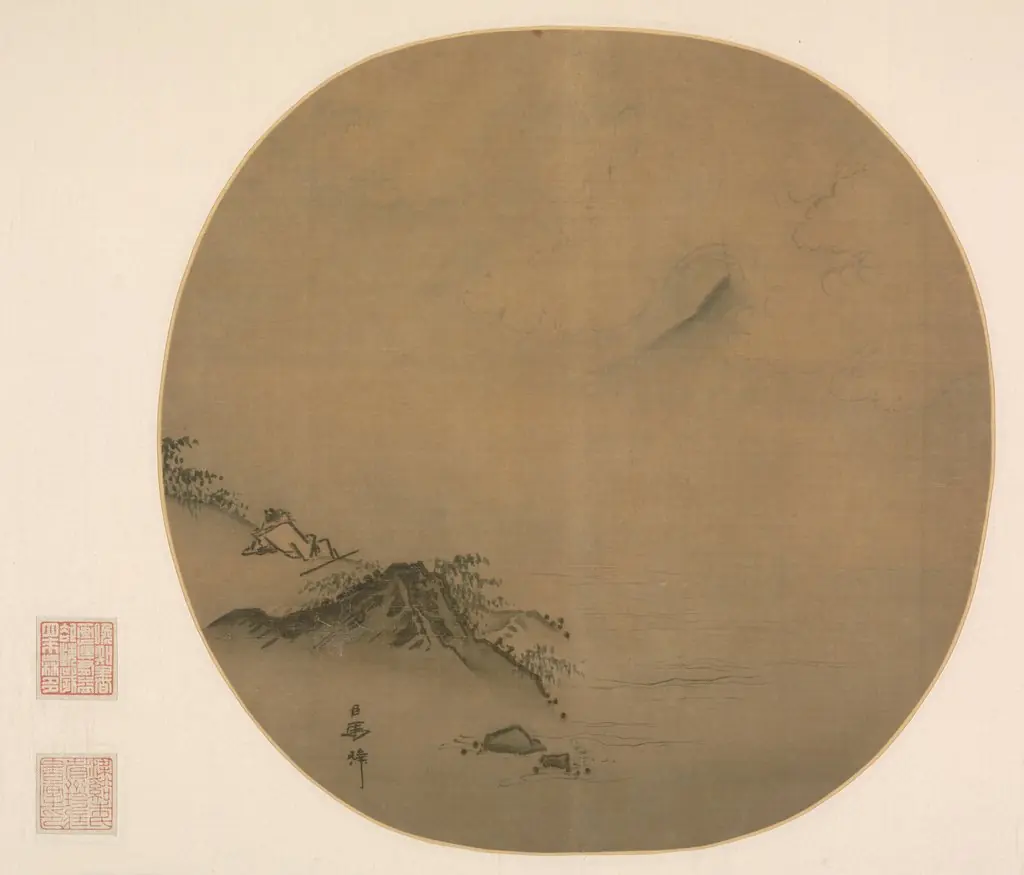 Scholar Reclining and Watching Rising Clouds; Poem by Wang Wei
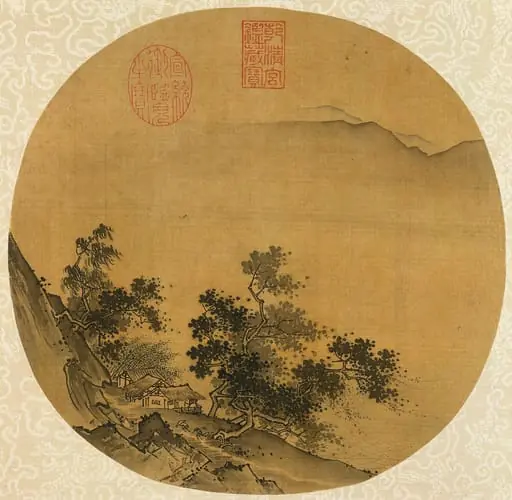 南宋 佚名 倣夏珪 冒雨尋莊圖 團扇|Returning Home in a Driving Rain
 元 盛著 秋江垂釣圖 團扇|Angling in the Autumn River