Artwork
明 佚名 (舊傳)吳炳 枇杷 扇|Bird on a Loquat Tree
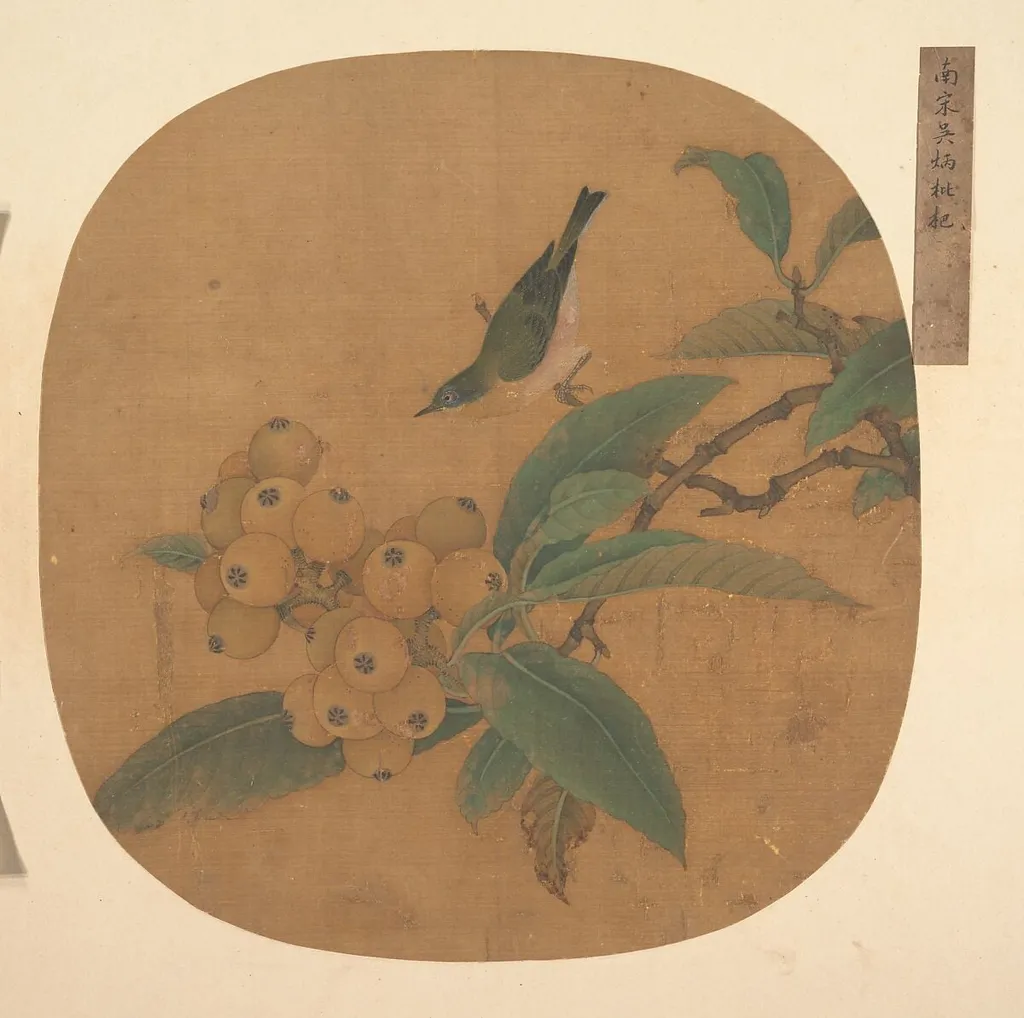
明 佚名 (舊傳)吳炳 枇杷 扇|Bird on a Loquat Tree is an ink painting by the Ming dynasty painting artist After Wu Bing. It dates from 1506 and is held in the collection of the Metropolitan Museum of Art.
About this work
Subject & Meaning
The composition centers on the natural subject, using delicate ink and color on silk to render the bird’s plumage and the loquat’s glossy, yellow-orange fruit.
The painting depicts a bird perched on the branch of a loquat tree, accompanied by two ripe fruits. The composition centers on the natural subject, using delicate ink and color on silk to render the bird’s plumage and the loquat’s glossy, yellow-orange fruit.
In Chinese visual culture, the loquat (枇杷) is associated with autumn and abundance, while birds often symbolize good fortune and the arrival of spring. The pairing of bird and fruit in a single composition suggests a wish for prosperity and the cyclical renewal of nature.
Technique & Style
The painting is executed in ink and color on silk, mounted as a fan-shaped album leaf, reflecting Ming-dynasty fan-painting conventions.
Stylistic handling emphasizes delicate linework to delineate the loquat’s foliage and fruit, while the bird is rendered with controlled, tapered brushstrokes to suggest plumage texture. Subtle color washes, soft greens and yellows, modulate the composition, avoiding heavy modeling. The overall effect prioritizes refined detail and compositional clarity over dramatic spatial illusion, aligning with bird-and-flower genre expectations of the period.
History & Provenance
The work, titled Bird on a Loquat Tree, is dated to 1506 and is attributed to an anonymous painter, though it was formerly ascribed to Wu Bing. Created in China, the piece consists of ink and color on silk, originally executed as a fan and later remounted as an album leaf. It depicts a bird perched among loquat fruit and is classified within the landscape genre.
The painting is currently held in the collection of the Metropolitan Museum of Art, which acquired the work as part of its holdings of Chinese art. No specific commission details or intermediate ownership records are provided in the available sources.
Overview
This painting, titled Bird on a Loquat Tree, is an ink and color work on silk, originally created as a fan during China's Ming Dynasty around 1506. While formerly attributed to Wu Bing, it is now considered the work of an anonymous artist. The composition features a small bird perched on a branch laden with ripe loquat fruit, rendered with meticulous detail. It exemplifies the tradition of nature studies in Chinese art.
Context
Originally conceived as a functional fan, this painting was designed for intimate appreciation rather than large-scale display. Such works were often exchanged as thoughtful gifts, reflecting personal taste and cultural refinement. The act of holding and examining the fan allowed for a direct engagement with the artist's detailed execution. This format was popular in medieval China for its portability and the private viewing experience it offered.
Artist & collection


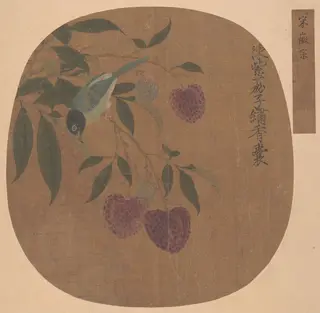
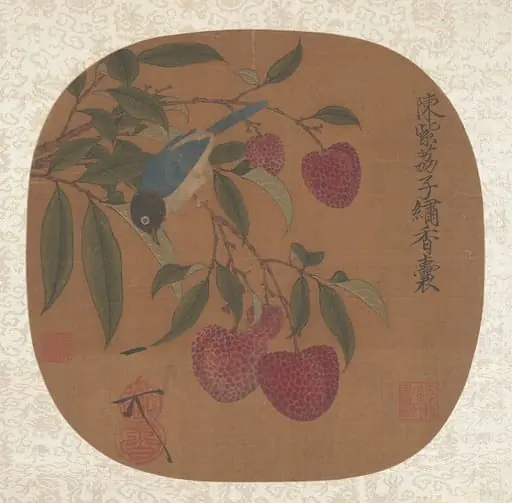
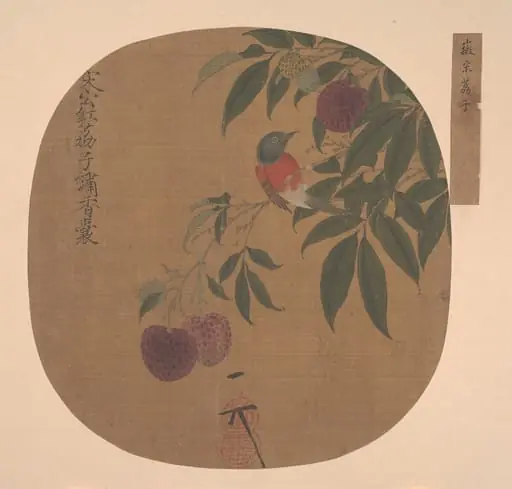
- 明 佚名(舊傳宋徽宗) 荔枝圖 冊頁|Bird on a Lychee Branch
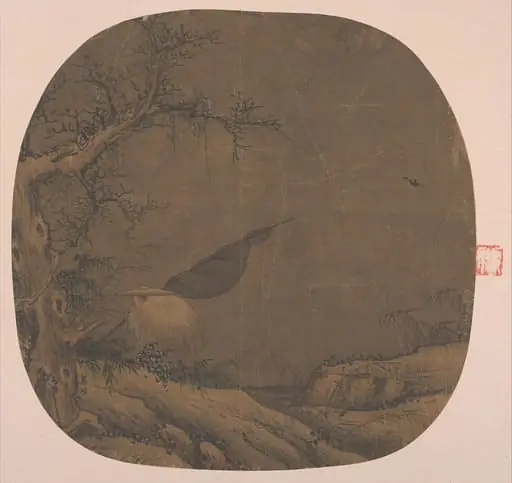
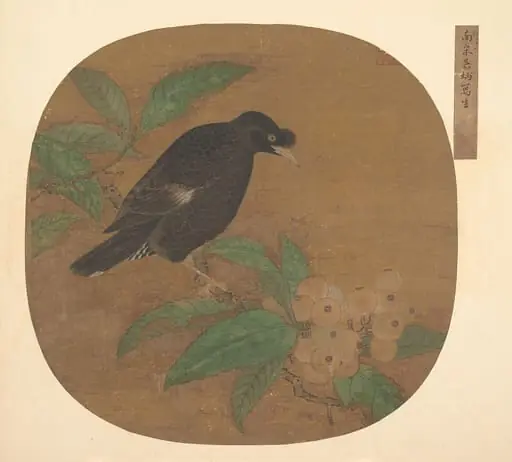 南宋?佚名 舊傳吳炳 枇杷八哥圖 團扇頁|Minah Bird on a Loquat Branch
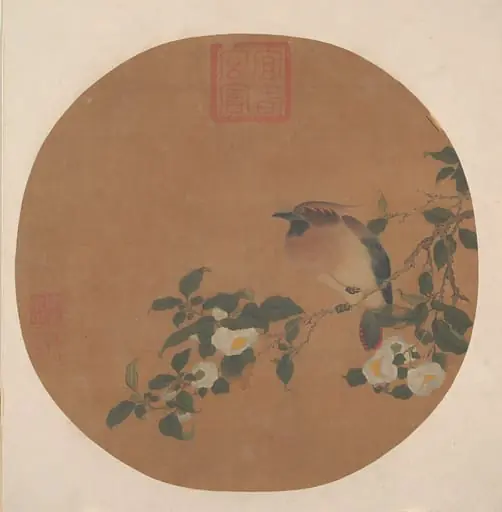
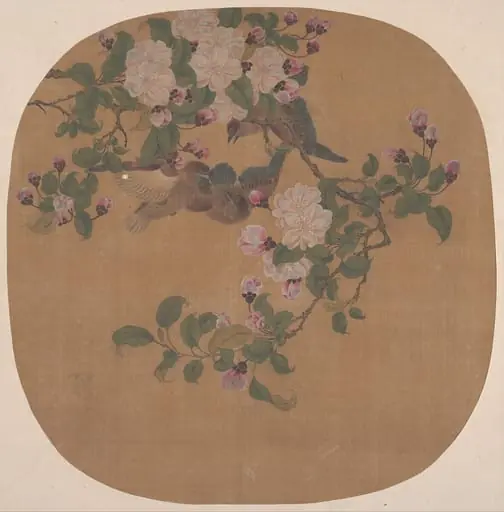 清 佚名 山禽海棠 扇|Flowers with Birds
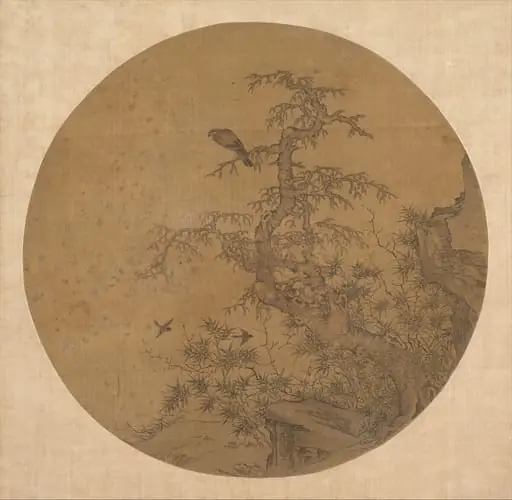 元/明 佚名 古木竹禽圖 團扇|Old Tree, Bamboo, and Birds
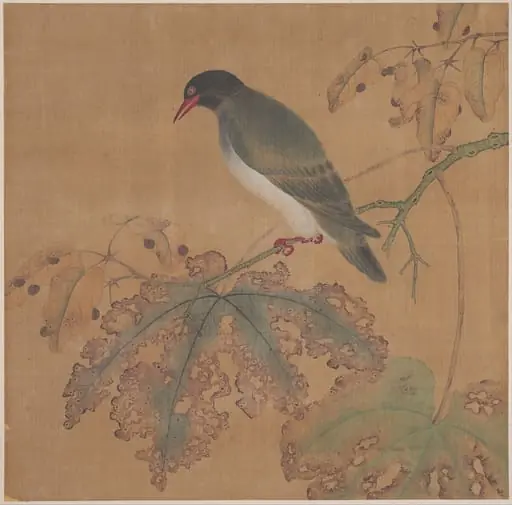 清 佚名 秋葉山禽 冊頁|Bird on Branch
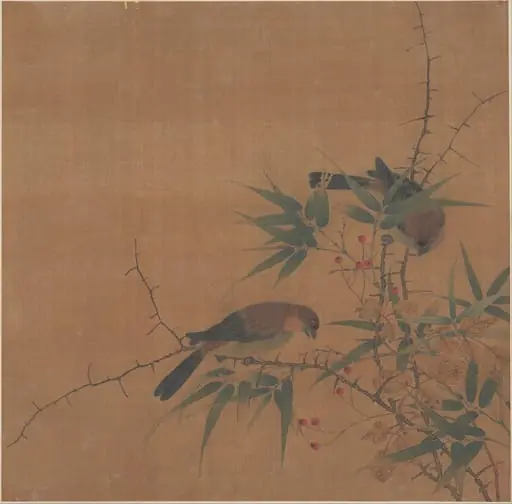 清 佚名 竹禽圖 冊頁|Bamboo Branch with Berries and Birds
 南宋 傳李迪 幽禽寒林圖 冊頁|Two Birds on a Wintry Tree
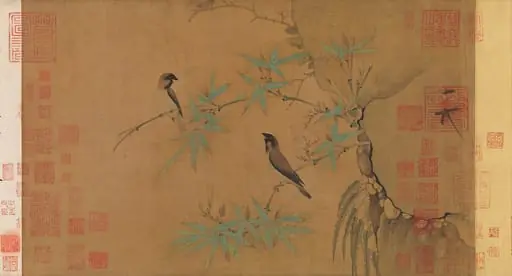 北宋 徽宗 竹禽圖 卷|Finches and bamboo