Artwork
Aristaeus and dead bees
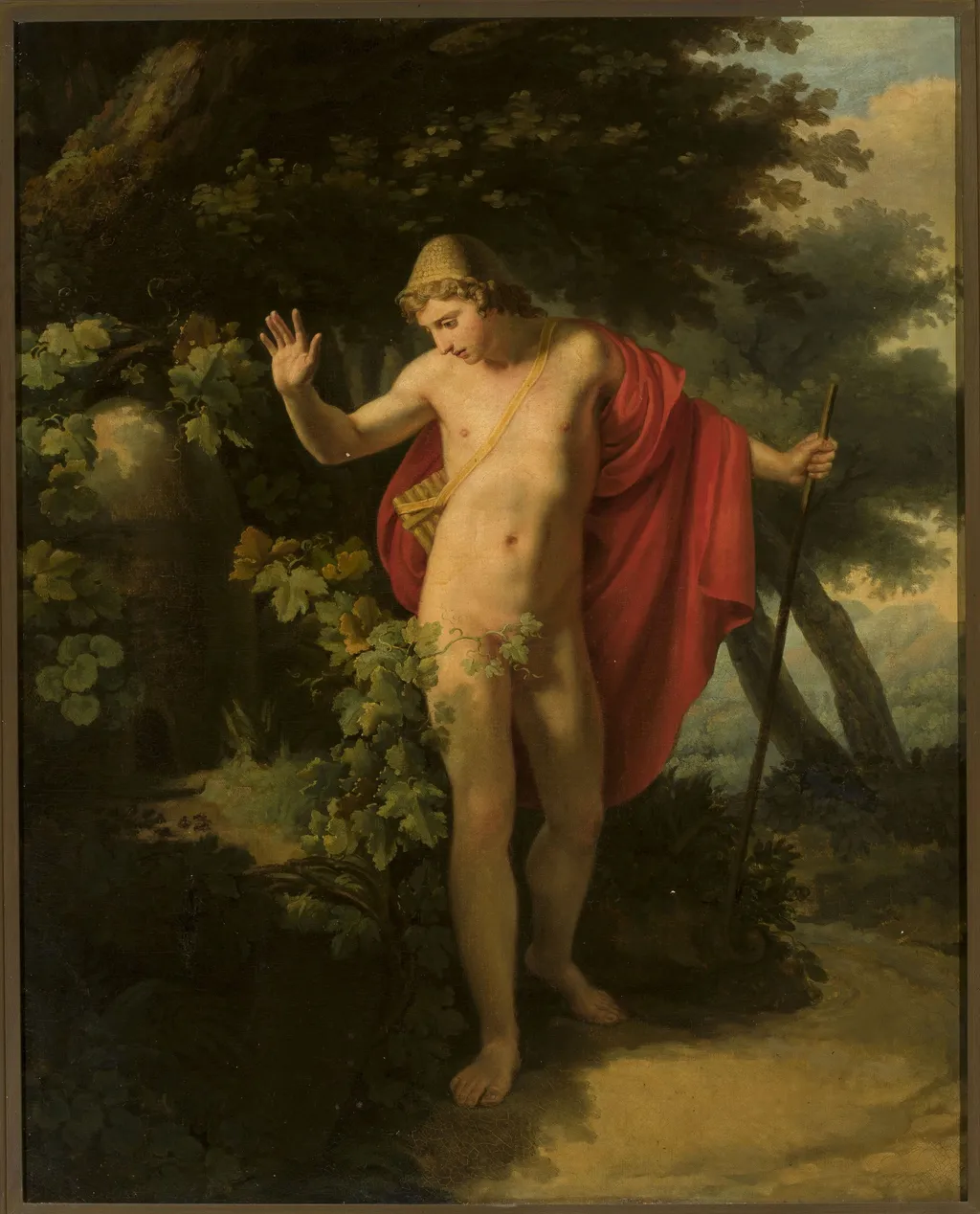
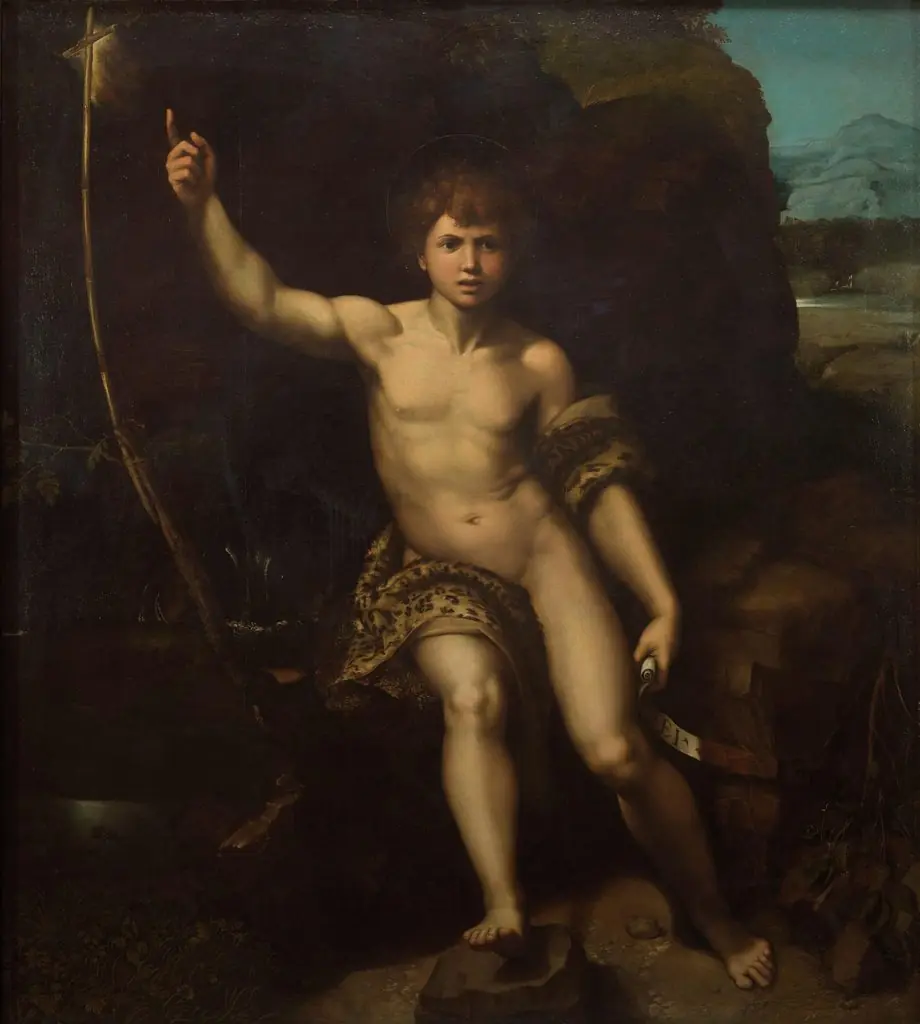
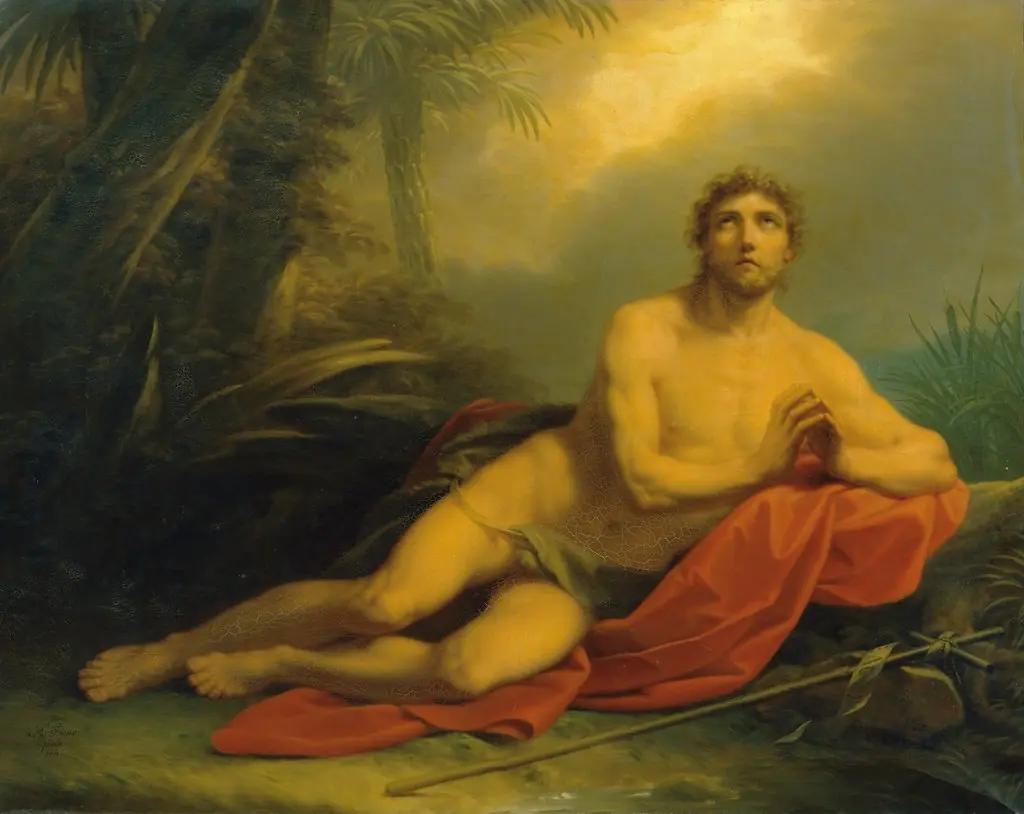
Aristaeus and dead bees is an oil painting. It dates from 1812 and is held in the collection of the National Museum in Warsaw. The oil painting depicts a barefoot youth positioned in a forested setting.
About this work
Subject & Meaning
The iconography presents Aristaeus as a naked man, accompanied by the specific attributes of a walking stick and drapery.
The painting belongs to the mythological genre and centers on the figure of Aristaeus, its main subject. The iconography presents Aristaeus as a naked man, accompanied by the specific attributes of a walking stick and drapery. A bee is also depicted, directly referencing the myth of Aristaeus and his dead bees, a narrative in which the culture hero struggles with the sudden loss of his hives.
Together, these elements synthesize classical mythology with the tradition of the nude, using the figure of the unclothed hero alongside symbolic motifs to represent the ancient tale.
Technique & Style
Created in 1812, the work is an oil painting executed on a canvas support. The composition measures 100 cm in height and 81.5 cm in width. As a mythological painting, it features a nude male figure identified as Aristaeus, accompanied by elements such as a walking stick, drapery, and bees.
The piece was produced in France and is currently held in the collection of the National Museum in Warsaw.
History & Provenance
Aristaeus and dead bees is an oil painting created in France in 1812. The work measures 100 cm in height by 81.5 cm in width and was executed in oil on canvas. It depicts the mythological figure Aristaeus, a naked man holding a walking stick and draped in fabric, accompanied by bees.
The painting entered the collection of the National Museum in Warsaw, where it remains on display. Its creation date is recorded as January 1, 1812, and it is classified as a mythological painting.
Overview
The oil painting depicts a barefoot youth positioned in a forested setting. He raises his right arm as if calling, while a red cloak drapes over one shoulder and a walking stick rests in his left hand. Dense trees and shrubs fill the background, and soft illumination creates gentle shadows across his chest and arms.
Context
Set within a wooded landscape, the work reflects a tradition of integrating mythological subjects into natural environments. The inclusion of a red cloak and walking staff situates the figure within a classical or pastoral iconography, while the dead bees introduce an element of symbolic significance tied to the figure’s mythic role.
Artist & collection