Artwork
Southern rocky landscape with Mercury and Argus
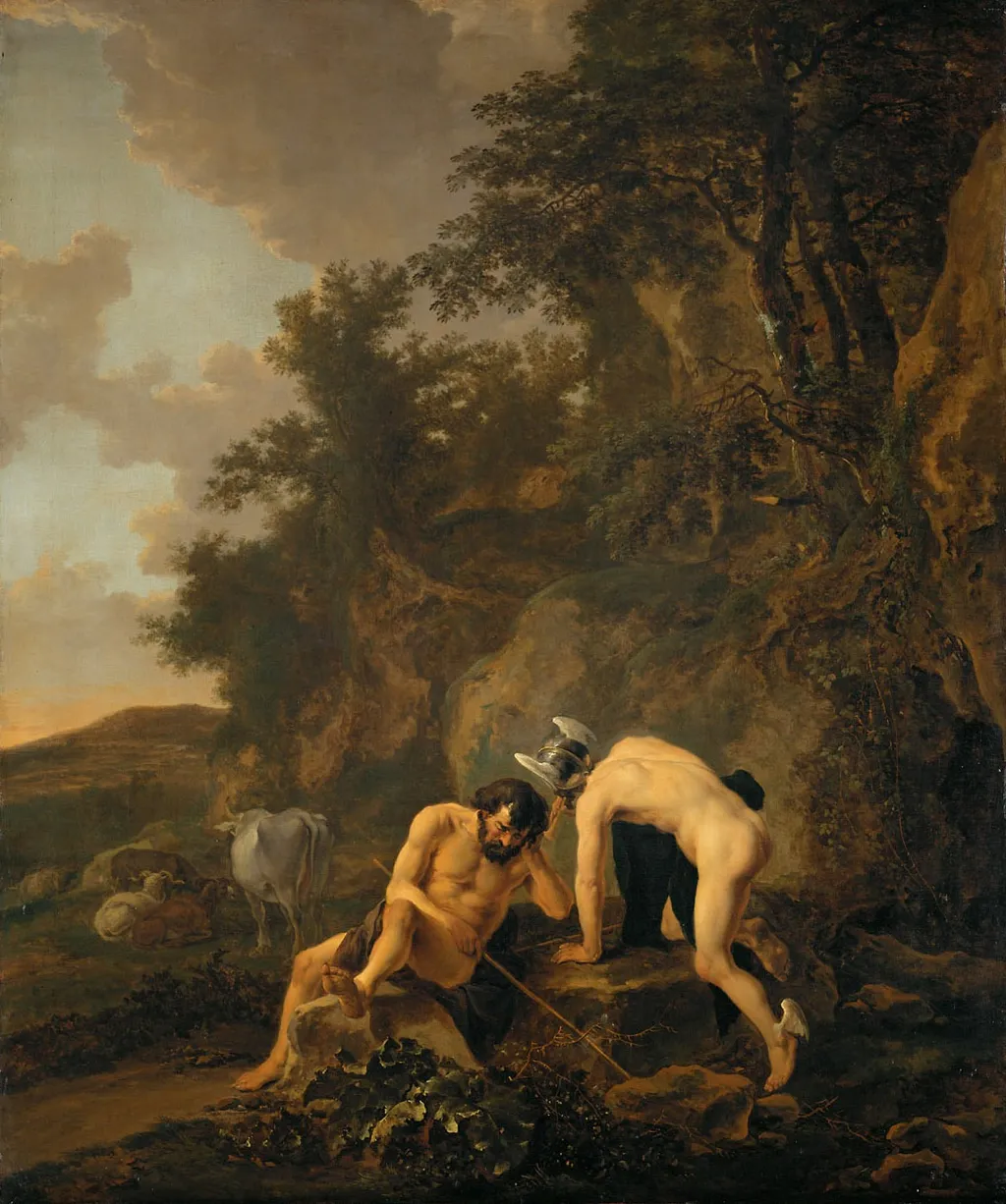
Southern rocky landscape with Mercury and Argus is an oil painting by the Dutch Golden Age artist Jan Both. It dates from 1650 and is held in the collection of the Kunsthistorisches Museum.
About this work
Subject & Meaning
The work thus operates simultaneously as a landscape and as a moralizing mythological vignette, in which cunning and vigilance overcome brute watchfulness.
The painting depicts the Ovidian myth of Mercury and Argus, drawn from the story in which Jupiter's messenger Mercury lulls the hundred-eyed giant Argus to sleep in order to rescue the nymph Io, whom Juno had transformed into a heifer. The scene is set within a southern, Italianate rocky landscape traversed by a river, where cattle graze near the foreground. Mercury, identifiable by his winged helmet, approaches the slumbering Argus, whose vulnerable sleep enables the god to carry out Juno's defeat.
The combination of mythological narrative with pastoral landscape typifies Jan Both's blending of history painting and landscape, in which classical storytelling is absorbed into the sunlit countryside rather than presented as a staged figure composition. The work thus operates simultaneously as a landscape and as a moralizing mythological vignette, in which cunning and vigilance overcome brute watchfulness.
Technique & Style
Southern rocky landscape with Mercury and Argus is executed in oil paint on canvas, a standard support for mid-seventeenth-century Dutch Italianate painters. The work measures 108 cm in height by 88 cm in width, a vertical format suited to its rocky landscape composition. As a landscape with mythological narrative, the painting combines naturalistic Italianate scenery, rocky terrain, river, and cattle, with figures drawn from classical mythology, including Mercury and the shapeshifting Argus, rendered with a helmeted figure and sleeping form.
The genre is classified as both landscape and history painting, reflecting Jan Both's characteristic fusion of topographical observation with literary subject matter. The canvas is held in the collection of the Kunsthistorisches Museum in Vienna.
The handling is consistent with Both's mature Italianate style of 1650, in which carefully observed southern light and warm tonalities are applied to rugged terrain and architectural fragments, while the mythological action is integrated into the landscape rather than dominating it.
History & Provenance
The painting is held at the Kunsthistorisches Museum in Vienna. It is inventoried there as part of the museum’s holdings, with an accession record linked to the Academy of Fine Arts Vienna. The work entered the collection during the mid-seventeenth century, aligning with its documented creation date of 1650.
Overview
Jan Both's oil painting, Southern rocky landscape with Mercury and Argus, dates to approximately 1650. This work presents an Italianate landscape, characteristic of the artist's style, featuring a mythological narrative within a detailed natural setting. The painting is currently part of the collection at the Kunsthistorisches Museum.
Artist & collection

Artist
Jan Dirksz Both was a Dutch painter, draughtsman, and etcher, who made an important contribution to the development of Dutch Italianate landscape painting.

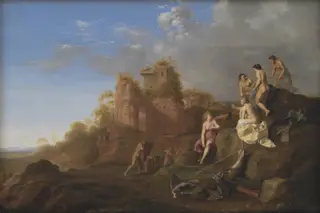 Diana and her Nymphs
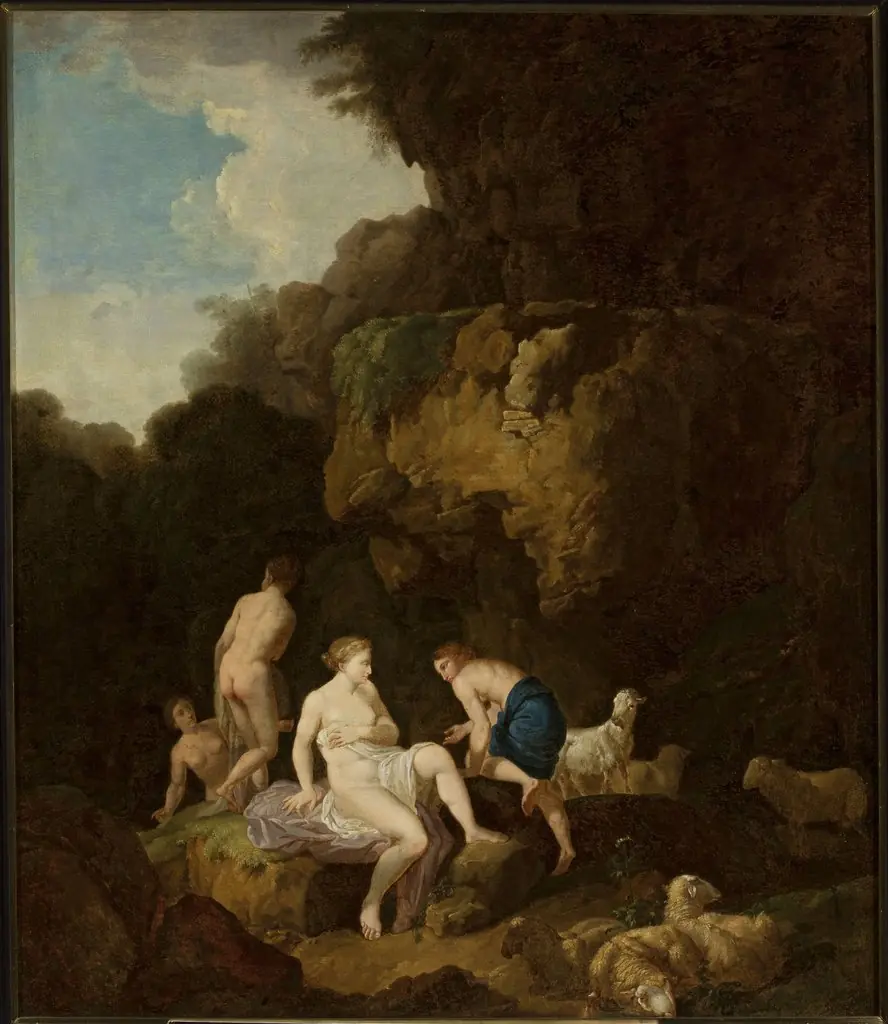 Nymphs in a grotto
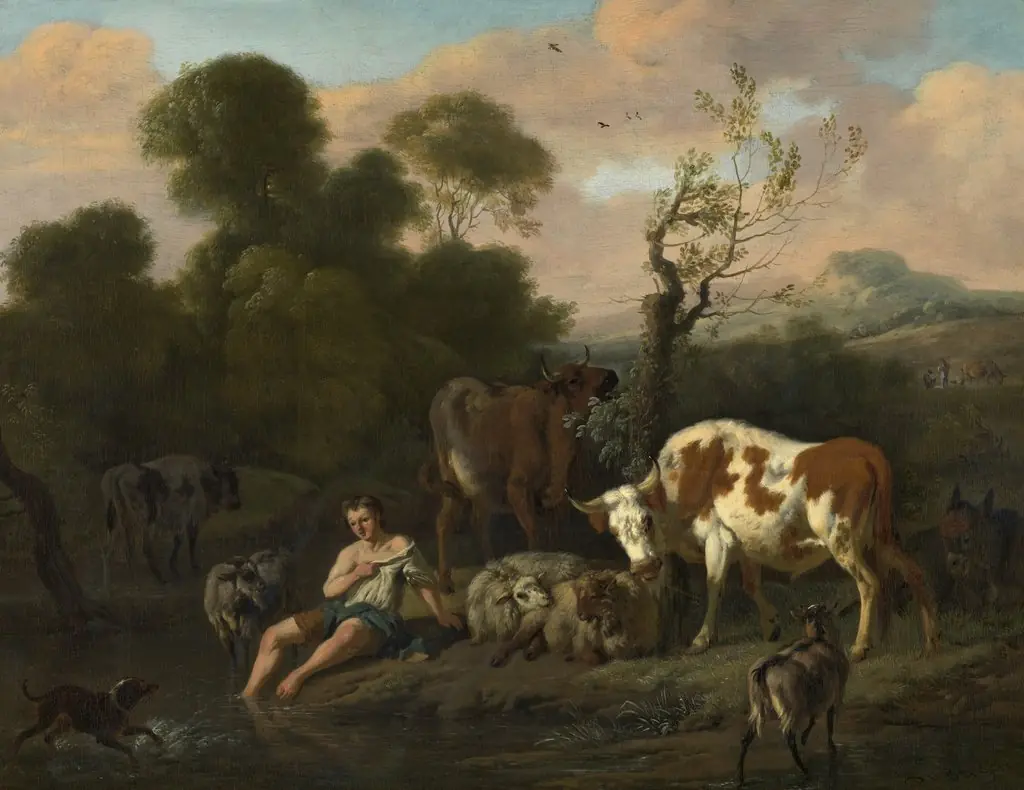 Landscape with a Shepherd
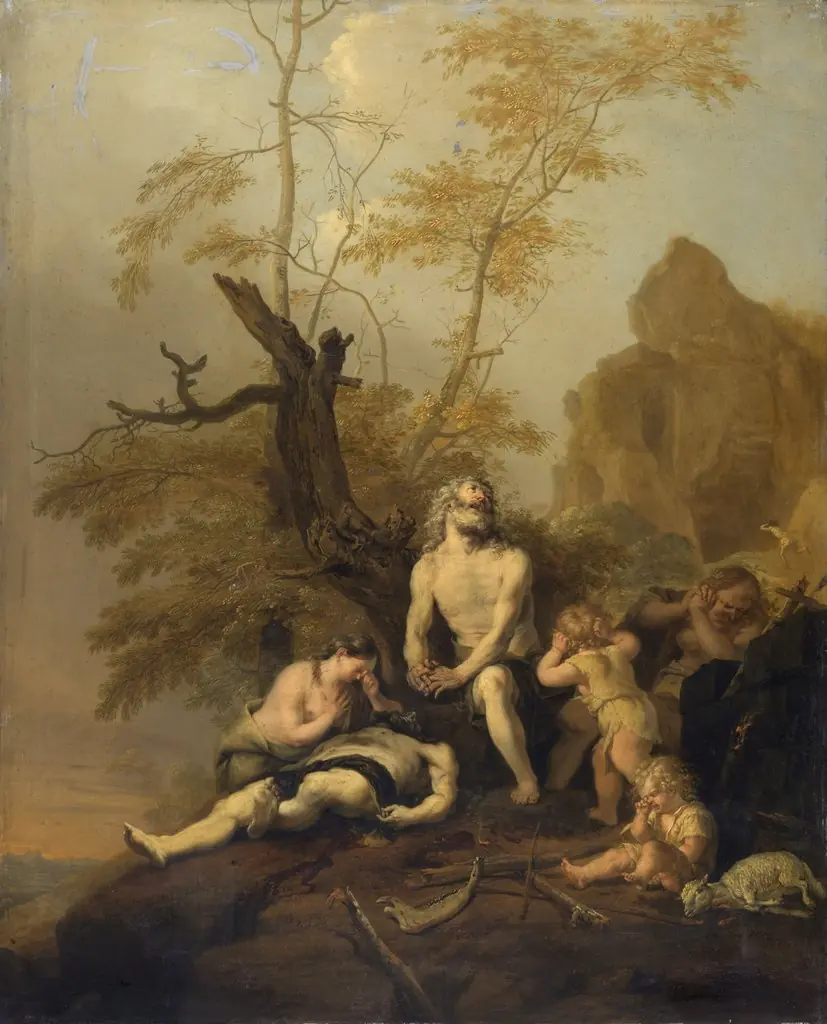 The Death of Abel
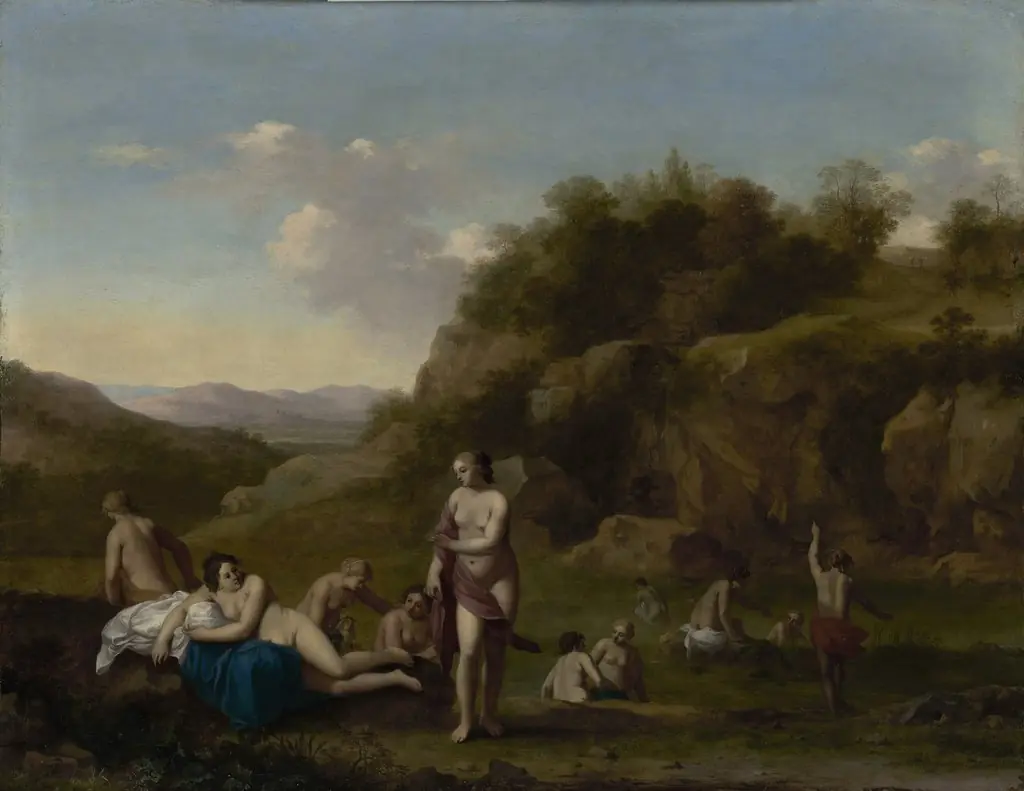 Landscape with Bathing Nudes
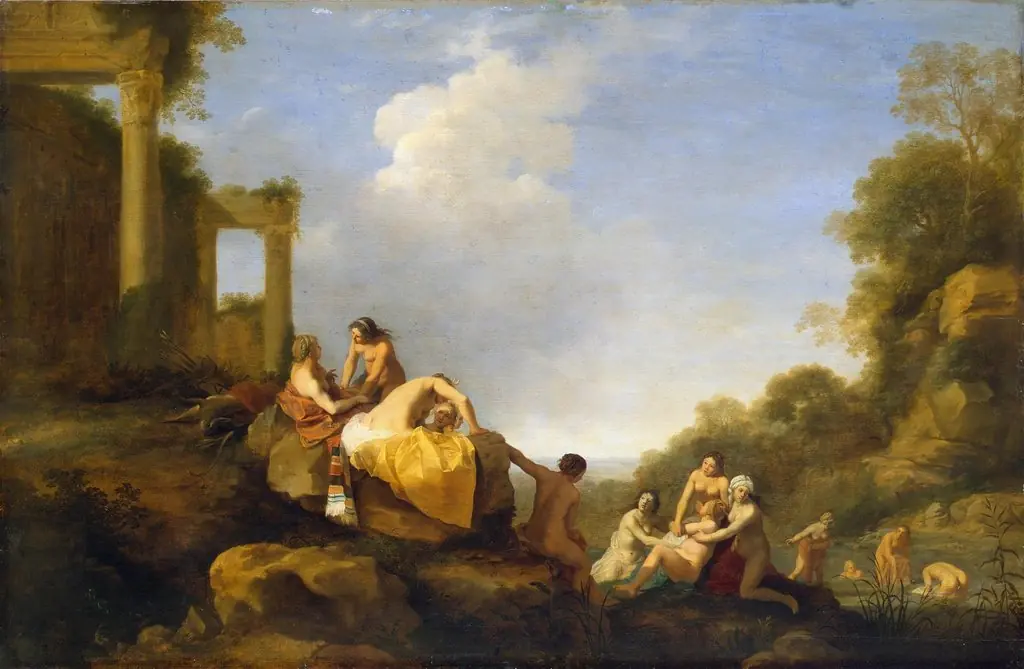 Landscape with Diana and Callisto
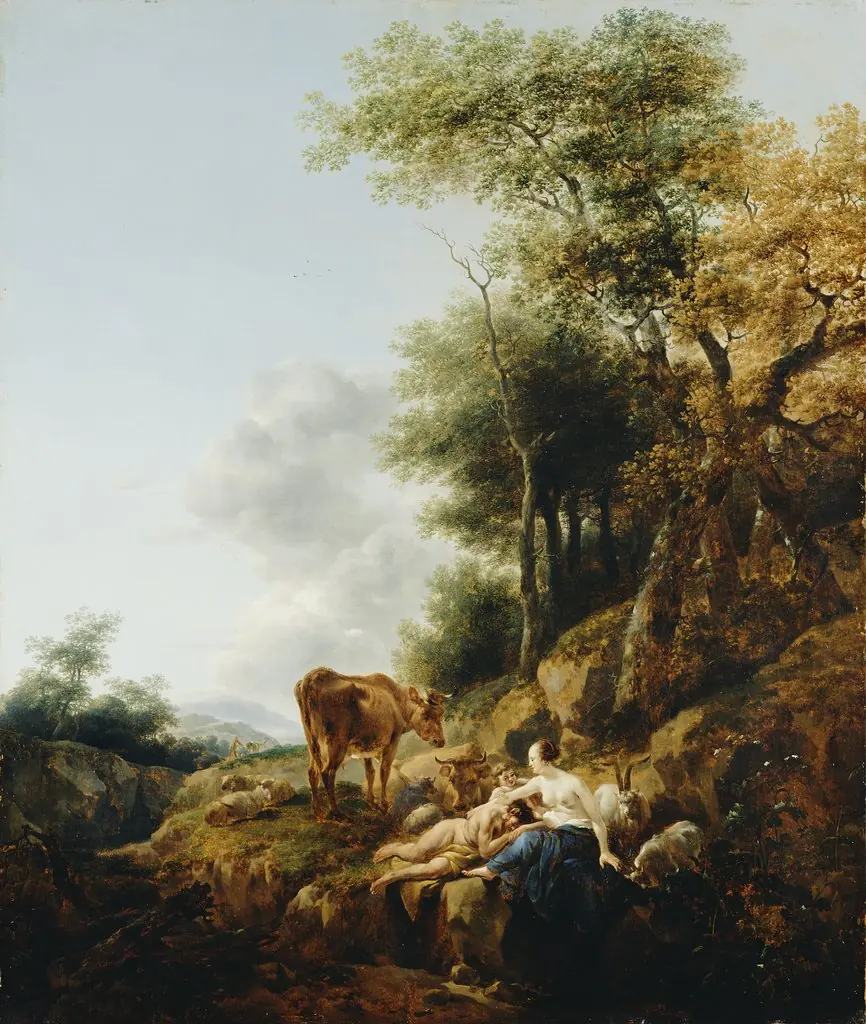 Landscape with a Nymph and a Satyr
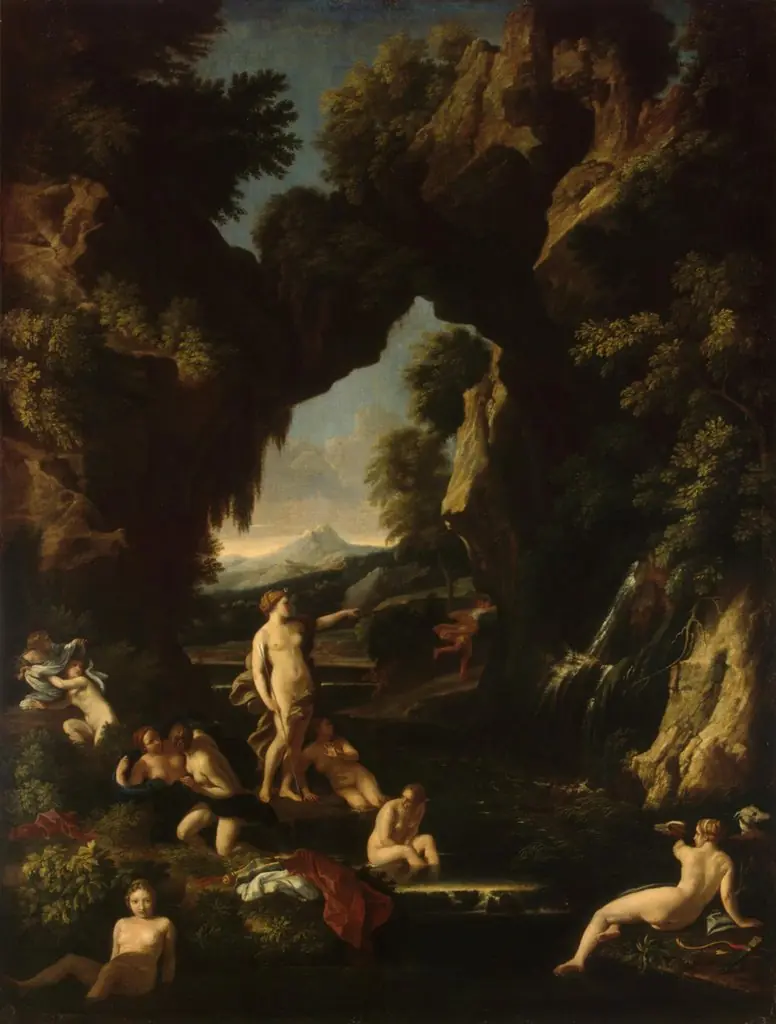 Landscape with Diana and Actaeon
 Midas Washing at the Source of the Pactolus
 Kylpeviä nymfejä
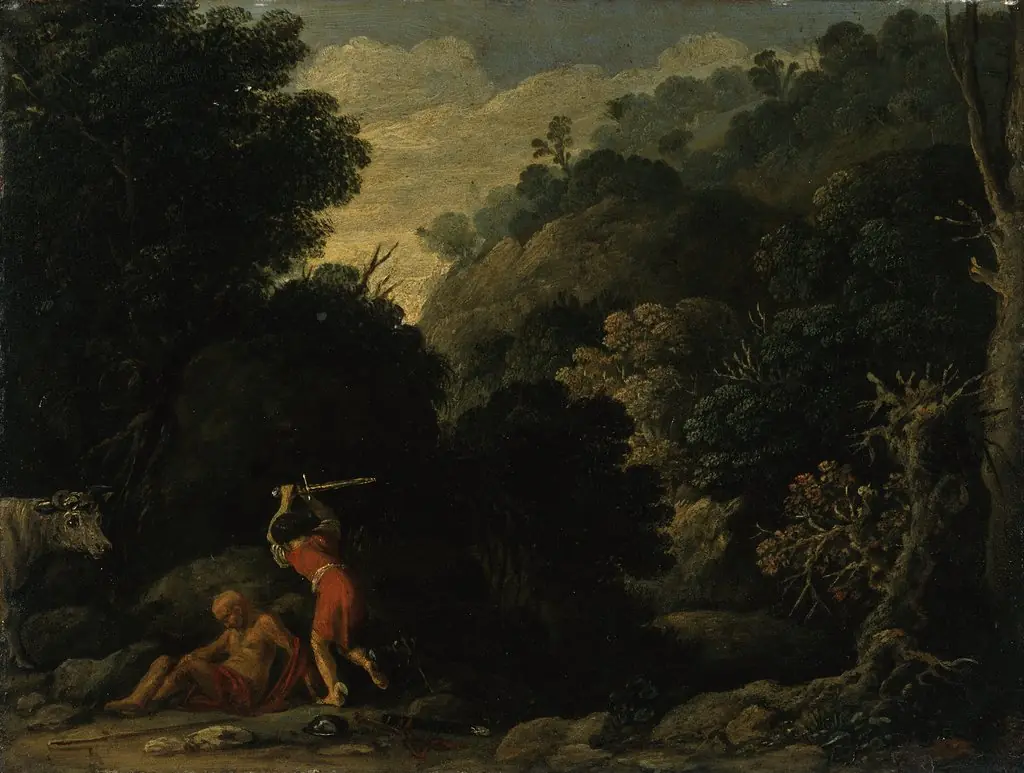 Forest Landscape with the Murder of Argus and Mercury
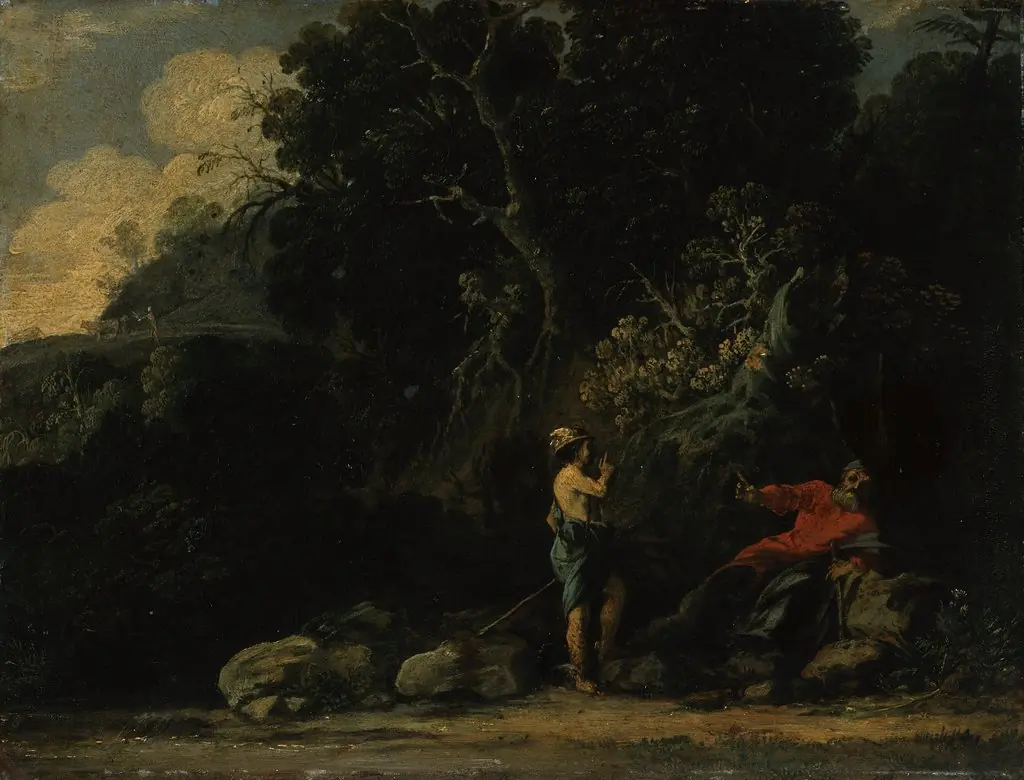
- Forest Landscape with Mercury and Battus