Artwork
God Holds Adam and Eve Responsible
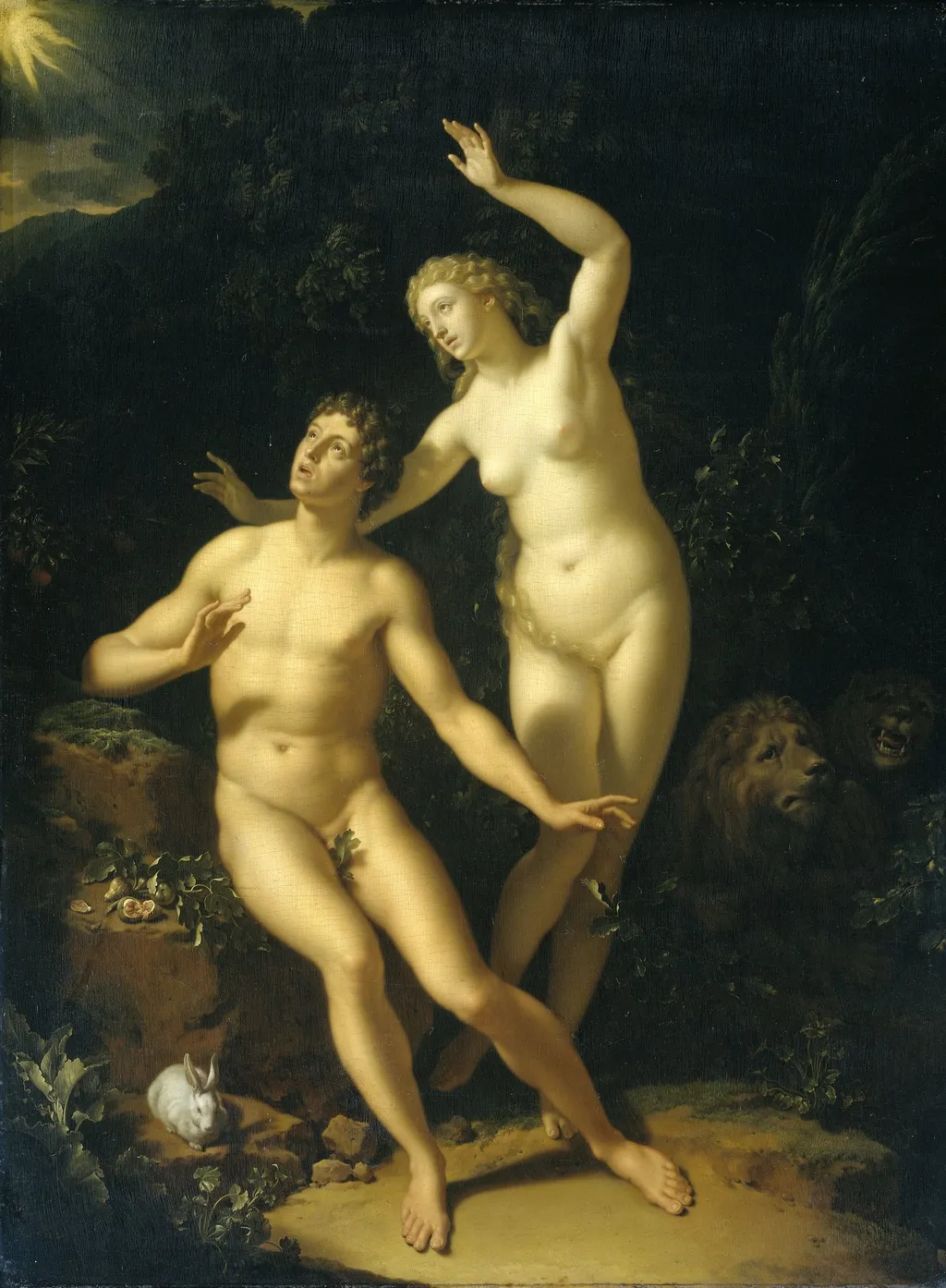
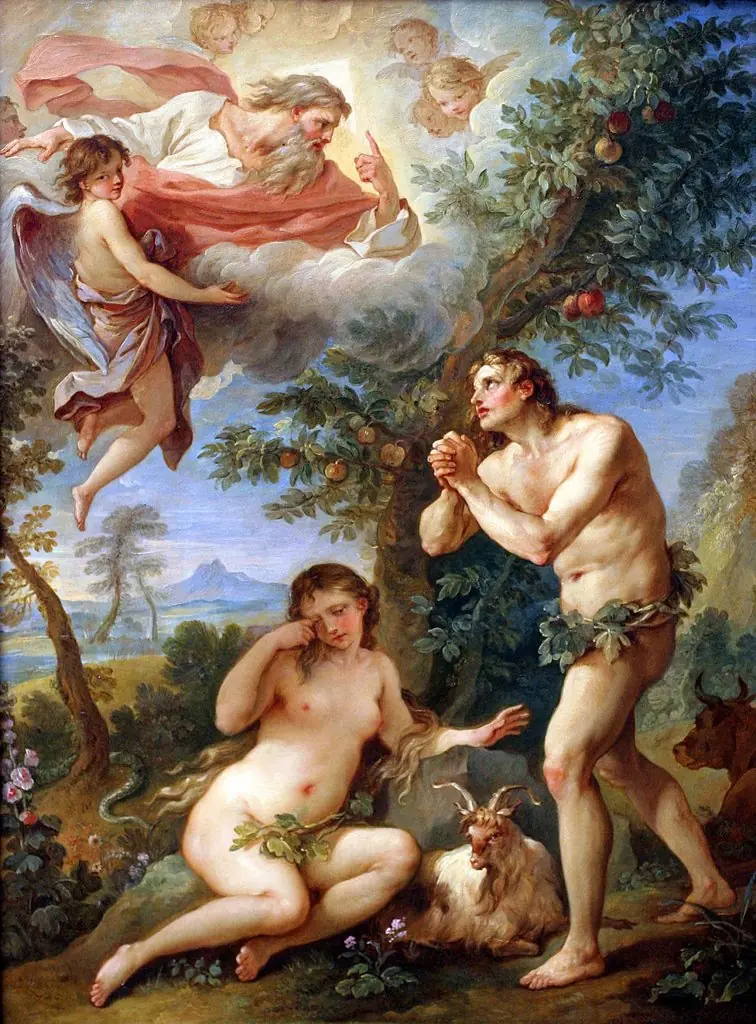
God Holds Adam and Eve Responsible is an oil painting by the Rococo painting artist Adriaen van der Werff. It dates from 1717 and is held in the collection of the Rijksmuseum.
About this work
In 1717 Adriaen van der Werff logged nineteen days of his own work and two and a half weeks of his brother Pieter's, then charged 3,500 guilders for the panel. Adam and Eve cower in Paradise as God confronts them after the Fall. Around 1700 van der Werff, not Rembrandt, was thought the greatest painter in the Netherlands, and the panel shows the fijnschilder finish he perfected.
Subject & Meaning
Its composition draws on 'The Judgement of Paris,' blending classical and biblical iconography to underscore themes of sin, judgment, and human responsibility.
The painting depicts the biblical moment after Adam and Eve’s transgression in the Garden of Eden, with God holding them accountable for eating the forbidden fruit. Iconographic elements include the fig leaves covering their nudity, a fallen fruit, and the presence of a rabbit and lion, likely symbolizing carnal desire and the disrupted balance of nature following the Fall. The work belongs to the religious art genre and also functions as a nude study, incorporating details such as the removal of pubic hair and the depiction of the mons pubis.
Its composition draws on 'The Judgement of Paris,' blending classical and biblical iconography to underscore themes of sin, judgment, and human responsibility.
Technique & Style
Executed in oil paint on panel, this painting measures 55.7 × 41.1 cm. Van der Werff employs a refined technique characteristic of late Dutch classicism, with smooth brushwork and precise modelling of the nude figures of Adam and Eve. The composition places the couple in the Garden of Eden, accompanied by a rabbit and a lion, with the fall of man as the underlying theme. The treatment of the bodies emphasizes anatomical detail, including the depiction of pubic hair, navels, and armpits, while fig leaves provide modesty.
The palette and lighting evoke a polished, almost enamel-like surface. The work belongs to the religious and nude genres, reflecting van der Werff’s academic approach to narrative painting.
History & Provenance
Painted in 1717 by Adriaen van der Werff, this work was originally owned by Adam Gottlob Moltke and later by Frederik Moltke. It is based on the Judgment of Paris. The painting is now held in the collections of the Rijksmuseum and the Rijksmuseum Twenthe.
Overview
Adriaen van der Werff's 1717 oil on panel, God Holds Adam and Eve Responsible, illustrates a pivotal moment from Genesis. This painting, measuring 55.7 by 41.1 centimetres, showcases the artist's renowned fijnschilder technique, characterized by an exceptionally smooth, enamel-like surface and precise rendering of every detail. It captures the first couple's reaction to divine judgment in Paradise.
Context
At the turn of the 18th century, Adriaen van der Werff held a prominent position in Dutch art, often considered the foremost painter in the Netherlands, even over Rembrandt. This particular panel serves as a prime example of the fijnschilder aesthetic he refined, showcasing the precise and polished finish that contributed to his widespread acclaim during his lifetime.
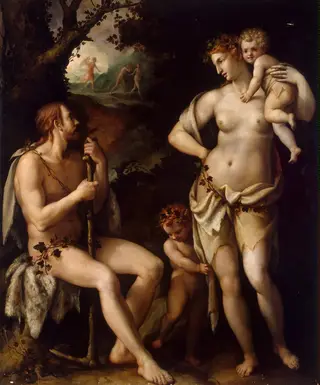
Own this work as a print
Artist & collection
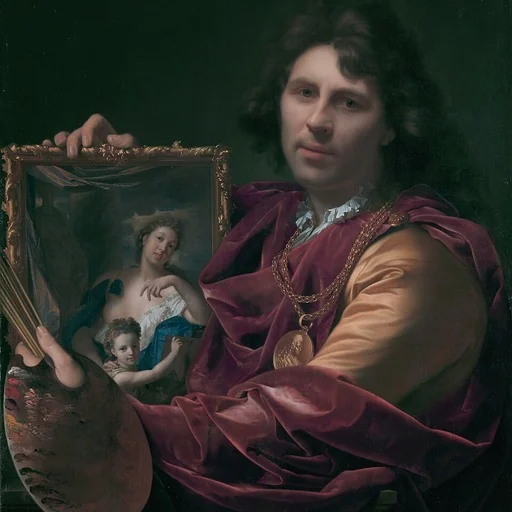
Artist
Adriaen van der Werff (21 January 1659 – 12 November 1722) was a Dutch painter of portraits and erotic, devotional and mythological scenes.

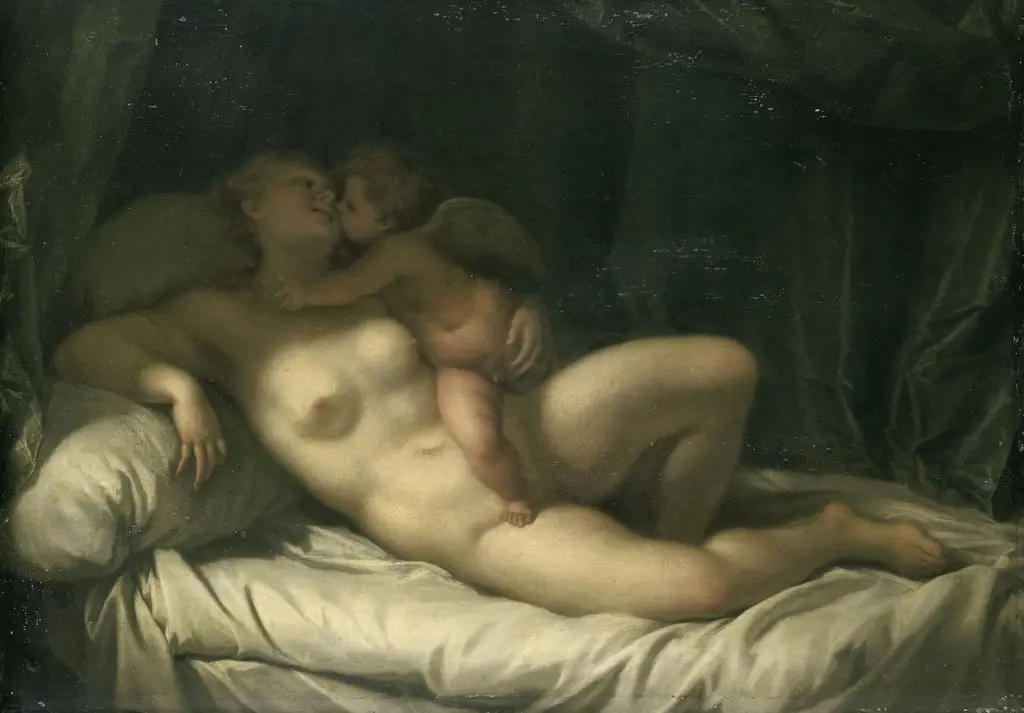 Cupid Kissing Venus (Venus Kissed by Amor)
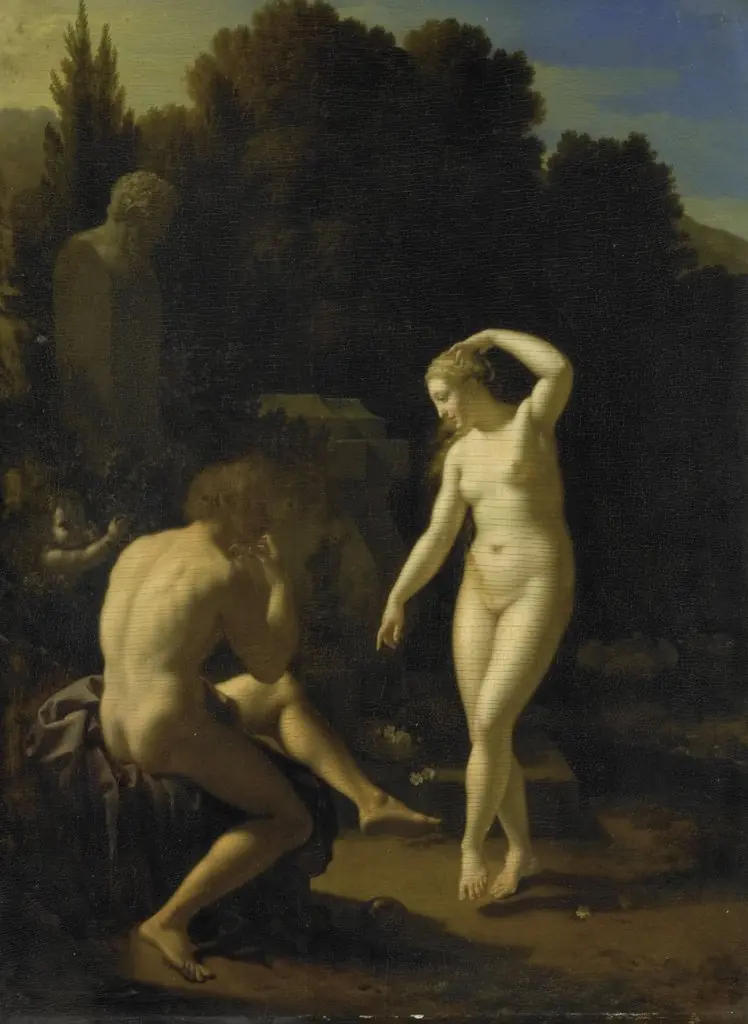 A Nymph Dancing to a Shepherd's Flute-Playing
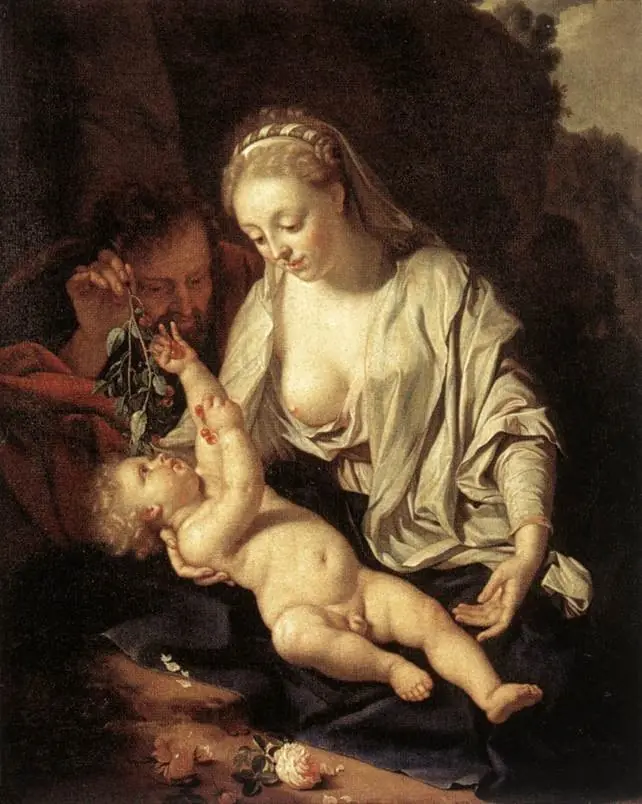 The Holy Family
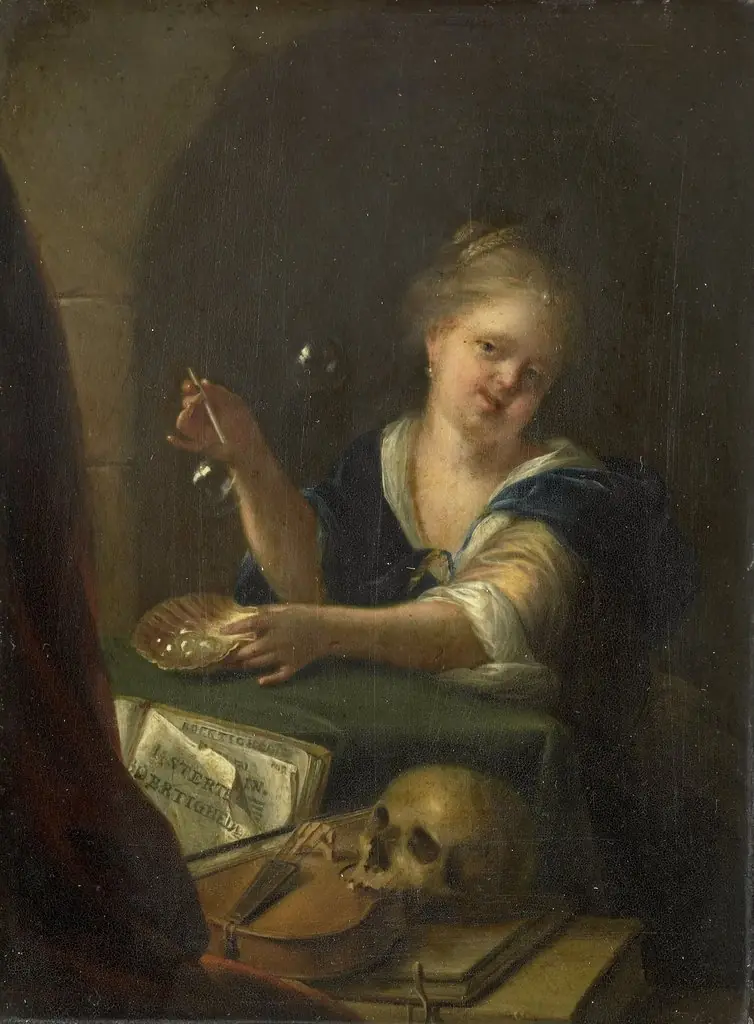 Bubble-blowing Girl with a Vanitas Still Life
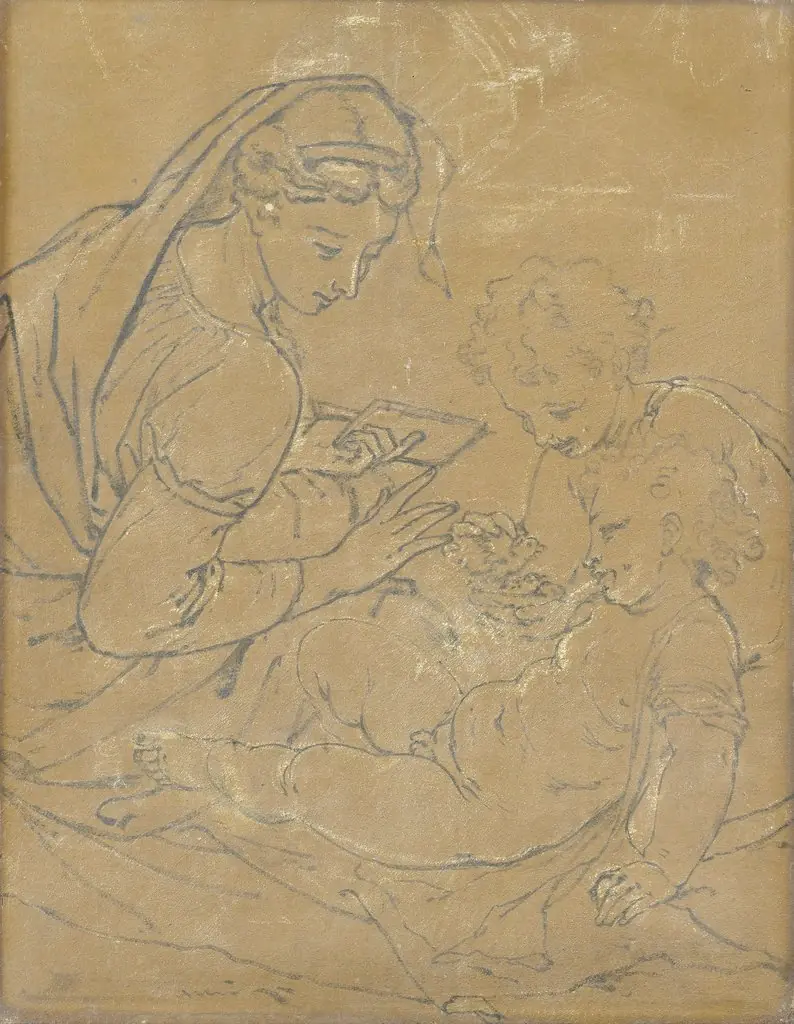 Virgin and Child with Saint John (chalk sketch)
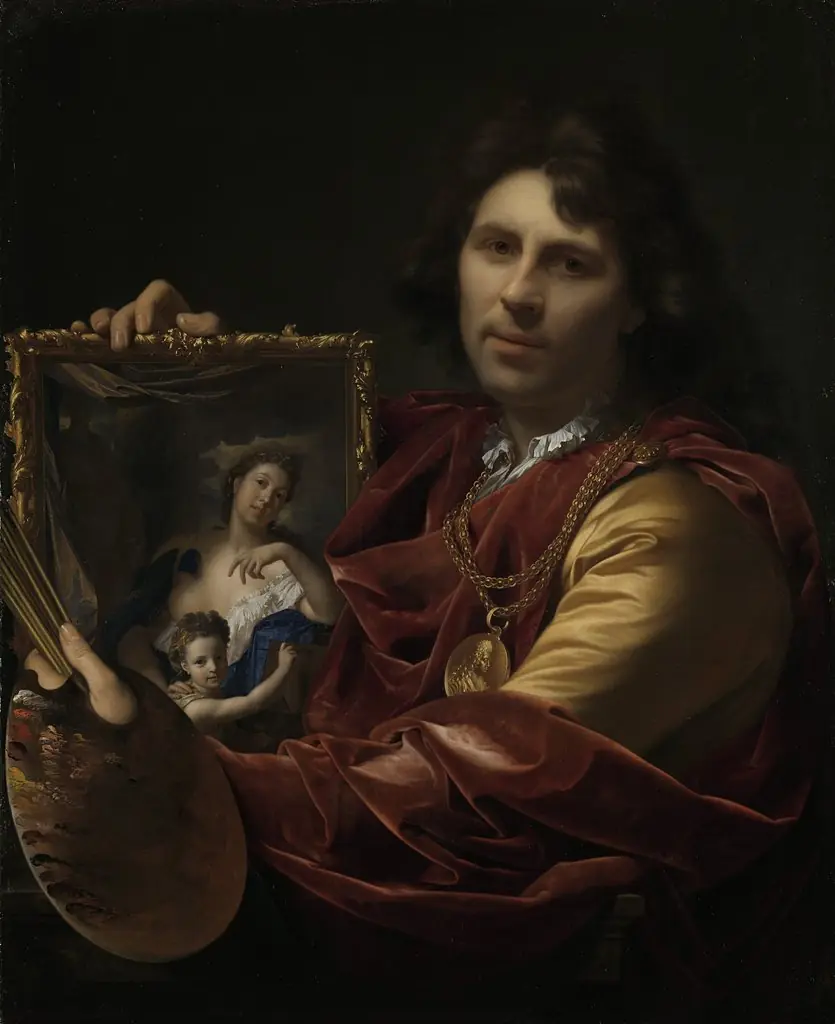 Self-portrait with the Portrait of his Wife, Margaretha van Rees, and their Daughter Maria
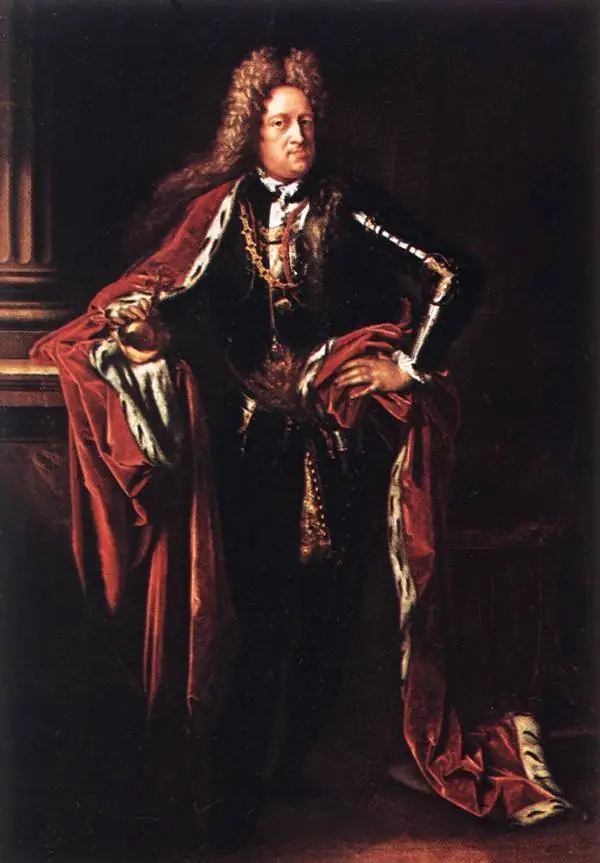 Portrait of Johann Wilhelm Elector of Palatine (1658-1716)
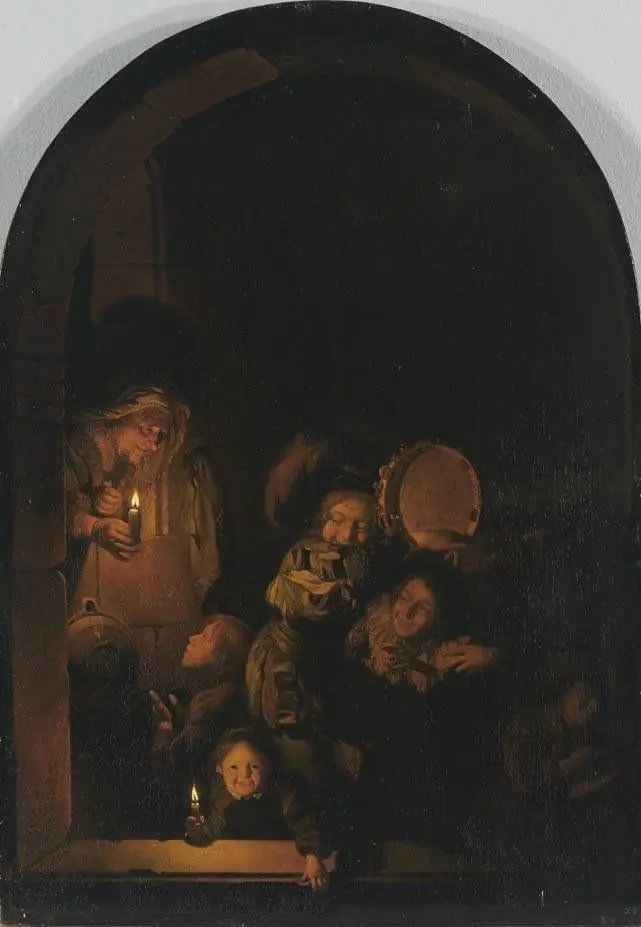 Night scene with children