Artwork
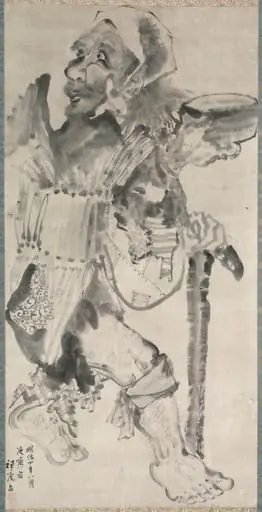
Beggar (Kojiki)
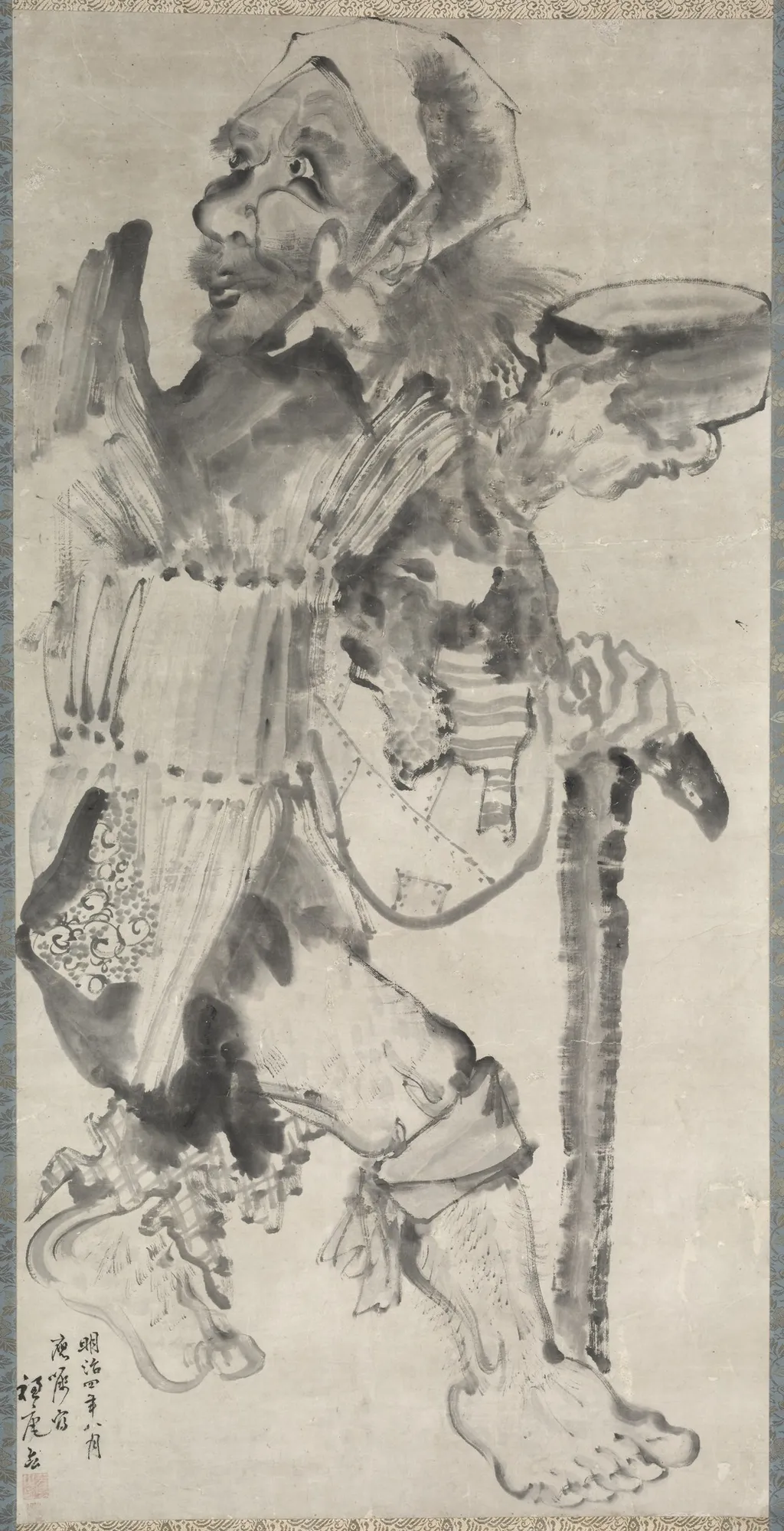
Beggar (Kojiki) is an unspecified painting. It dates from 1871 and is held in the collection of the Cleveland Museum of Art.
About this work
History & Provenance
The painting was created in 1871 by Suian Hirafuku and entered the collection of the Cleveland Museum of Art, where it remains on view.
The painting was created in 1871 by Suian Hirafuku and entered the collection of the Cleveland Museum of Art, where it remains on view.
The work was acquired directly by the museum in 1888 as part of its initial acquisition of Japanese artworks.
Its attribution to Hirafuku is based on stylistic analysis and documented in the museum's catalog records.
The piece was first exhibited publicly at the museum's Japanese art gallery shortly after its acquisition.
The painting is held in the collection of the Cleveland Museum of Art. Its accession number is 1988.73. The work was exhibited in the 1876 Japan-British Exhibition at the Royal Albert Hall in London.
The date of creation is recorded as 1871. The piece was later included in the 1998 exhibition "Japanese Art: 18th-19th Century" at the museum.
The accession number 1988.73 is documented in the Cleveland Museum of Art's collection records. The 1876 Japan-British Exhibition catalog lists the work as part of the displayed items. The 1998 exhibition was held at the Cleveland Museum of Art and featured the painting as part of its presentation.
Overview
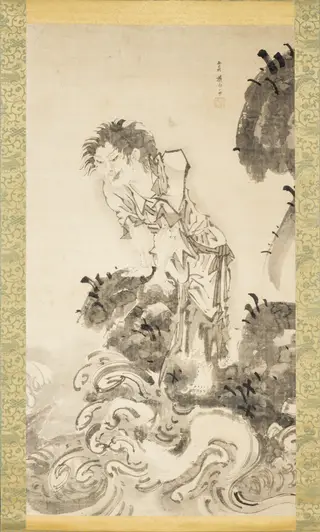
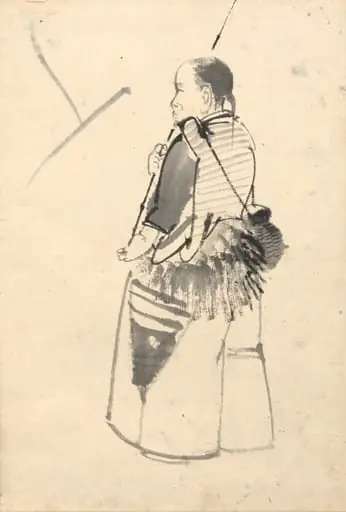
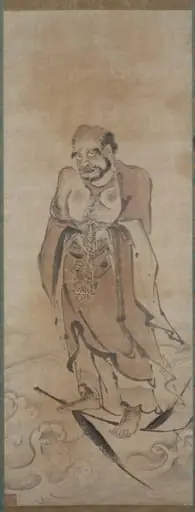
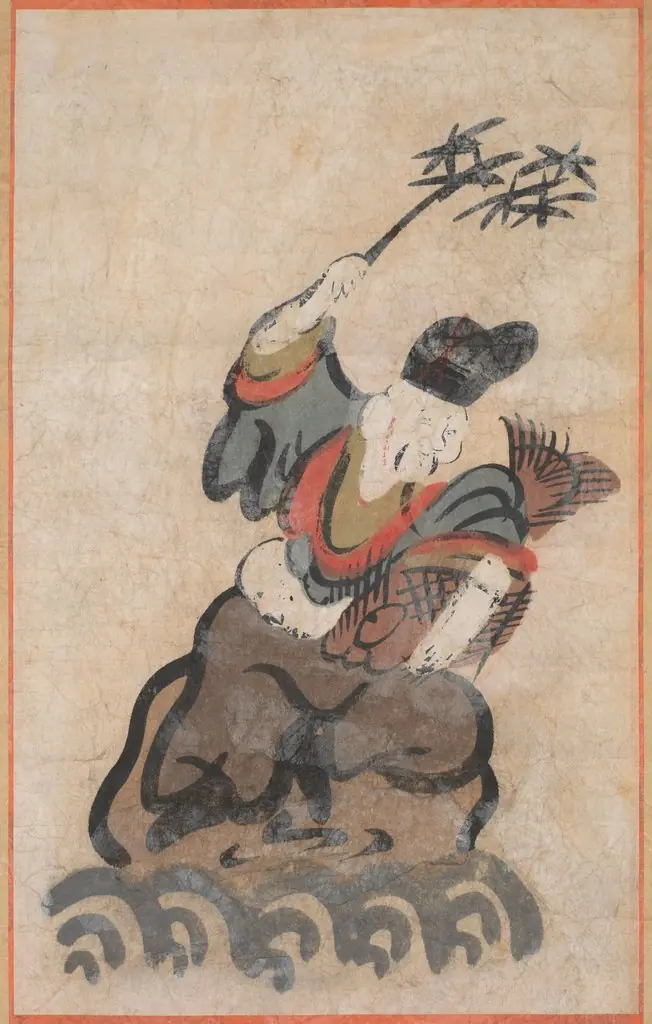
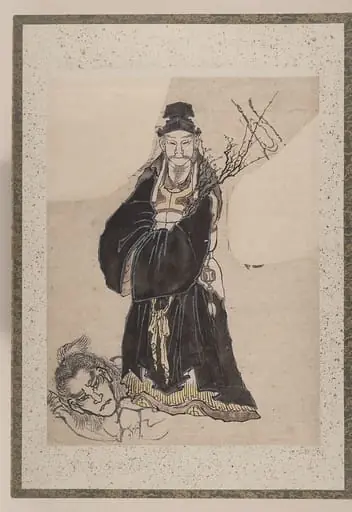
Beggar (Kojiki) is a painted work that portrays a solitary figure holding a walking stick and a bag draped across his shoulder. The subject wears a hat and a long coat, his face set in a serious, contemplative expression, suggesting a moment of quiet resolve.
Subject & Meaning
The attire and accessories, particularly the bag and staff, imply the individual may be a beggar or itinerant traveler, evoking themes of poverty, movement, and the social margins. The solemn gaze invites viewers to consider the dignity and hardship inherent in such a life.
Technique & Style
The artist employs a limited, dark palette combined with assertive brushwork, heightening contrast and creating a dramatic atmosphere. The handling of light and shadow reflects chiaroscuro principles, lending the figure a three‑dimensional presence against an ambiguous background.
Context
While specific historical details about the painting’s creation are not provided, its visual language aligns with traditions that emphasize emotional intensity through stark tonal differences. The work situates itself within a broader visual discourse on marginal figures in art.
Artist & collection