Artwork
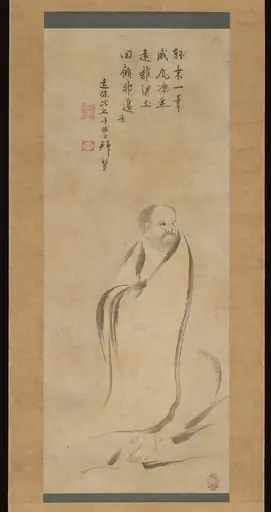
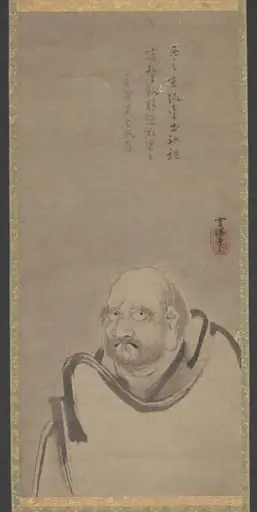
Bodhidharma on a Reed
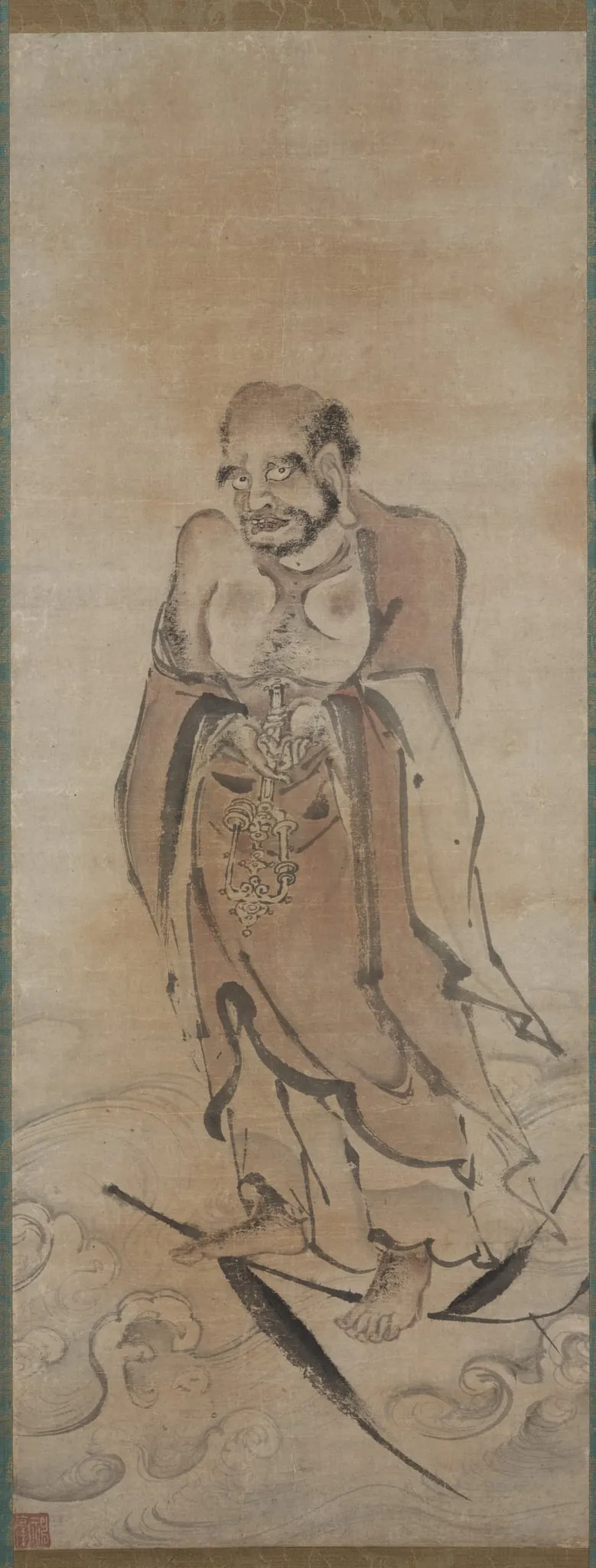
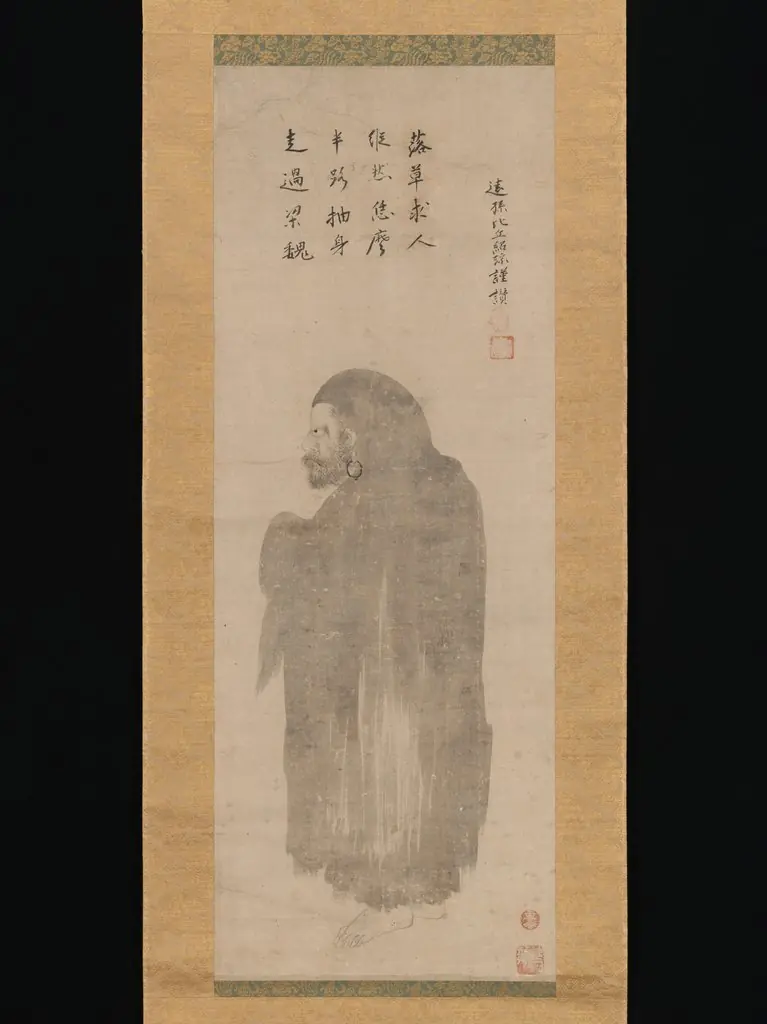
Bodhidharma on a Reed is an unspecified painting by the Renaissance artist Shingo. It dates from 1504 and is held in the collection of the Cleveland Museum of Art. The painting depicts Bodhidharma, the founder of Zen Buddhism, seated upon a reed.
- Accession no.
- 1983.21
- Credit line
- Purchase from the J. H. Wade Fund
About this work
Overview
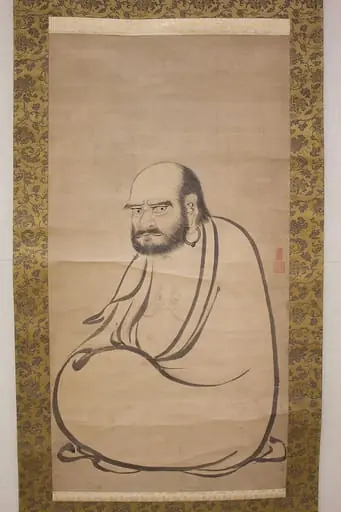
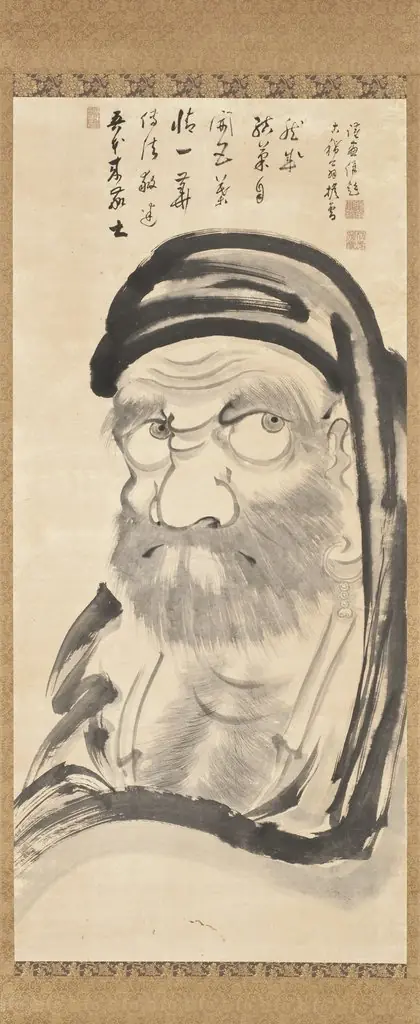
The painting depicts Bodhidharma, the founder of Zen Buddhism, seated upon a reed. He is rendered with a dark complexion, a full beard, and a stern, scowling expression that conveys his resolute pursuit of enlightenment. The composition centers on his solitary figure, emphasizing the intensity of his meditation.
Subject & Meaning
Bodhidharma is traditionally portrayed as a fierce, determined monk whose austere demeanor reflects the Zen emphasis on direct, experiential insight rather than textual study. The scowl serves both as a symbol of his unwavering focus and as a visual warning to those lacking similar commitment.
Technique & Style
Rendered in a style common to Japanese Zen iconography, the work employs bold lines and a limited palette to highlight the figure’s muscular form and dark skin. The reed serves as a simple, natural platform, reinforcing the monk’s connection to the natural world and the ascetic simplicity valued in Zen art.
History & Provenance
The image follows a long-standing visual tradition in Japanese depictions of Bodhidharma, aligning with the conventions established by artists such as Shingo. While the specific creator of this painting is not identified, its adherence to these conventions suggests it was produced within the Japanese Zen artistic milieu.
Context
In Zen Buddhism, Bodhidharma is credited with introducing meditation as the primary path to enlightenment, rejecting reliance on scriptures. His portrayal in this work reflects that doctrinal stance, presenting a figure whose physical austerity mirrors the spiritual rigor he advocated.
Artist & collection