Artwork
Bifolium with Christ in Majesty in an Initial A, from an Antiphonary
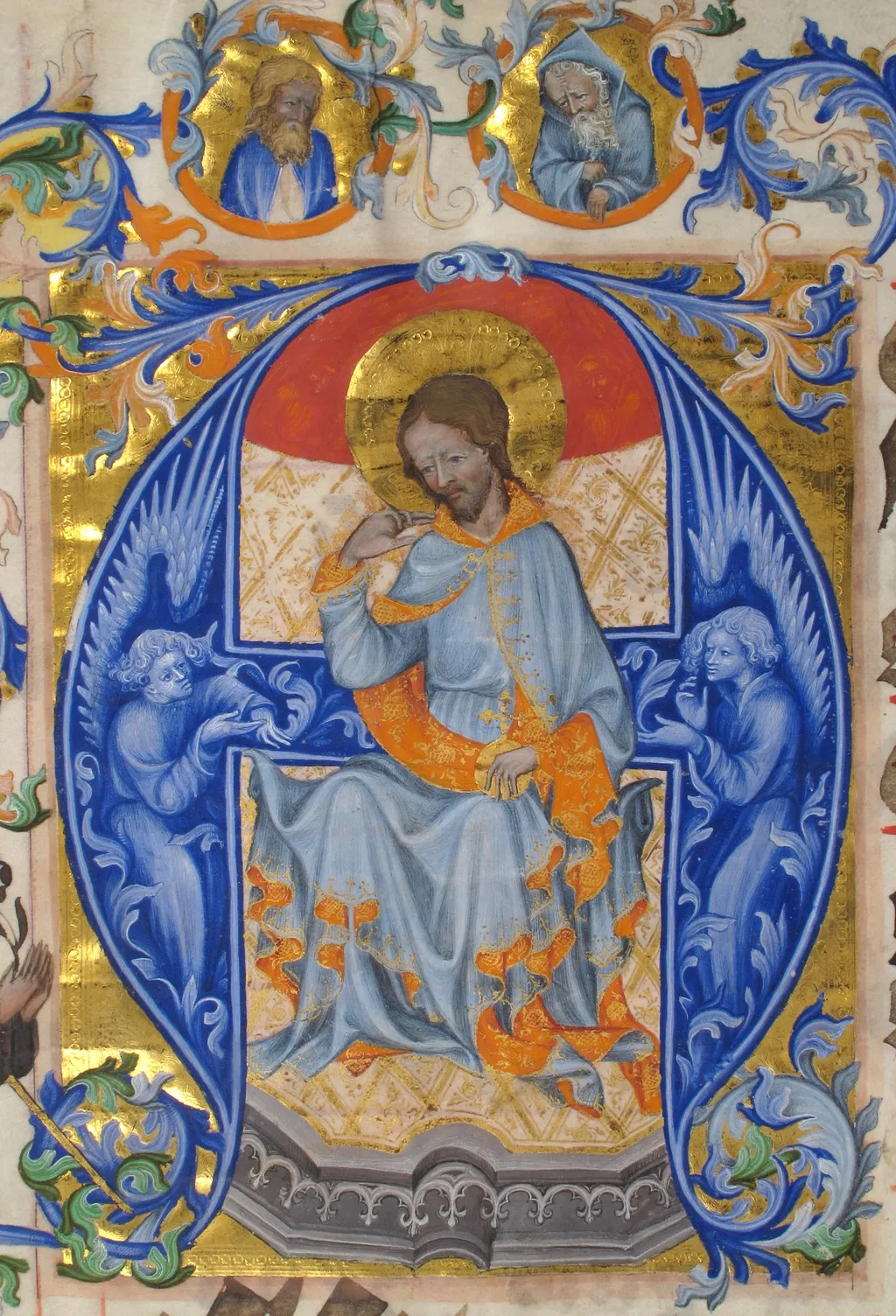
Bifolium with Christ in Majesty in an Initial A, from an Antiphonary is an unspecified painting. It dates from 1405 and is held in the collection of the Metropolitan Museum of Art. This artwork is a bifolium, a folded sheet of parchment, extracted from a medieval antiphonary.
About this work
Subject & Meaning
The composition follows the conventional iconography of Christ in Majesty, a motif used to emphasize divine authority and to introduce liturgical texts.
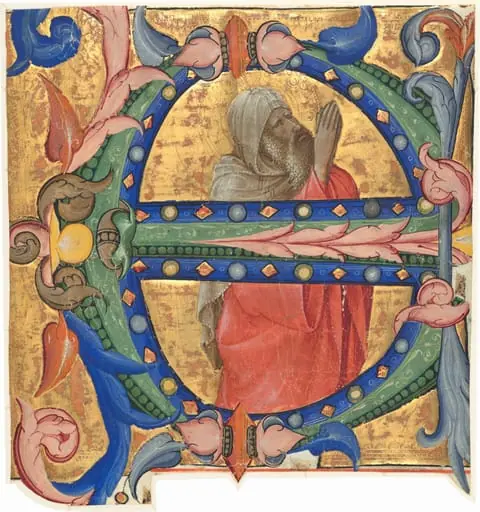
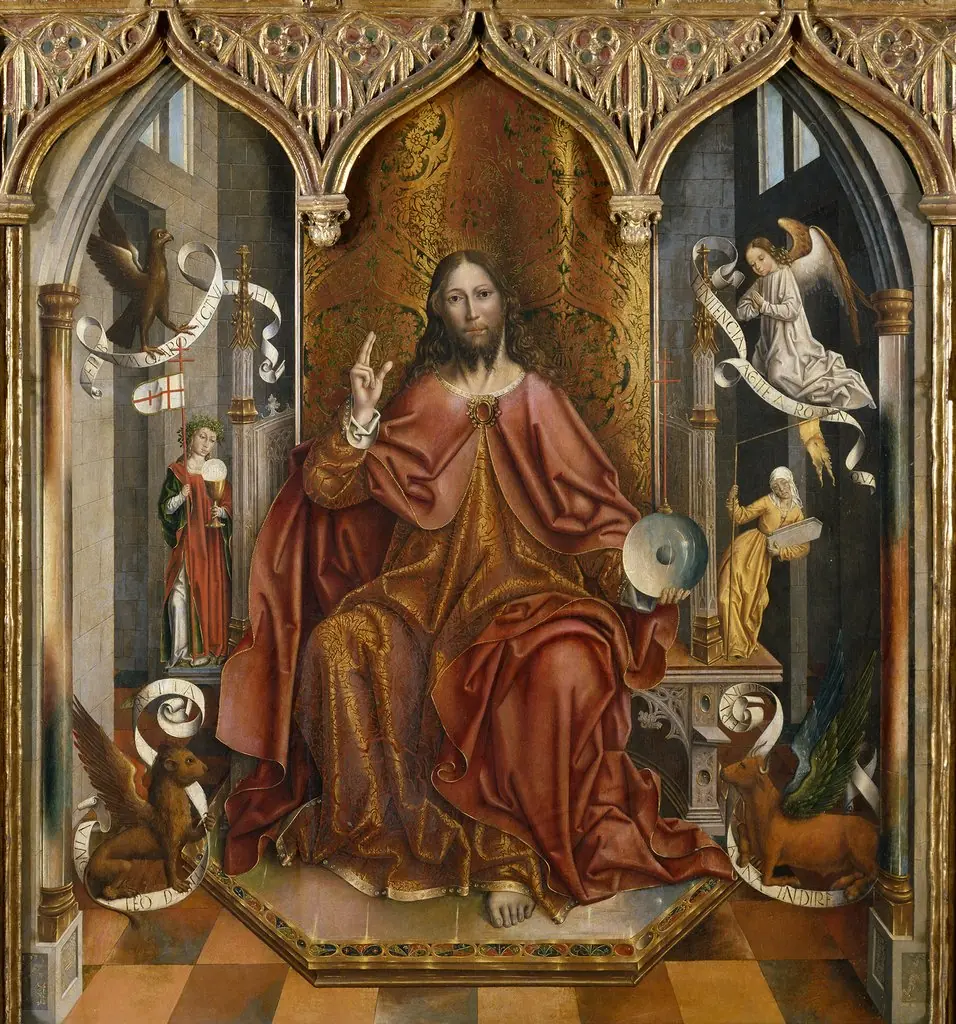
The work shows the sovereign Christ enthroned, rendered within the decorative initial A of an antiphonary. He is depicted with a halo, seated on a jeweled throne, holding a book and extending a blessing gesture, attributes that signal his role as the ruler of the heavenly realm. The composition follows the conventional iconography of Christ in Majesty, a motif used to emphasize divine authority and to introduce liturgical texts.
By placing the figure within a large initial, the image also serves a functional purpose, marking the beginning of a chant while reinforcing the sacred narrative through visual symbolism. The painting dates to 1405 and measures 56.7 cm by 40.2 cm.
History & Provenance
Created in 1405, this religious painting was originally produced as a bifolium containing an initial A with Christ in Majesty for an antiphonary. The work is attributed to an anonymous artist. It eventually entered the collection of the Metropolitan Museum of Art, where it is currently held.
Specific details regarding its original commission, intermediate ownership history, or the circumstances of its acquisition by the museum are not provided in the available records.
Context
Created in 1405, the bifolium functioned as a liturgical leaf within an antiphonary, pairing a devotional text with a visual representation of Christ in Majesty enclosed in an illuminated initial A.
The fragment is held by the Metropolitan Museum of Art, where it is catalogued as an anonymous religious painting. Its dimensions measure 56.7 cm by 40.2 cm, and its composition reflects the devotional art produced by anonymous workshops in early fifteenth‑century Italy.
Overview
This artwork is a bifolium, a folded sheet of parchment, extracted from a medieval antiphonary. It features an illuminated initial 'A' that encloses a depiction of Christ in Majesty. The painting served a liturgical function, likely marking the beginning of a significant chant or section within the large-format choir book.
Its intricate design and vibrant palette highlight its role in enhancing the sacred texts for monastic or ecclesiastical use.
Technique & Style
The painting demonstrates the decorative artistry typical of manuscript illumination. Christ is set against a vibrant red and white background, framed by elaborate gold and blue motifs that also form the initial 'A'. These rich colors and intricate patterns not only delineate the figures but also create a visually opulent effect.
The use of gold suggests a preciousness befitting the sacred subject, while the detailed framing elements showcase the skill of the illuminator.
Artist & collection