Artwork
舞楽図巻|Bugaku Imperial Court Dance
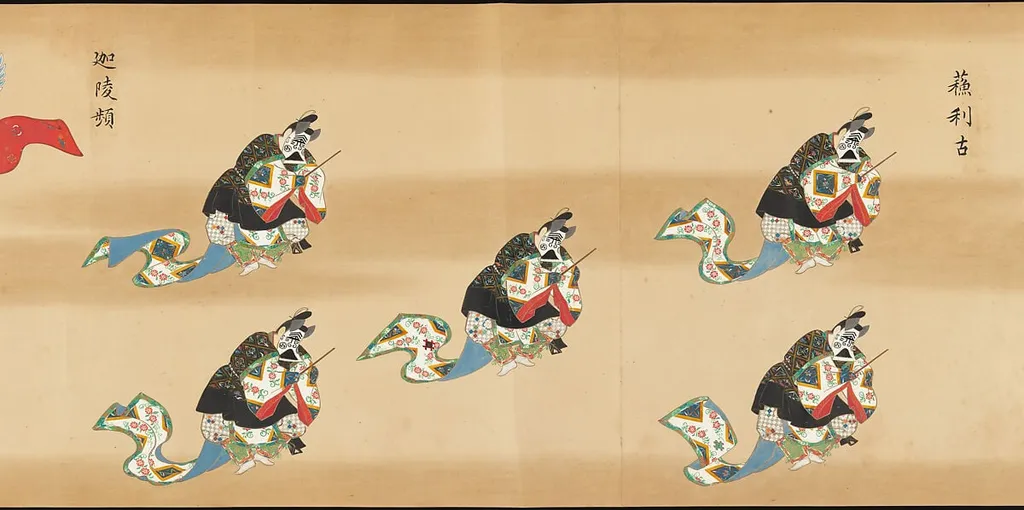
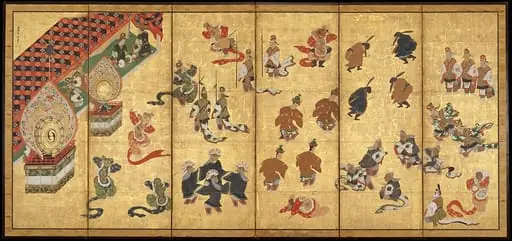
舞楽図巻|Bugaku Imperial Court Dance is an ink painting. It dates from 1657 and is held in the collection of the Metropolitan Museum of Art. This handscroll, titled Bugaku Imperial Court Dance, is one of a pair depicting the ancient Japanese court performance of bugaku.
- Accession no.
- 57.52.1
- Credit line
- Seymour Fund, 1957
About this work
Technique & Style
Stylistically, the piece depicts court dancers and dance performances, characteristic of Japanese painting traditions from the mid-17th century.
Created in 1657, the Bugaku Imperial Court Dance is executed as a handscroll on paper, utilizing ink, color, and gold as its primary media. The work is part of a set of two scrolls and measures 36.5 cm in height with a substantial length of 1697.7 cm, indicating a format designed for sequential, close-range viewing. Stylistically, the piece depicts court dancers and dance performances, characteristic of Japanese painting traditions from the mid-17th century.
The combination of metallic gold with ink and pigments on the paper support highlights the ceremonial nature of the subject matter. As an anonymous work held in the Metropolitan Museum of Art, the scroll preserves the formal qualities of Edo-period representation through its elongated composition and material richness.
History & Provenance
The Bugaku Imperial Court Dance handscrolls were produced in the Edo period, with the set dated to 1657. The two-handscroll set entered the collection of the Metropolitan Museum of Art in 1957 as accession 57.52.1. The artist remains anonymous, and the work was created in Japan during the mid-seventeenth century. The scrolls depict dancers in court dance scenes, reflecting the cultural and ceremonial practices of the period.
Context
The handscroll titled 舞楽図巻 (Bugaku Imperial Court Dance), produced in 1657 by an anonymous Japanese painter, illustrates a ceremonial Bugaku dance and functions as a representation of courtly performance. Its presence in the Metropolitan Museum of Art has made it a reference point for studies of Edo-period visual culture that explore how elite patronage encoded ritual through imagery. Scholars cite the work to demonstrate the integration of dance iconography within painting genres and to trace the anonymous workshop's role in disseminating courtly motifs across media. The piece thus contributes to understanding of early modern Japanese artistic practice and its diplomatic symbolism.
Overview
This handscroll, titled Bugaku Imperial Court Dance, is one of a pair depicting the ancient Japanese court performance of bugaku. Executed with ink, vibrant colors, and gold on paper, it captures numerous small figures in elaborate costumes and distinctive headwear. The artwork was created during the 1600s for the imperial court, offering a visual record of these traditional ceremonial movements against a shimmering gold ground.
Subject & Meaning
The central theme of this scroll is bugaku, a form of Japanese court dance and music with a history predating the scroll's creation by centuries. These performances, characterized by their slow, deliberate movements and rich costuming, were integral to imperial ceremonies. The artwork serves as a detailed visual document of these enduring traditions, preserving the aesthetic and ritualistic aspects of bugaku as practiced within the emperor's court.
Artist & collection

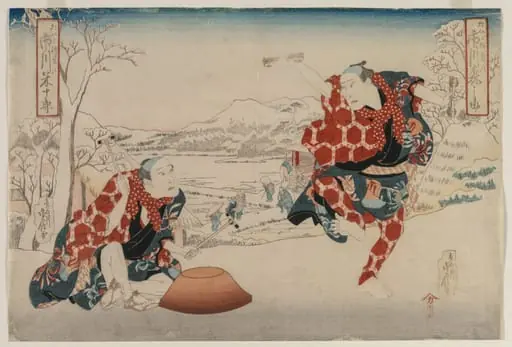 Ichikawa Norinosuke and Ichikawa Yonejuro as Morihachi and Yonehachi, Two Comedians
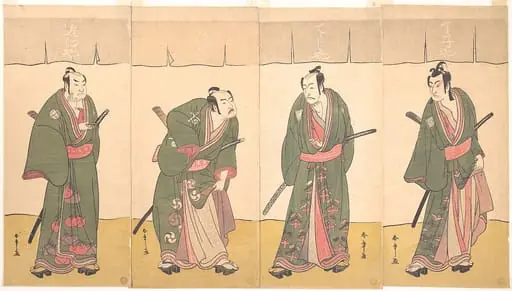 Untitled
 Copy of Night Parade of One Hundred Demons from the Shinjuan Collection
 Untitled
 Untitled
 楊洲周延画 「千代田之大奥 おたち退」|“Evacuation of the Ladies,” from the series The Inner Precincts of Chiyoda Castle (Chiyoda no Ōoku, Otachinoki)
 Festivities of the Twelve Months: “Sannō Hiyoshi Festivals Held on the Day of the Monkey in the Mid-Fourth Month”; Festivities of the Twelve Months: “Sumō Wrestling at Matsuno’o Shrine during the Hass
 Untitled
 The Thirty-Six Immortal Poets (1 of a pair)
 Untitled