Artwork
Copy of Night Parade of One Hundred Demons from the Shinjuan Collection

Copy of Night Parade of One Hundred Demons from the Shinjuan Collection is an unspecified painting by the Yōga artist Mochizuki Gyokusen. It dates from 1749 and is held in the collection of the Metropolitan Museum of Art.
About this work
History & Provenance
Created in 1749 in Japan, this painting is a copy of the Night Parade of One Hundred Demons based on the Shinjuan Collection.
Created in 1749 in Japan, this painting is a copy of the Night Parade of One Hundred Demons based on the Shinjuan Collection. The work was executed by the artist Mochizuki Gyokusen. It currently resides in the collection of the Metropolitan Museum of Art.
The work is held at the Metropolitan Museum of Art, where it is cataloged under the inventory number 1988.176. It entered the collection as part of the Shinjuan Collection and was accessioned in 1988. The painting has been exhibited in the museum’s Japanese art galleries, including a 1995 display of Edo-period works and a 2012 rotation of early modern Japanese paintings.
Context
The painting Copy of Night Parade of One Hundred Demons from the Shinjuan Collection (1749) by Mochizuki Gyokusen has been discussed in scholarly literature regarding Edo-period supernatural art. Its inclusion in the Metropolitan Museum of Art's collection situates it within the broader study of Japanese ghostly narratives in painting, with research examining its stylistic relationship to earlier Edo demonological imagery and its role in contemporary reassessments of Gyokusen's output beyond his more widely documented works. The work's provenance and display context at the Met contribute to ongoing academic conversations about the preservation and interpretation of supernatural themes in pre-modern Japanese art.
Overview
Created in 1749 by the Edo‑period painter Mochizuki Gyokusen, this work is a replica of the famed Night Parade of One Hundred Demons from the Shinjuan Collection. It is part of the Metropolitan Museum of Art’s holdings and presents a nocturnal tableau populated by a multitude of supernatural beings.
Subject & Meaning
The composition depicts a bustling procession of demons and assorted mythic creatures moving through a night landscape. Each figure assumes a distinct posture, suggesting a chaotic yet organized parade that reflects traditional Japanese folklore about nocturnal spirit gatherings.
Technique & Style
Gyokusen employs varied brushwork to render the figures, alternating fine lines with broader strokes that generate texture and depth. A palette of muted and vivid hues distinguishes individual entities, while layered washes create atmospheric perspective, enhancing the sense of a dimly lit, otherworldly night.
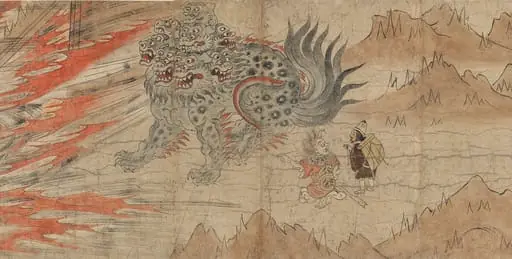
Artist & collection

- 北野天神縁起絵巻|Illustrated Legends of the Kitano Tenjin Shrine (Kitano Tenjin engi emaki)
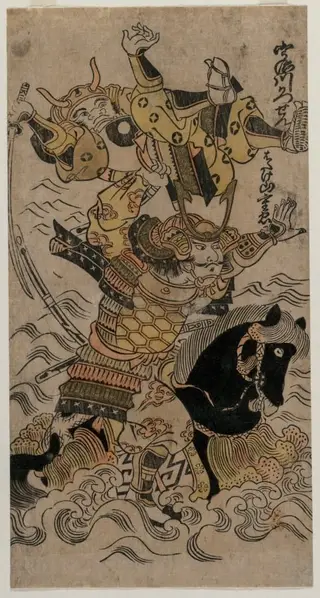 The Battle of the Uji River
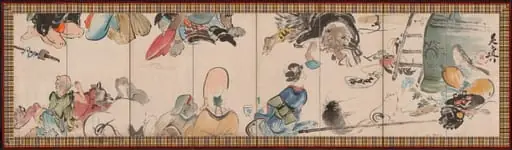 Gathering of Otsu-e Subjects
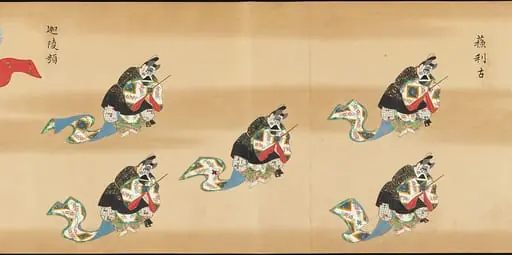 舞楽図巻|Bugaku Imperial Court Dance
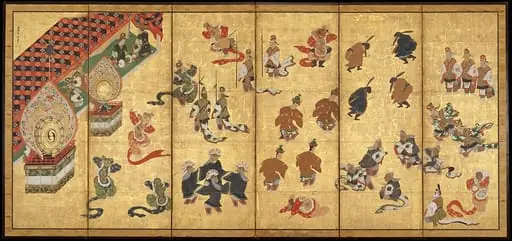 Untitled
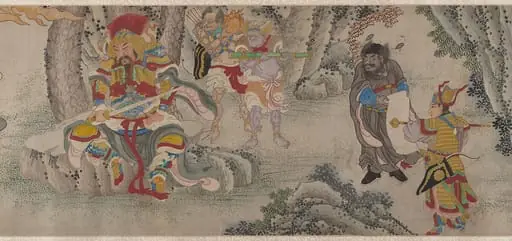 明 鄭重 搜山圖 卷|Searching the Mountains for Demons
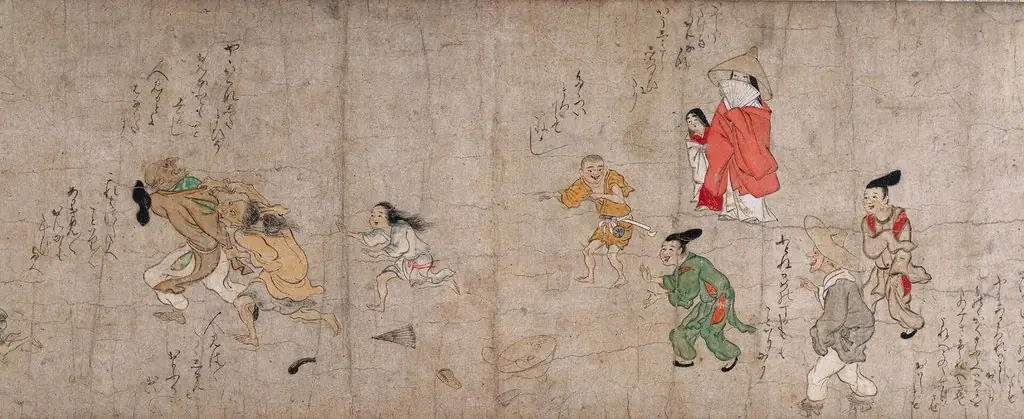 The Story of Fukutomi
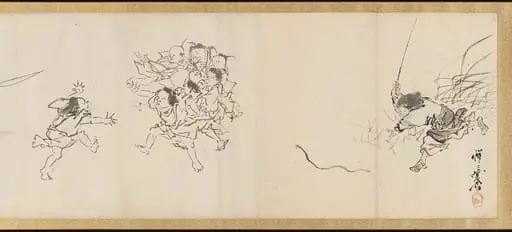 Untitled
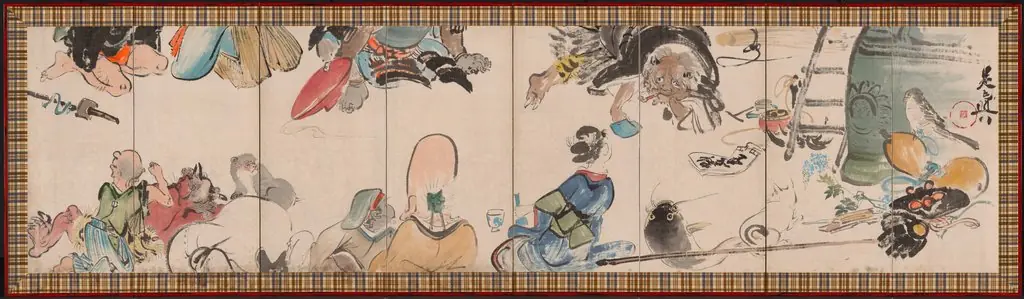 Gathering of Otsu-e Subjects
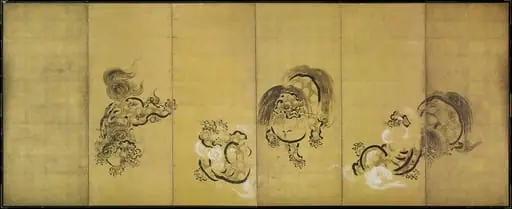 舞楽図屏風 ・唐獅子図屏風|Bugaku Dances (front); Chinese Lions (reverse)
 Chung K'uei Escorting His Sister's Wedding Procession
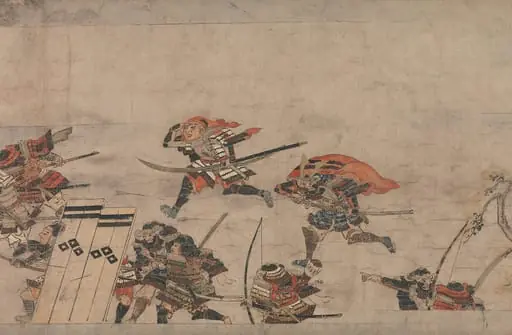 秋夜長物語|A Long Tale for an Autumn Night (Aki no yo nagamonogatari)