Artwork
Covered wine pot or teapot
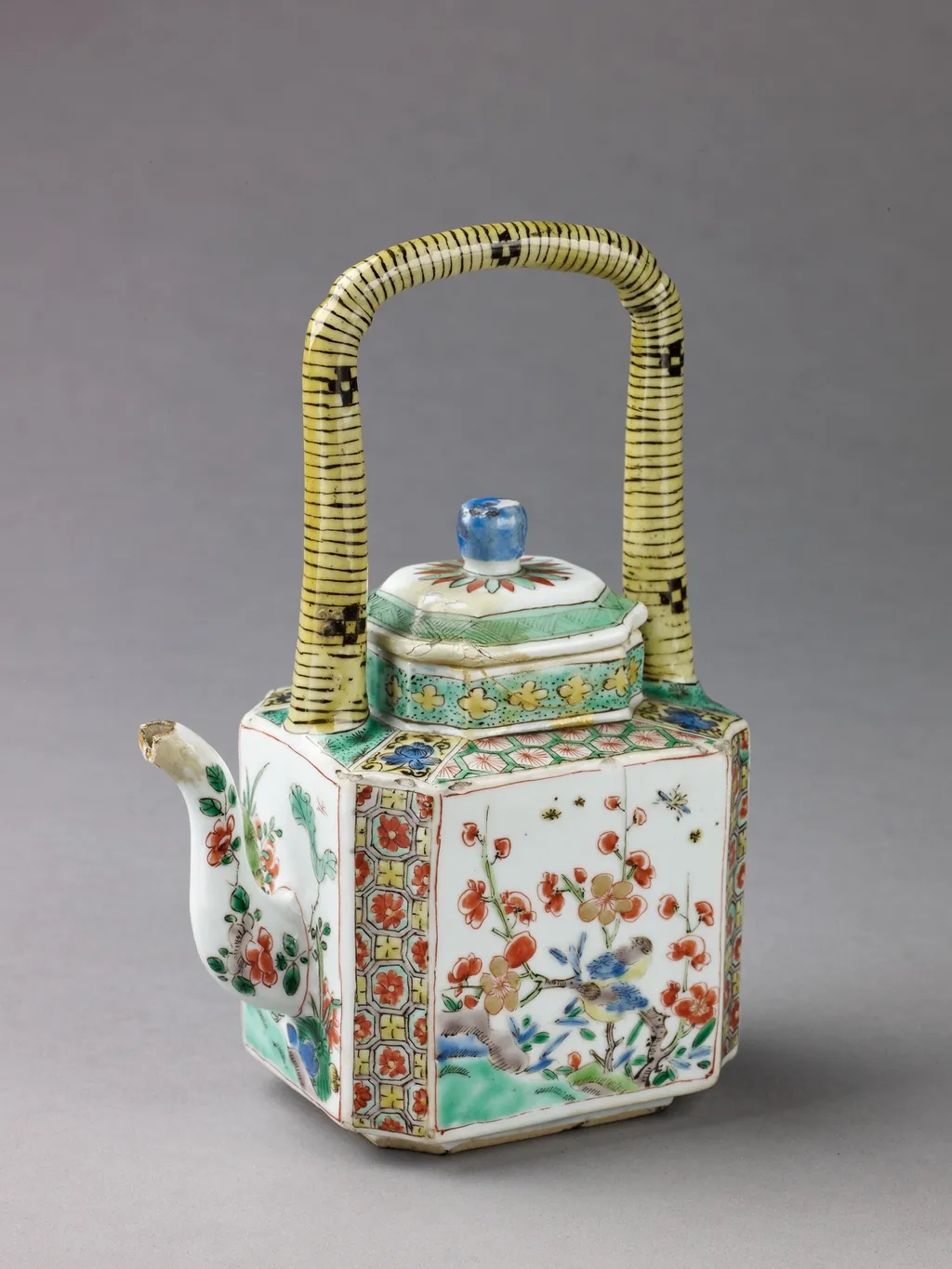
Covered wine pot or teapot is an unspecified painting. It dates from 1696 and is held in the collection of the Metropolitan Museum of Art.
About this work
Subject & Meaning
The covered wine pot or teapot is a painting that depicts a flower. Classified as a painting from 1692, it is held in the Metropolitan Museum of Art as part of the Robert Lehman collection. Beyond this floral subject, the available sources do not elaborate on specific iconographic motifs, symbolic associations, or the broader meaning the work is intended to convey.
History & Provenance
It is currently held by the Metropolitan Museum of Art, where it is cataloged under the accession number 1975.
Created in 1692, this work is a painting by a Chinese artist. The piece entered the collection of Robert Lehman at some point in its history. It is currently held by the Metropolitan Museum of Art, where it is cataloged under the accession number 1975.1.1708.
While the specific circumstances of its commission and the details of its ownership prior to Lehman are not detailed in the available records, its inception is firmly dated to the late seventeenth century.
The covered wine pot or teapot was created in 1692 and is part of the Metropolitan Museum of Art's collection. It was owned by Robert Lehman and has been exhibited as part of the museum's holdings. The work is cataloged with the accession number 1975.1.1708 and is associated with the painting category, though it depicts a flower motif.
Overview
The work depicts a ceramic vessel resembling a covered wine pot or teapot. Its white body is overlaid with a dense decorative scheme of stylized flowers, foliage and small birds rendered in bright reds, greens, blues and yellows. A yellow handle marked with black stripes leads to a lid capped by a blue knob, while the spout bears additional floral motifs.
Technique & Style
The piece is executed in glazed ceramic, employing a polychrome palette applied in painted layers before a final firing. The motifs follow a flat, ornamental style typical of East Asian porcelain decoration, with bold outlines and saturated colors that emphasize pattern over realistic representation.
Context
Ceramic vessels of this type were often displayed as part of a broader collection of decorative arts, illustrating the cross‑cultural exchange of motifs such as birds and floral bands that traveled between Chinese, Japanese and Western manufacturers.
Legacy
Works like this exemplify the enduring appeal of richly painted porcelain, influencing later studio pottery that revisits historic decorative vocabularies while exploring contemporary forms.
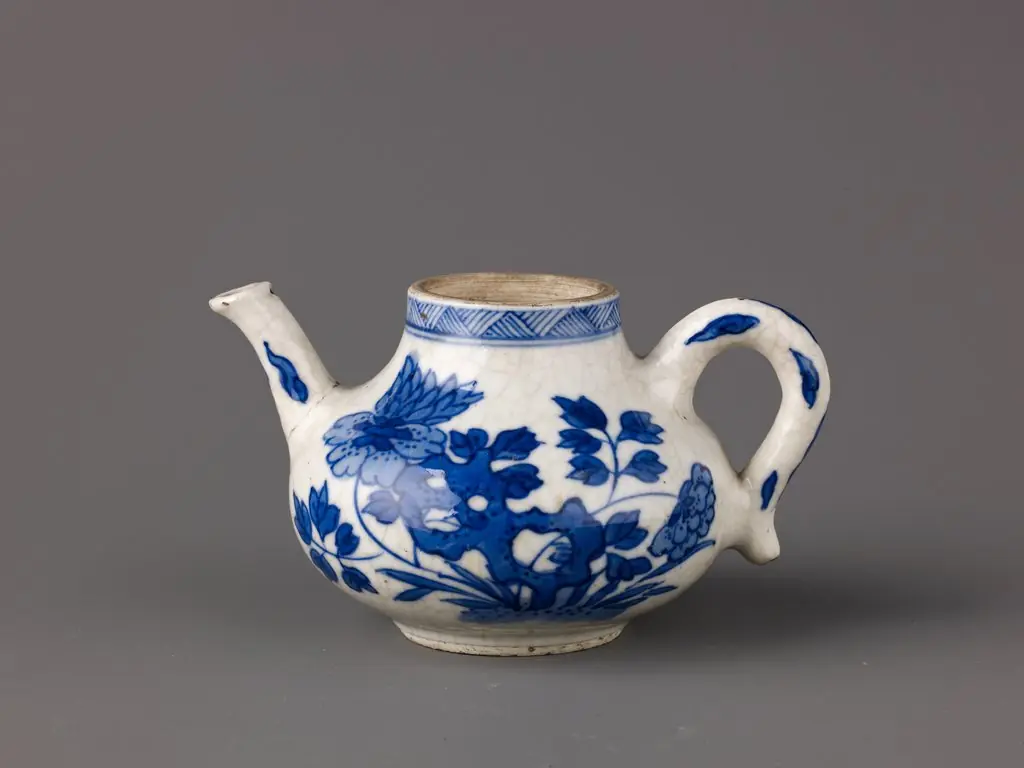
Artist & collection

- Small wine pot or teapot
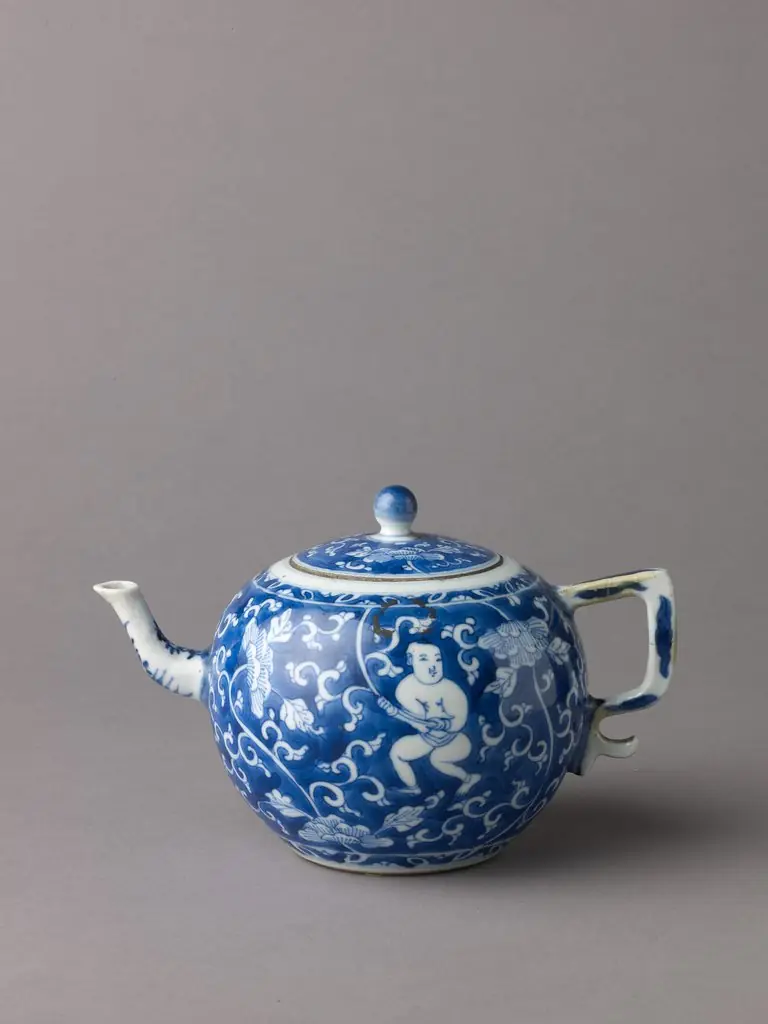 Covered wine pot or teapot
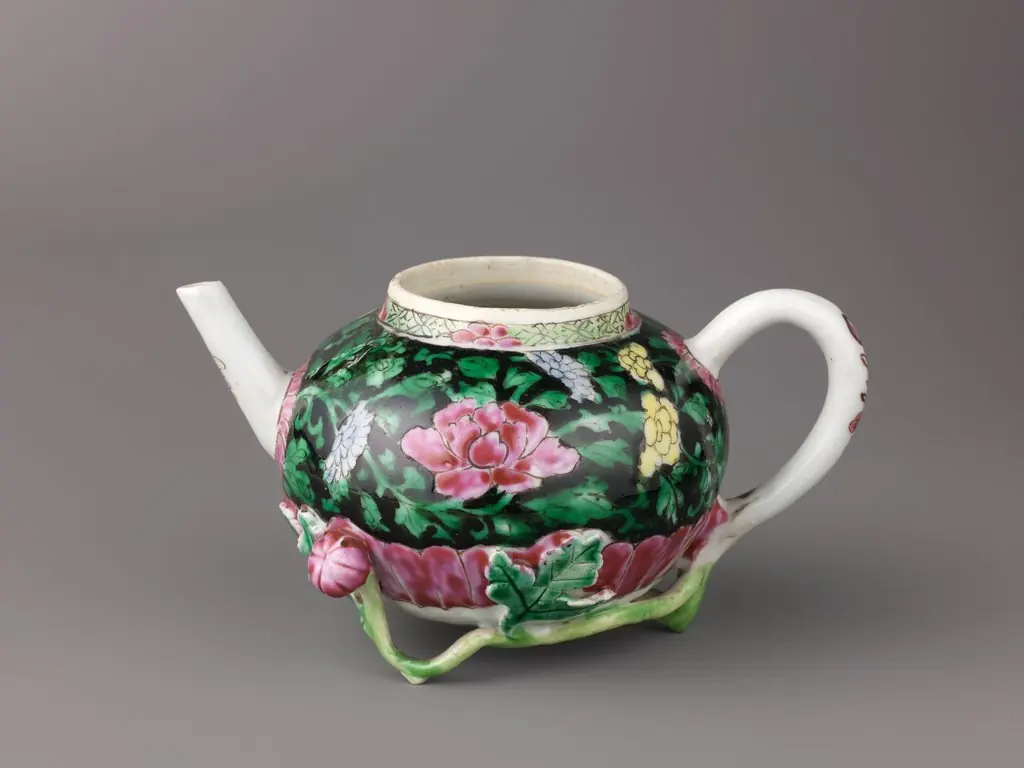 Teapot (a) and saucer (b)
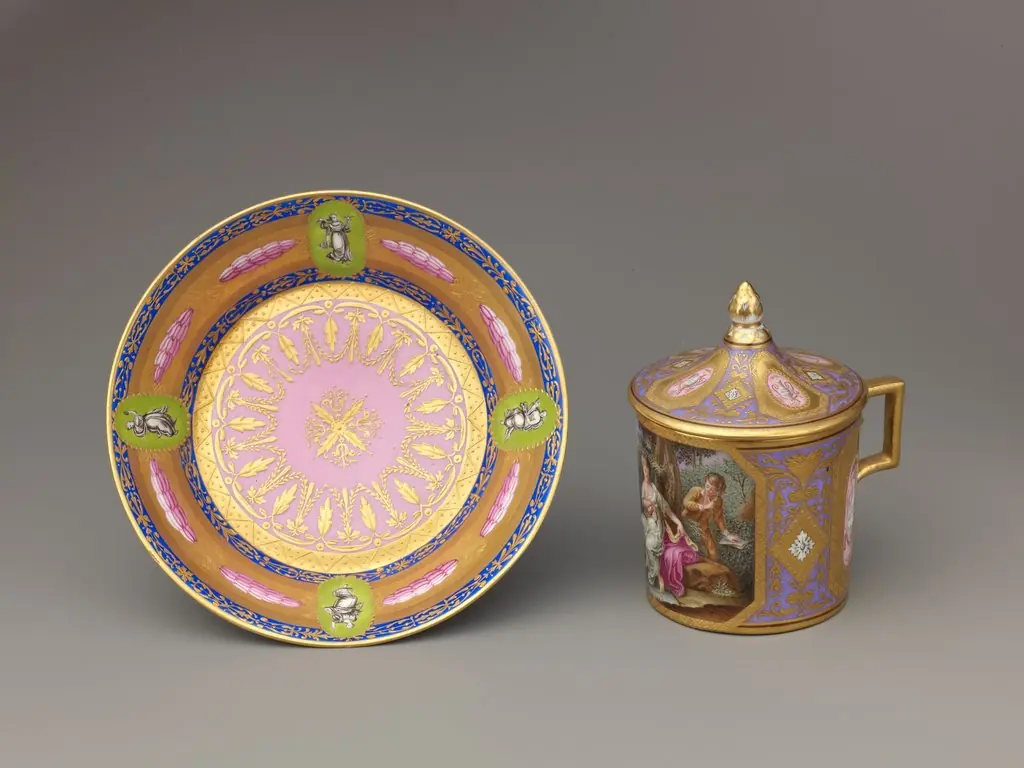 Covered Cup and Saucer
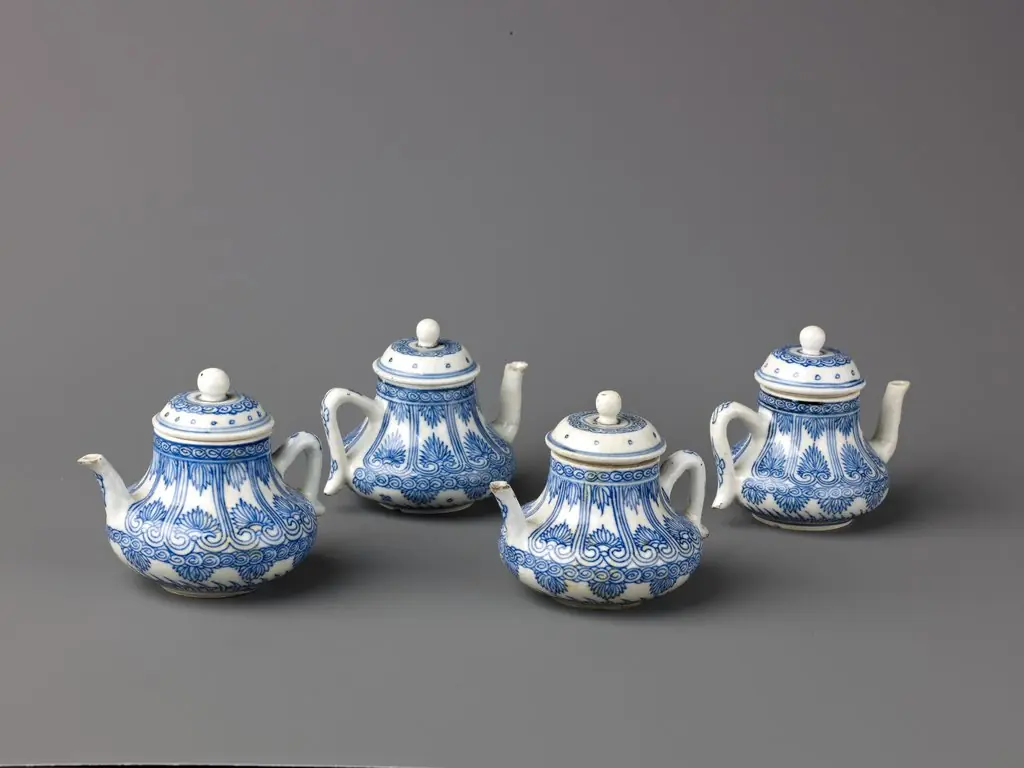 Small covered wine pot or teapot (similar to 1975.1.15-17)
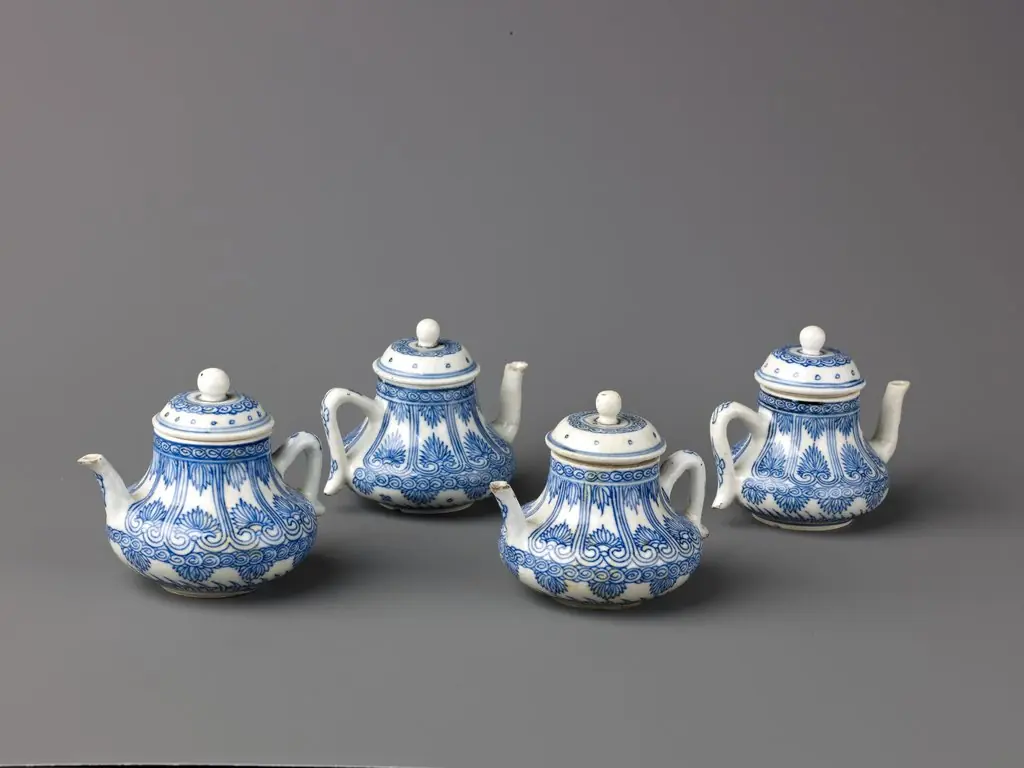 Small covered winepot or teapot (similar to 1975.1.1714-16)
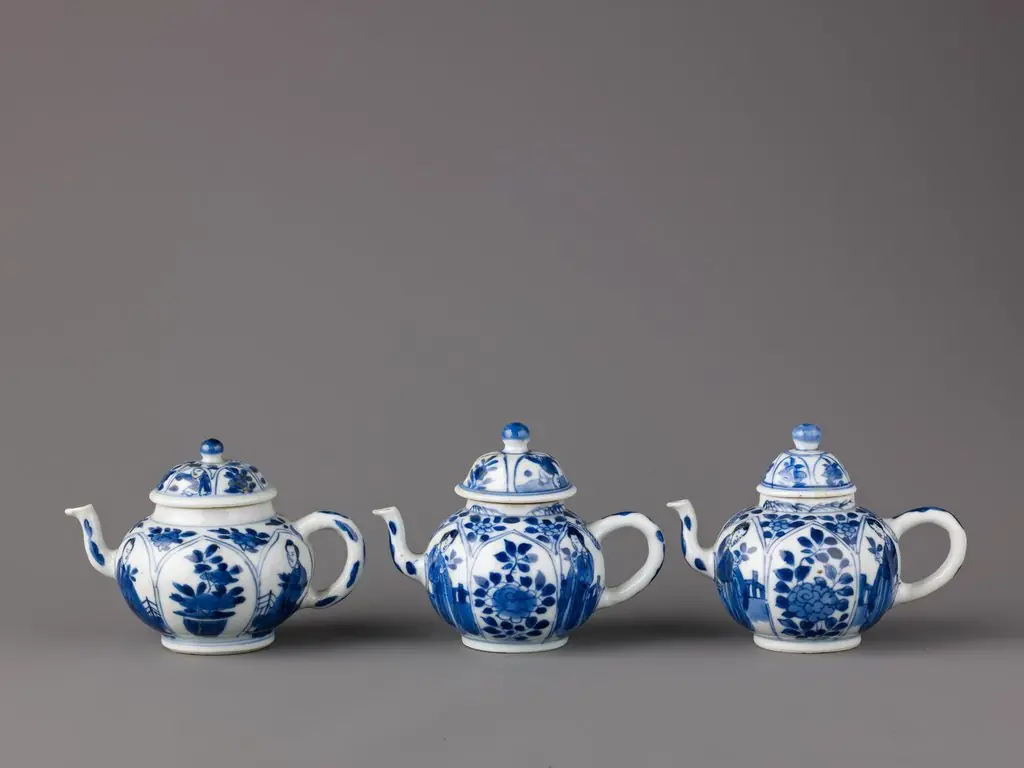 Small covered winepot or teapot (see also 1975.1.1710 and 1975.1.1712)
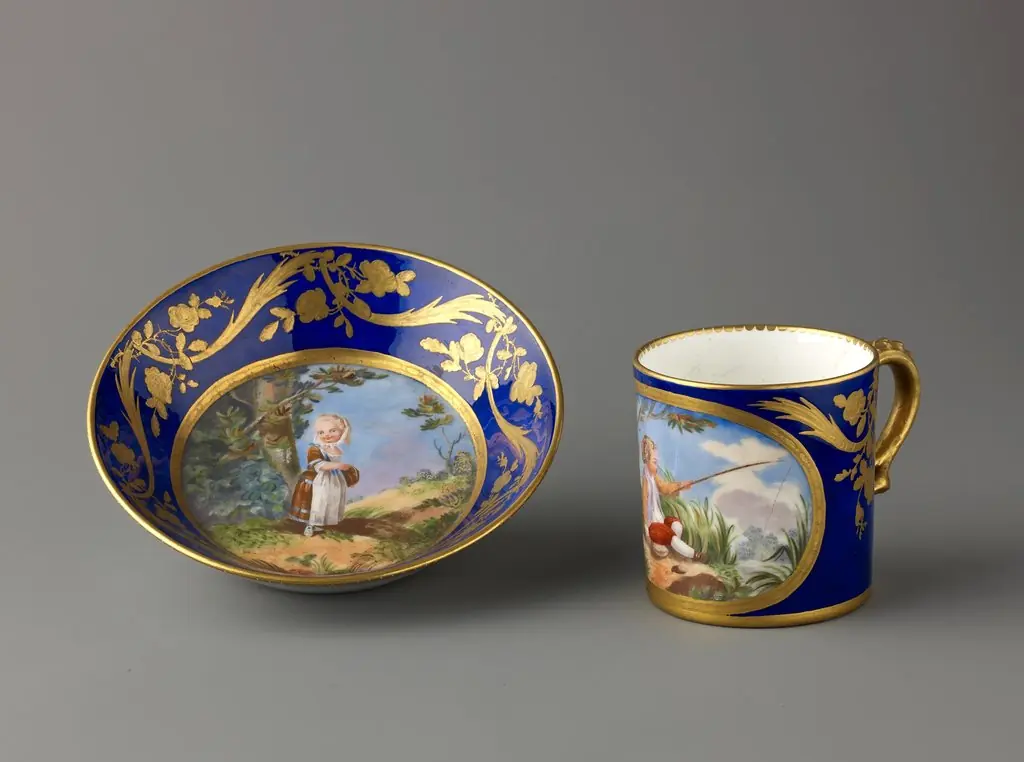 Cup and saucer
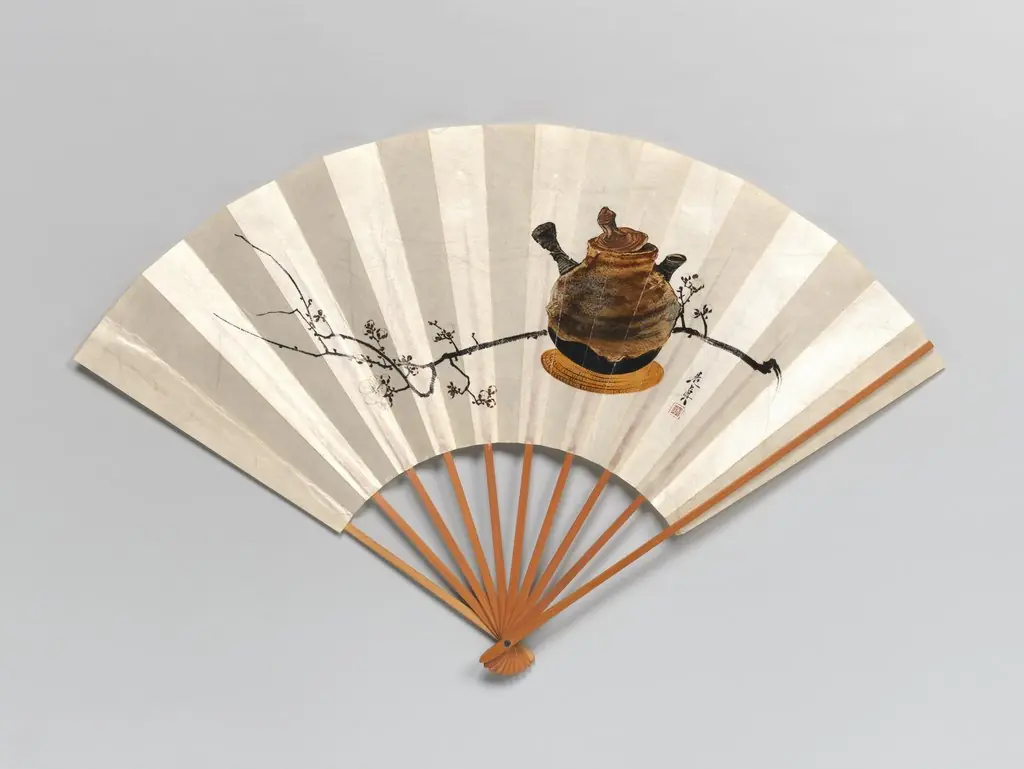 Plum Branch and Teapot