Artwork
Plum Branch and Teapot
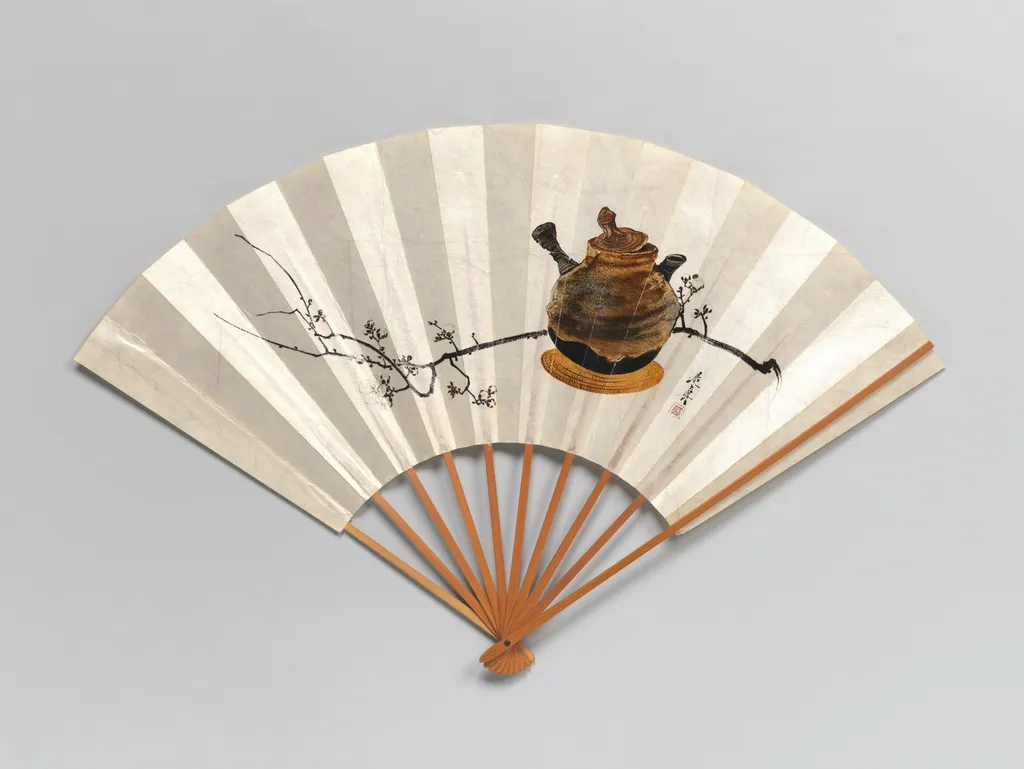
Plum Branch and Teapot is an unspecified painting by the Nihonga artist Shibata Zeshin. It is held in the collection of the Metropolitan Museum of Art.
About this work
Subject & Meaning
The teapot, set against the branch, grounds the scene in everyday life, suggesting the pleasure of tea taken in the garden.
The composition pairs a flowering plum branch with a ceramic teapot, combining seasonal and domestic motifs. The plum’s blossoms, rendered in delicate gradations of pink and white, signal the arrival of spring, a traditional theme in East Asian art that conveys renewal and endurance. The teapot, set against the branch, grounds the scene in everyday life, suggesting the pleasure of tea taken in the garden.
Together, these elements evoke harmony between nature and human ritual, a common subject in late nineteenth-century Japanese painting that reflects both aesthetic appreciation and cultural continuity.
History & Provenance
Plum Branch and Teapot is a painting created by Shibata Zeshin in 1890. The work was produced in Japan and is part of the collection at the Metropolitan Museum of Art. It entered the museum's holdings as part of the museum's collection, with its creation attributed to Zeshin in 1890. The painting depicts a teapot alongside a plum branch, reflecting traditional Japanese artistic motifs.
The artwork's provenance is documented through its inclusion in the Metropolitan Museum of Art's collection, where it has been displayed and preserved since its acquisition. Its inception is recorded as 1890, aligning with the artist's active period in the late 19th century.
Plum Branch and Teapot is held in the collection of the Metropolitan Museum of Art, where it is housed as a painting by Shibata Zeshin dated 1890. The work was made in Japan and is recorded as part of the museum's holdings.
No exhibition history is documented in the available sources.
Legacy
The work Plum Branch and Teapot by Shibata Zeshin, created in 1890, is recognized as an early example of modern Japanese painting that blends Western perspective with traditional subjects, influencing later artists who sought to modernize Japanese art. Its presence in the Metropolitan Museum of Art has contributed to scholarly discussions of Meiji-era innovations, though its specific impact on later movements is noted only in specialized studies of Japanese art history.
Overview
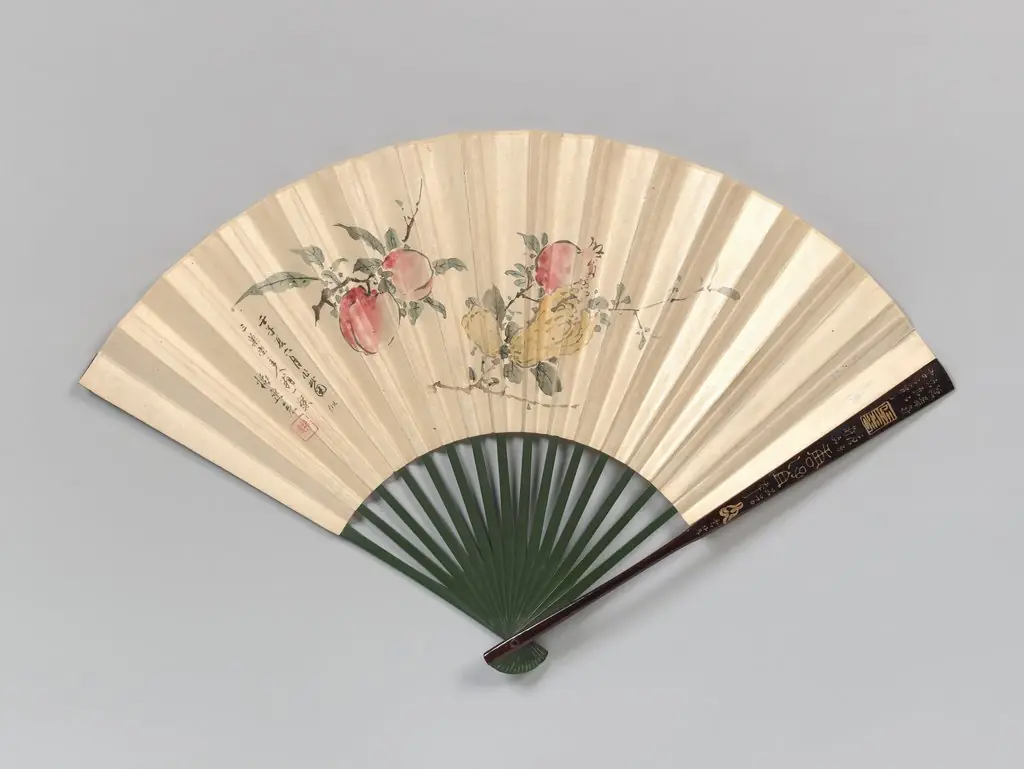
Created in 1896, this small-scale painting by Shibata Zeshin portrays a solitary teapot accompanied by a plum branch, rendered on a fan‑shaped support. The work is part of the collection of the Metropolitan Museum of Art, where it is displayed as an example of late‑nineteenth‑century Japanese painting.
Technique & Style
Zeshin employs fine brushwork to delineate the teapot’s surface, using layered shades of brown to suggest volume and the sheen of lacquer. The plum branch is painted with darker strokes that contrast against an off‑white fan background marked by subtle light‑brown stripes, creating depth through tonal variation.
Own this work as a print
Artist & collection