Artwork
Farfurie adâncă de tip castron, cu corpul rotunjit și buza dreaptă, verticală; este acoperită pe suprafața interioară și pe exteriorul buzei cu un strat de angobă albastră peste care este pictat cu pensula și cu cornul decorul format din motive avimorfe, vegetale și geometrice, dispuse astfel: registrul decorativ de pe fundul farfuriei conține un cocoș cu penaj alb stând pe iarbă verde; elemente geometrice completează decorul în această zonă (linie ondulată și puncte maro, grup de linii subțiri maro, hașurate intersectat, cerc punctat de culoare maro). Partea superioară a peretelui farfuriei este marcată cu o linie circulară maro, iar exteriorul buzei este decorat cu trei linii circulare de culoare maro: două linii drepte și cea din mijloc ondulată. Farfuria este acoperită în întregime cu un strat de smalț transparent. Cromatica: alb, verde, albastru deschis, roșu, maro.
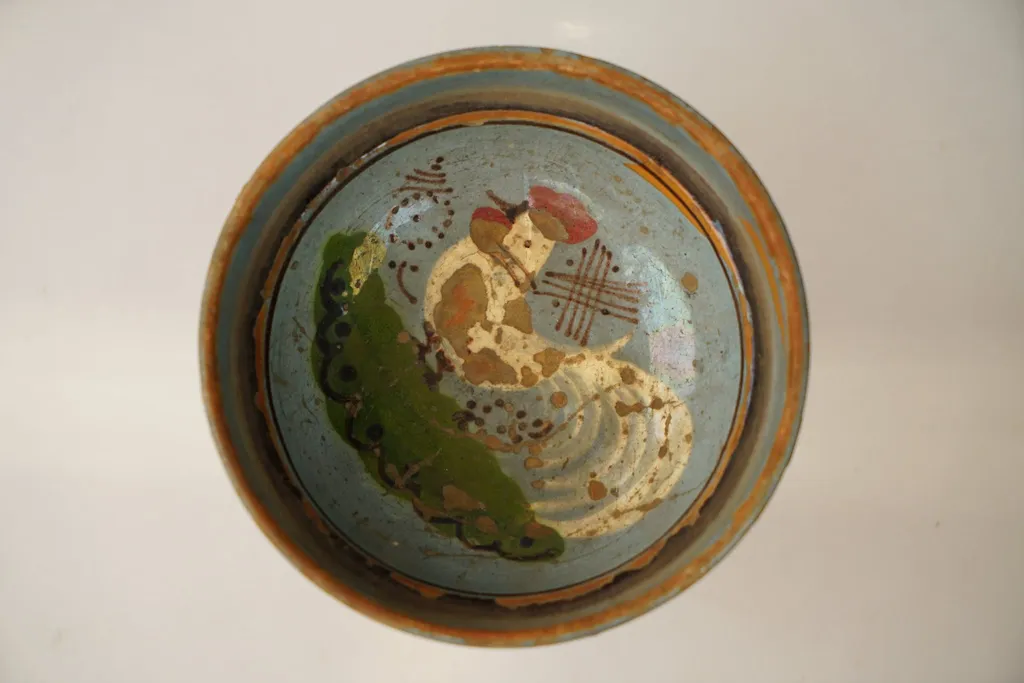
Farfurie adâncă de tip castron, cu corpul rotunjit și buza dreaptă, verticală; este acoperită pe suprafața interioară și pe exteriorul buzei cu un strat de angobă albastră peste care este pictat cu pensula și cu cornul decorul format din motive avimorfe, vegetale și geometrice, dispuse astfel: registrul decorativ de pe fundul farfuriei conține un cocoș cu penaj alb stând pe iarbă verde; elemente geometrice completează decorul în această zonă (linie ondulată și puncte maro, grup de linii subțiri maro, hașurate intersectat, cerc punctat de culoare maro). Partea superioară a peretelui farfuriei este marcată cu o linie circulară maro, iar exteriorul buzei este decorat cu trei linii circulare de culoare maro: două linii drepte și cea din mijloc ondulată. Farfuria este acoperită în întregime cu un strat de smalț transparent. Cromatica: alb, verde, albastru deschis, roșu, maro. is a print by Unknown. It dates from 1850 and is held in the collection of the Ethnographical Museum of Transylvania. This deep, rounded bowl features a straight, vertical lip and is entirely coated in a transparent glaze.
About this work
Overview
Its interior and lip are covered with a faded blue slip, beneath which painted decorations in brown, green, white, and red form a layered ornamental scheme.
This deep, rounded bowl features a straight, vertical lip and is entirely coated in a transparent glaze. Its interior and lip are covered with a faded blue slip, beneath which painted decorations in brown, green, white, and red form a layered ornamental scheme. The surface shows signs of wear, suggesting prolonged use, yet the composition remains legible, centered on a single figure amid abstract motifs.
Subject & Meaning
At the center of the base, a rooster stands upright on a patch of green, its white feathers outlined in brown, with a red comb and wattles. It is the only representational element, isolated from other figures. Surrounding it are non-figurative patterns—wavy lines, dots, hatched grids, and dotted circles—suggesting symbolic or ritual significance rather than narrative. The rooster may signify vigilance, fertility, or a connection to domestic or spiritual life.
Technique & Style
The decoration was applied with a brush over a blue slip before glazing, using mineral pigments in brown, green, white, and red. The rooster is rendered with simplified contours and minimal detail, while geometric and vegetal motifs are executed in repetitive, rhythmic strokes. The three horizontal brown bands on the lip and the single circular line along the upper wall provide structural framing, reflecting a deliberate, standardized decorative logic.
History & Provenance
The bowl’s wear patterns and material composition indicate it was used regularly, likely in domestic or communal settings. Its stylistic traits align with regional ceramic traditions from the late medieval or early modern period in Eastern Europe. Though exact origin is unconfirmed, comparable pieces are held in the Museum of Ethnography, suggesting a shared cultural production zone across the Carpathian basin.
Context
This vessel belongs to a broader tradition of utilitarian ceramics adorned with symbolic motifs, common in rural communities where functional objects carried cultural meaning. The absence of human or animal figures beyond the rooster reflects a preference for stylized, non-narrative decoration. Similar patterns appear on other household items, indicating a shared visual language tied to local beliefs and aesthetic norms.
Legacy
Though not produced for elite or ceremonial use, this bowl exemplifies the enduring craftsmanship of everyday pottery in Eastern Europe. Its preservation allows study of how symbolic forms were adapted into domestic life. Contemporary ethnographic collections preserve similar pieces, affirming its role in understanding regional material culture and the transmission of decorative motifs across generations.
Artist & collection
Museum
Ethnographical Museum of Transylvania
Continue through works from the same source collection.
 Domestic Scene
 Giacomo and Cardinal Marco, investing Andrea, Abbot of San Zeno, with his Benefice
 The Nymph of Fontainebleau
 Portrait of a Woman
 Madonna and Child with Saints in the Enclosed Garden
 Venus and Minerva
 Family Group of Four on Sofa
 Wall painting from Room H of the Villa of P. Fannius Synistor at Boscoreale
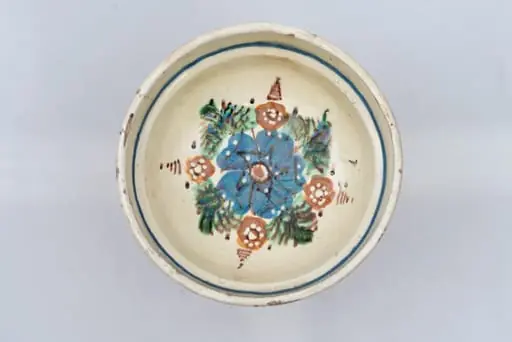 Farfurie adâncă de tip castron, cu corp tronconic, ușor concav, și buza dreaptă și verticală. Este acoperită pe suprafața interioară și pe exteriorul buzei cu un strat de angobă albă. Decorul este pictat cu pensula și cu cornul și se compune din motive florale și vegetale stilizate: central pe fundul farfuriei este pictată o floare cu cinci petale albastre, frunze verzi și patru flori mai mici, maro. O linie circulară albastră marchează pe interior partea inferioară a buzei, iar exteriorul acesteia este decorat cu o linie circulară simplă, ș una ondulată, albastre. Cromatica: alb, albastru, verde, maro. Ambele suprafețe ale farfuriei sunt acoperite cu un strat de smalț transparent.
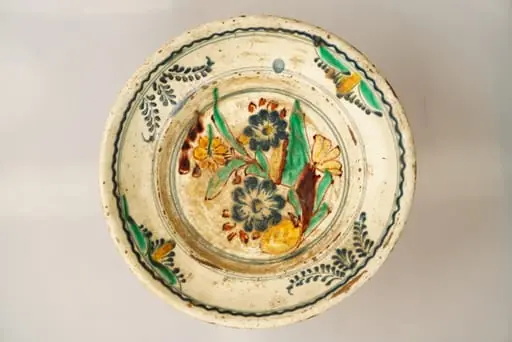 Farfurie adâncă, cu buza dreaptă evazată; suprafața exterioară este acoperită cu un strat de angobă albă peste care este pictat cu cornul și cu pensula decorul format din motive florale și geometrice, dispuse astfel: registrul decorativ de pe fundul farfuriei conține, încadrat într-un cerc dublu albastru, un buchet desenat cu contur subțire maro, format din două flori cu petale ușor alungite albastre, un boboc și două flori galbene și din frunze verzi. Registrul decorativ de pe buza farfuriei, marcat de două linii circulare duble albastre, conține două motive decorative formate din trei frunze realizate din linii mici albastre și două motive formate din două frunze verzi și o floare centrală galbenă, decorată cu linii mici albastre. Marginea buzei este decorată cu o linie circulară albastră. Suprafața ornamentată a farfuriei este acoperită cu un strat de smalț transparent. Cromatica: alb, galben, verde, maro, albastru.
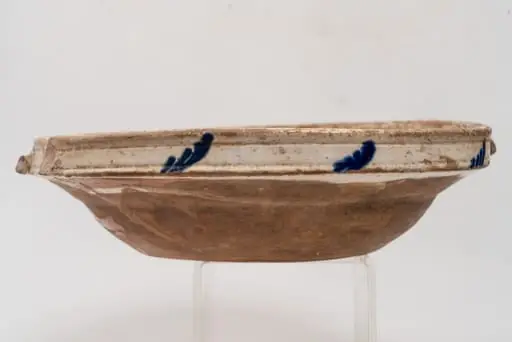 Farfurie adâncă de tip castron, cu corp tronconic și buza dreaptă, verticală. Cele două torți laterale de prindere cu care a fost prevăzută inițial farfuria, nu se mai păstrează. Suprafața interioară a farfuriei și exteriorul buzei sunt acoperite cu un strat de angobă albă, peste care este pictat cu cornul și cu pensula decorul monocromatic, compus din motive florale și vegetale stilizate: registrul decorativ de pe centrul farfuriei conține, încadrată într-un cerc albastru, o tulpină cu trei flori cu petale mici rotunde și cu mijlocul format din linii hașurate intersectat, și cu frunze. Peretele farfuriei, imediat sub buză, este decorat cu un șir de frunze duble și linii mici punctate, încadrate între două linii circulare albastre. Exteriorul buzei este decorat cu grupuri formate din câte trei-patru linii ușor curbe și descrescătoare ca mărime și cu două linii circulare incizate. Suprafața ornamentată a farfuriei este acoperită cu un strat de smalț transparent. Cromatica: alb, albastru.
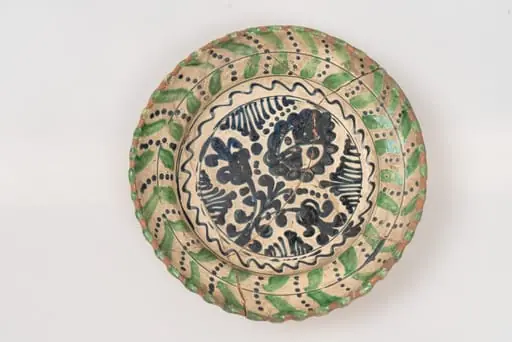 Farfurie de formă semi-adâncă, cu buză evazată și muchia buzei ondulată. Farfuria este angobată pe fața interioară cu un strat de humă albă, peste care este pictat cu cornul și cu pensula decorul format din motive florale și fitomorfe stilizate și din motive geometrice: în registrul central de pe fundul farfuriei este pictată o tulpină cu trei flori și frunze mici de culoare albastră, înscrisă într-un cerc dublu ce are la mijloc o linie ondulată circulară, de culoare albastră. Acest registru este completat cu motive formate din linii albastre crescătoare și descrescătoare dispuse în formă de triunghi. Buza farfuriei este decorată cu un șir continuu de frunze duble verzi între linii punctate de culoare albastră. Buza farfuriei este marcată cu o dungă de culoare verde. Cromatica: alb, albastru, verde. Farfuria este acoperită pe fața decorată cu un strat de smalț transparent.
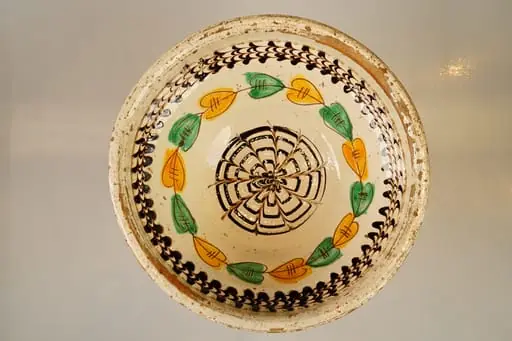 Farfurie adâncă, de tip castron, cu corp tronconic și buza dreaptă, cu muchia buzei răsfrântă spre exterior. Piesa este acoperită pe suprafața interioară cu un strat de angobă albă, peste care este realizat, prin sgrafitare în pasta de angobă și prin pictare cu cornul și cu pensula, decorul format din motive vegetale și geometrice, dispuse astfel: fundul farfuriei este decorat cu cercuri concentrice de culoare maro, pictate cu cornul și trase cu găițoiul, iar peretele farfuriei cu un șir continuu de frunze duble de culoare verde și galben, realizate cu contur sgrafitat și înșiruite de-a lungul unei linii circulare sgrafitate. La baza buzei se găsește o bandă decorativă circulară, formată din linii de culoare maro-închis, trase cu găițoiul. Suprafața ornamentată a farfuriei este acoperită cu un strat de smalț transparent. Cromatica: alb, verde, maro-închis, galben.
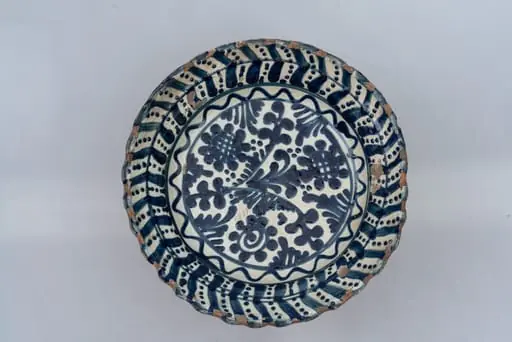 Farfurie semi-adâncă, cu fund larg, buză evazată și muchia buzei ondulată. Este acoperită pe suprafața interioară cu un strat de angobă albă peste care este pictat cu pensula și cu cornul decorul monocromatic format din motive geometrice și florale stilizate: registrul central de pe fundul farfuriei conține un buchet format din trei flori cu petale rotunde și mijlocul umplut cu linii hașurate intersectat, una dintre flori având mijlocul dintr-o linie spiralată, și din frunze; acest registru este încadrat între două linii circulare simple și o linie circulară ondulată și este completat cu șase motive formate din grupuri de linii crescătoare și descrescătoare, dispuse sub formă de triunghi și cu puncte. Registrul decorativ marginal de pe buza farfuriei este decorat cu un șir continuu de frunze duble între care se găsesc motive punctate (linii). Muchia buzei este marcată cu o dungă albastră. Suprafața ornamentată a farfuriei este acoperită cu un strat de smalț transparent. Cromatica: alb, albastru.
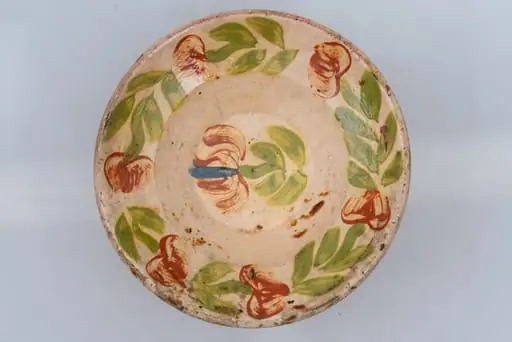 Farfurie adâncă, acoperită pe suprafața interioară cu un strat de angobă albă. Decorul este realizat prin pictare cu pensula și se compune din motive florale și fitomorfe: central pe fundul farfuriei este pictată o floare cu patru petale alungite de culoare maro deschis si o petală albastră și frunze verzi. Decorul de pe buza farfuriei se compune dintr-un șir de flori de culoare maro cu frunze verzi. Suprafața ornamentată a farfuriei este acoperită cu un strat de smalț transparent. Cromatica: alb, verde, albastru, maro-deschis.