Artwork
Farfurie mare, adâncă, cu buză lată, răsfrântă și cu muchia buzei dreaptă. Piesa este modelată la roata olarului, angobată cu humă albă pe fața interioară și decorată cu pensula și cu cornul. Motivele decorative sunt vegetale și florale stilizate și geometrice, foarte variate, acoperind întreaga suprafață a piesei. Cromatica: alb, albastru. Piesa este smălțuită pe interior cu smalț transparent.
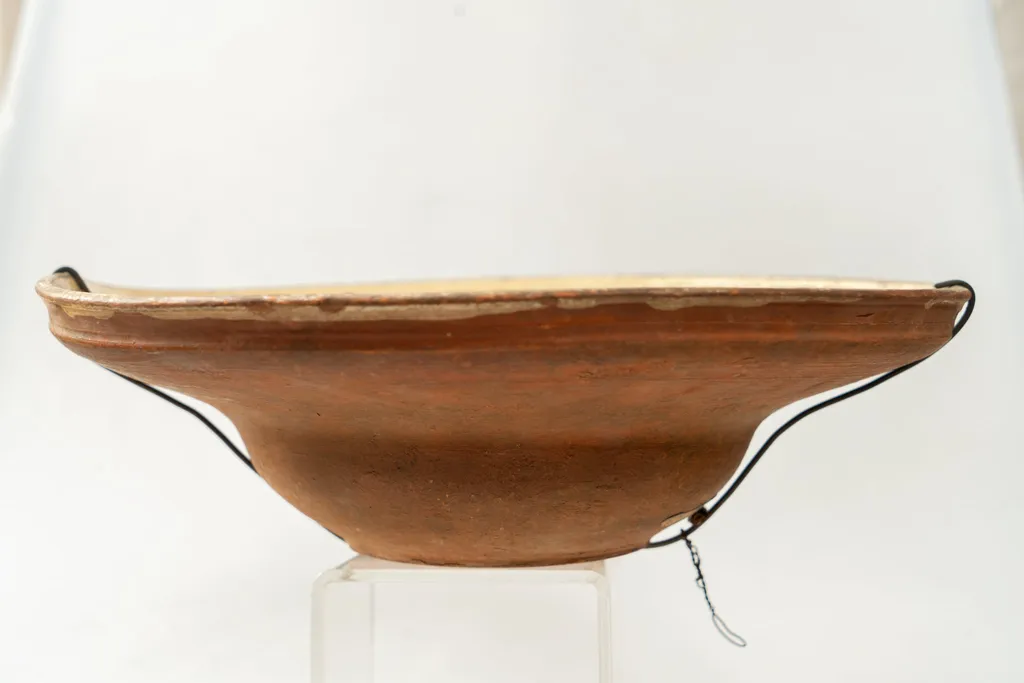
Farfurie mare, adâncă, cu buză lată, răsfrântă și cu muchia buzei dreaptă. Piesa este modelată la roata olarului, angobată cu humă albă pe fața interioară și decorată cu pensula și cu cornul. Motivele decorative sunt vegetale și florale stilizate și geometrice, foarte variate, acoperind întreaga suprafață a piesei. Cromatica: alb, albastru. Piesa este smălțuită pe interior cu smalț transparent. is a print by Unknown. It dates from 1850 and is held in the collection of the Ethnographical Museum of Transylvania. This ceramic vessel is a large, wheel-thrown bowl with a broad, upturned rim and a sturdy, simple form.
About this work
Overview
Decoration is applied with brush and horn tools, limited to blue and white pigments, creating a restrained yet intricate pattern across the entire interior.
This ceramic vessel is a large, wheel-thrown bowl with a broad, upturned rim and a sturdy, simple form. Its exterior retains the natural reddish-brown hue of fired clay, while the interior is coated in a white slip. A transparent glaze seals the inner surface, enhancing durability and visual contrast. Decoration is applied with brush and horn tools, limited to blue and white pigments, creating a restrained yet intricate pattern across the entire interior.
Subject & Meaning
The decorative motifs consist of stylized floral and vegetal forms, interwoven with geometric patterns. These designs lack figurative representation, suggesting an emphasis on rhythm and repetition rather than narrative. Such ornamentation may reflect regional aesthetic traditions, possibly tied to agricultural cycles or symbolic uses of plant forms in daily life, though no explicit ritual function is documented.
Technique & Style
The vessel was formed on a potter’s wheel, indicating standardized production methods. The interior was coated with white slip, then painted with blue designs using fine brushes and possibly a hollowed horn for controlled lines. The use of two colors and dense, all-over patterning reflects a deliberate effort to maximize visual impact within a limited palette, characteristic of folk ceramic traditions in the region.
History & Provenance
Though exact origins are unrecorded, the form and decoration align with late 19th- to early 20th-century ceramic practices in Eastern Europe, particularly in rural communities. Similar pieces are held in the Museum of Ethnography, suggesting this object was collected as part of broader efforts to document vernacular material culture during a period of increasing industrialization.
Context
This bowl likely served utilitarian purposes—storage, serving, or ritual use in domestic settings. Its durable construction and glazed interior indicate practical concerns, while the decorative effort suggests value beyond mere function. The prevalence of similar wares in ethnographic collections points to widespread local craftsmanship, preserved as cultural artifacts amid shifting lifestyles.
Legacy
The vessel represents a continuity of pre-industrial ceramic traditions in Eastern Europe, where handcrafted forms persisted alongside modernization. Its preservation in museum collections underscores its role as a tangible link to regional artisan practices, offering insight into everyday aesthetics and material culture before mass production replaced localized making.
Artist & collection
Museum
Ethnographical Museum of Transylvania
Continue through works from the same source collection.
 Domestic Scene
 Giacomo and Cardinal Marco, investing Andrea, Abbot of San Zeno, with his Benefice
 The Nymph of Fontainebleau
 Portrait of a Woman
 Madonna and Child with Saints in the Enclosed Garden
 Venus and Minerva
 Family Group of Four on Sofa
 Wall painting from Room H of the Villa of P. Fannius Synistor at Boscoreale
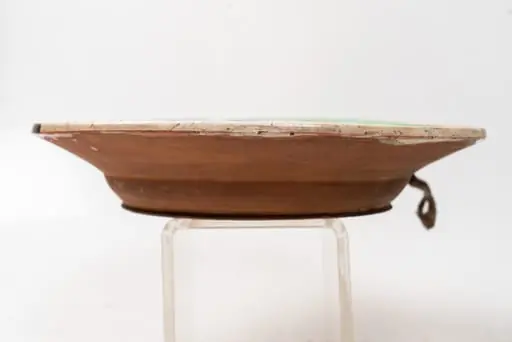 Farfurie mare, semi-adâncă, cu buza răsfrântă; piesa este modelată la roata olarului și angobată cu humă albă pe fața interioară. Decorul este realizat prin sgrafitare în pasta albă de angobă și prin pictare cu pensula și cu cornul și se compune din motive decorative vegetale (o floare foarte stilizată, cu patru petale, dispusă în registrul central de pe fundul farfuriei) și geometrice (linii circulare, de culoare verde și siena arsă, pe buza farfuriei). Cromatica: alb, verde, siena arsă, maro. Fața ornamentată a farfuriei este acoperită cu un strat de smalț transparent.
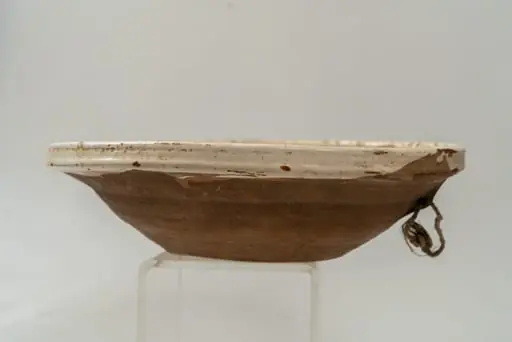 Farfurie mare, adâncă, de tip castron. Piesa este modelată la roata olarului și este angobată pe fața sa interioară. Decorul este pictat cu pensula și cu cornul și se compune din motive decorative florale (buchet de flori, în zona centrală a farfuriei) și geometrice (linii hașurate, linii sub formă de cercuri concentrice) situate pe buza farfuriei. Cromatica: alb, albastru, siena naturală, verde. Farfuria este acoperită, pe fața sa interioară, de un strat de smalț transparent.
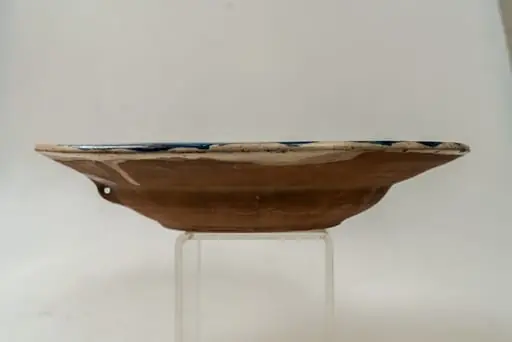 Farfurie mare, adâncă, cu corp scund și buză lată, răsfrântă. Piesa este modelată la roata olarului, angobată cu humă albă pe fața interioară a acesteia. Decorul este unul bogat, realizat prin pictare cu pensula, cu linii groase, și constă în motive decorative florale și vegetale stilizate (flori și frunze), dispuse pe toată suprafața farfuriei. Cromatica decorului: alb, albastru. Farfuria este smălțuită pe interior, cu smalț transparent.
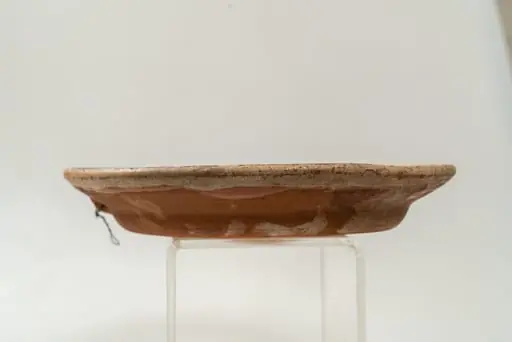 Farfurie semi-adâncă, cu buza răsfrântă, modelată la roata olarului și angobată cu humă albă pe fața interioară. Decorul este pictat cu cornul și cu pensula și se compune din motive decorative vegetale stilizate (flori cu frunze, dispuse central, pe fundul farfuriei) și motive decorative geometrice (șapte grupuri de linii paralele,verticale, intercalate cu șapte grupuri de câte 3 linii sub formă de semicercuri umplute cu culoare galbenă și verde), dispuse pe buza farfuriei și încadrate de linii paralele sub formă de cerc. Piesa este acoperită pe fața pictată cu un strat de smalț transparent. Cromatica: alb, verde, maro, galben ocru.
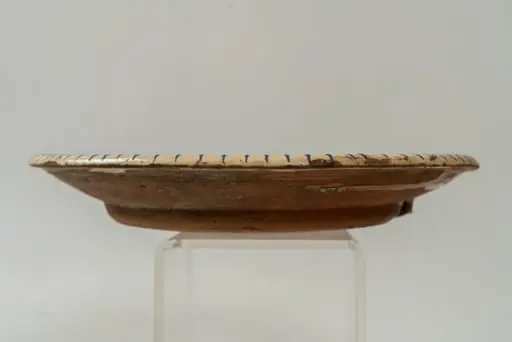 Farfurie de formă aplatizată, modelată la roata olarului, angobată cu humă albă pe fața interioară a acesteia. Decorul este realizat prin pictare cu pensula și cu cornul și constă în motive decorative vegetale stilizate (floare cu frunze - dispuse central, pe fundul farfuriei) și motive geometrice (grupuri de linii paralele, descrescătoare ca mărime - motivul brăduțului - și un șir de linii paralele pe toată lungimea muchiei buzei). Cromatica decorului: alb, albastru. Farfuria este smălțuită pe interior, cu smalț transparent.
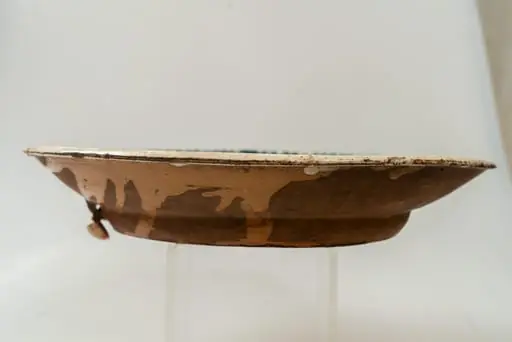 Farfurie mare, lată, cu buză răsfrântă. Este modelată la roata olarului și angobată cu humă albă pe fața interioară. Decorul este realizat prin pictare cu cornul și cu pensula și se compune din motive decorative florale stilizate (buchet central, pe fundul farfuriei) și motive geometrice variate, dispuse pe buza farfuriei. Cromatica: alb, brun, verde, galben, albastru. Fața interioară a farfuriei este acoperită de un strat de smalț transparent.
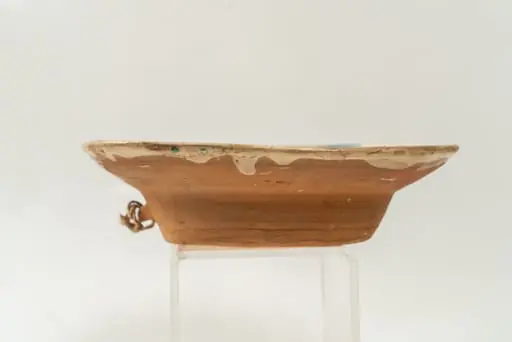 Farfurie adâncă, cu corp mic și buză lată, evazată; piesa este modelată la roata olarului și angobată cu humă albă pe fața interioară. Decorul este realizat prin pictare cu pensula și se compune din motive decorative florale și vegetale stilizate, dispuse central, pe fundul vasului (o floare albastră cu frunze verzi) și pe buza farfuriei (4 flori albastre alternate cu 4 grupuri de frunze). Fața decorată a farfuriei este acoperită cu un strat de smalț transparent. Cromatica: alb, albastru, verde.
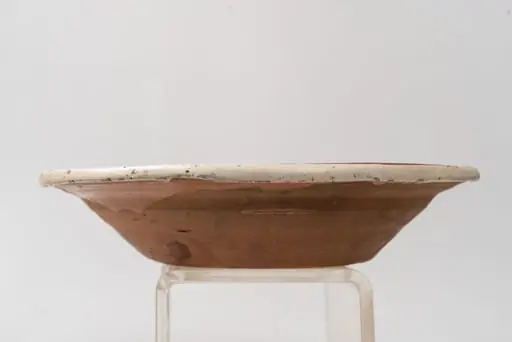 Farfurie adâncă, cu buza răsfrântă; piesa este modelată din lut la roata olarului și angobată cu humă albă pe fața interioară. Decorul este realizat prin pictare cu cornul și constă în motive geometrice (linii hașurate, puncte, linii circulare, linii dispuse sub formă de raze, linii în V). Cromatica: alb, albastru, verde, siena arsă. Fața ornamentată a farfuriei este acoperită cu un strat de smalț transparent.
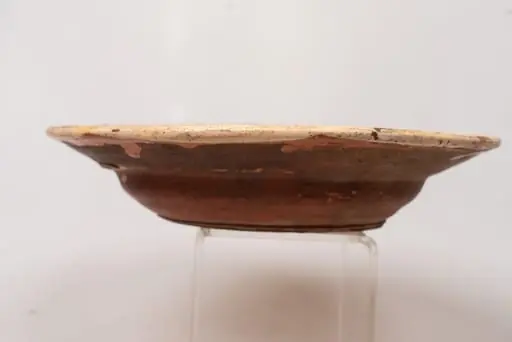 Farfurie mare, adâncă, cu buză lată, răsfrântă; piesa este modelată la roata olarului și angobată cu humă albă pe fața interioară. Decorul este pictat cu pensula și se compune din motive vegetale și avimorfe stilizate, dispuse astfel: în registrul central de pe fundul farfuriei este pictată o pasăre albastră așezată pe o tulpină cu o floare de culoare albastră și frunze verzi, iar pe muchia buzei sunt pictate șapte păsări de culoare albastră, intercalate de șapte grupuri de frunze. Cromatica: alb, albastru, verde, galben (culoarea verde a elementelor vegetale ale decorului a fost obținută prin suprapunerea de către meșter a unei culori galbene peste pigmentul albastru, rezultând o oarecare culoare verde, cu halouri de galben). Fața ornamentată a farfuriei este acoperită cu un strat de smalț transparent.