Artwork
Game Piece with Hercules Slaying the Three-Headed Geryon
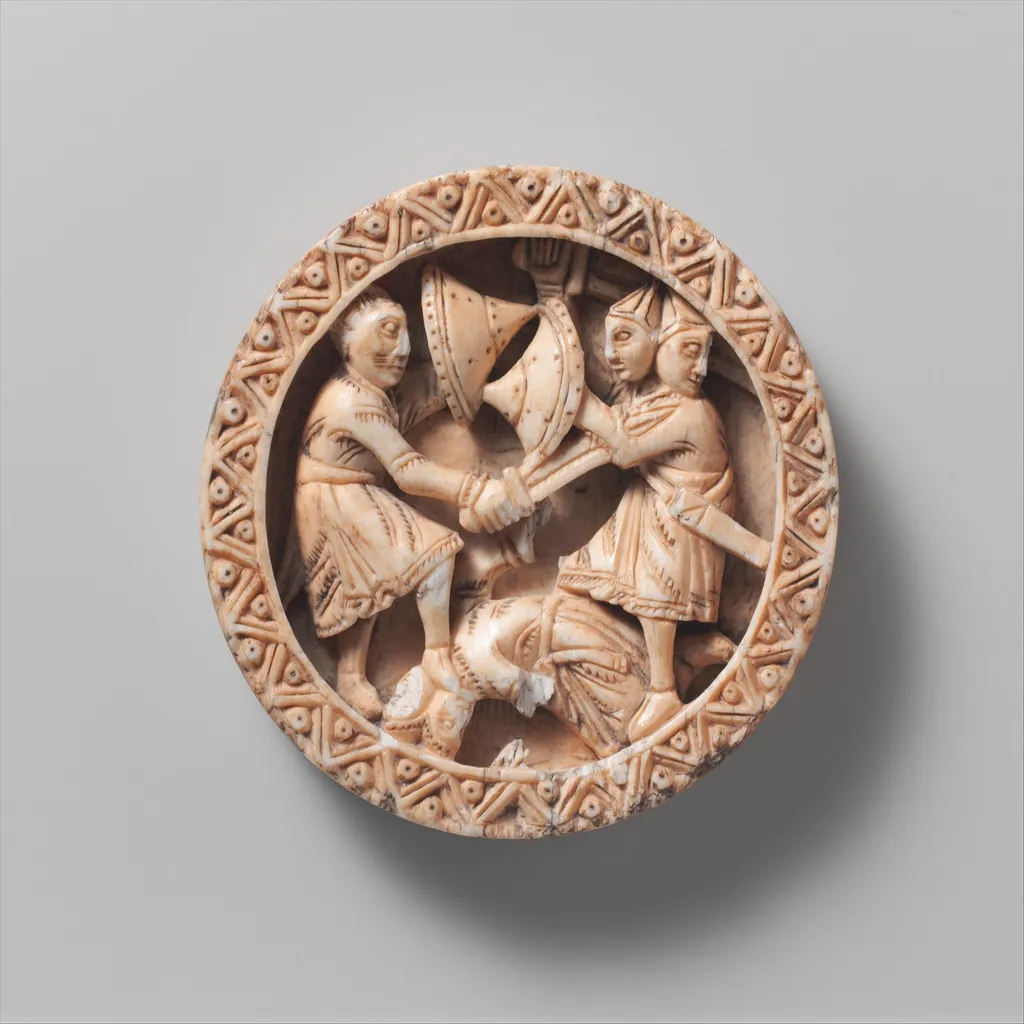
Game Piece with Hercules Slaying the Three-Headed Geryon is an unspecified painting. It dates from 1150 and is held in the collection of the Metropolitan Museum of Art.
About this work
Subject & Meaning
The work functions as a game piece, suggesting its primary role was likely recreational or educational within a medieval context rather than purely devotional.
Created circa 1150, this anonymous mythological painting illustrates the classical legend of Heracles (Hercules) engaged in combat with a monster. The specific subject matter identifies the adversary as the three-headed Geryon, a multi-formed giant from Greek mythology. The work functions as a game piece, suggesting its primary role was likely recreational or educational within a medieval context rather than purely devotional.
By depicting the hero slaying the beast, the image captures a moment of triumph over chaos, a common theme in mythological narratives adapted for medieval audiences. The inclusion of such a specific labor of Hercules on a gaming object indicates the enduring popularity of classical heroes in twelfth-century material culture, serving both as entertainment and a visual reference to ancient tales of strength and victory.
History & Provenance
The Game Piece with Hercules Slaying the Three-Headed Geryon is an anonymous mythological painting dated to approximately 1150. The work depicts Heracles in combat with a three-headed monster within a game context. While the specific commission details and the identity of the original creator remain unrecorded, the piece is currently held in the collection of the Metropolitan Museum of Art.
Its creation history is characterized by its classification as a medieval painting executed in the High Middle Ages, reflecting the period's interest in classical mythology adapted for game pieces. No further details regarding the original patron or the specific workshop of production are provided in the available records, leaving the precise circumstances of its creation to the general timeframe of the mid-12th century.
The painting titled Game Piece with Hercules Slaying the Three-Headed Geryon is held in the collection of the Metropolitan Museum of Art. Created around the year 1150 by an anonymous artist, this mythological work depicts the hero Heracles confronting a three-headed monster. While the artwork is currently located at the Metropolitan Museum of Art, the provided sources do not specify a unique inventory or accession number for the piece.
Furthermore, the available documentation contains no details regarding the work's exhibition history or specific display records within the museum. The piece remains categorized as a mythological painting from the twelfth century within the institution's holdings.
Overview
This carved game piece depicts a pivotal moment from classical mythology: the hero Hercules engaged in combat with the monstrous, three-headed Geryon. The small, circular object captures the intensity of the struggle, presenting a muscular figure confronting a formidable beast. Such pieces were likely part of a larger set, used for strategic play, while simultaneously illustrating well-known narratives from antiquity.
Technique & Style
The carving employs a direct and vigorous style to convey the dramatic confrontation. Deep cuts define the figures, emphasizing the hero's musculature and the beast's tangled limbs and sharp claws. Despite its compact size, the piece achieves a sense of dynamic action through its clear lines and focused composition. A decorative border, featuring a repeating motif resembling leaves or stars, frames the central narrative.
Artist & collection

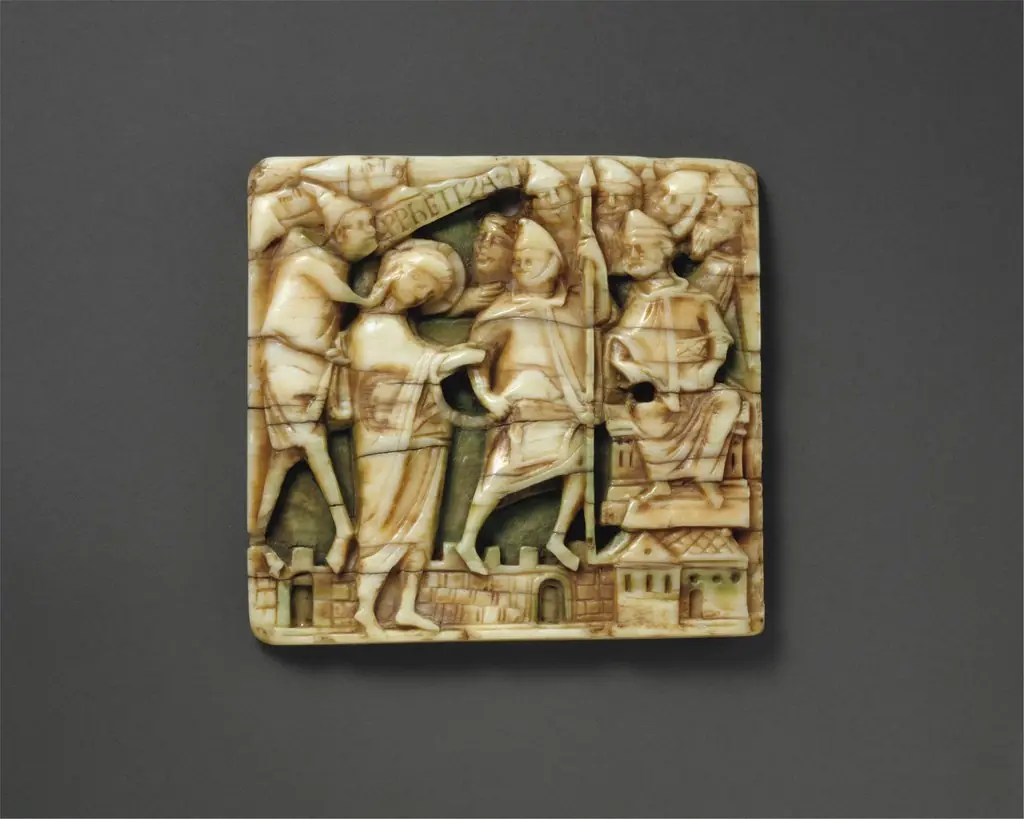
- Plaque with Christ Before the High Priest Caiaphas
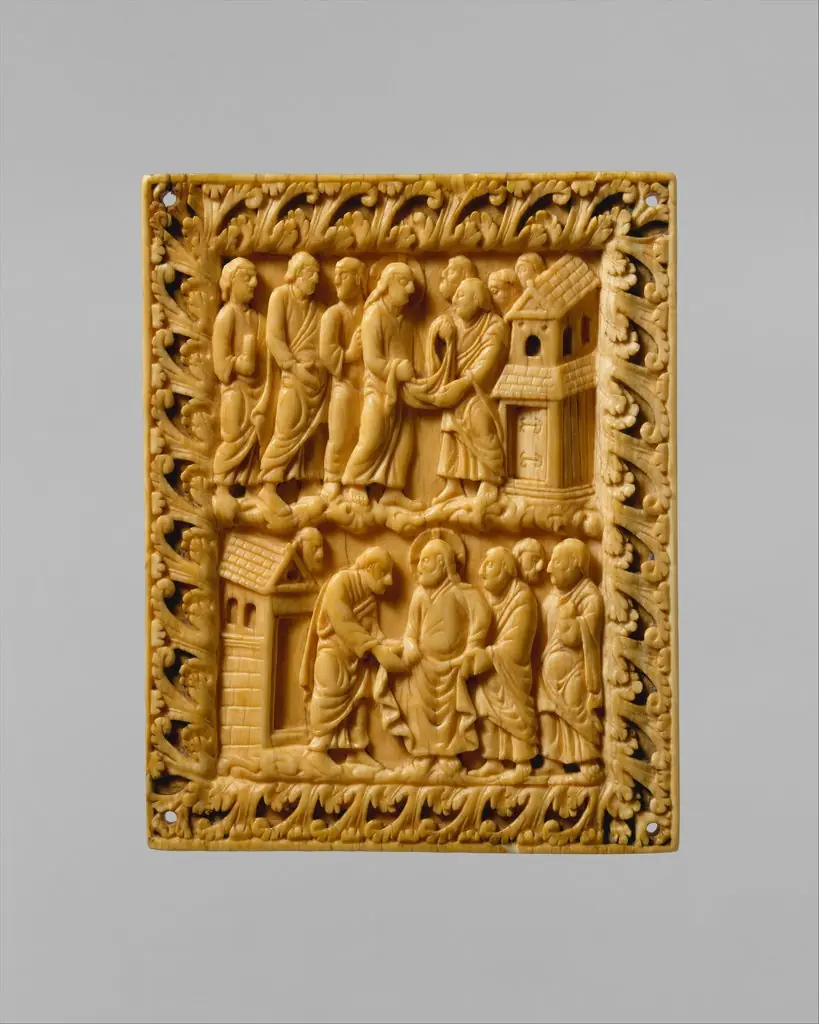 Two Scenes of Christ and the Apostles
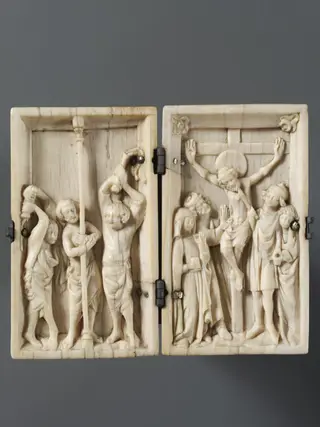 Scourging of Christ and the Crucifixion
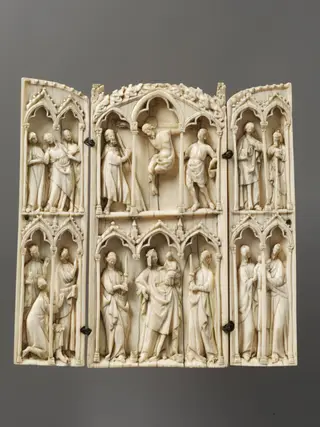 The Crucifixion, the Virgin and Child and Scenes from the Life of Christ
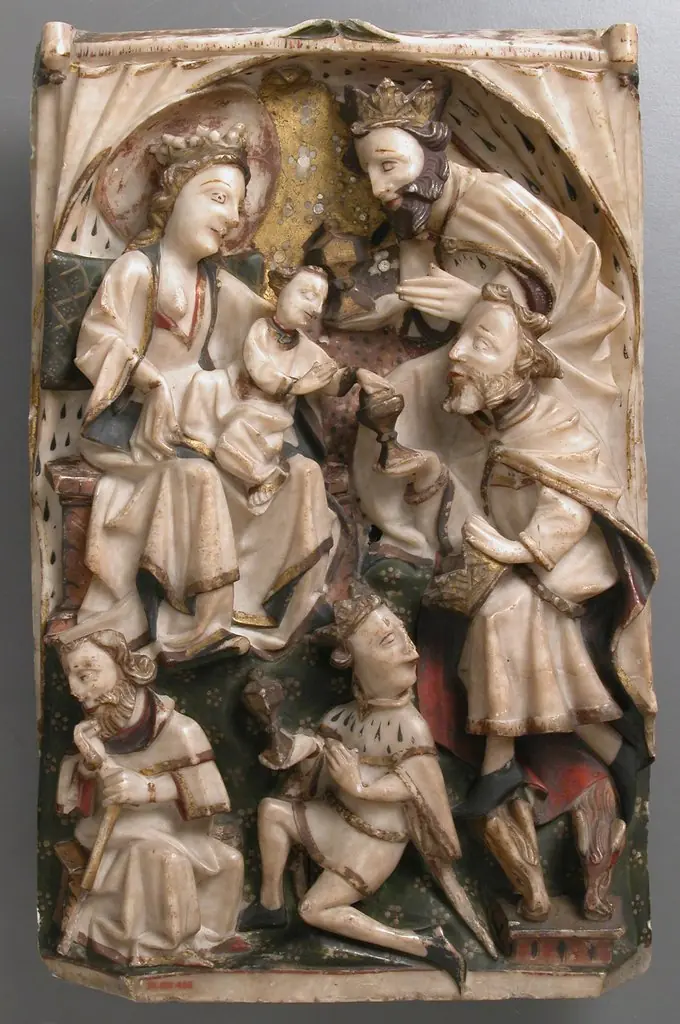 Adoration of the Magi
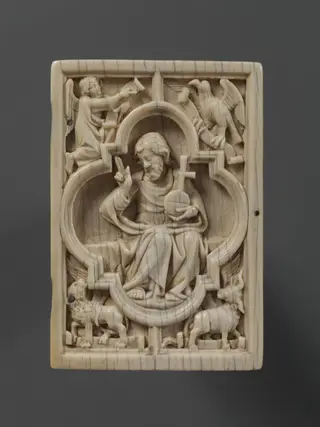 Christ in Majesty and the Coronation of the Virgin
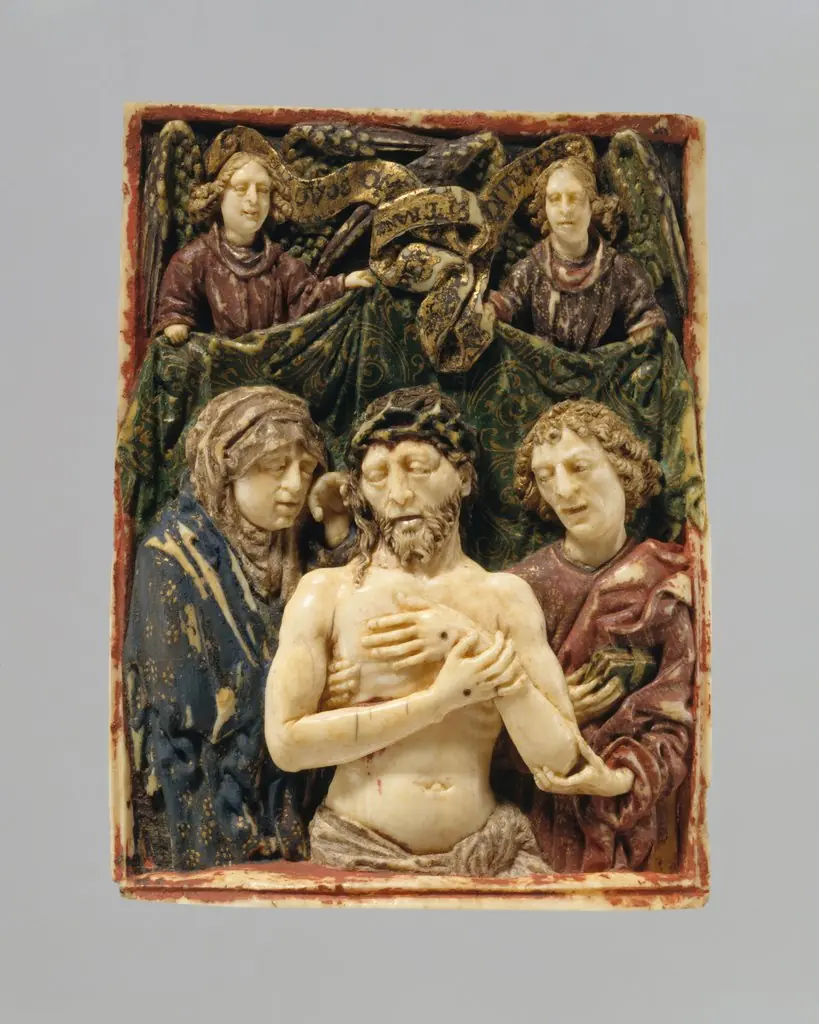 Man of Sorrows
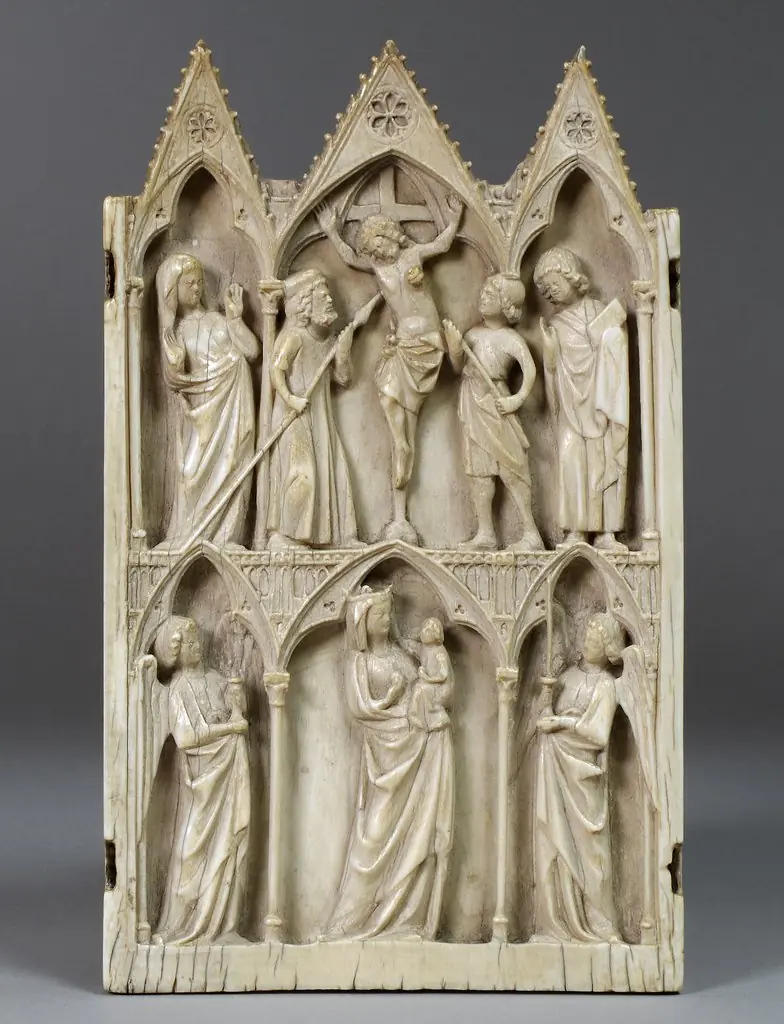 Central Panel of a Triptych
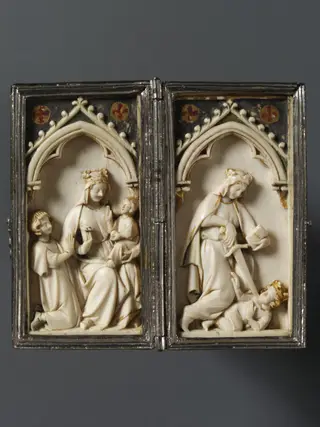
 Diptych
 The Nativity with the Adoration of the Magi, the Crucifixion and the Last Judgement
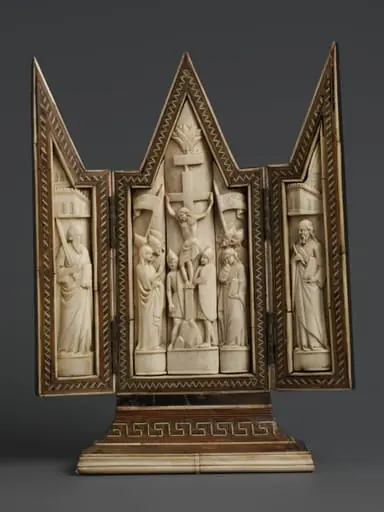 The Crucifixion
 The Virgin and Child and St Catherine with the Emperor Maxentius