Artwork
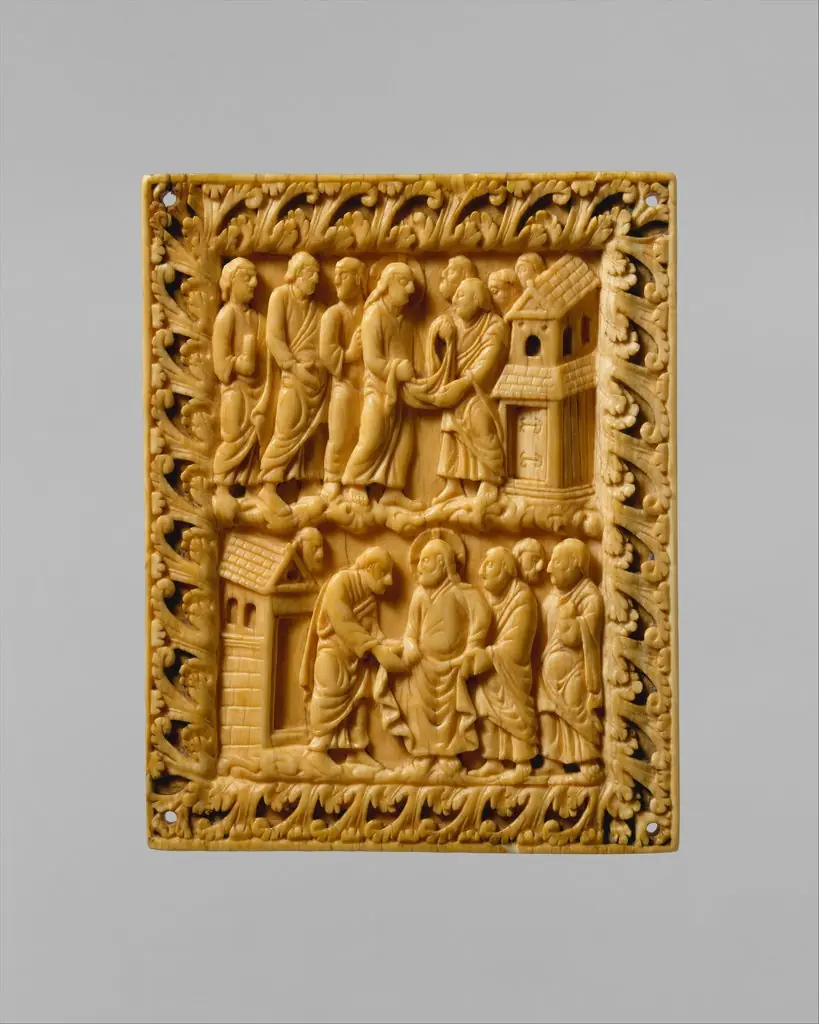
Plaque with Christ Before the High Priest Caiaphas
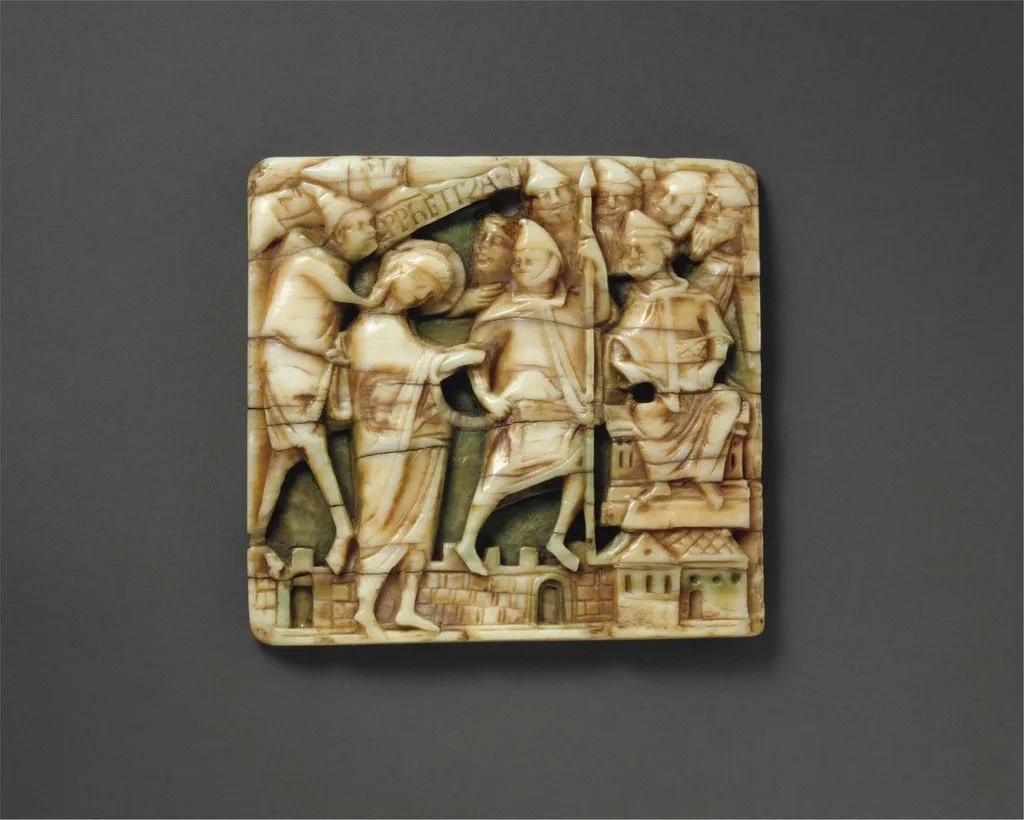
Plaque with Christ Before the High Priest Caiaphas is an unspecified painting. It dates from 1150 and is held in the collection of the Metropolitan Museum of Art. This carved plaque, dating from the 12th century, depicts a pivotal moment from the New Testament: Christ before the High Priest Caiaphas.
About this work
Look up The Metropolitan Museum of Art to see more carved religious scenes like this.
This carved box shows a group of robed figures in a tight space. One man stands in the center, arms out. Others crowd around him, some looking down or away. The background has simple buildings with flat roofs. The whole scene is carved from a light, creamy material with greenish accents.
The central figure might be the focus, but the faces are worn smooth. The artist used shallow carving to show folds in the robes. This piece is old, made between 1100 and 1200.
Look up The Metropolitan Museum of Art to see more carved religious scenes like this.
Subject & Meaning
The plaque depicts the biblical narrative of Christ standing before the High Priest Caiaphas, a pivotal moment in the Passion story. As a work of religious art created around 1150, the piece functions as an anonymous carving intended for devotional or liturgical contexts. The subject matter focuses on the interrogation scene, highlighting the confrontation between Jesus and the Jewish high priest.
This iconography serves to visualize the trial of Christ, emphasizing themes of judgment and the fulfillment of prophecy within the Christian tradition. The artwork represents the solemnity of the event through its classification as religious art, preserving the theological significance of the encounter for viewers. Its creation in the mid-twelfth century aligns with a period of heightened production of such narrative religious objects.
History & Provenance
The plaque, dated to circa 1150, is an anonymous carving whose original commission and early ownership are not documented in the available sources. It entered the collection of the Metropolitan Museum of Art, where it is currently housed as a work of religious art depicting Christ before the High Priest Caiaphas. Both sources classify the work within the religious genre, noting its depiction of the New Testament scene. Prior to its acquisition by the Met, the provenance chain remains unspecified.
The plaque is held in the collection of the Metropolitan Museum of Art, where it is documented as part of the museum's holdings. According to the available records, the work's location is listed as the Metropolitan Museum of Art, and its collection attribution is to that same institution. The plaque is classified as a religious carving dating to 1150. No specific inventory or accession number, nor any exhibition history, is provided in the available sources.
Overview
This carved plaque, dating from the 12th century, depicts a pivotal moment from the New Testament: Christ before the High Priest Caiaphas. Fashioned from a light, creamy material with subtle greenish tones, the relief presents a crowded composition of robed figures within a compact architectural setting. It serves as an example of medieval religious narrative art, likely intended for devotional use or as part of a larger ecclesiastical furnishing.
Technique & Style
The artist employed a shallow relief carving technique to render the detailed drapery of the figures' robes, creating a sense of volume despite the limited depth. While the faces of the figures are now smooth from wear, the overall composition remains clear. Simple architectural elements, characterized by flat-roofed buildings, form a minimalist backdrop, emphasizing the dense gathering of figures in the foreground.
Context
Such carved religious plaques were common during the medieval period, serving various functions from altar decorations to portable devotional aids. Their production often involved workshops specializing in ivory, bone, or other materials suitable for intricate relief work. Examples of comparable carved religious narratives can be found in major museum collections, illustrating the widespread demand for visual representations of biblical stories.
Artist & collection

- Scourging of Christ and the Crucifixion
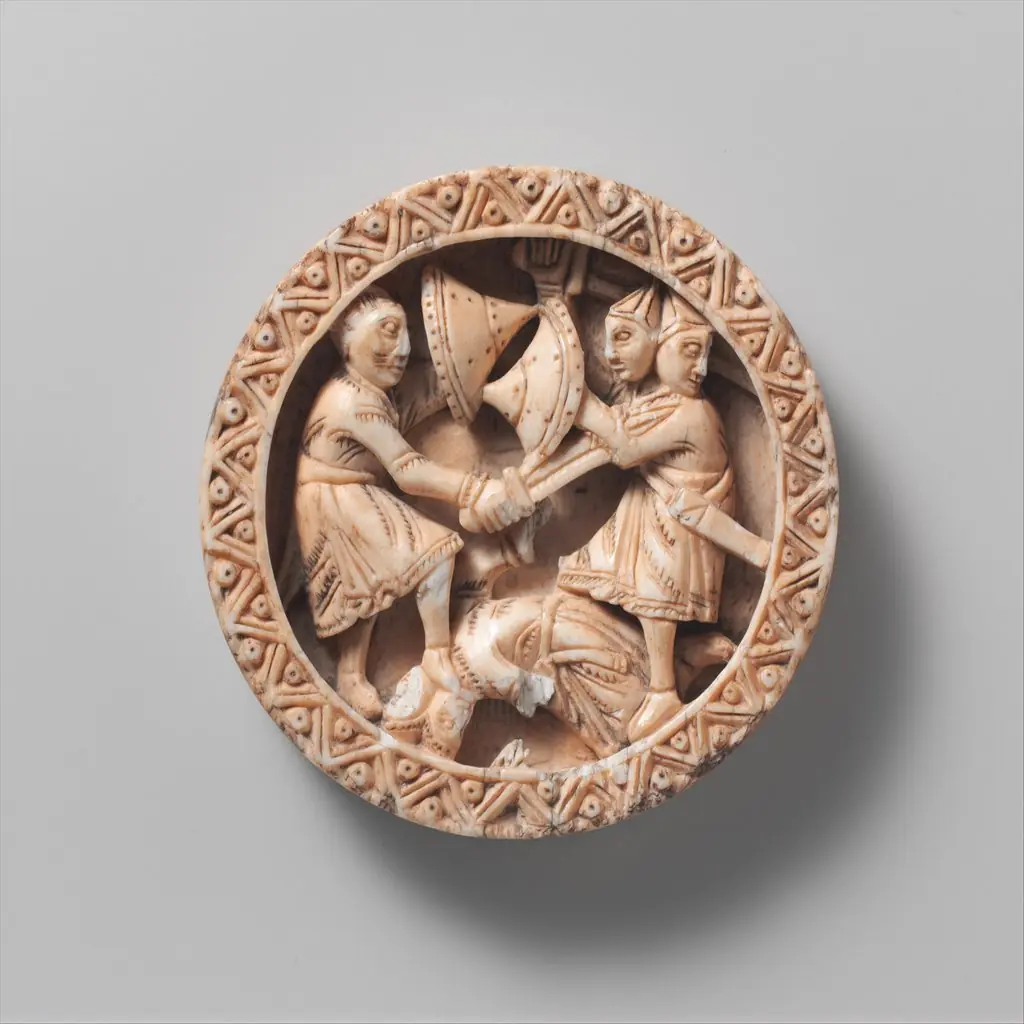 Game Piece with Hercules Slaying the Three-Headed Geryon
 The Nativity with the Adoration of the Magi, the Crucifixion and the Last Judgement
 The Crucifixion, the Virgin and Child and Scenes from the Life of Christ
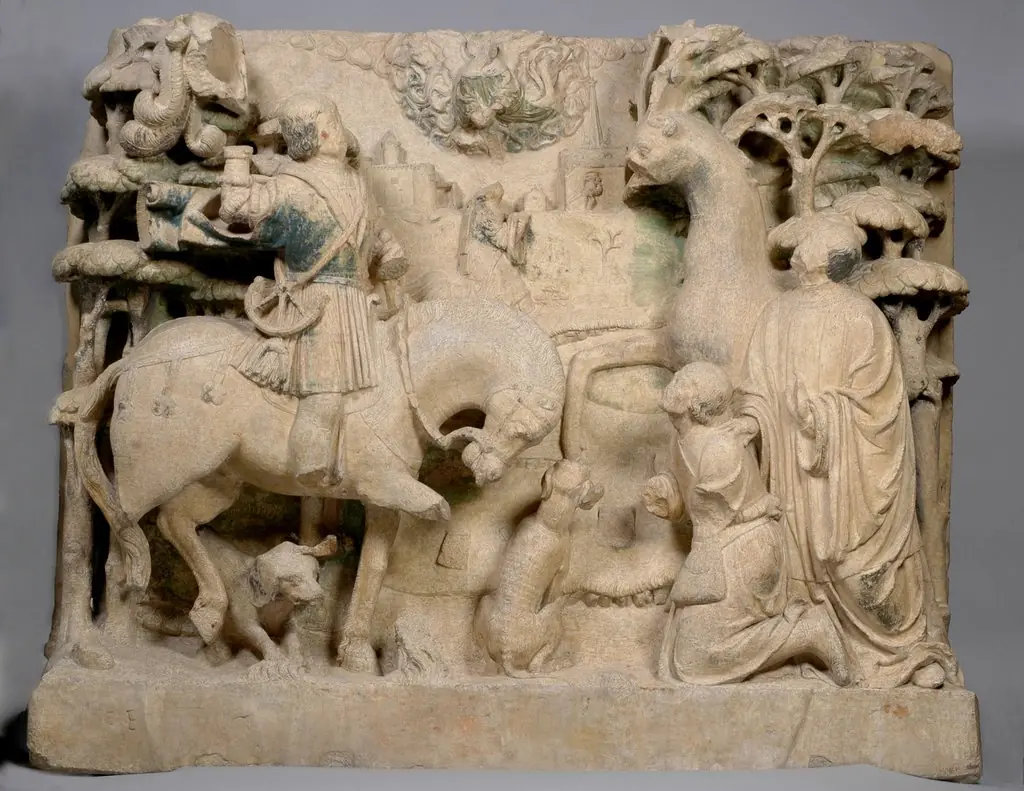 Saint Hubert and the Stag
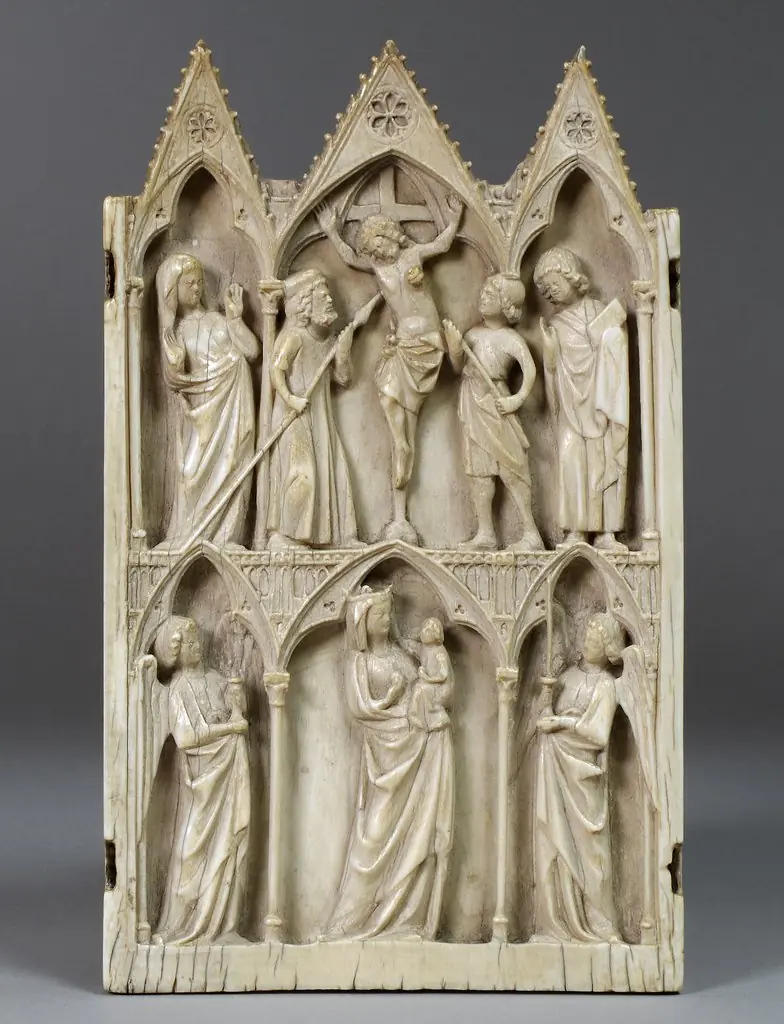 Central Panel of a Triptych
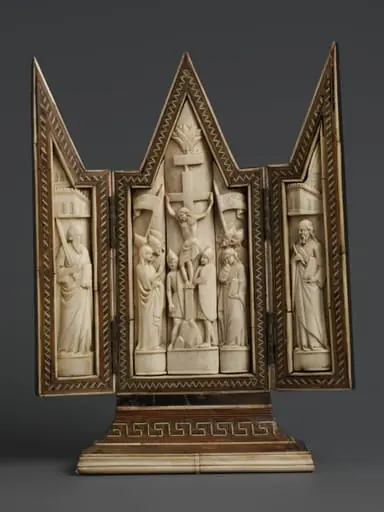 The Crucifixion
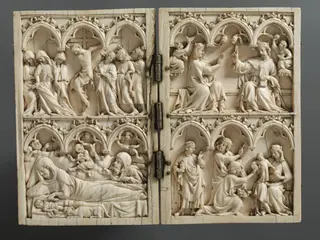 The Nativity, the Adoration of the Magi, the Crucifixion and the Coronation of the Virgin
 Two Scenes of Christ and the Apostles
 Adoration of the Magi
 Diptych
 Plaque with the Pentecost