Artwork
Hanuman
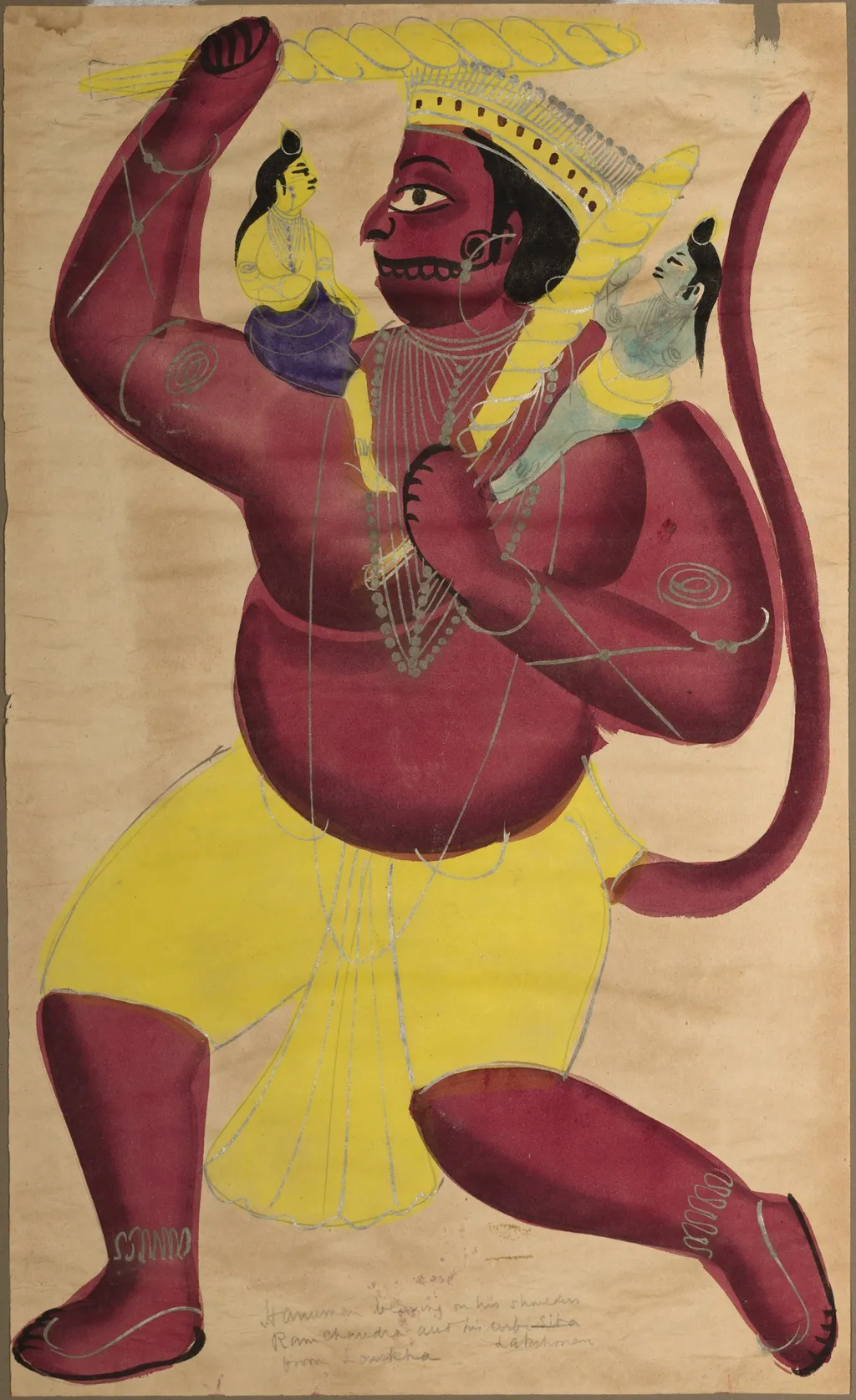
Hanuman is an unspecified painting. It dates from 1890 and is held in the collection of the Cleveland Museum of Art.
About this work
History & Provenance
It is classified as a painting and is held in the collection of the Cleveland Museum of Art, where it is catalogued under accession number 1980.
The painting Hanuman is dated to 1880, with the inception recorded as 1 January 1880. It is classified as a painting and is held in the collection of the Cleveland Museum of Art, where it is catalogued under accession number 1980.217. The artist is not identified in the available records, and no information is provided concerning its commission, prior ownership, or chain of custody prior to its acquisition by the museum.
The painting titled Hanuman, created in 1880 by an unknown artist, is held in the collection of the Cleveland Museum of Art in Cleveland. The work is accessioned under the inventory number 1980.217. While the artwork is part of the museum's permanent holdings, the provided sources do not list specific exhibition histories or past display locations for this piece.
Overview
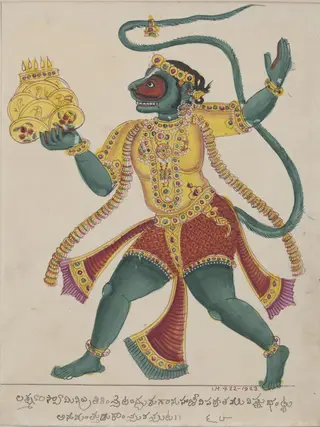
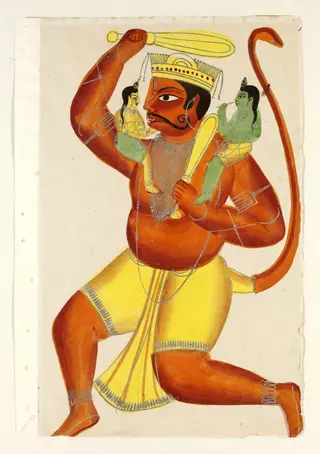
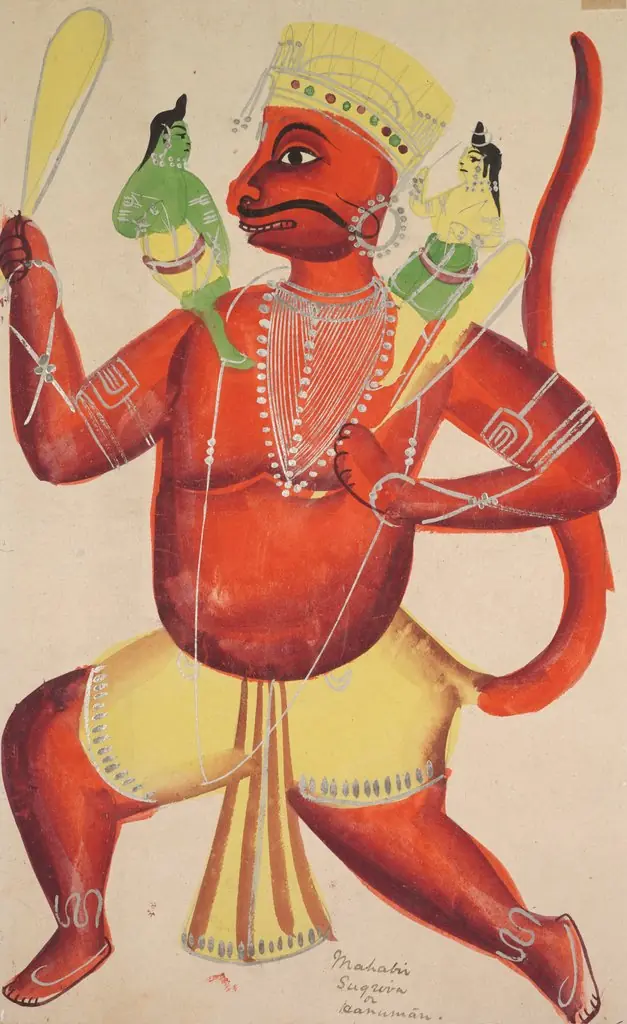
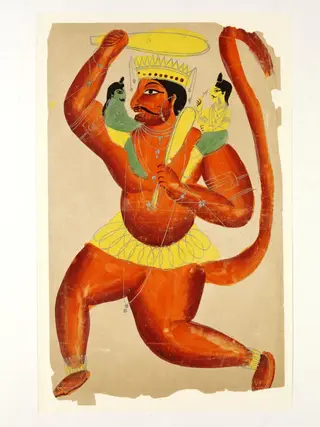
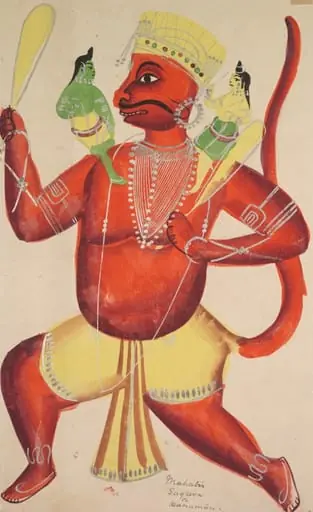
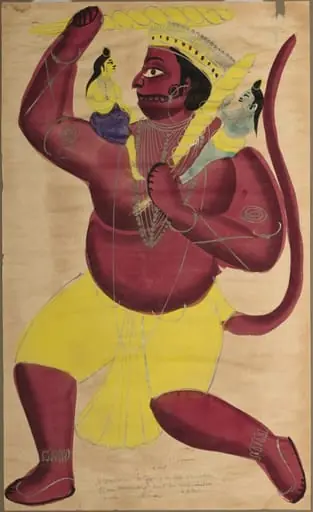
The work depicts a towering figure with red skin, adorned with a golden crown and necklace, grasping a small blue object in one hand and a club in the other. Two diminutive figures appear behind or upon its shoulders, suggesting a narrative scene rendered in vivid reds, yellows, and blues with clear outlines and flat color fields.
Subject & Meaning
The central character is the Hindu deity Hanuman, known for his strength and devotion. The accompanying smaller figures likely represent allies or devotees, while the blue object may allude to a specific episode from the Ramayana, emphasizing Hanuman’s role as a heroic messenger and protector.
Technique & Style
Executed with bold, saturated pigments, the painting employs a simplified, graphic approach: strong contour lines define forms, and large, unmodulated color areas create a flat visual effect. The composition emphasizes movement, with the figure’s raised arm and hip‑resting pose conveying dynamic action typical of folk or devotional illustration.
Context
Such depictions of Hanuman are common in South Asian religious art, where vivid coloration and straightforward iconography serve didactic purposes. The inclusion of textual elements at the bottom suggests the piece may have functioned as a visual aid for storytelling or ritual recitation within a community setting.
Artist & collection