Artwork
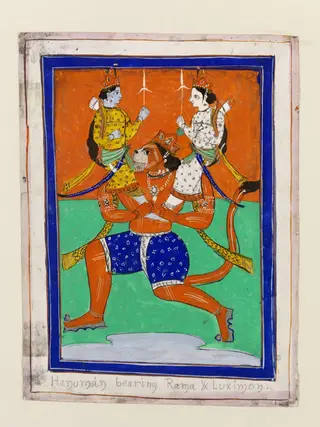
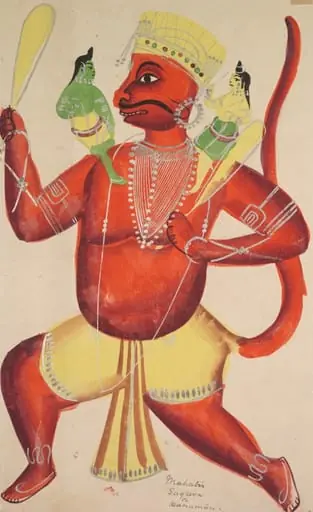
Hanuman with Rama and Lakshmana on his shoulders, from a Kalighat album
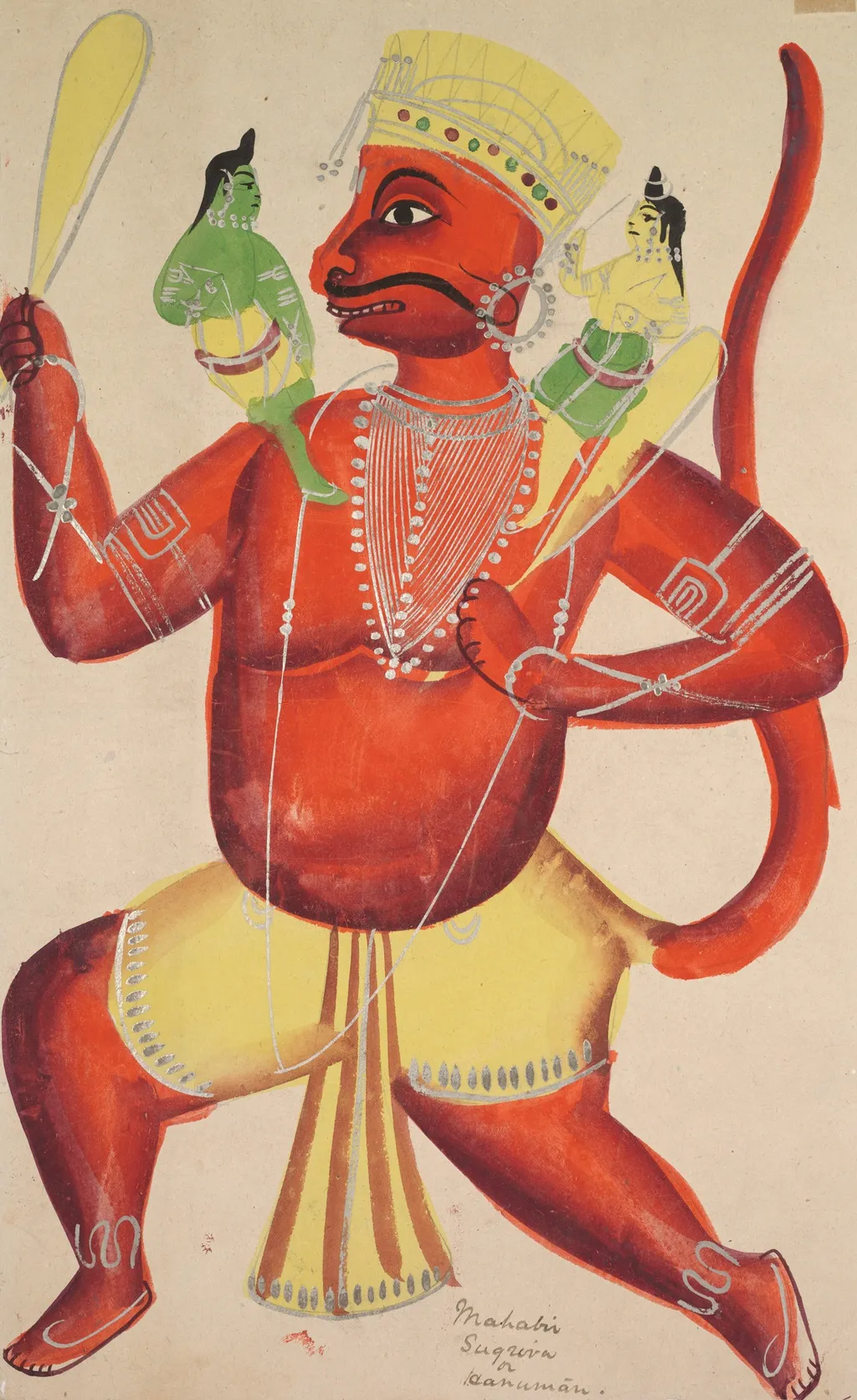
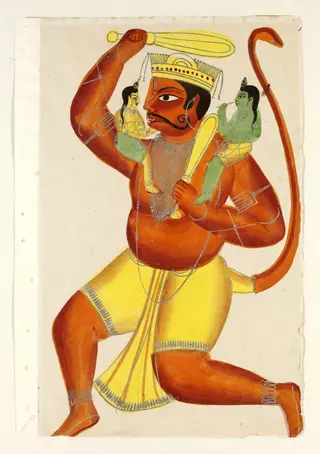
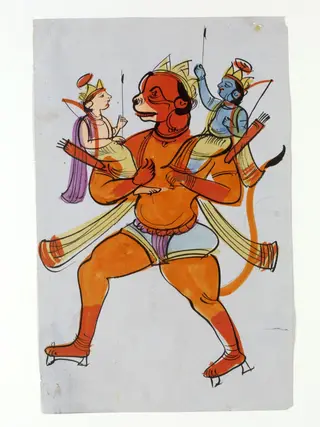
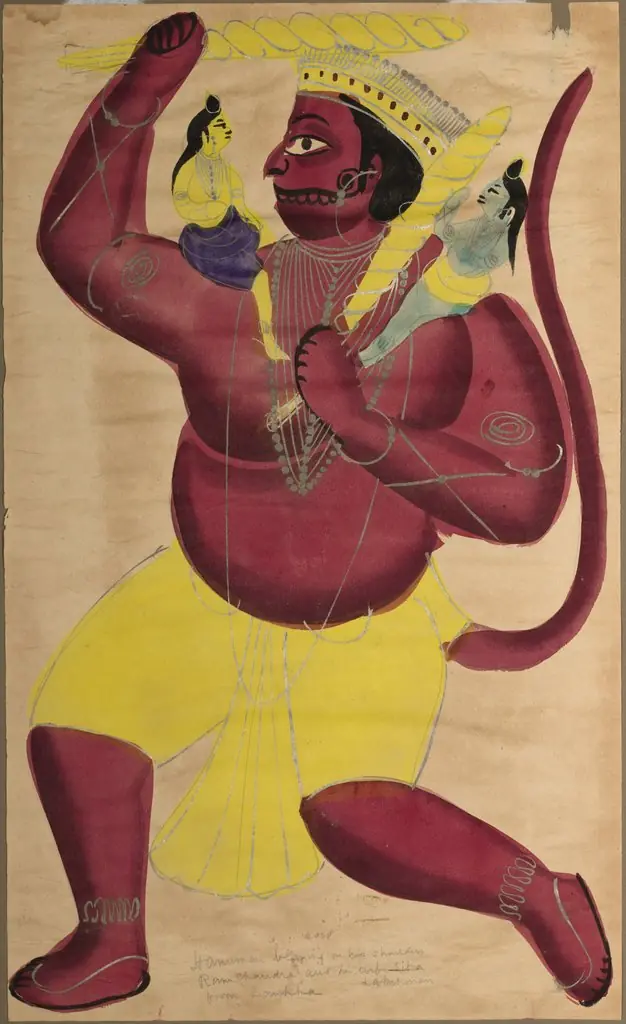
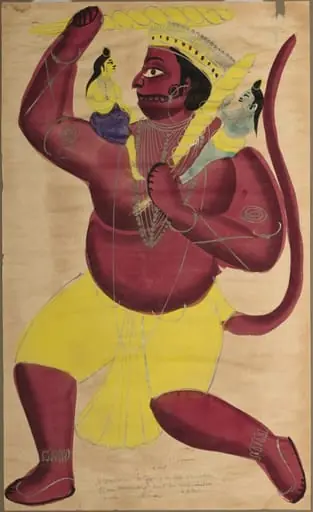
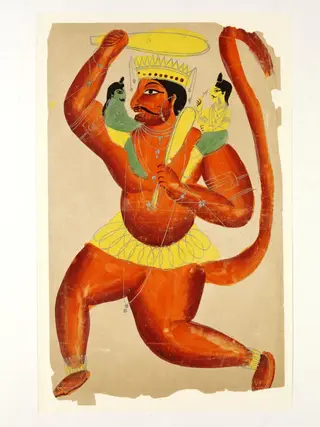
Hanuman with Rama and Lakshmana on his shoulders, from a Kalighat album is an unspecified painting. It dates from 1896 and is held in the collection of the Cleveland Museum of Art. The work is a Kalighat school painting that portrays the Hindu deity Hanuman bearing the brothers Rama and Lakshmana on his shoulders.
About this work
Subject & Meaning
The composition emphasizes Hanuman’s role as a devoted ally, while Rama and Lakshmana represent righteous sovereignty and the preservation of dharma.
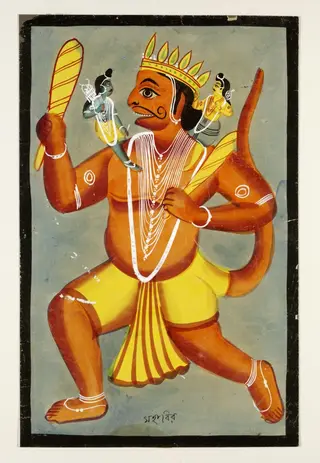
The painting depicts the Hindu deity Hanuman carrying the brothers Rama and Lakshmana on his shoulders, a scene drawn from the Ramayana. In this iconography, Hanuman’s act of bearing the two figures symbolizes devotion, service, and protective strength, as he carries Rama, an avatar of Vishnu, toward the battlefield to rescue Lakshmana. The composition emphasizes Hanuman’s role as a devoted ally, while Rama and Lakshmana represent righteous sovereignty and the preservation of dharma.
The Kalighat style’s simplified forms and bold outlines heighten the narrative’s immediacy, conveying themes of loyalty, divine intervention, and the triumph of virtue over adversity.
History & Provenance
The painting Hanuman with Rama and Lakshmana on his shoulders was created around 1890 in Kolkata as part of a Kalighat album by an unknown artist. It entered the Cleveland Museum of Art’s collection and is recorded under accession number 2003.120. No further details about its commission, earlier owners, or subsequent provenance are available in the provided sources.
Overview
The work is a Kalighat school painting that portrays the Hindu deity Hanuman bearing the brothers Rama and Lakshmana on his shoulders. Rendered in vivid pigments, the composition centers on a red‑skinned figure crowned in gold, his long tail visible as he kneels on one knee. The two smaller figures are distinguished by green and pale tones, while Hanuman holds a yellow mace, his expression intense and focused.
Technique & Style
Executed in the characteristic Kalighat manner, the painting employs bold outlines and flat, saturated colors that enhance visual clarity. The figures are rendered with simplified forms and minimal shading, typical of the Bengal folk tradition that catered to a popular audience. Gold leaf in the crown and the use of a bright yellow mace add decorative emphasis without compromising the overall graphic quality.
Artist & collection