Artwork
Jupiter
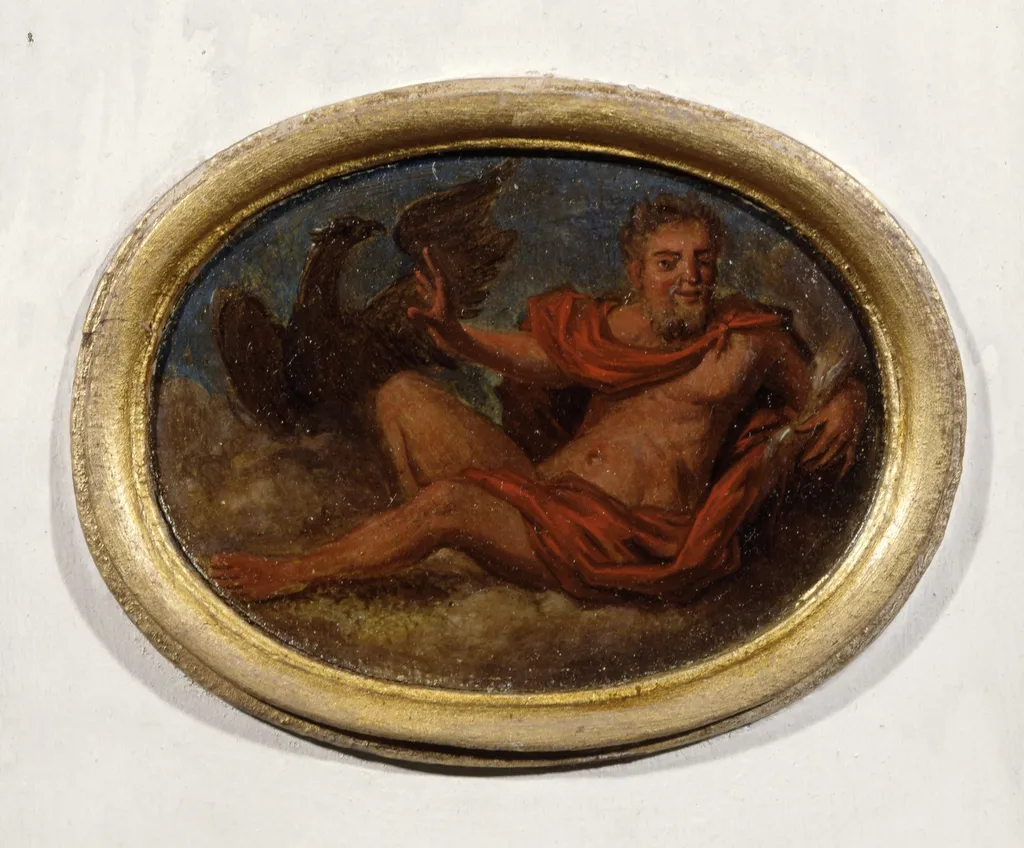
Jupiter is an oil painting. It dates from 1700 and is held in the collection of the Rijksmuseum.
About this work
Subject & Meaning
Created in 1700 by an anonymous artist in Amsterdam, this oil painting on panel depicts the Roman god Jupiter as its central figure.
Created in 1700 by an anonymous artist in Amsterdam, this oil painting on panel depicts the Roman god Jupiter as its central figure. Classified as a mythological work, the image focuses exclusively on the representation of this supreme deity, adhering to the conventions of depicting classical gods. The composition serves as a visual embodiment of Jupiter, presenting him as the primary subject without additional narrative context provided in the available records.
As a piece held by the Rijksmuseum, the work functions as an example of early eighteenth-century Dutch engagement with ancient mythology, isolating the god's likeness for devotional or decorative purposes.
Technique & Style
The work is an oil painting on wooden panel, created in Amsterdam around 1700. It depicts the mythological figure Jupiter and was executed in the Dutch Golden Age style, characterized by rich coloration and chiaroscuro. The surface exhibits fine brushwork with subtle glazing that enhances the three-dimensional modeling of the figure.
History & Provenance
The painting was created in Amsterdam in 1700 as an oil-on-panel work by an anonymous artist, commissioned within the Dutch Golden Age context of mythological subjects for private collection display. It entered the Rijksmuseum's collection following its acquisition from a private sale, where it remains housed today.
The work depicts the mythological figure Jupiter, reflecting 18th-century Dutch interest in classical narratives rendered in oil paint on panel. Its dimensions measure 8.2 cm by 11.0 cm, and it is classified as a mythological painting within the artist's oeuvre.
Dating to 1700, the piece was likely executed during the artist's mature period, though specific patrons or institutional records of its original commission are not documented in available sources.
The oil painting titled Jupiter, created in 1700 by an anonymous artist, is held in the collection of the Rijksmuseum in Amsterdam. The work is executed in oil paint on panel and depicts the mythological figure Jupiter. While the specific inventory or accession number is not provided in the available records, the piece remains part of the museum's holdings. There is no information in the provided sources regarding a specific exhibition history for this artwork.
Overview
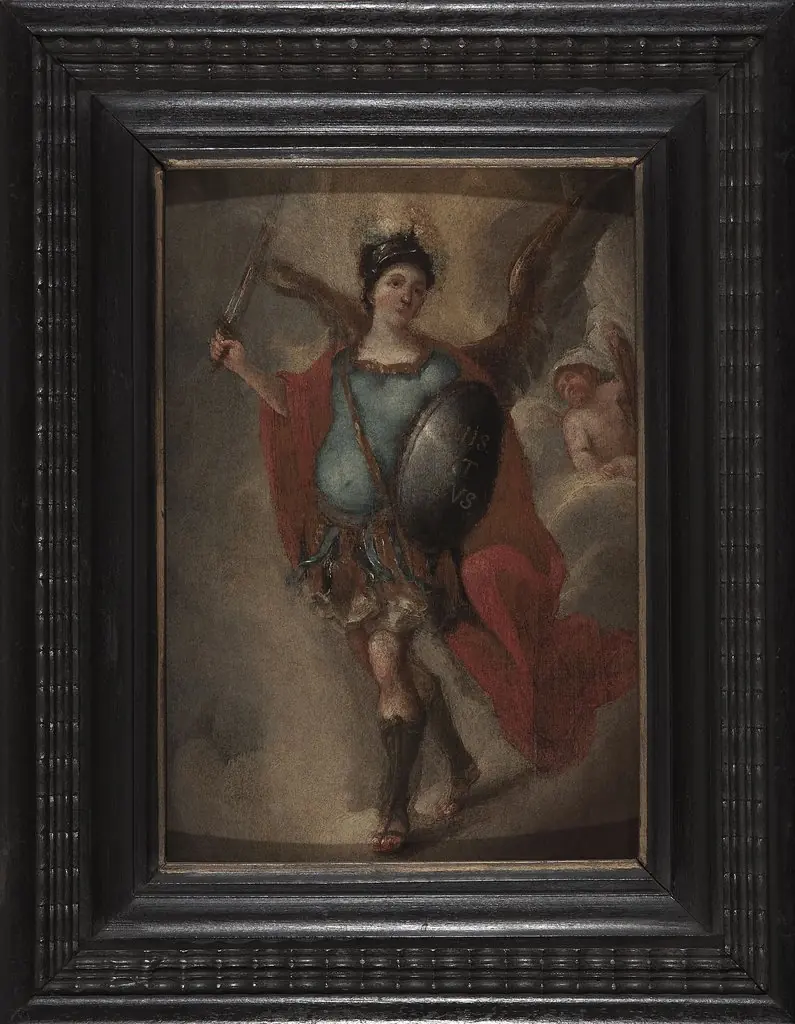
The work, executed in oil on canvas, depicts a powerful, winged male figure draped in a vivid red garment, suspended against a stormy, darkened sky. He holds an object in his left hand, his expression composed yet resolute, and his body is caught in a twisting pose that suggests recent arrival or movement. A small cherubic figure, or putto, accompanies him on the left.
Context
The inclusion of a putto reflects a common Renaissance and Baroque practice of integrating youthful, winged attendants to soften the grandeur of divine figures. Such compositional elements link the piece to a tradition of mythological representation that balances awe-inspiring power with approachable, humanizing details.
Artist & collection

- Saint Michael Archangel
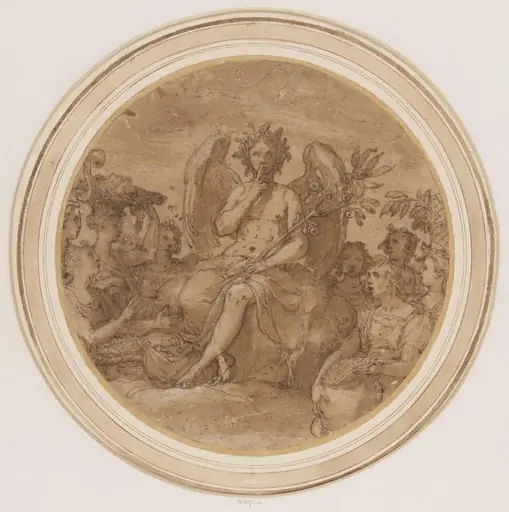 Harpocrates (or Horus), God of Silence
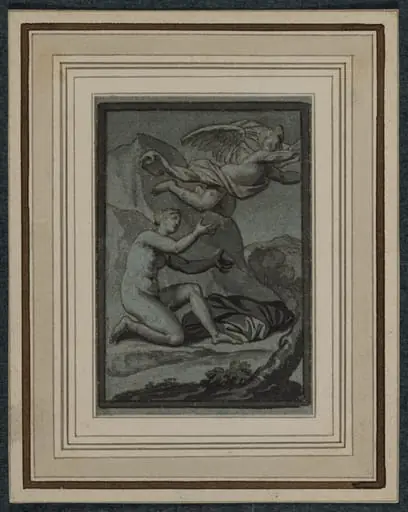 Mythological Scene
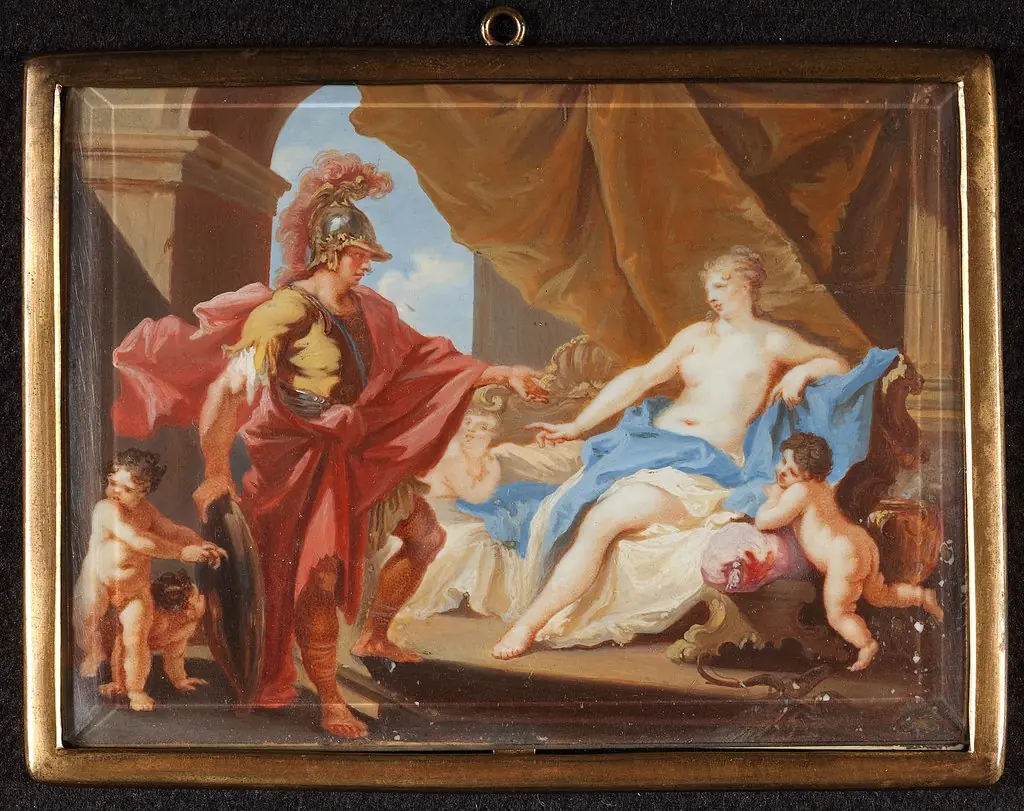 Mars and Venus
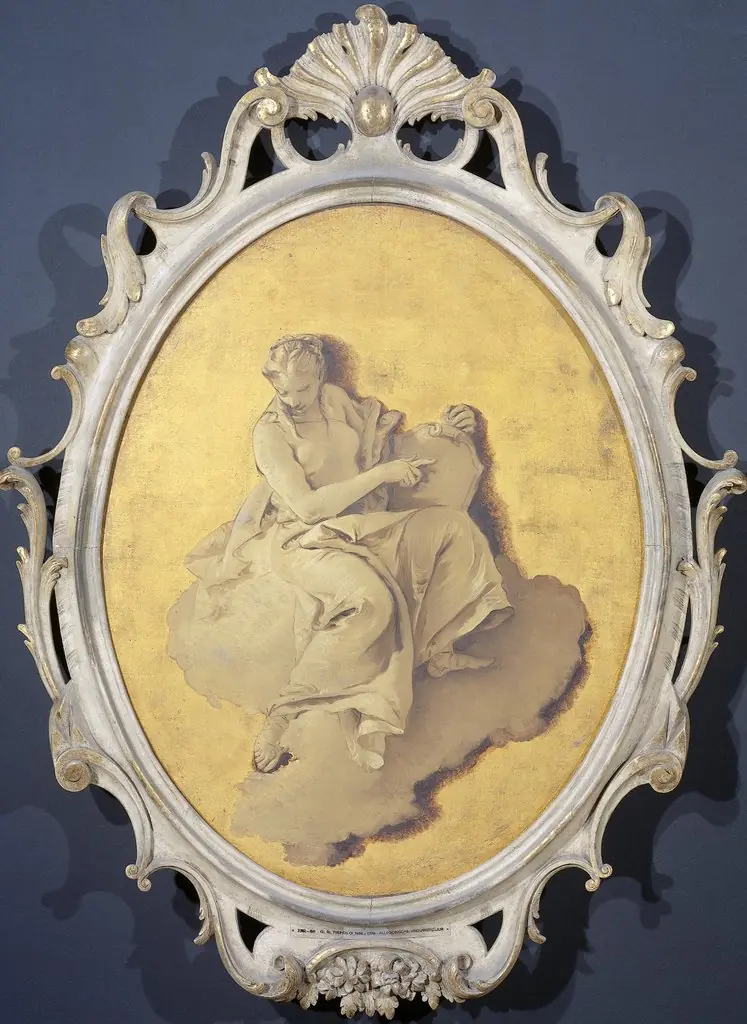 Allegorical Figure of a Woman with a Shield or a Mirror (Prudence?)
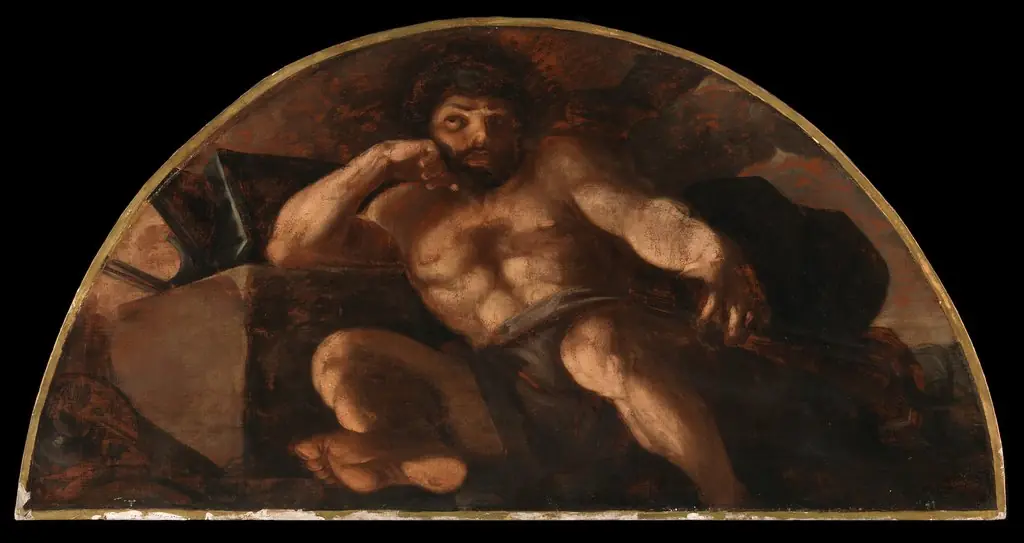 Vulcan Ends the Manufacture of Arms
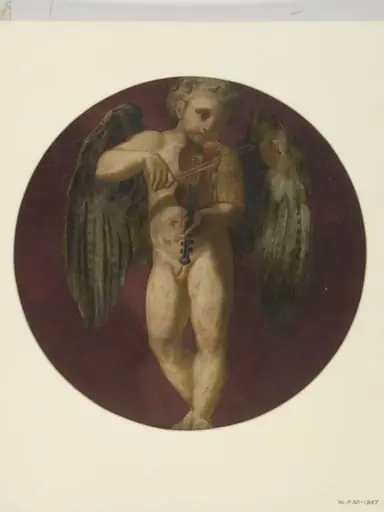 Painted Roundel
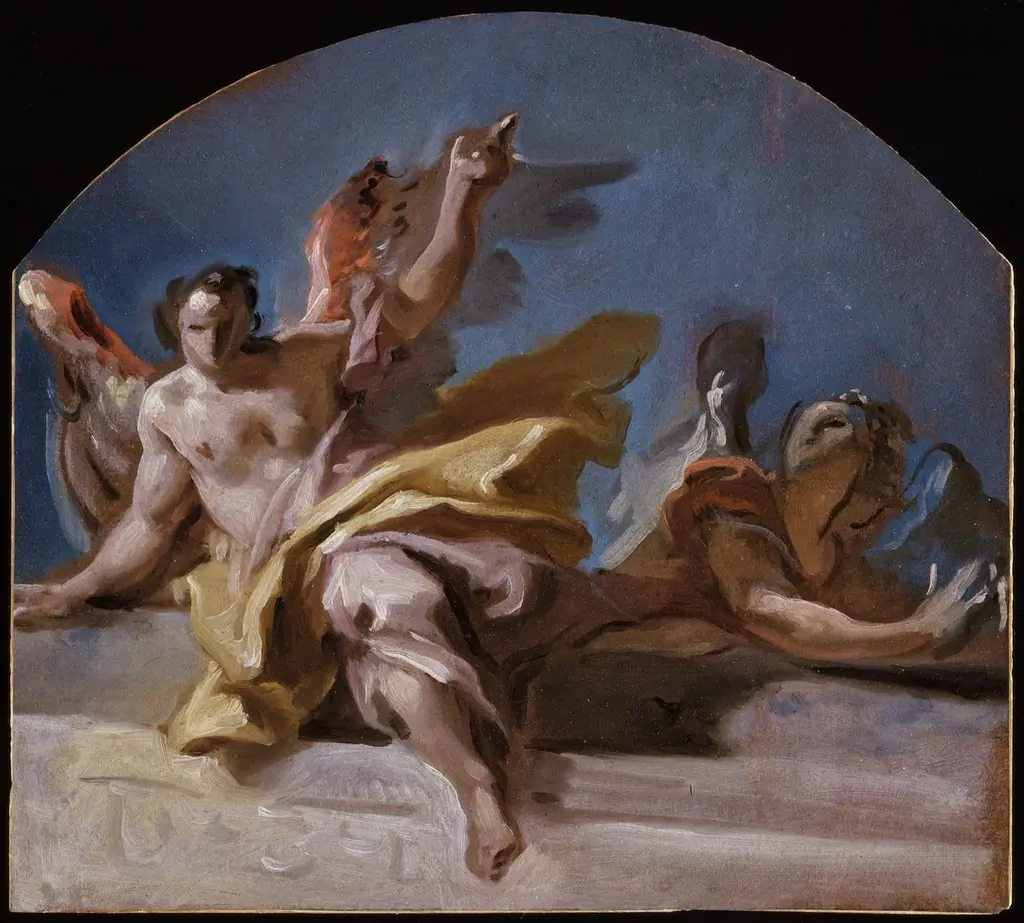 A Study for Two Angels on a Balustrade
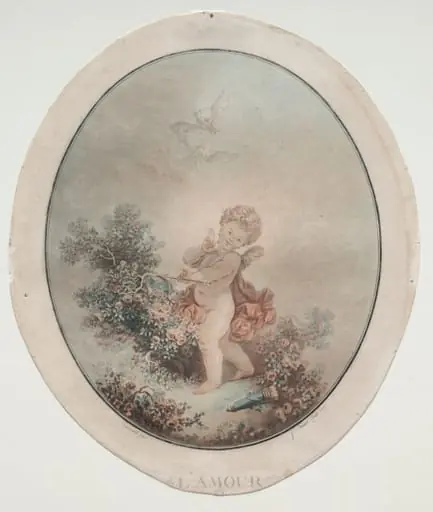 Cupid
Cupid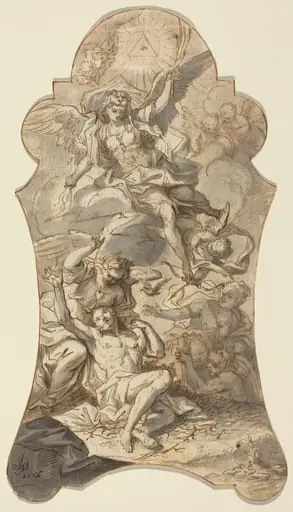 The Holy Angels Protecting a Hermit from Evils
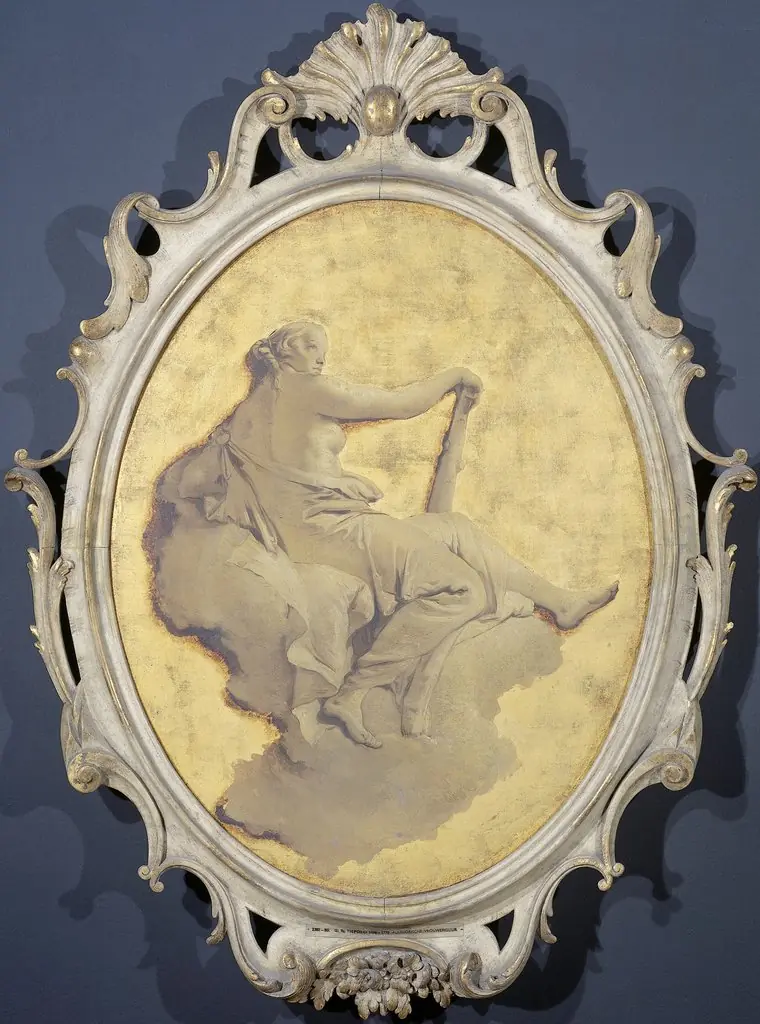 Allegorical Figure of a Woman with a Club (Fortitude?)
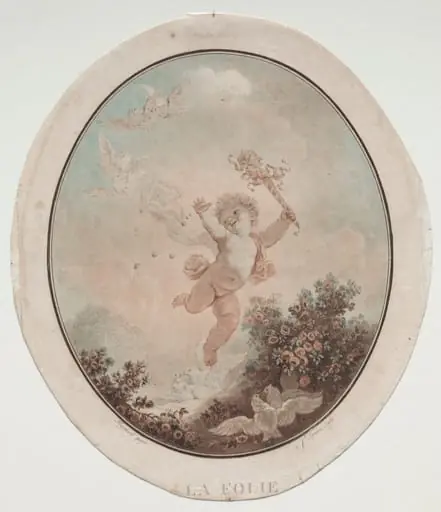 Folly
Folly