Artwork
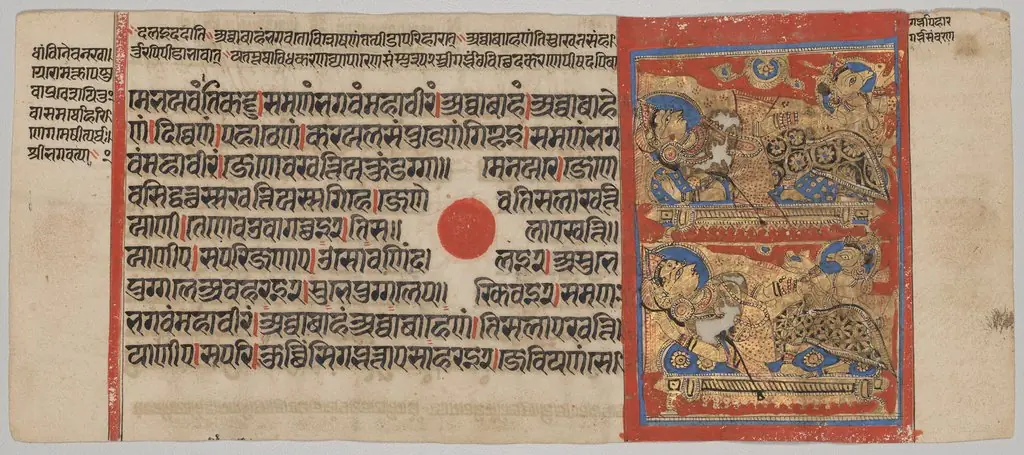
Kalpa-sutra Manuscript with 24 Miniatures: Birth of Rsabhanatha
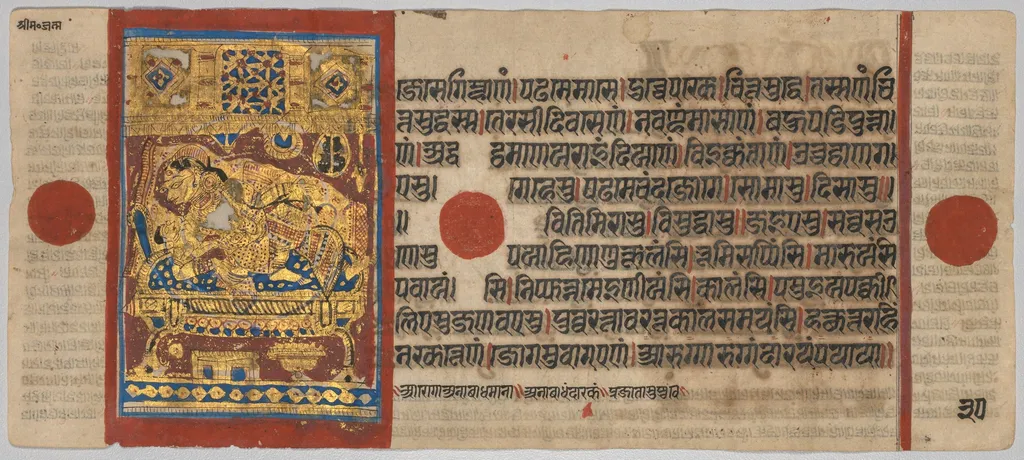
Kalpa-sutra Manuscript with 24 Miniatures: Birth of Rsabhanatha is an unspecified painting. It dates from 1494 and is held in the collection of the Cleveland Museum of Art. The Kalpa‑sutra manuscript contains a painted miniature depicting the birth of Rsabhanatha.
About this work
History & Provenance
Its presence in the museum’s collection reflects the broader tradition of Jain manuscript painting from western India during the late 15th century.
The Kalpa-sutra Manuscript with 24 Miniatures, including the Birth of Rsabhanatha, was created in Gujarat in 1487, as indicated by its documented inception date.
The manuscript is held by the Cleveland Museum of Art, where it is catalogued under the accession number 1932.119.22. Its presence in the museum’s collection reflects the broader tradition of Jain manuscript painting from western India during the late 15th century.
The manuscript is held by the Cleveland Museum of Art, where it is recorded as object 1932.119.22. It was created in Gujarat around 1487. The museum’s collection record identifies the work as a religious painting and attributes it to an unknown artist.
Overview
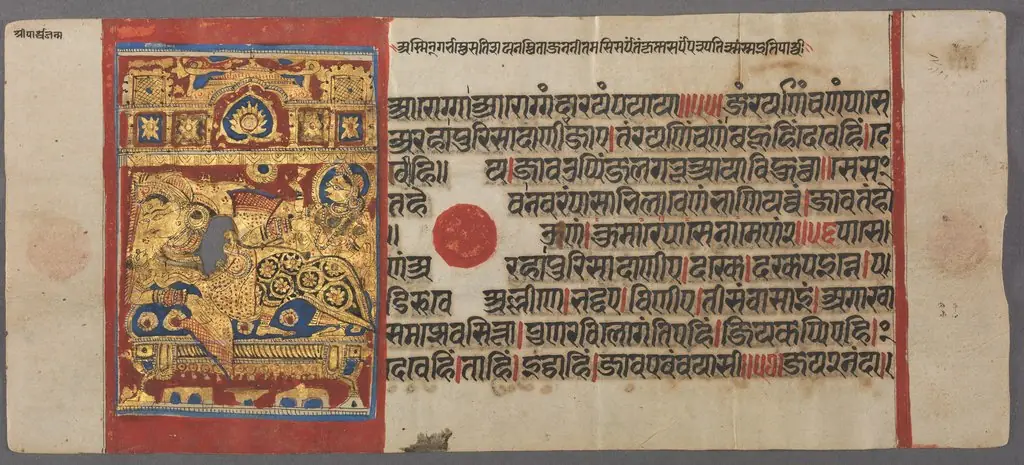
The Kalpa‑sutra manuscript contains a painted miniature depicting the birth of Rsabhanatha. Executed on paper, the image presents a bearded figure crowned and seated upon an elaborately carved throne, his right hand raised in a ritual gesture. The composition is set against a warm golden background filled with intricate ornamental motifs, emphasizing the ceremonial nature of the scene.
Subject & Meaning
The central figure represents Rsabhanatha, a revered deity in the Jain tradition, shown at the moment of his birth. The serene expression and inward‑directed gaze convey spiritual tranquility, while the raised hand signifies a benediction or a specific mudrā associated with divine proclamation.
Technique & Style
Rendered with fine brushwork, the miniature employs a palette of deep blues and luminous golds, highlighting the robes and throne. Detailed linear patterns fill the background, demonstrating the manuscript’s emphasis on ornamental precision and the high level of craftsmanship typical of courtly Jain painting.
Context
Jain miniature painting frequently integrates symbolic iconography, crowns, thrones, and mudrās, to convey theological narratives. This piece aligns with that tradition, situating the divine birth within a richly decorated setting that reflects both spiritual reverence and the material wealth of its patrons.
Artist & collection

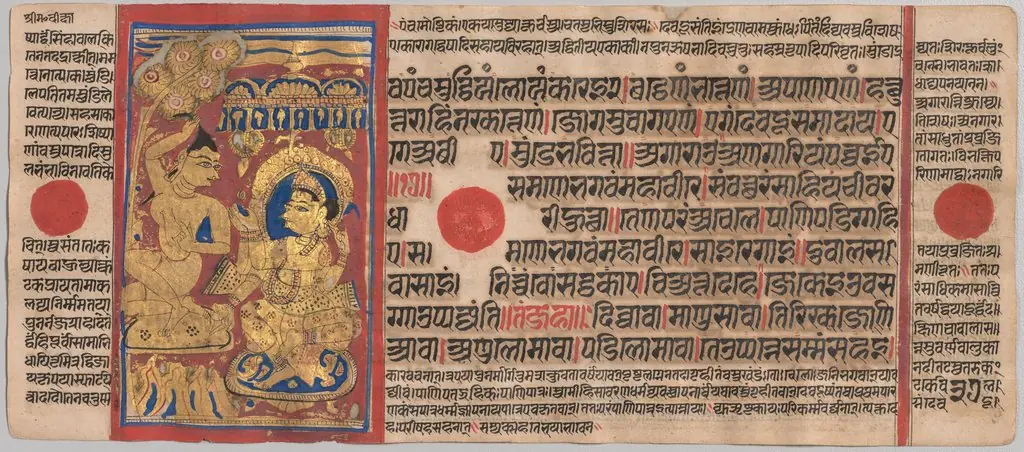
- Kalpa-sutra Manuscript with 24 Miniatures: Mahavira's Tonsure
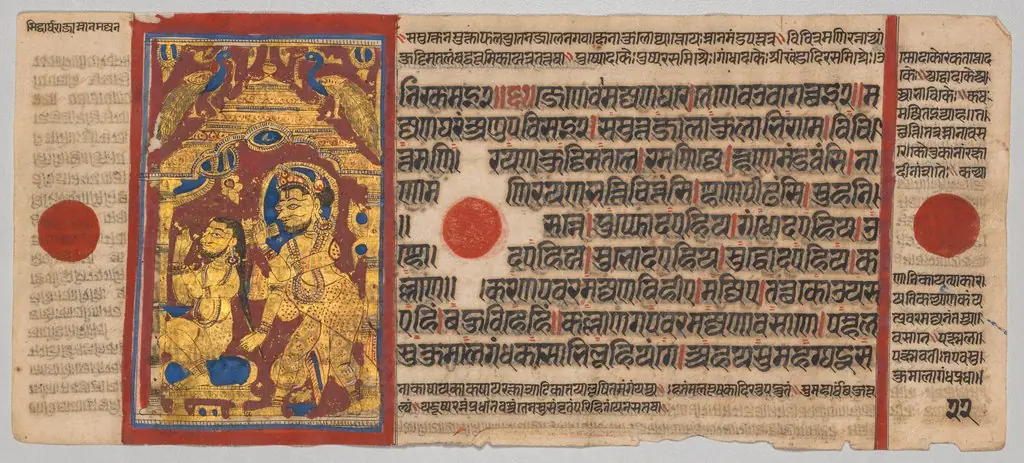 Kalpa-sutra Manuscript with 24 Miniatures: King Siddhartha Rises and Bathes
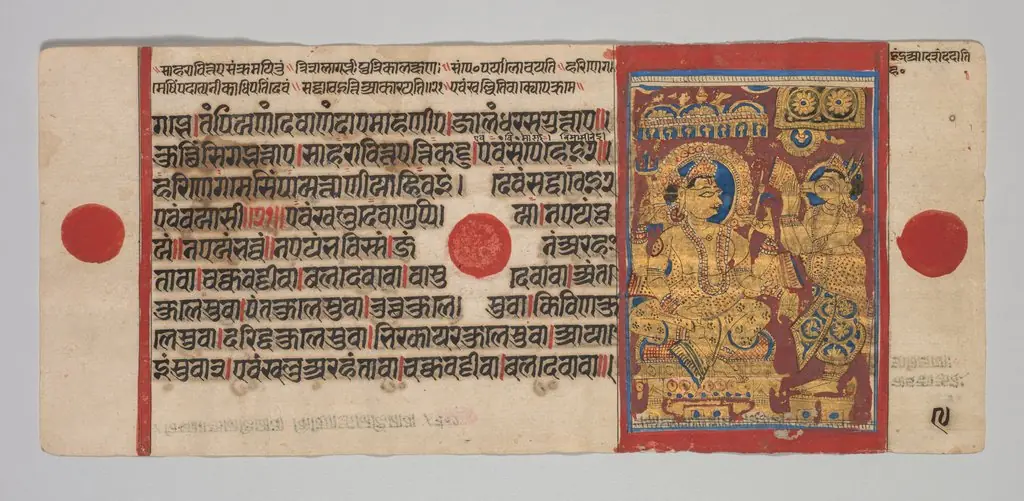 Kalpa-sutra Manuscript with 24 Miniatures: Sakra Summons Harinegamesin
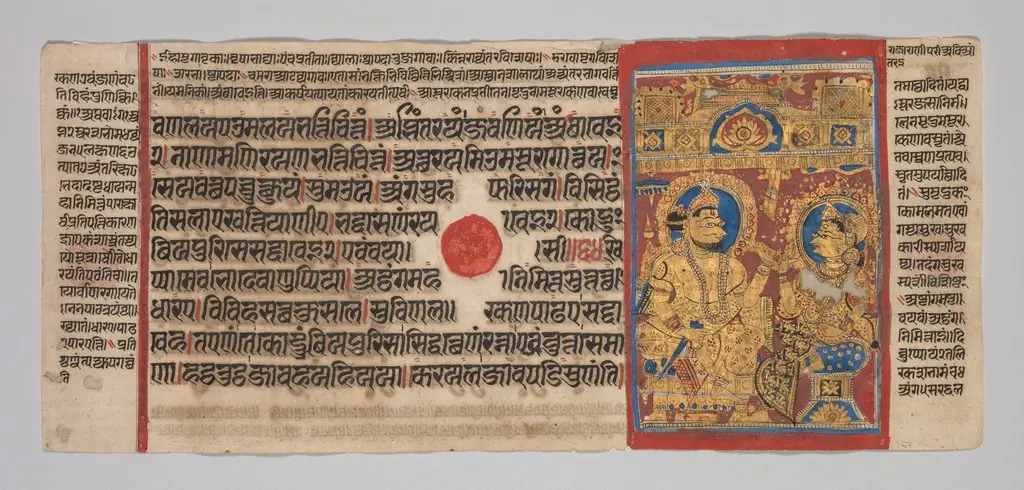 Kalpa-sutra Manuscript with 24 Miniatures: Siddhartha Hears the Recitation of Trisala's Dreams
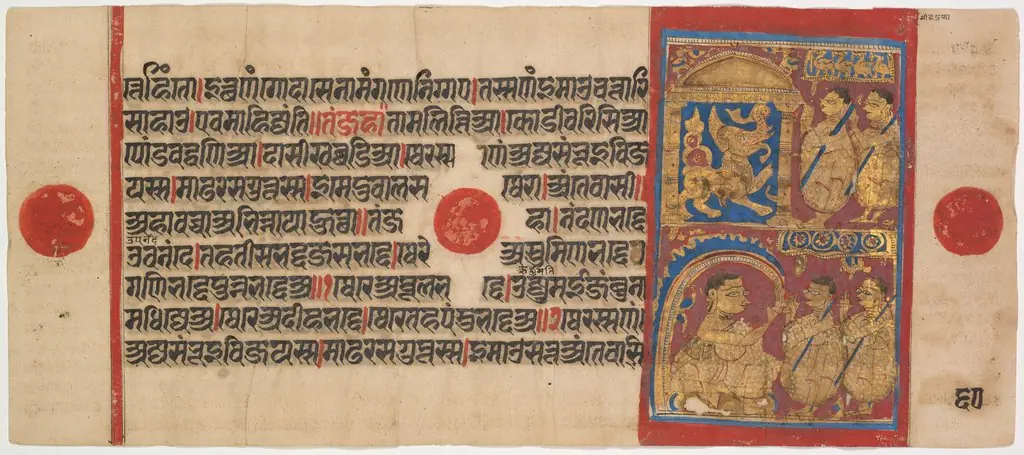 Kalpa-sutra Manuscript with 24 Miniatures: Folio 60, text (recto); Sthulabhadra as a Lion (verso)
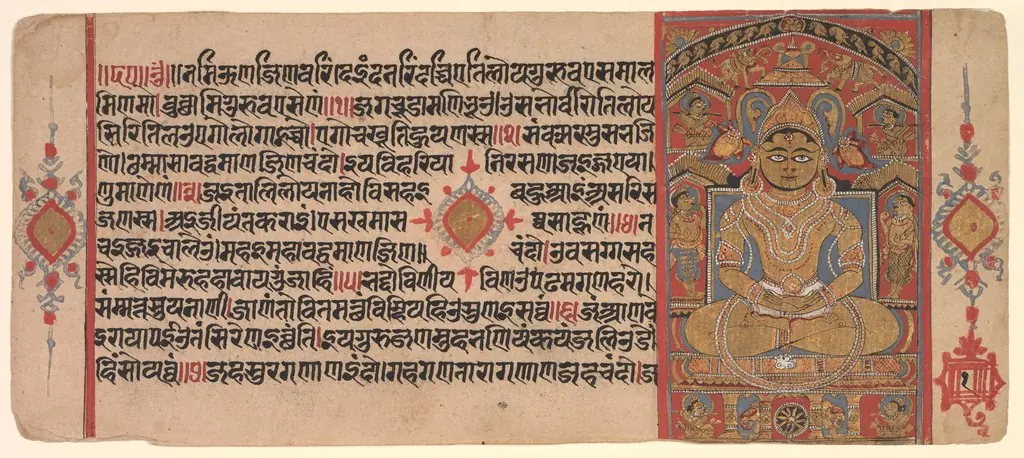 Seated Jina Rishabha Enshrined, from a Jain Manuscript: Kalpa-Sutra
 Serpents Protect Parshva from the Flood, from the Kalpa-sutra
 Birth of Parshva to Queen Vama, from the Kalpa-sutra
 Text, Folio 44 (recto), from a Kalpa-sutra
 Text, Folio 23 (verso), from a Kalpa-sutra
 Parshva Undergoes Physical Trials, Folio 46 (recto), from a Kalpa-sutra
 Transfer of the Embryo of Mahavira, from a Kalpa-sutra