Artwork
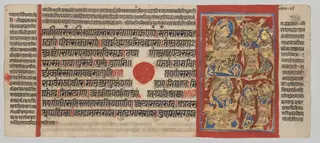
Transfer of the Embryo of Mahavira, from a Kalpa-sutra
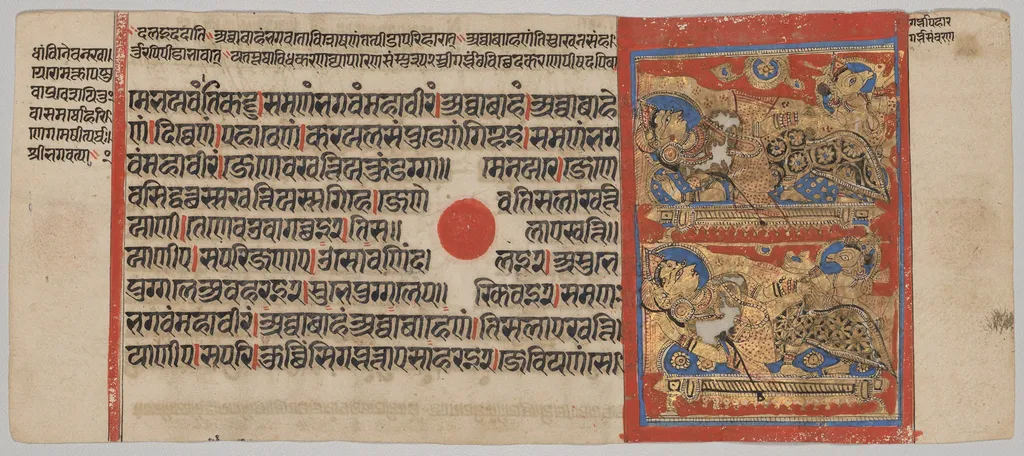
Transfer of the Embryo of Mahavira, from a Kalpa-sutra is an unspecified painting. It dates from 1494 and is held in the collection of the Cleveland Museum of Art.
About this work
Technique & Style
Its formal qualities include restrained line work and muted earth tones characteristic of Jain manuscript painting from 15th-century Gujarat.
The work is a painting executed on paper, depicting a religious scene from the Kalpa-sutra tradition. Its formal qualities include restrained line work and muted earth tones characteristic of Jain manuscript painting from 15th-century Gujarat. The composition centers on a symbolic embryo motif rendered with delicate precision, reflecting the devotional focus of Jain cosmology.
The piece shows signs of careful handling, though the paper support exhibits minor edge toning consistent with age. It is attributed to an anonymous artist working in the late 15th century, likely in a workshop tradition rather than a single hand.
The painting was created in Gujarat, India, and is part of the collection at the Cleveland Museum of Art, where it is cataloged as 1932.119.5. Its stylistic features align with contemporary Jain religious art, emphasizing spiritual symbolism over naturalistic representation.
History & Provenance
The painting was created in 1487 in Gujarat and depicts the transfer of the embryo of Mahavira from a Kalpa-sutra. It belongs to the religious genre and was classified as a painting. The work entered the collection of the Cleveland Museum of Art, where it remains on view.
The work is held in the collection of the Cleveland Museum of Art, where it is accessioned under the identifier 1932.119.5. It was created in 1487 in the region of Gujarat and has not been recorded in any major exhibition history according to the available documentation.
Context
The painting depicting the Transfer of the Embryo of Mahavira belongs to the religious art tradition of 15th-century Gujarat, India, and was created in 1487. Its subject derives from the Kalpa-sutra, a Jain text, reflecting the religious context of its production. The work is attributed to an unknown artist associated with the Cleveland Museum of Art collection, where it is catalogued as 1932.119.5.
Scholarly attention to this piece remains limited, with few documented analyses of its stylistic or iconographic significance within broader Indian painting traditions, leaving its precise place in art history understudied.
Overview
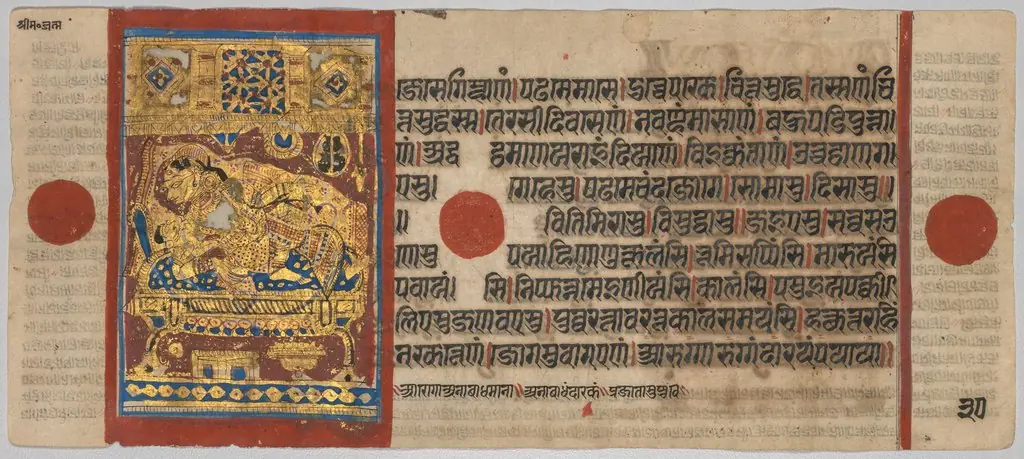
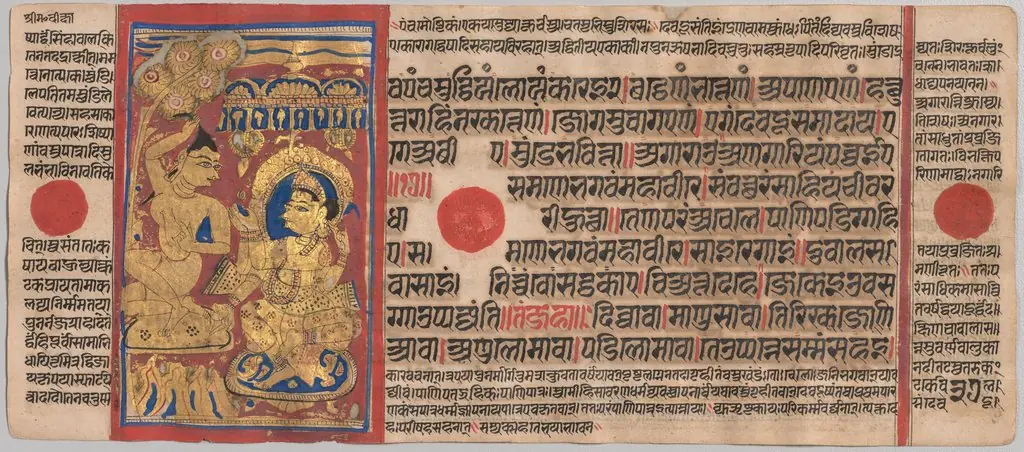
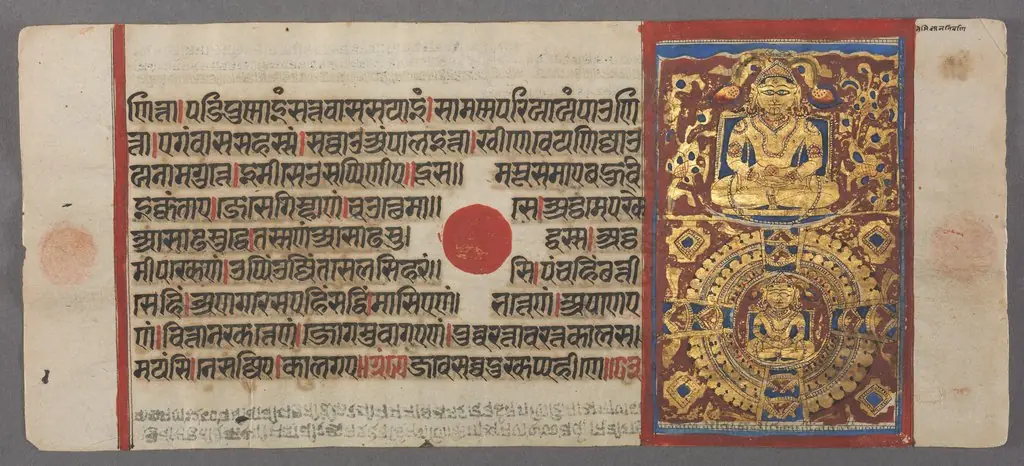
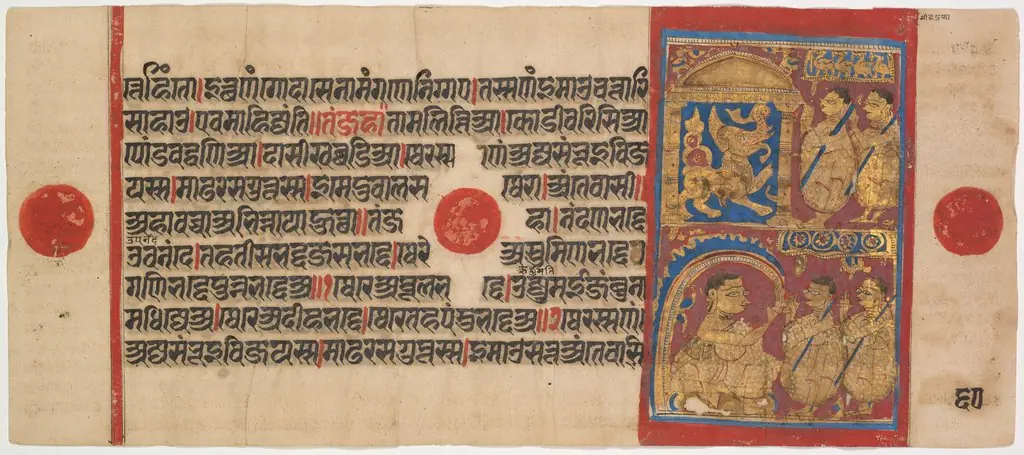
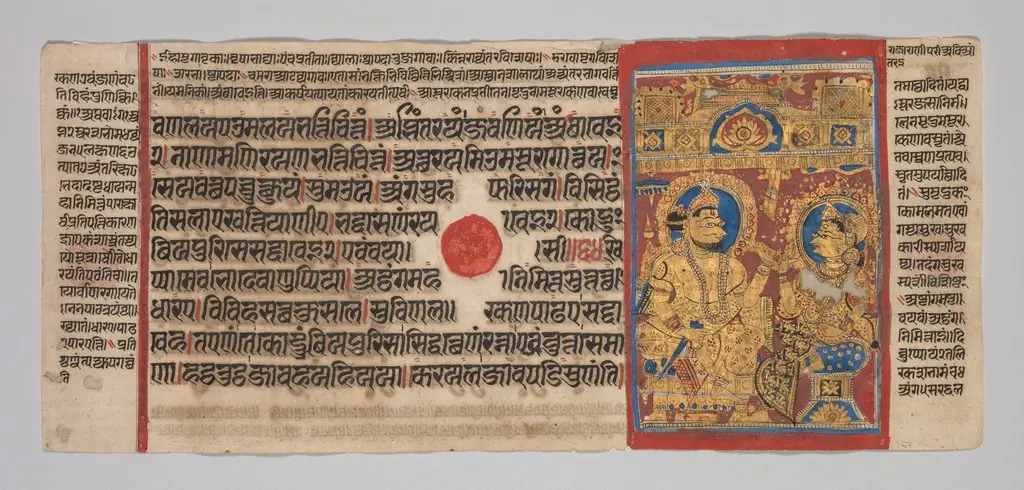
The work is a painted page from a Kalpa‑sutra, a Jain religious manuscript, featuring black ink text on the left and two miniature illustrations on the right. The miniatures are framed in vivid red borders, outlined in blue, and accented with gold. One image depicts a seated figure wearing a headdress amid ornamental motifs; the other shows a multi‑armed being holding various objects while seated on an elaborate throne.
Subject & Meaning
The illustrations relate to the narrative of Mahavira’s embryonic transfer, a legend describing the soul’s movement before his birth. The seated figure likely represents the divine or a celestial attendant, while the multi‑armed entity embodies a protective deity or attendant spirit involved in the ritual transfer.
Artist & collection

 Text, folio 60 (recto), from a Kalpa-sutra
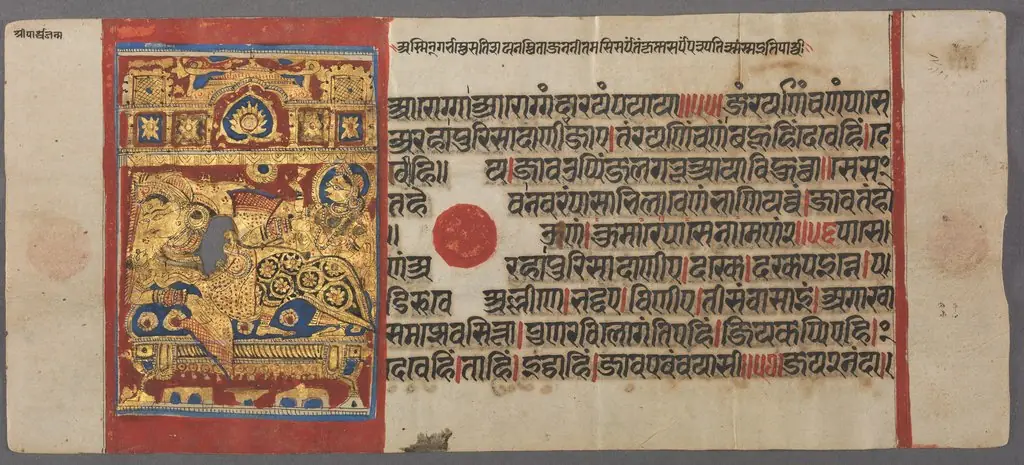 Birth of Parshva to Queen Vama, from the Kalpa-sutra
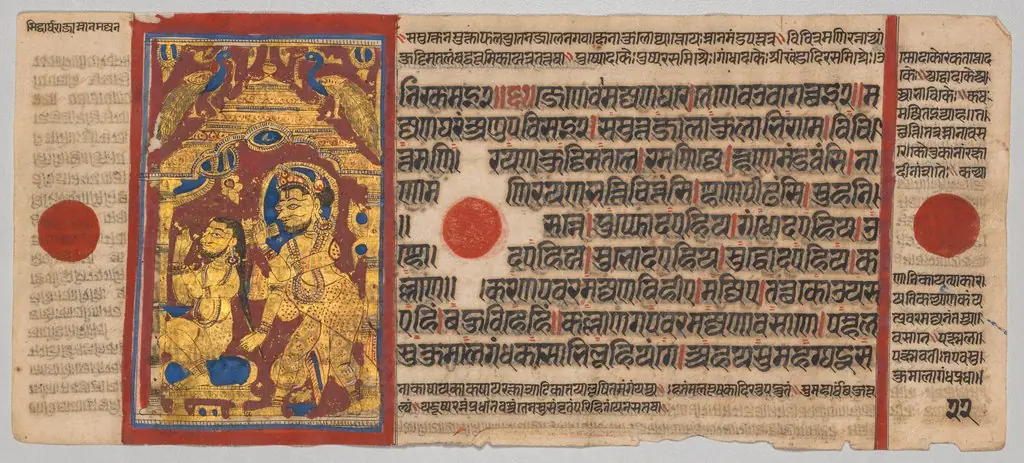 Kalpa-sutra Manuscript with 24 Miniatures: King Siddhartha Rises and Bathes
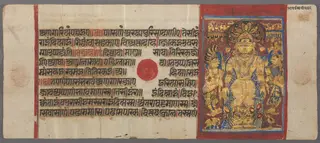 Serpents Protect Parshva from the Flood, from the Kalpa-sutra
 Teaching and Liberation of Nemi, from the Kalpa-sutra
 Kalpa-sutra Manuscript with 24 Miniatures: Folio 60, text (recto); Sthulabhadra as a Lion (verso)
 Kalpa-sutra Manuscript with 24 Miniatures: Siddhartha Hears the Recitation of Trisala's Dreams
 Untitled
 Queen Trishala's Grief and Happiness, Folio 29 (recto), from a Kalpa-sutra