Artwork
Krishna Quells the Serpent Kaliya, from a Bhagavata Purana
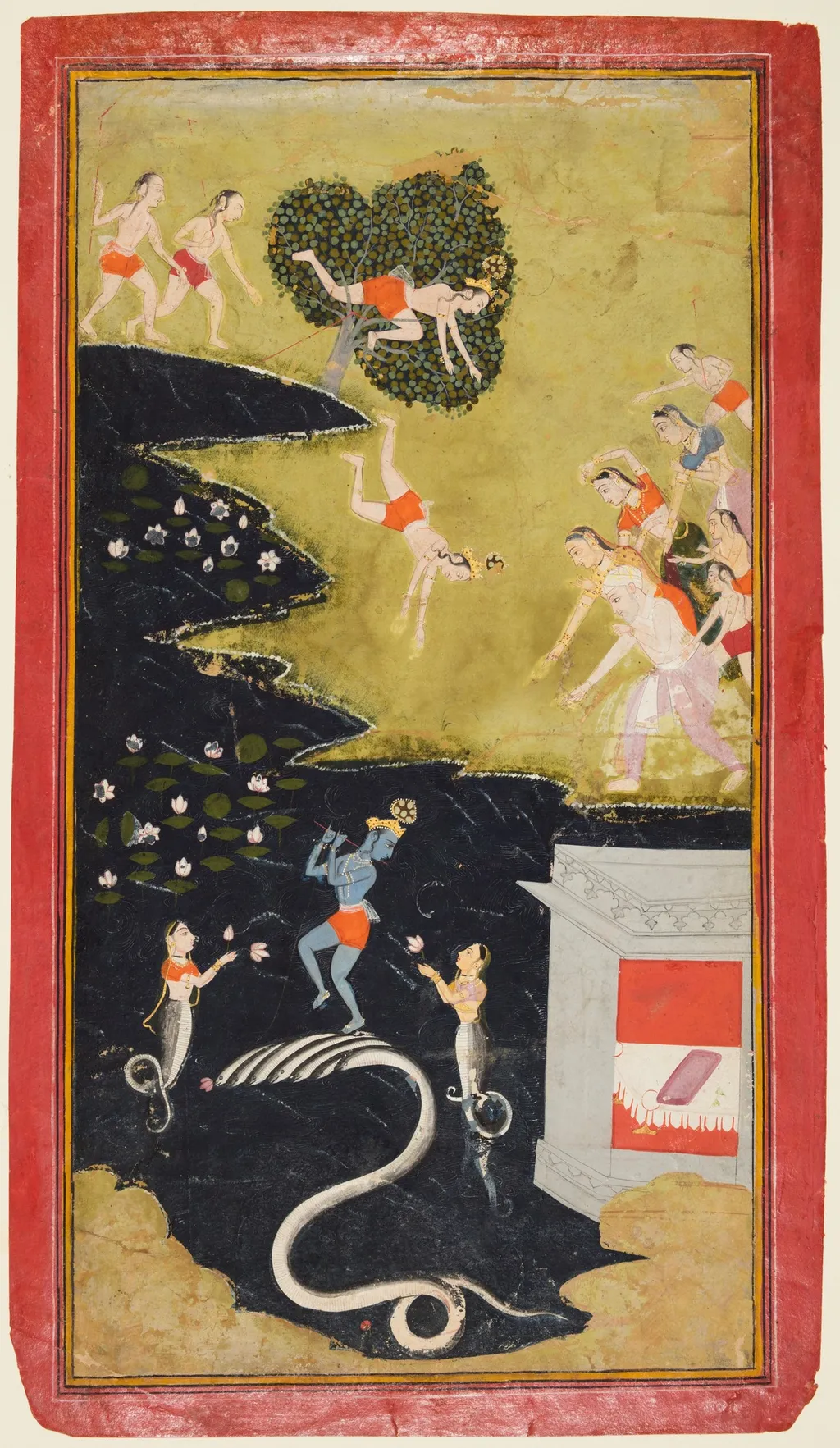
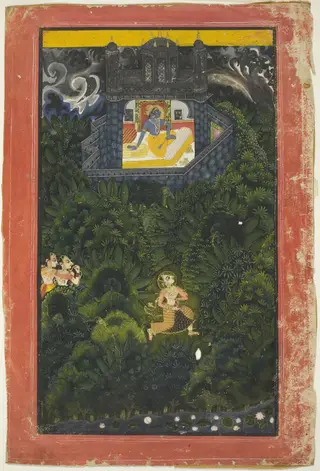
Krishna Quells the Serpent Kaliya, from a Bhagavata Purana is an unspecified painting. It dates from 1710 and is held in the collection of the Cleveland Museum of Art. This painting, titled "Krishna Quells the Serpent Kaliya," illustrates an episode from the Bhagavata Purana.
About this work
History & Provenance
The painting Krishna Quells the Serpent Kaliya, created in 1710 in Mewar, is held in the collection of the Cleveland Museum of Art.
Krishna Quells the Serpent Kaliya, from a Bhagavata Purana is dated to 1710, aligning with the early 18th century, a period associated with Mewar painting traditions in Rajasthan.
The work entered the Cleveland Museum of Art as part of a 2018 acquisition, where it is cataloged as a painting by an unknown artist and remains in the museum’s collection.
The painting Krishna Quells the Serpent Kaliya, created in 1710 in Mewar, is held in the collection of the Cleveland Museum of Art. The work is cataloged under the accession number 2018.141. The source material does not provide a record of specific exhibitions for this artwork.
Overview
This painting, titled "Krishna Quells the Serpent Kaliya," illustrates an episode from the Bhagavata Purana. It shows the blue-skinned deity Krishna standing triumphantly on the head of the multi-headed serpent Kaliya. Women, some in the water and others on the shore, surround the central figures, observing the dramatic event. The composition conveys a sense of intense action and divine intervention.
Subject & Meaning
The artwork depicts a key narrative from the Bhagavata Purana, where the young Krishna confronts Kaliya, a venomous serpent polluting the Yamuna River. Krishna dances on Kaliya's heads, subduing the creature to protect the local inhabitants. The women depicted are likely the serpent's wives, or perhaps villagers, who witness Krishna's divine power.
Their varied postures, some reaching out, suggest a mix of awe, supplication, and relief at the deity's intervention.
Technique & Style
The painting employs a vibrant palette, featuring Krishna's distinctive blue skin against the serpent's long, white body. A striking yellow background, framed by a red border, highlights the central drama. The serpent's form is dynamically coiled around a tree, its head raised towards Krishna, contributing to the overall sense of energy.
The varied gestures of the surrounding women, some reaching towards the deity, further emphasize the scene's dramatic and active nature.
Artist & collection

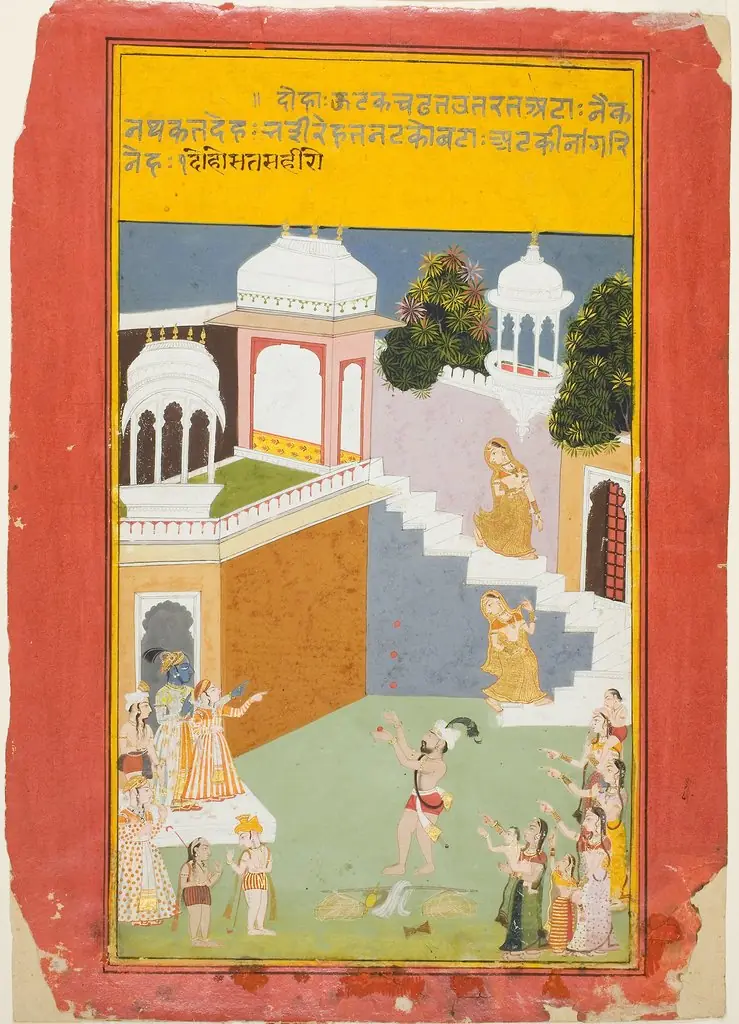 Krishna Watches A Juggler, from a copy of Bihari's Sat Sai
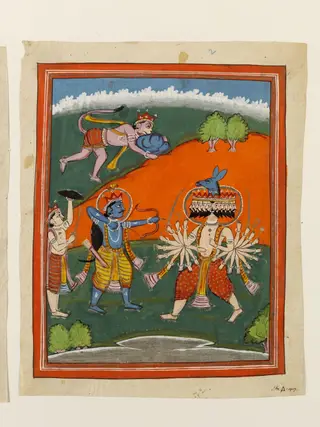 Rama and Ravana
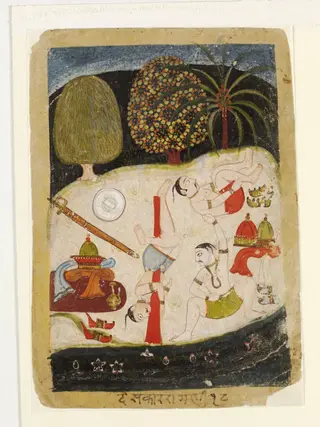 Desakara Ragini
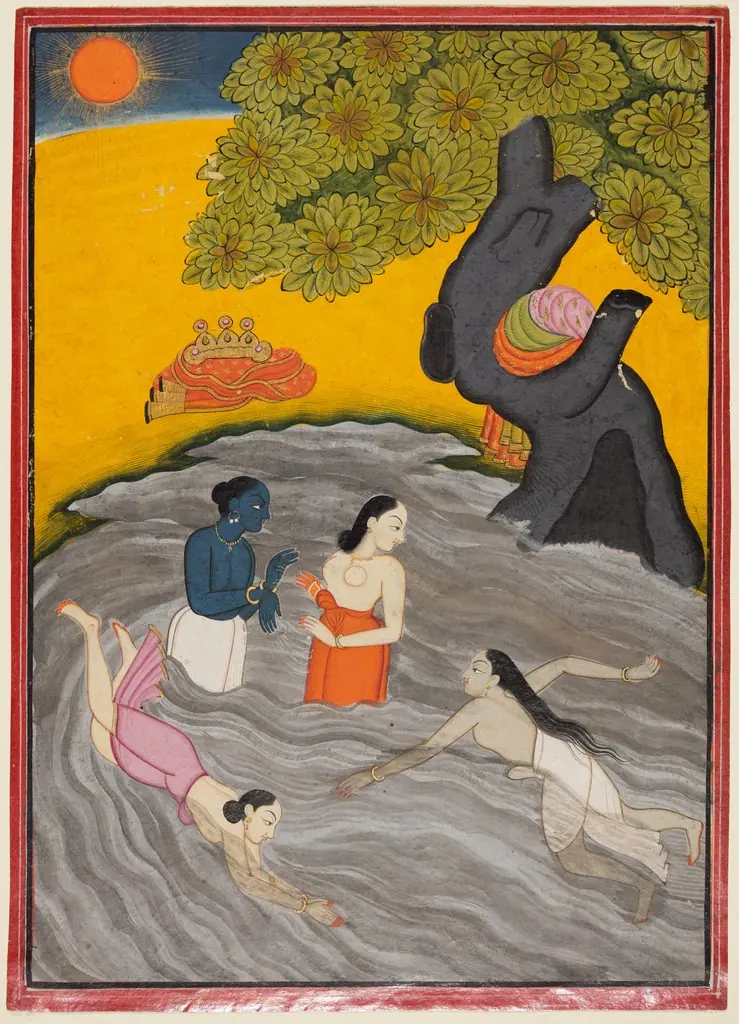 Krishna Playing with the Gopis in the Yamuna
 Vishnu as Matsya
 Krishna, Balarama and Gopis Swimming
 Rama and Lakshmana slay the demon giant Viradha, from Chapters 2 through 4 of the Aranya Kanda (Book of the Forest) of a Ramayana (Rama’s Journey)
 Bhairava Raga
 Abhisarika Nayika (Heroine Running to Meet her Lover)