Artwork
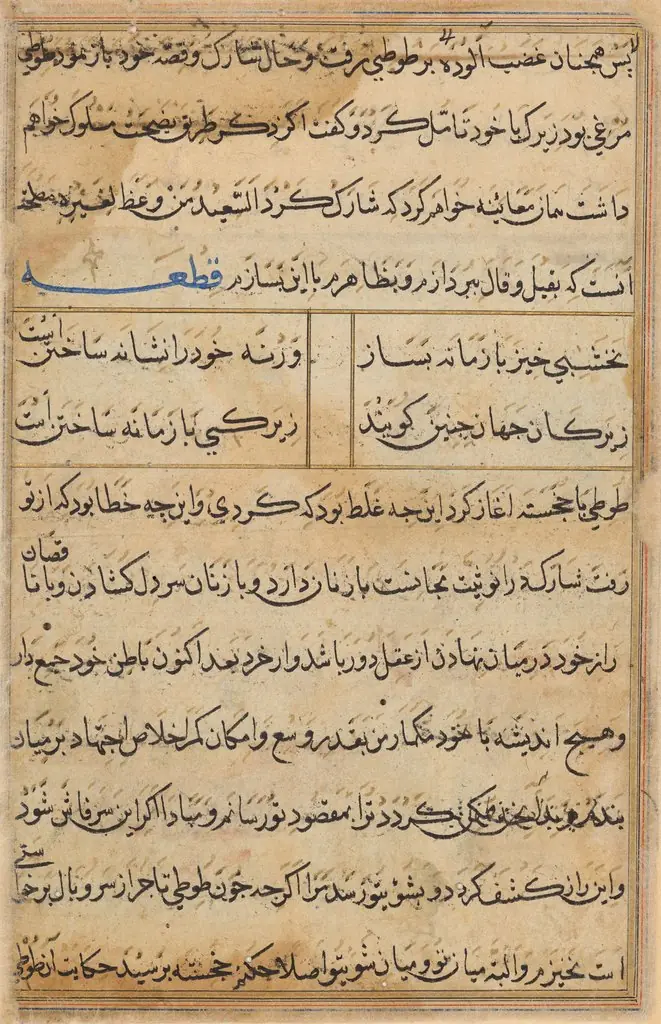
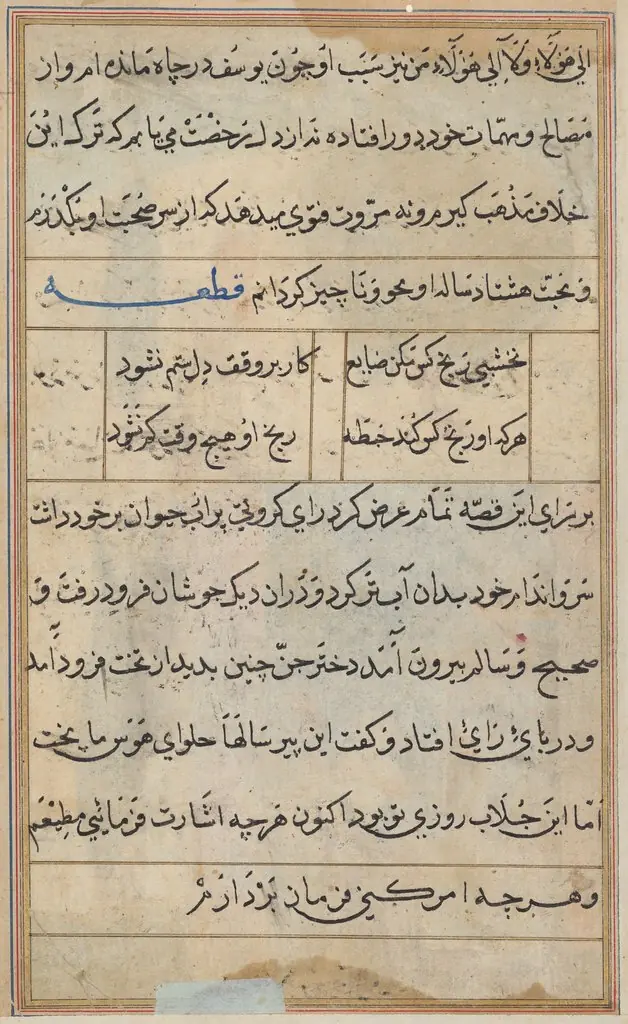
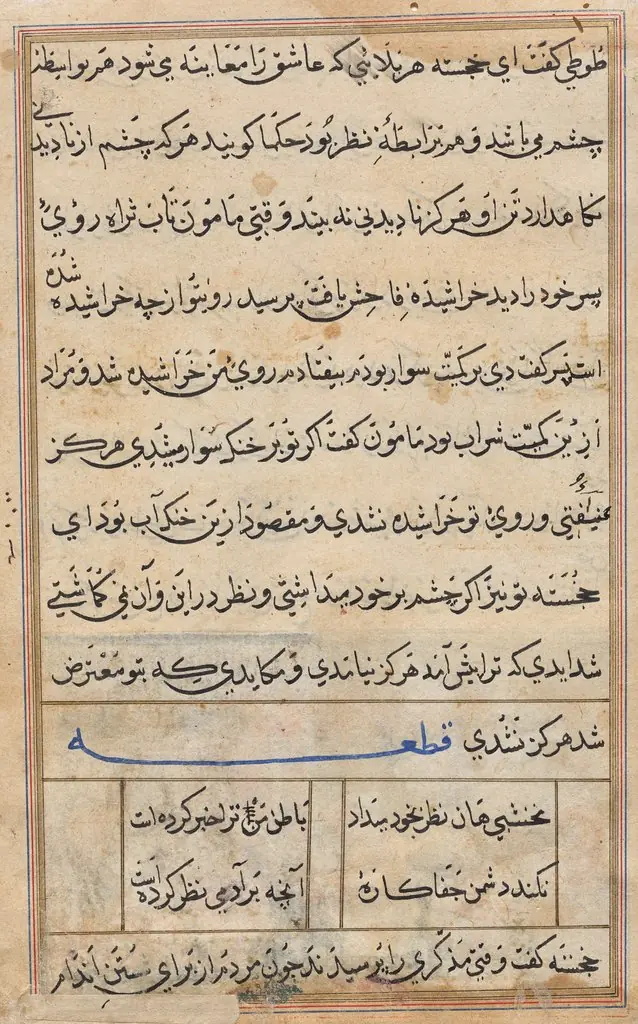
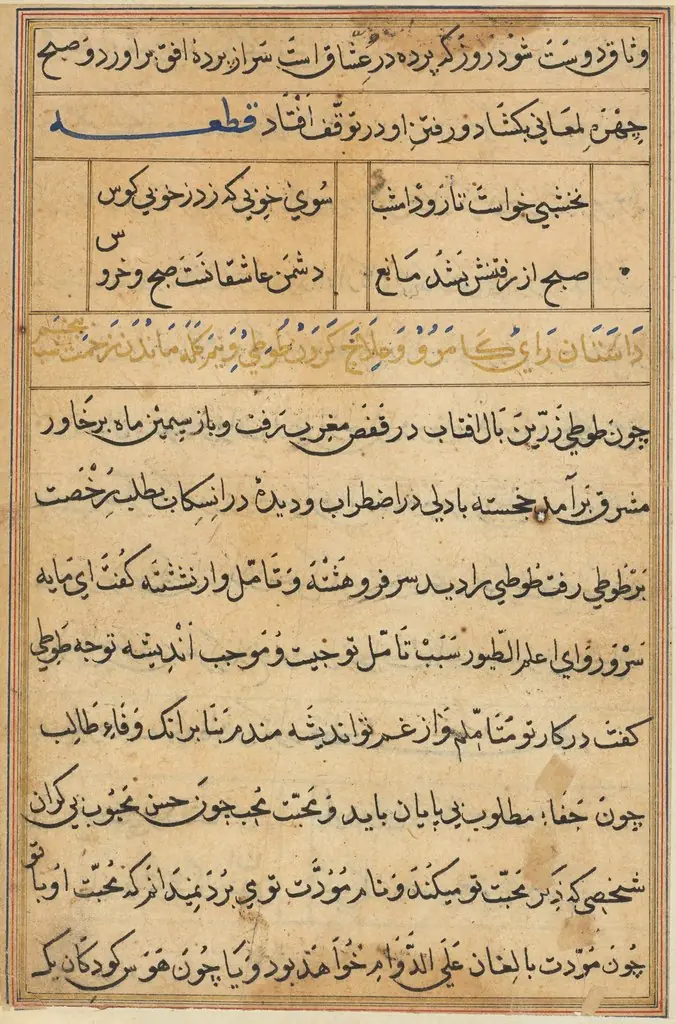
Page from Tales of a Parrot (Tuti-nama): text page
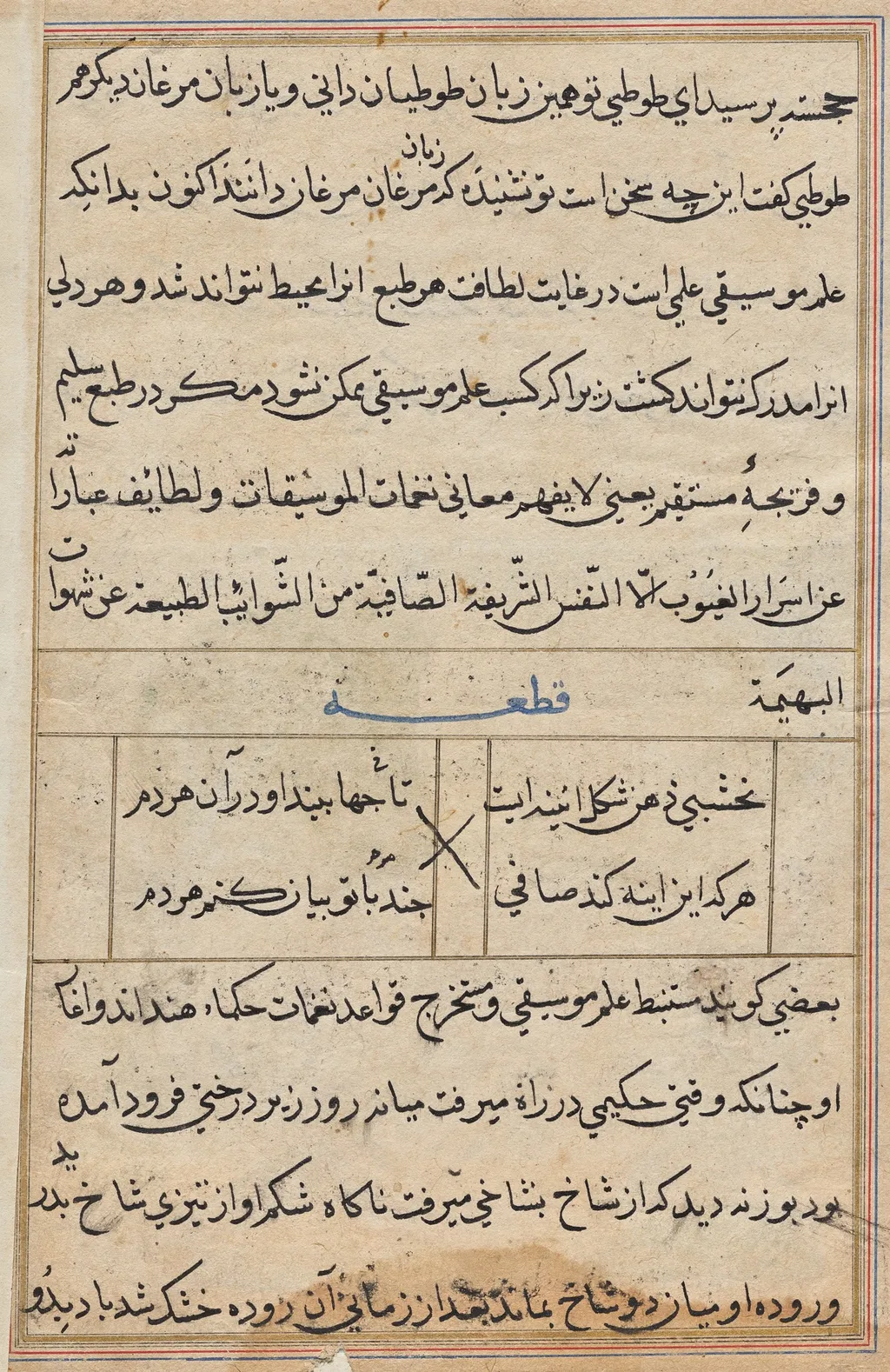
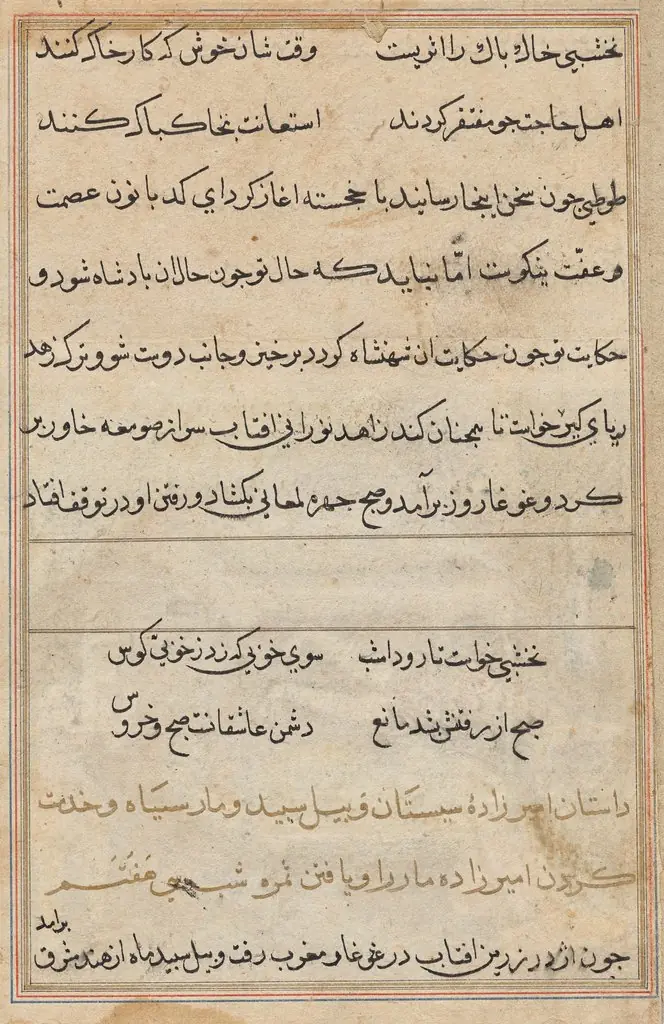
Page from Tales of a Parrot (Tuti-nama): text page is an unspecified painting. It dates from 1560 and is held in the collection of the Cleveland Museum of Art. The object is a painted page from the Persian manuscript known as Tales of a Parrot (Tuti‑nama).
About this work
History & Provenance
The provided records confirm its location and inventory details but do not list specific exhibitions where the leaf has been displayed.
Created in 1560 within the Mughal Empire, this text page from the Tales of a Parrot (Tuti-nama) is attributed to an unknown artist. The work was produced as a painting during the mid-16th century, serving as an illuminated manuscript page. It is currently held in the collection of the Cleveland Museum of Art, where it is cataloged under the accession number 1962.279.108.a. The specific commission details and the identity of the original patron remain undocumented in the available records.
The text page from the Tuti-nama (Tales of a Parrot) is held in the collection of the Cleveland Museum of Art. The institution assigns the work the accession number 1962.279.108.a. Created in 1560 within the Mughal Empire, the piece is classified as a painting by an unknown artist.
The provided records confirm its location and inventory details but do not list specific exhibitions where the leaf has been displayed.
Overview
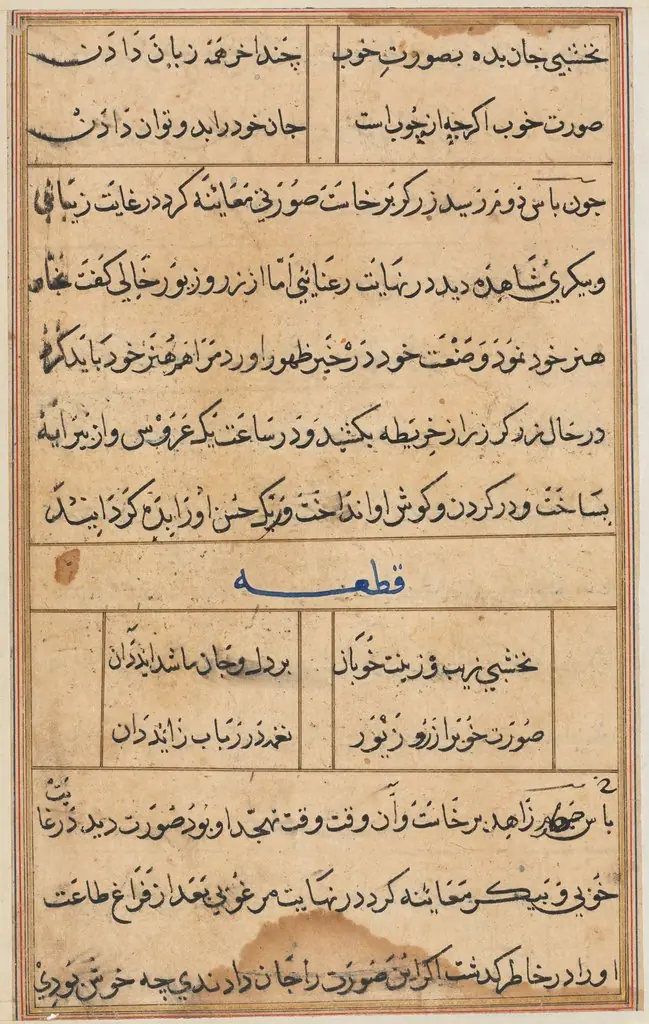
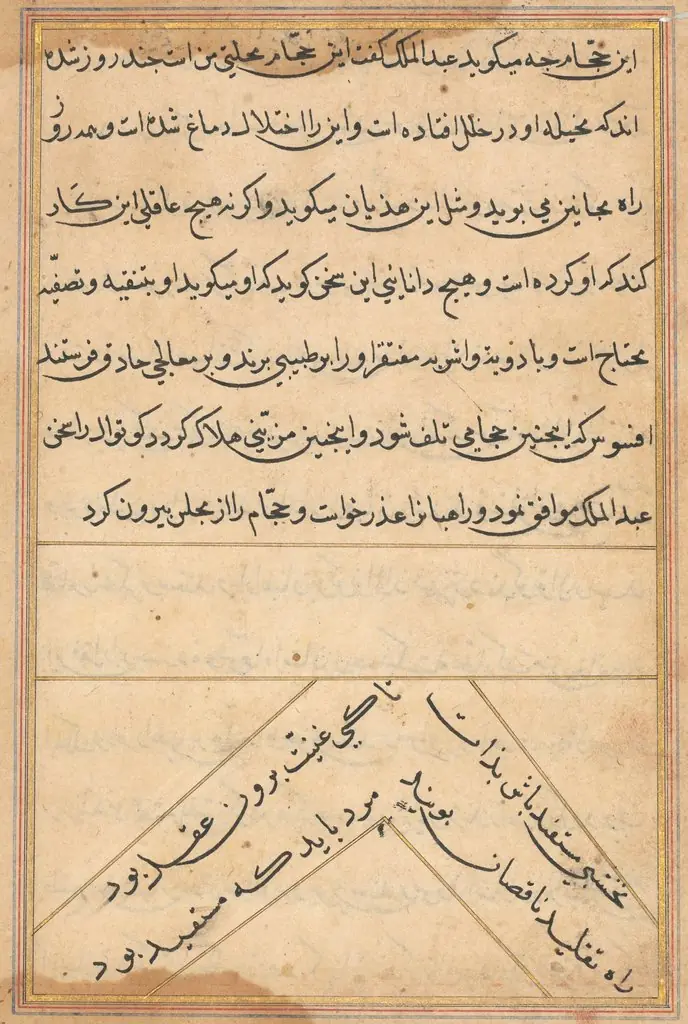
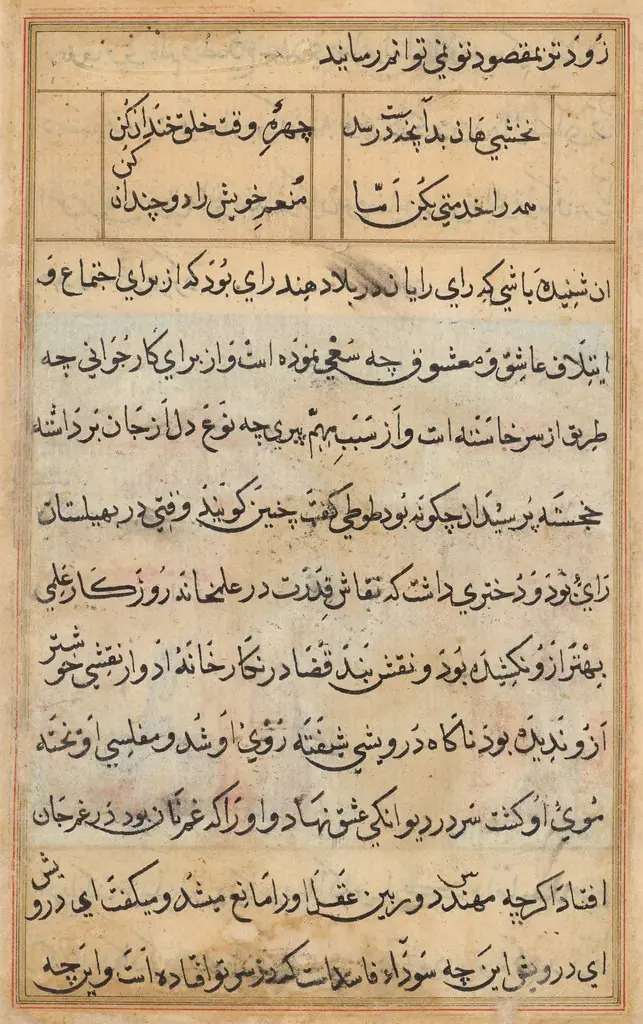
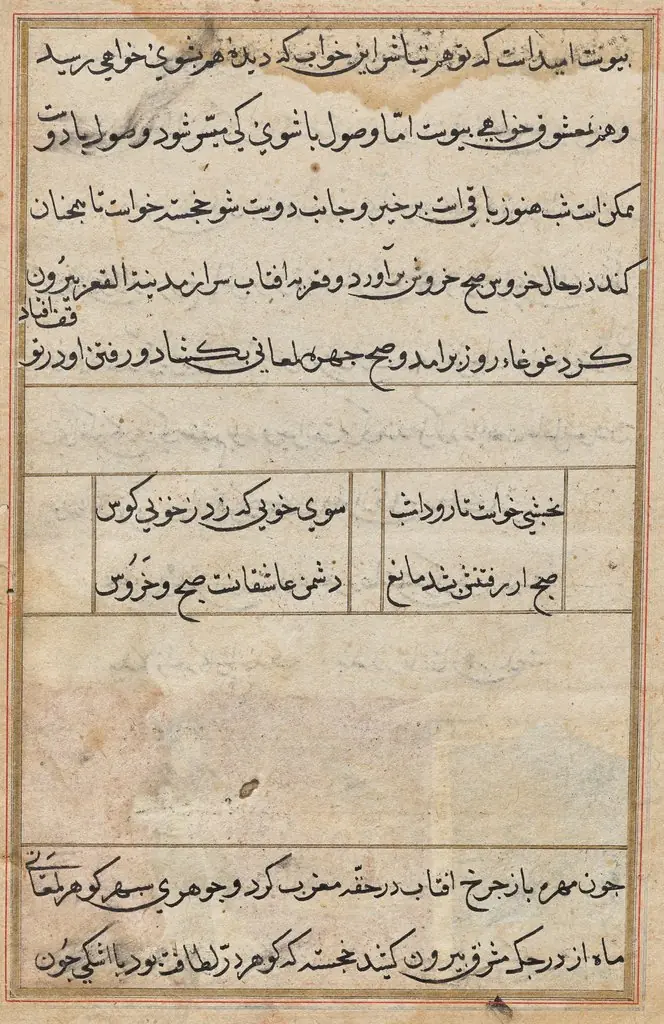
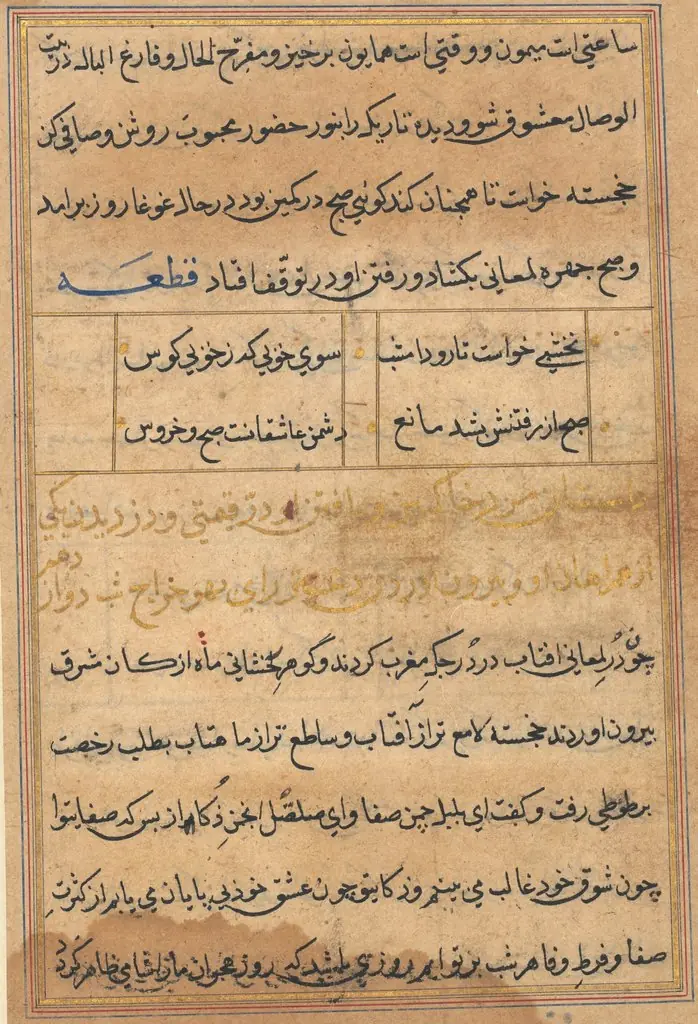
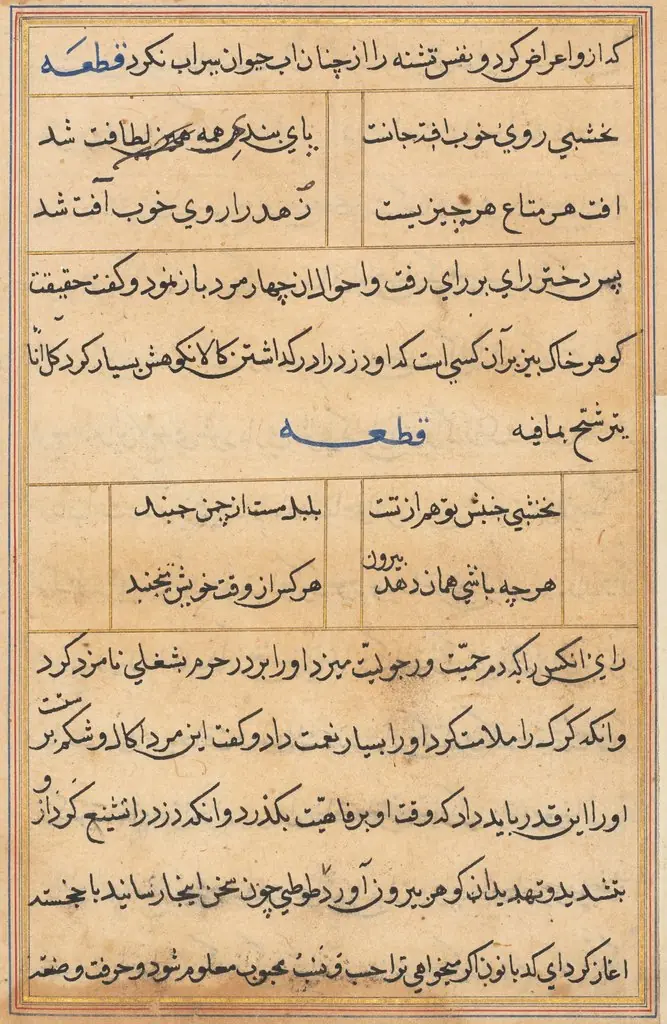
The object is a painted page from the Persian manuscript known as Tales of a Parrot (Tuti‑nama). Executed with black ink on a light‑brown ground, the sheet presents a neatly arranged block of decorative calligraphy, framed by a thin dark border and accented by a small blue mark in the lower left corner.
Subject & Meaning
The inscribed text appears to be a narrative or poetic passage, likely composed for a distinguished recipient. The elegance of the script and the careful composition suggest the content was intended to be read and cherished as a literary work of some importance.
Technique & Style
An artist applied black ink in a flowing, ornamental hand, filling the surface with evenly spaced lines that create a harmonious visual rhythm. The use of a light brown substrate provides subtle contrast, while the faint blue element adds a decorative touch without disrupting the overall monochrome scheme.
Context
Tuti‑nama, a collection of moral tales and fables, was traditionally produced for courtly audiences, combining literary content with visual embellishment. The careful calligraphic treatment of this page reflects the manuscript’s role as both a literary and artistic object within its cultural milieu.
Artist & collection

- Page from Tales of a Parrot (Tuti-nama): text page
 Page from Tales of a Parrot (Tuti-nama): text page
 Page from Tales of a Parrot (Tuti-nama): text page
 Page from Tales of a Parrot (Tuti-nama): text page
 Page from Tales of a Parrot (Tuti-nama): text page
 Page from Tales of a Parrot (Tuti-nama): text page
 Page from Tales of a Parrot (Tuti-nama): text page
 Page from Tales of a Parrot (Tuti-nama): text page
 Page from Tales of a Parrot (Tuti-nama): text page
 Tuti-Nama (Tales of a Parrot)
 Page from Tales of a Parrot (Tuti-nama): text page
 Page from Tales of a Parrot (Tuti-nama): text page