Artwork
Page from Tales of a Parrot (Tuti-nama): text page
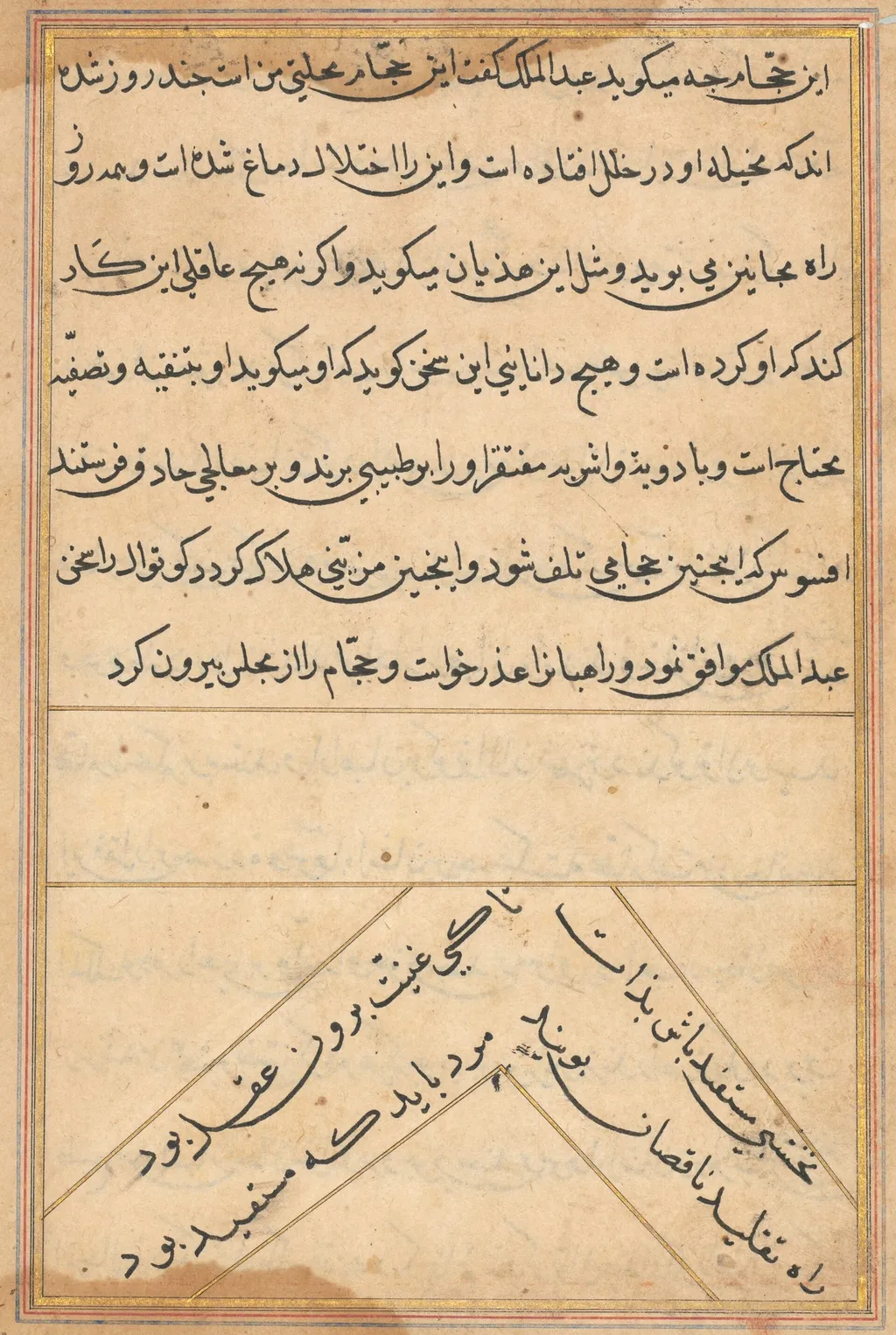
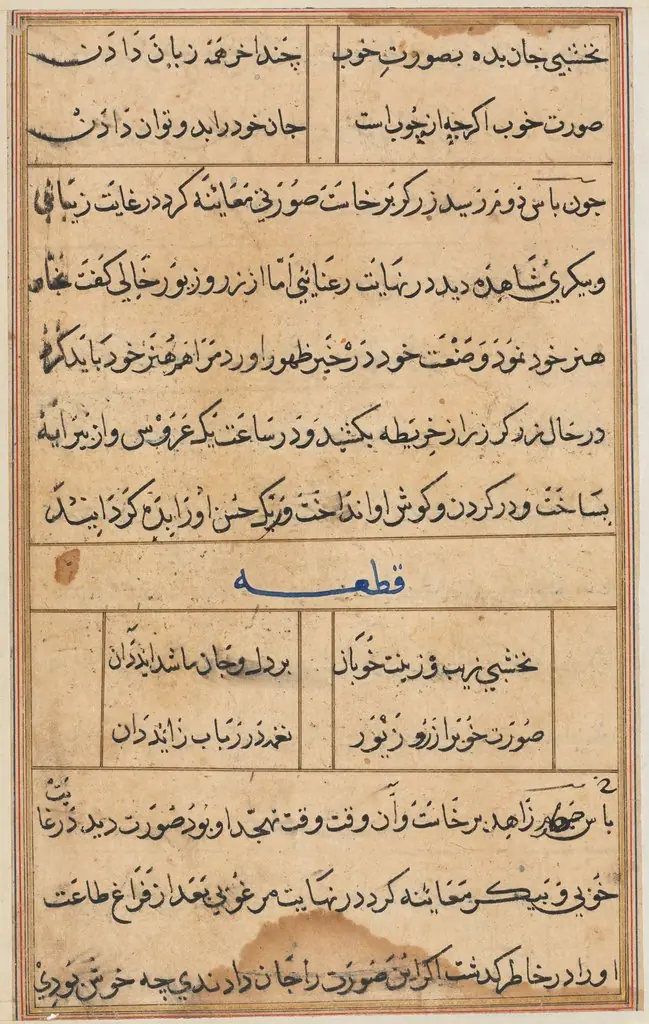
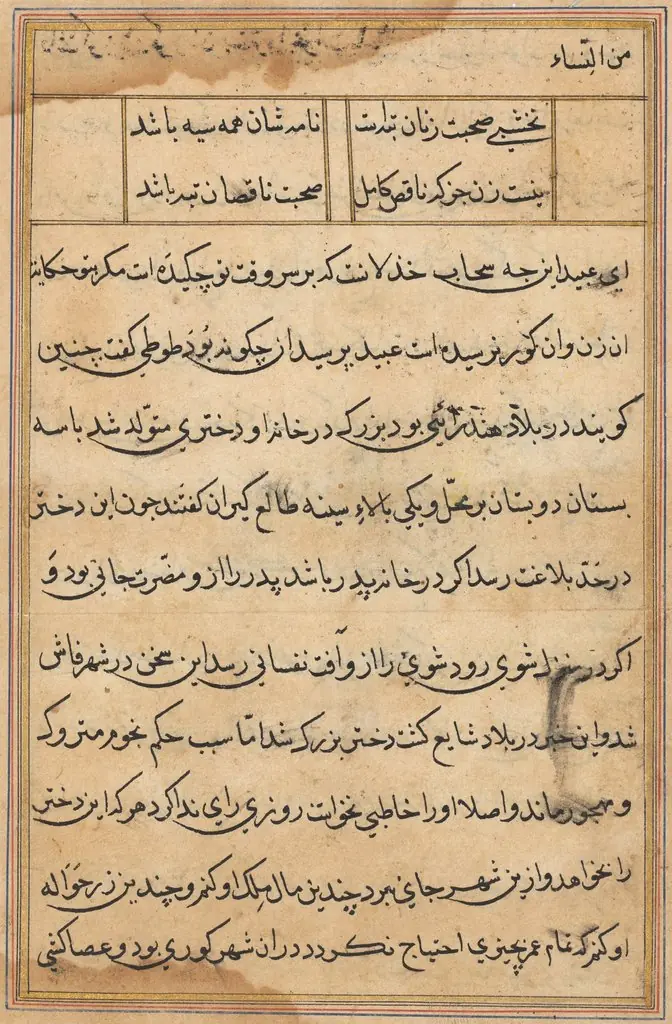
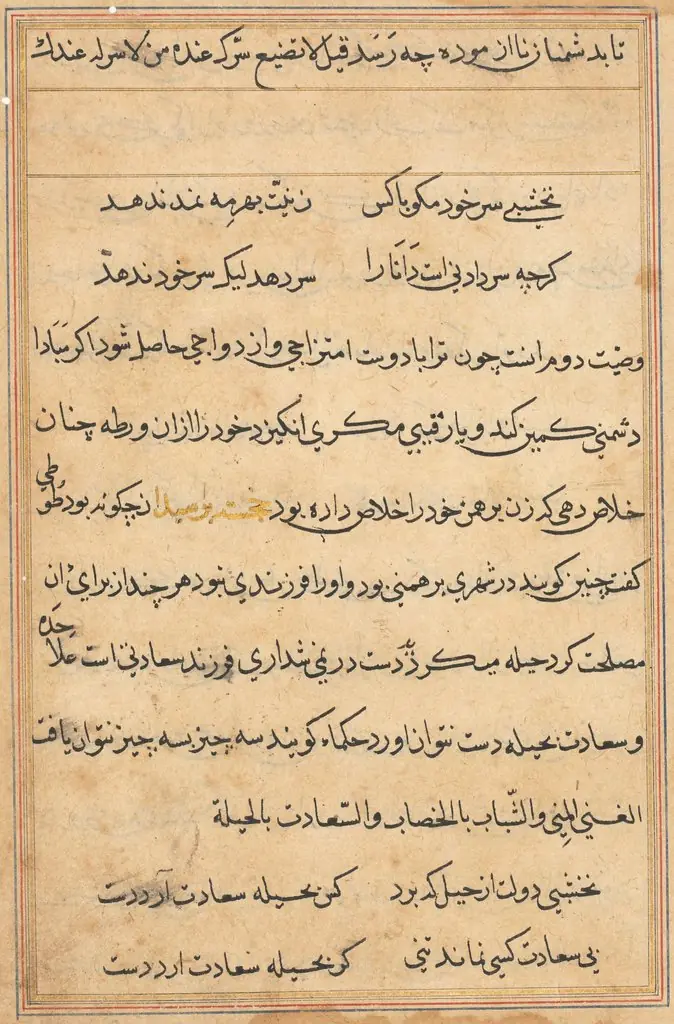
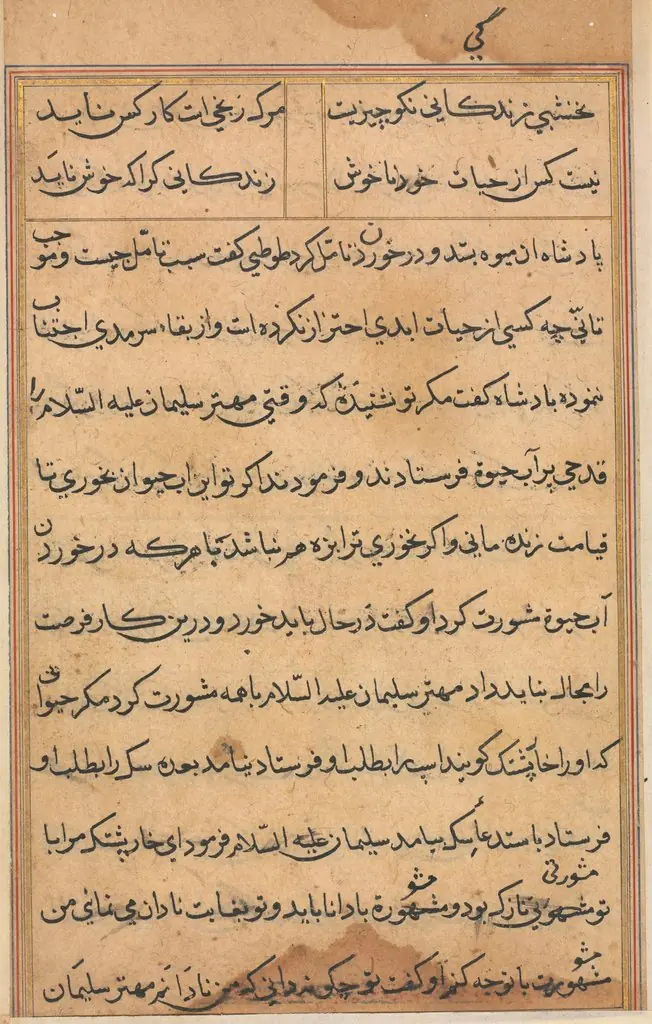
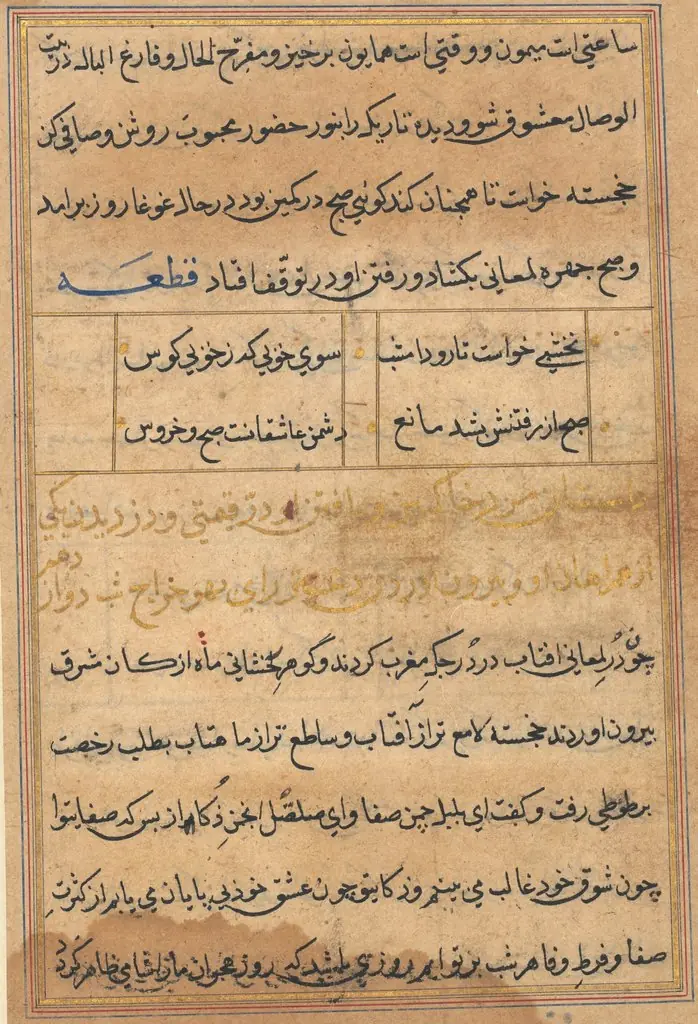
Page from Tales of a Parrot (Tuti-nama): text page is an unspecified painting. It dates from 1560 and is held in the collection of the Cleveland Museum of Art. This object is a single folio from the illustrated manuscript Tales of a Parrot (Tuti‑nama).
About this work
History & Provenance
Its attribution to an unknown artist underscores the anonymous collaborative practices of manuscript workshops in the Mughal Empire.
The miniature originates from a text page of the Tuti-nama, produced circa 1560 within the Mughal imperial context. It was created as part of a manuscript commissioned for a royal audience, reflecting the courtly patronage characteristic of mid-sixteenth-century manuscript production. The work entered the collection of the Cleveland Museum of Art, where it remains on view as item 1962.279.289.b. Its attribution to an unknown artist underscores the anonymous collaborative practices of manuscript workshops in the Mughal Empire.
Context
Created in 1560 within the Mughal Empire, this text page from the Tales of a Parrot (Tuti-nama) represents a specific phase in the development of Mughal manuscript illumination. The work is attributed to an unknown artist, reflecting the collaborative workshop practices common to imperial commissions of the period. Currently held by the Cleveland Museum of Art, the page serves as a surviving example of the textual and illustrative traditions that defined early Mughal art history.
Its preservation allows scholars to examine the stylistic conventions of the mid-sixteenth century, prior to the full synthesis of Persian and Indian visual languages seen in later decades.
Overview
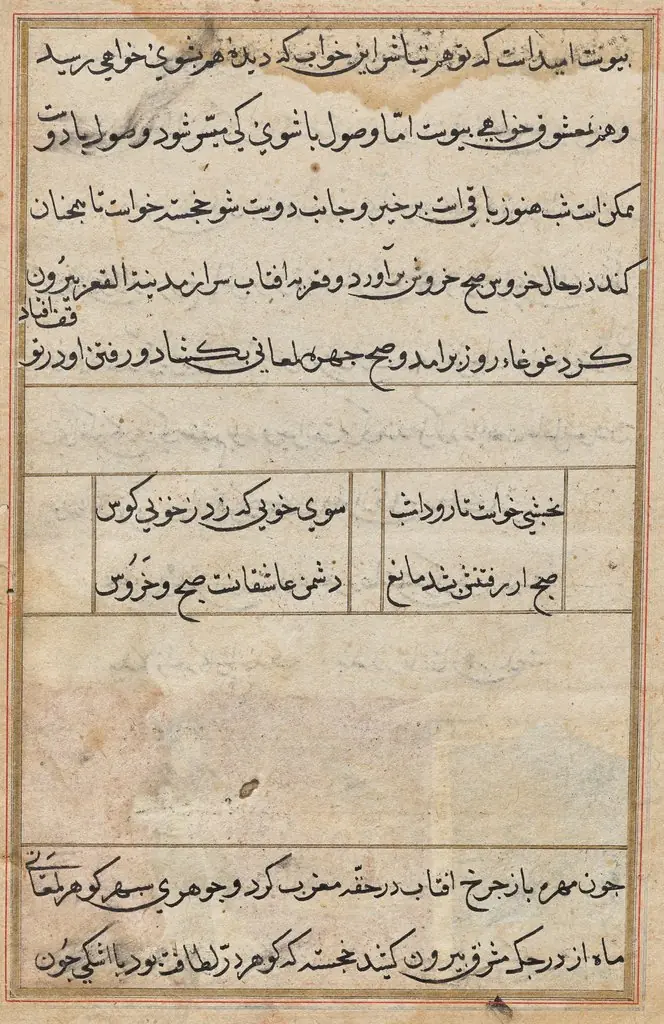
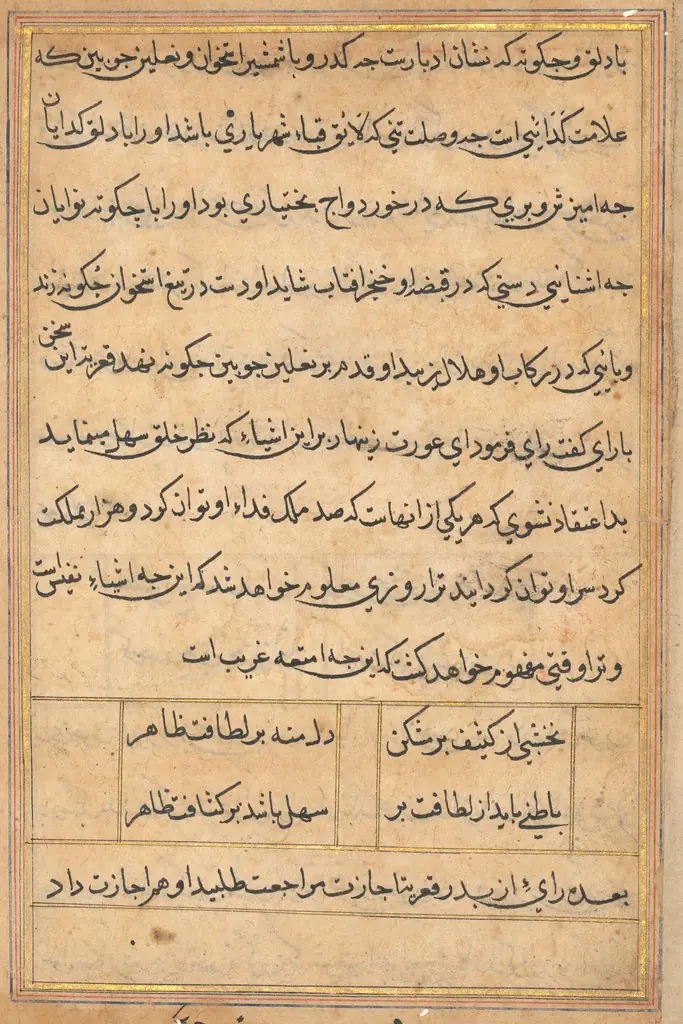
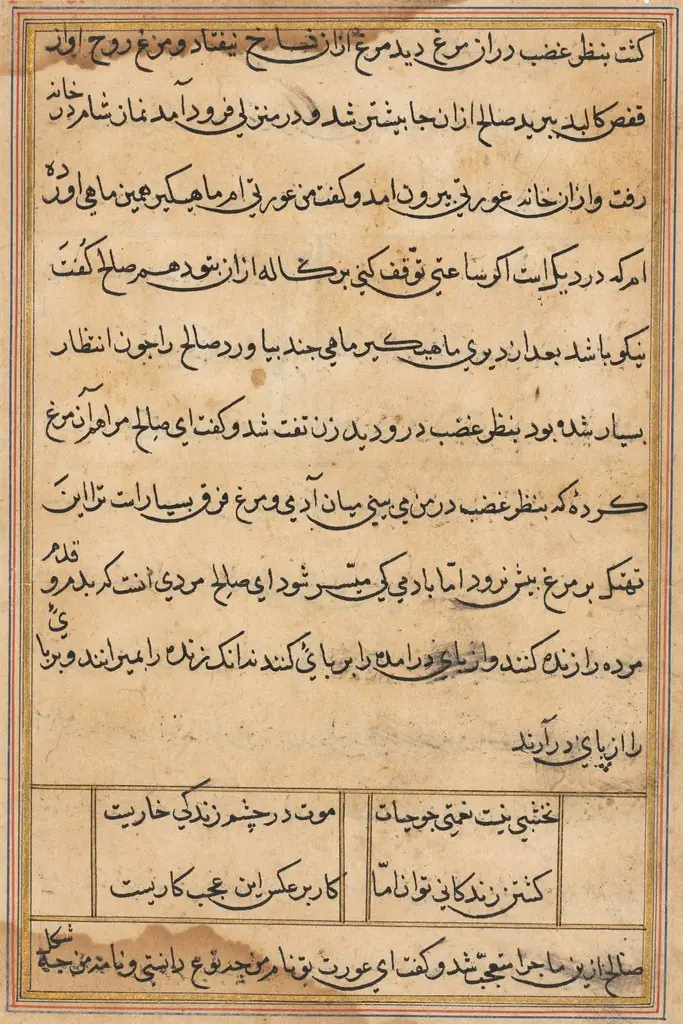
This object is a single folio from the illustrated manuscript Tales of a Parrot (Tuti‑nama). The page consists solely of calligraphic text rendered in black ink on a light tan paper support, framed by a thin red border that delineates the written area.
Subject & Meaning
The manuscript was commissioned for Prince Salim, a member of the Mughal court, and contains a collection of moral and entertaining stories narrated by a parrot. The page presents a segment of the narrative without accompanying illustrations, emphasizing the literary content intended for princely education and amusement.
Technique & Style
The calligraphy displays meticulous, uniform lettering, with occasional larger or underlined words to highlight key passages. The ink is applied with a fine brush, producing crisp, evenly spaced strokes. The red border, likely added with pigment or ink, serves both decorative and functional purposes, framing the text.
Artist & collection

 Page from Tales of a Parrot (Tuti-nama): text page
 Page from Tales of a Parrot (Tuti-nama): text page
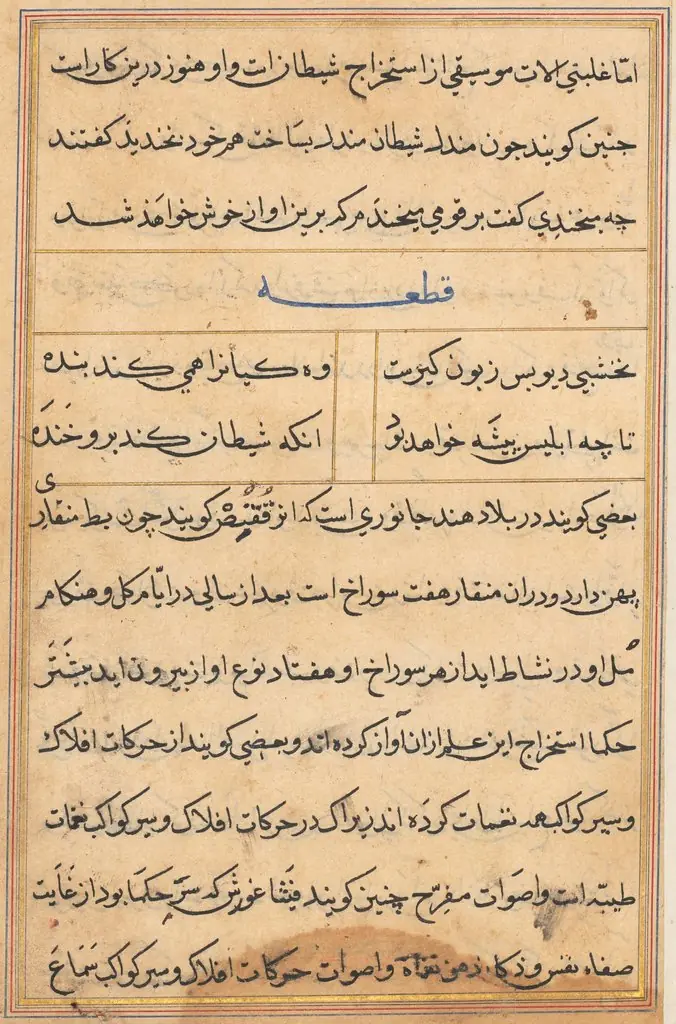 Page from Tales of a Parrot (Tuti-nama): text page
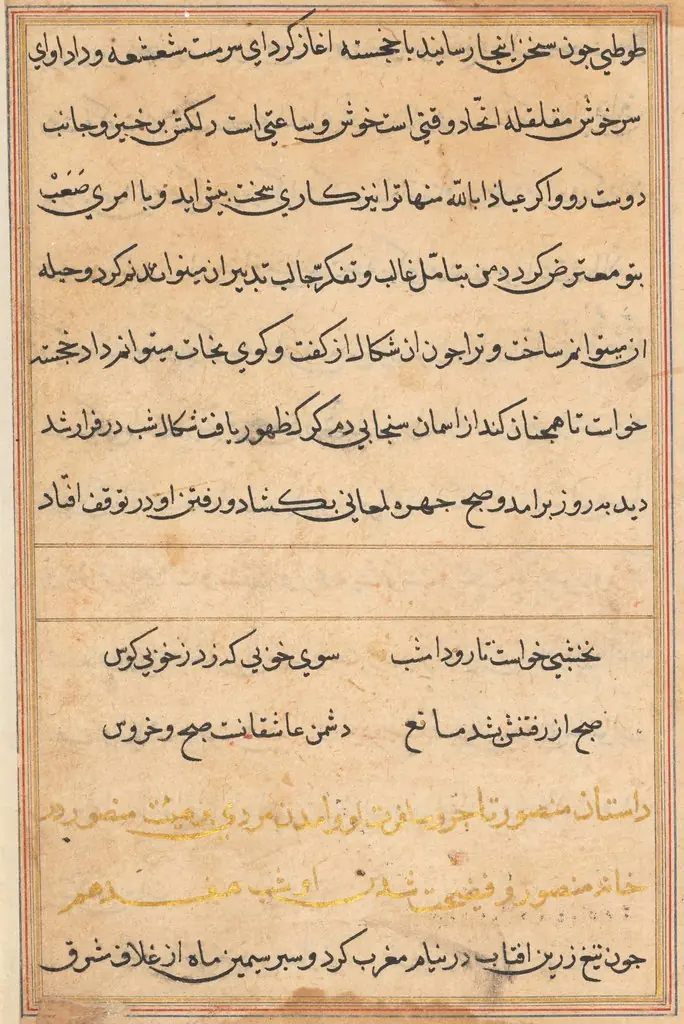 Page from Tales of a Parrot (Tuti-nama): text page
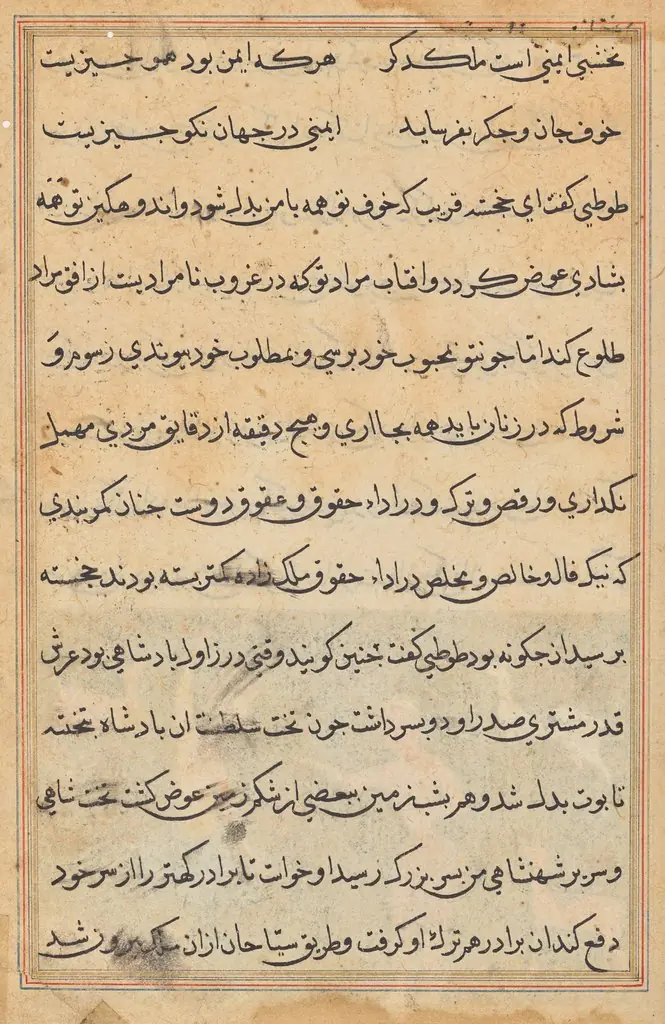 Page from Tales of a Parrot (Tuti-nama): text page
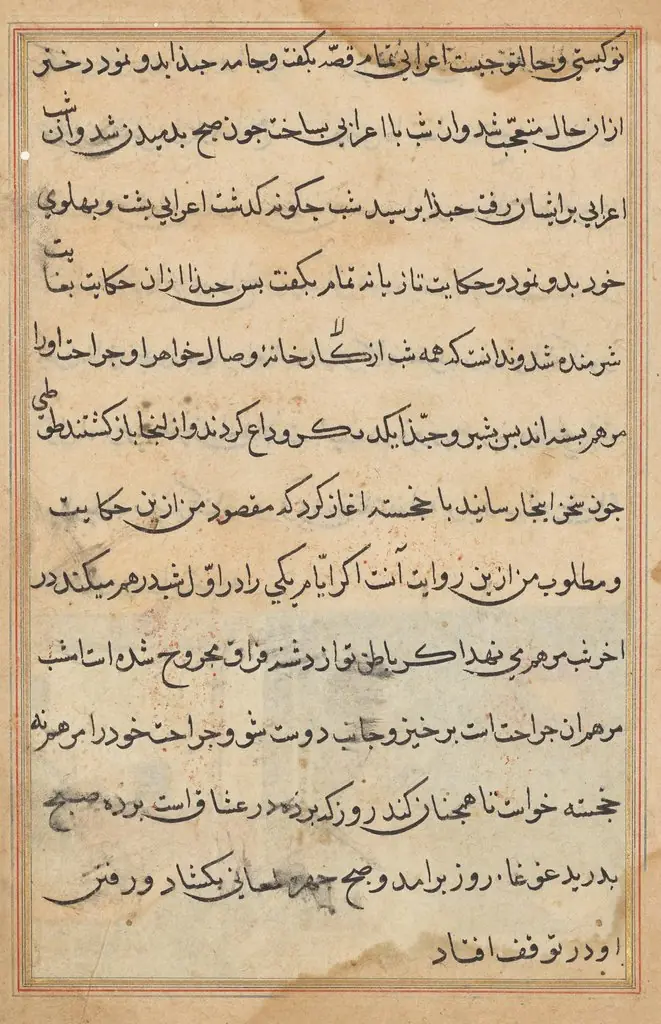 Page from Tales of a Parrot (Tuti-nama): text page
 Tuti-Nama (Tales of a Parrot)