Artwork
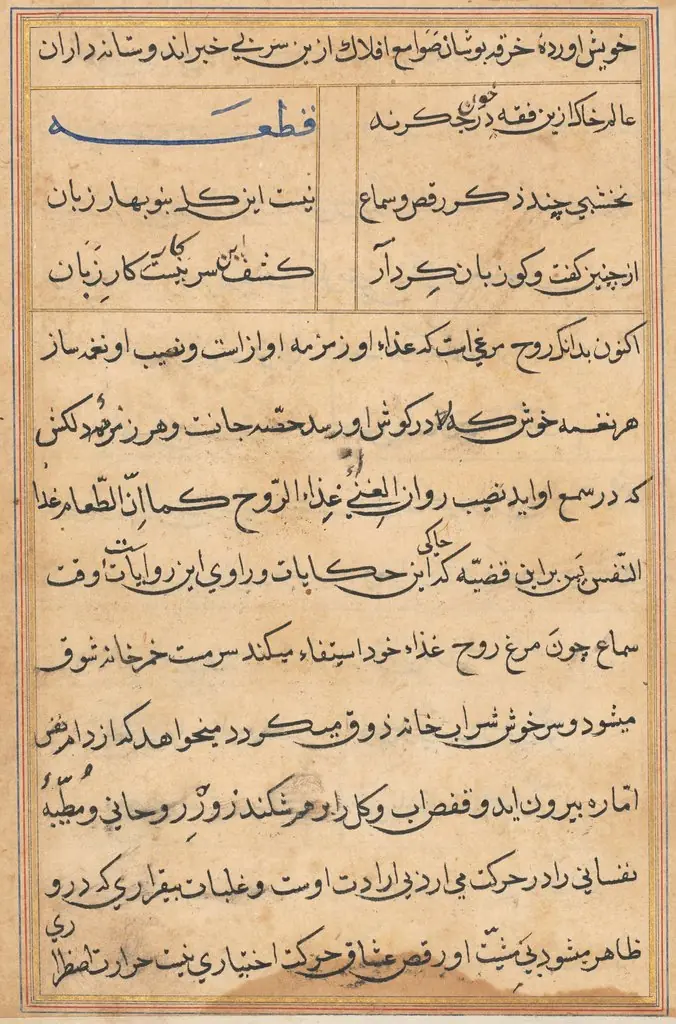
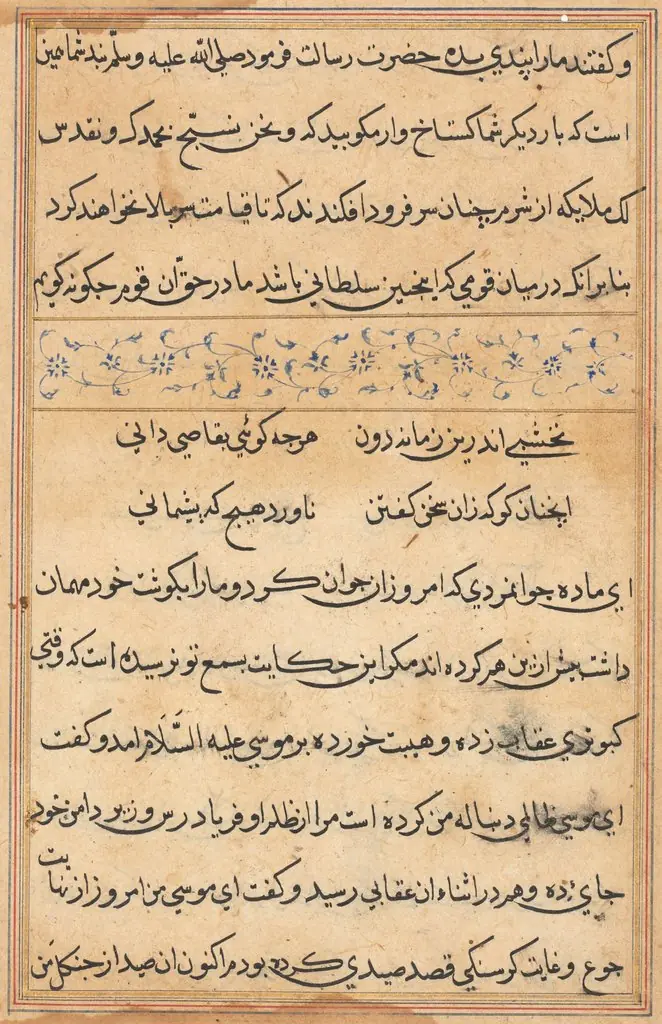
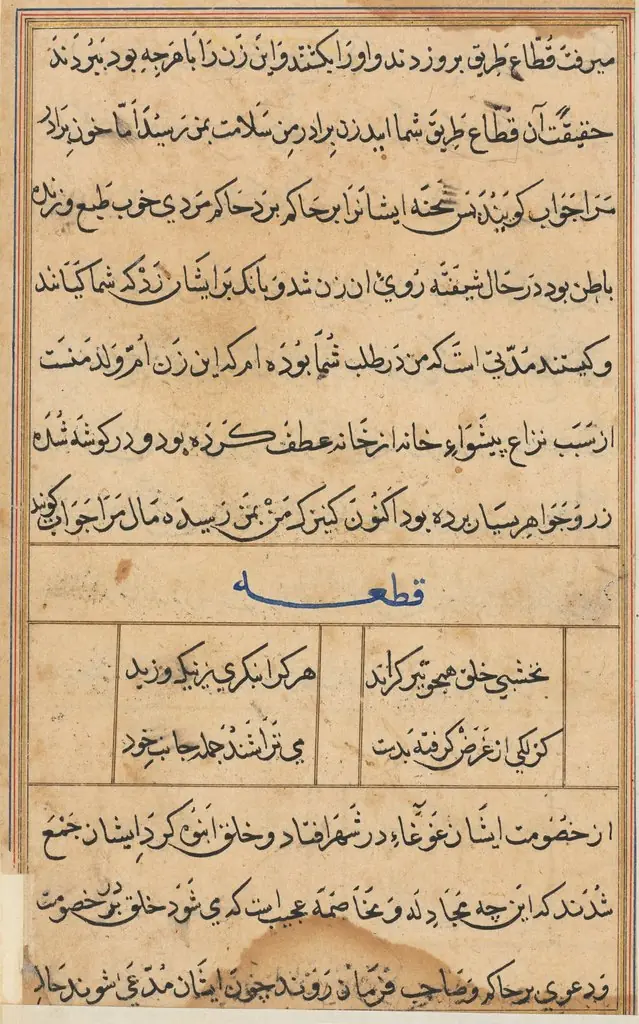
Page from Tales of a Parrot (Tuti-nama): text page
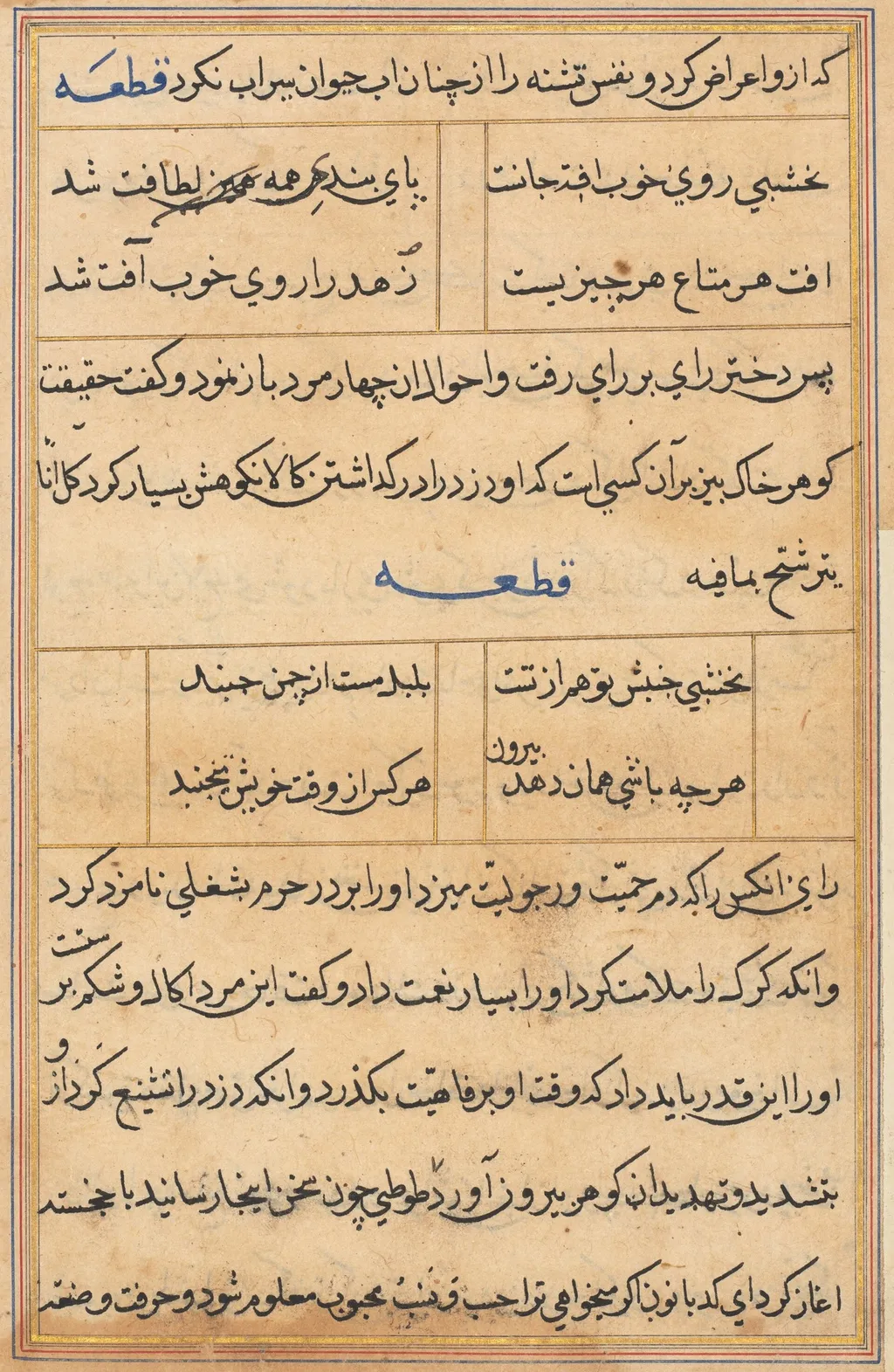
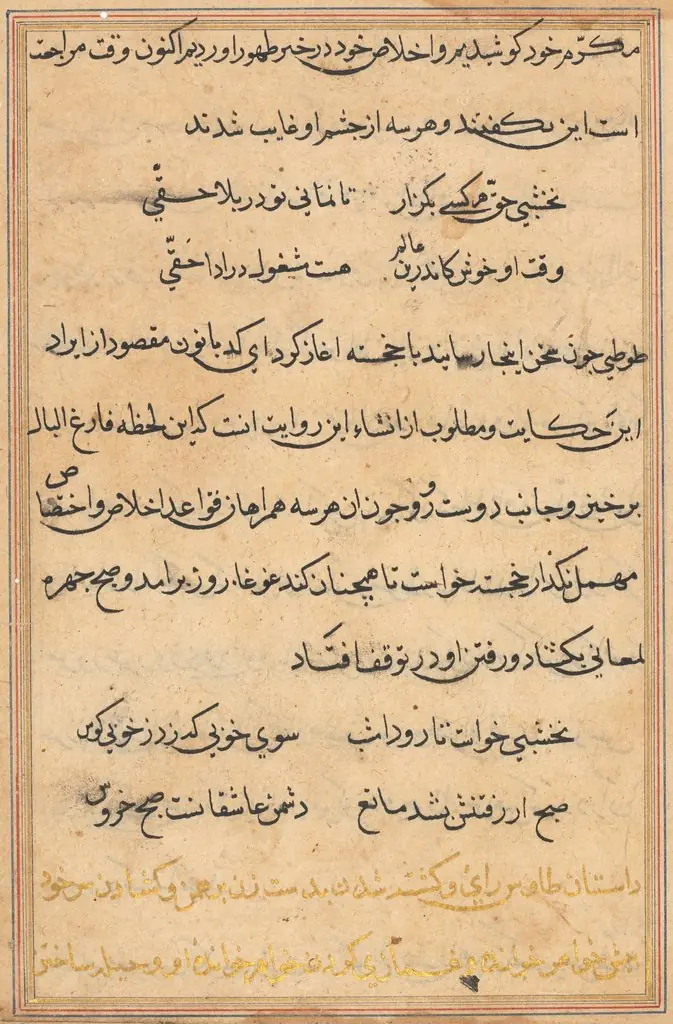
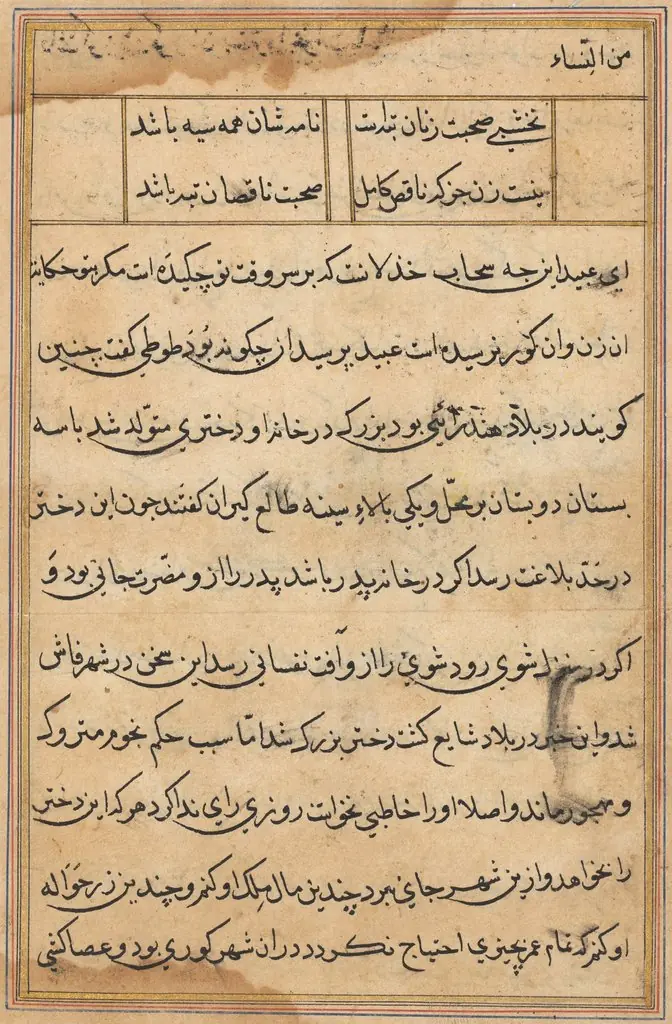
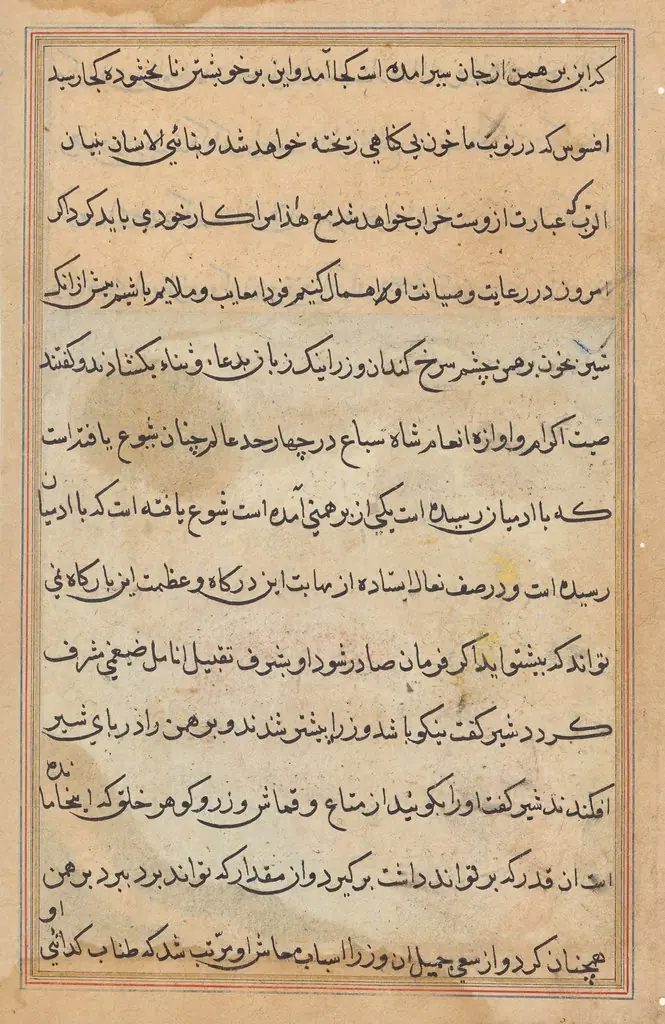
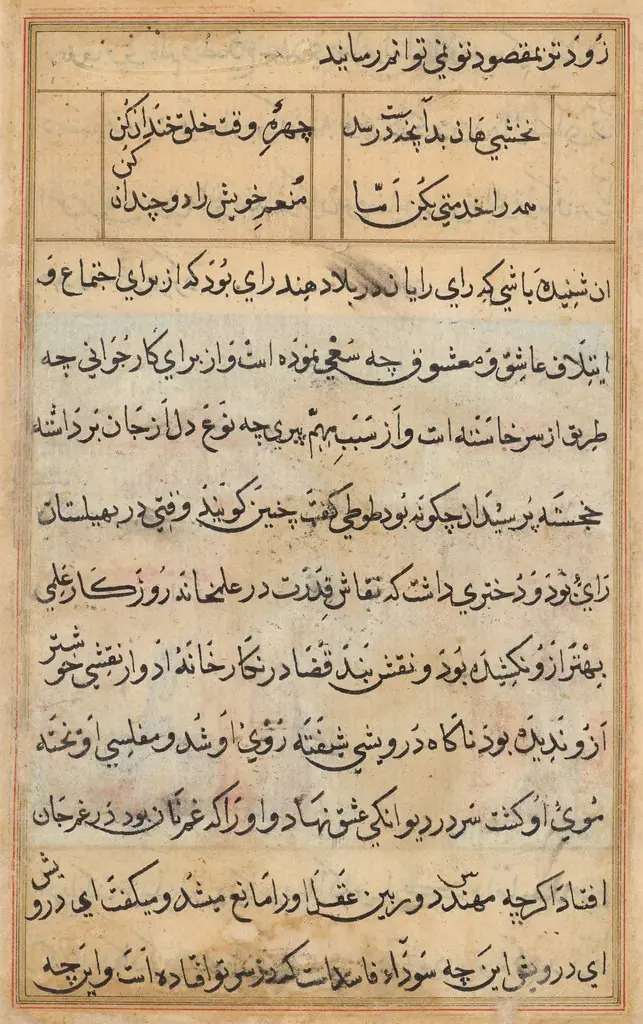
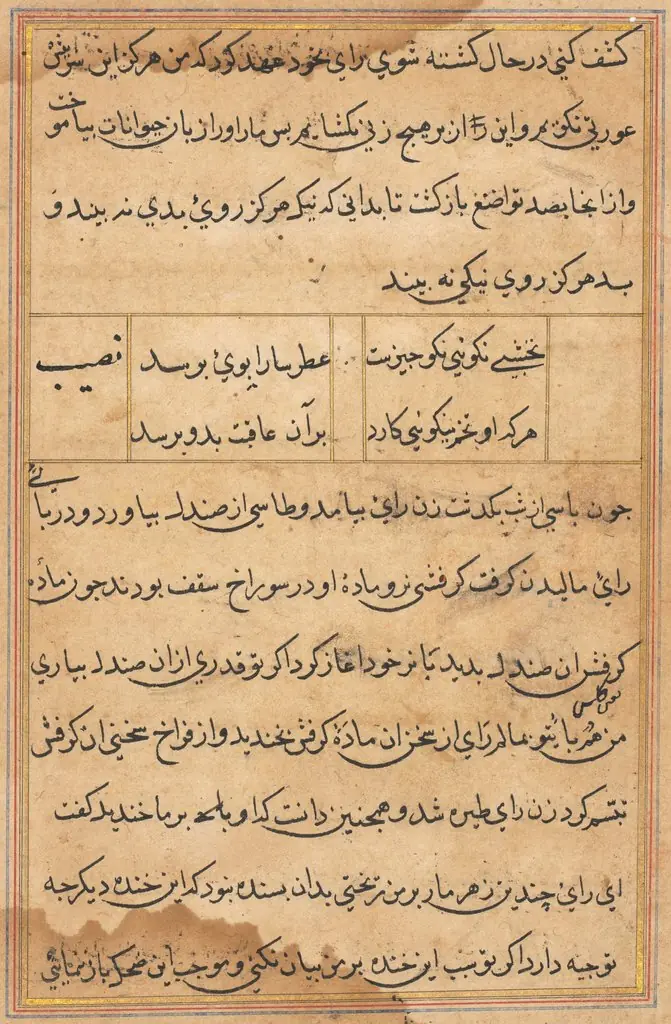
Page from Tales of a Parrot (Tuti-nama): text page is an unspecified painting. It dates from 1560 and is held in the collection of the Cleveland Museum of Art. This object is a painted page from the illustrated manuscript known as Tales of a Parrot (Tuti‑nama).
About this work
History & Provenance
Precise details of its commissioning are not recorded; it dates to the mid-sixteenth century, the early period of Mughal manuscript production.
This text page from the Tales of a Parrot (Tuti-nama) was created around 1560 in the Mughal Empire by an unknown artist. The manuscript page is held in the collection of the Cleveland Museum of Art, catalogued under accession number 1962.279.101.b. Precise details of its commissioning are not recorded; it dates to the mid-sixteenth century, the early period of Mughal manuscript production. No exhibition history is documented in the available sources.
Legacy
The miniature's transmission to later Persian and Deccan manuscript traditions established a model for narrative illustration that emphasized didactic clarity, a practice documented in subsequent Mughal atelier records. Its formal composition influenced nineteenth-century European Orientalist draftsmen who referenced the page in travelogues describing Indian aesthetic principles, a reception noted in archival correspondence from the 1880s. The work's scholarly prominence was reinforced by its inclusion in the 1962 Cleveland Museum of Art acquisition, where it became a reference point for studies of Indo-Persian manuscript culture and informed subsequent conservation approaches to miniature painting techniques.
Overview
This object is a painted page from the illustrated manuscript known as Tales of a Parrot (Tuti‑nama). The sheet measures roughly the size of a typical folio and functions as a textual illustration rather than a purely visual scene. Its surface is a light beige ground bordered by a narrow blue strip, upon which dense black calligraphy is arranged in orderly rectangular panels.
Subject & Meaning
The black script appears to be Persian verse, likely a segment of the narrative that the Tuti‑nama conveys, a collection of moral and romantic stories traditionally recited in courtly settings. The presence of highlighted words in blue ink suggests emphasis on key terms or names, indicating the text’s role in guiding the reader through the tale.
Technique & Style
The page was executed by hand, employing ink on a prepared paper support. The calligraphic blocks demonstrate a disciplined layout, with uniform spacing and consistent line weight, characteristic of Persian manuscript traditions. The subtle blue border and occasional blue ink highlights provide a restrained decorative element that frames the script without overwhelming it.
Context
Tales of a Parrot belongs to a genre of Persian storytelling that blends poetry with moral instruction, often circulated among elite patrons. The manuscript’s emphasis on calligraphic elegance mirrors the cultural importance placed on literacy and poetic expression in the societies that produced such works.
Artist & collection

- Page from Tales of a Parrot (Tuti-nama): text page
 Page from Tales of a Parrot (Tuti-nama): text page
 Page from Tales of a Parrot (Tuti-nama): text page
 Page from Tales of a Parrot (Tuti-nama): text page
 Page from Tales of a Parrot (Tuti-nama): text page
 Page from Tales of a Parrot (Tuti-nama): text page
 Page from Tales of a Parrot (Tuti-nama): text page
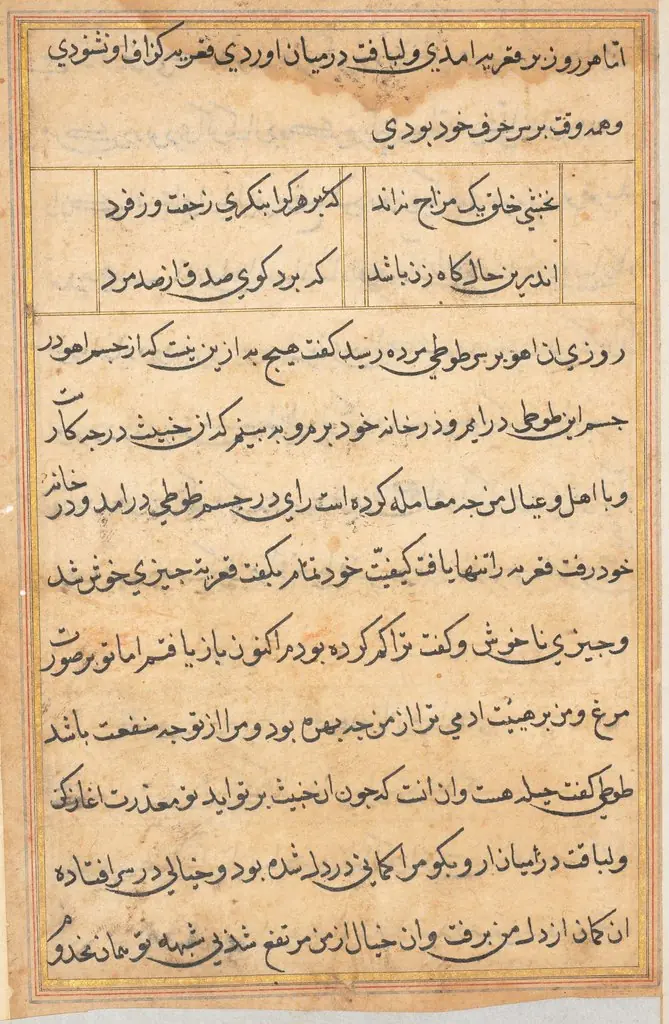 Page from Tales of a Parrot (Tuti-nama): text page
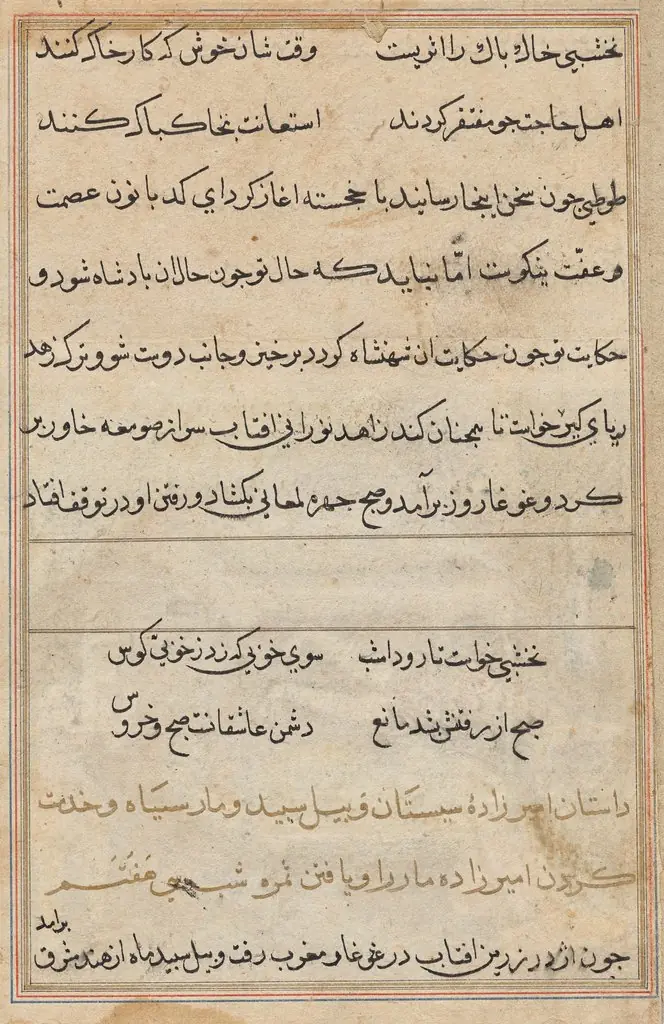 Page from Tales of a Parrot (Tuti-nama): text page
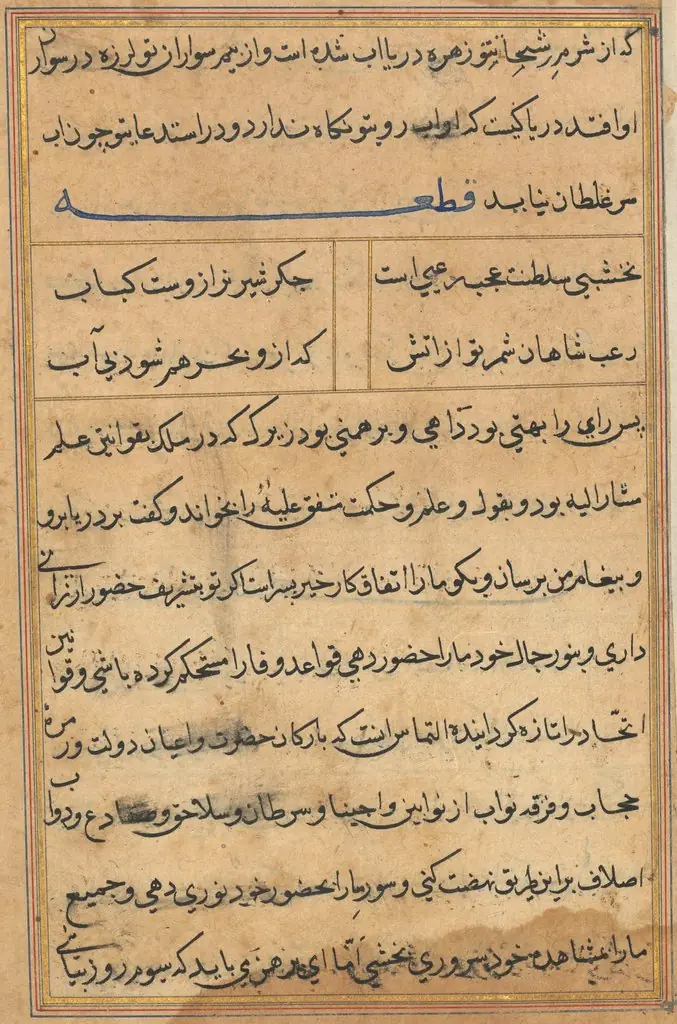 Page from Tales of a Parrot (Tuti-nama): text page
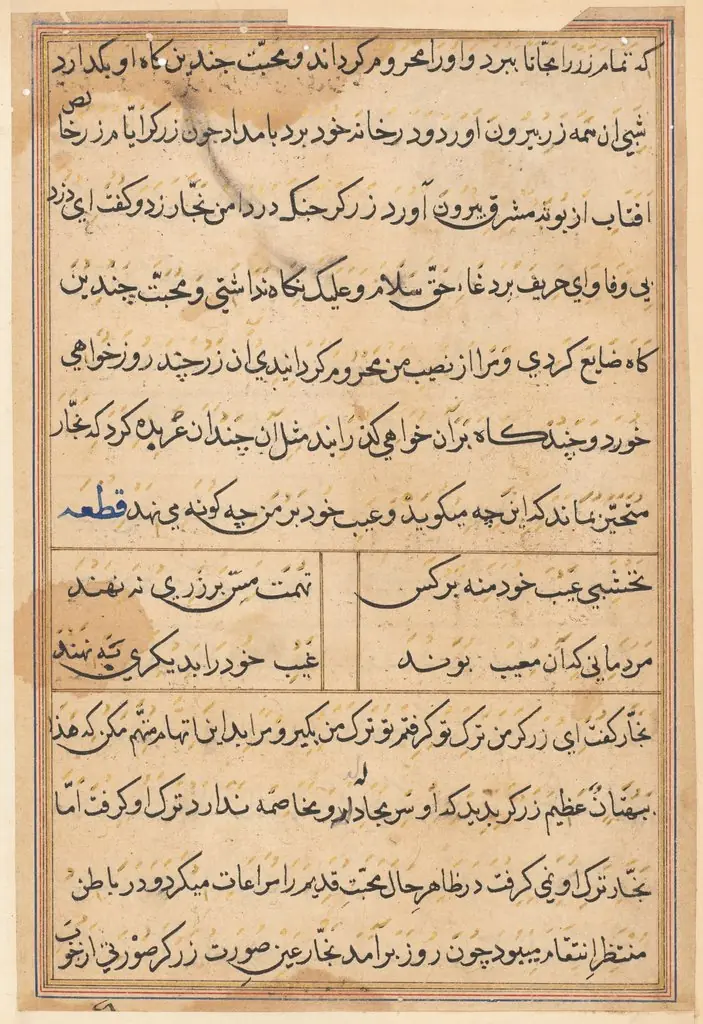 Page from Tales of a Parrot (Tuti-nama): text page
 Page from Tales of a Parrot (Tuti-nama): text page