Artwork
Philip IV in prayer
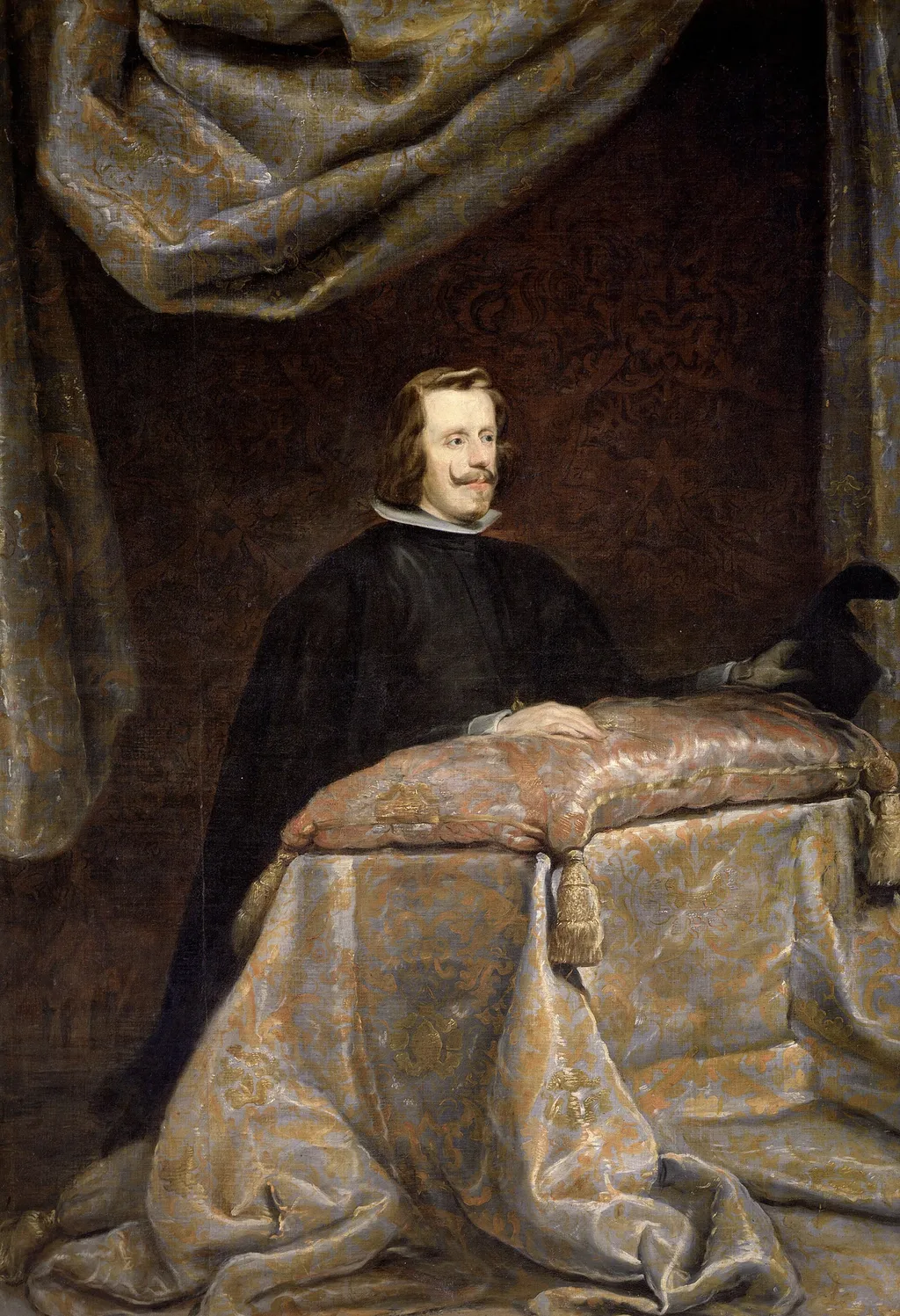
Philip IV in prayer is an oil painting. It dates from 1655 and is held in the collection of the Museo del Prado. The work depicts a solitary figure seated in a dimly lit interior.
About this work
Subject & Meaning
The painting shows Philip IV of Spain kneeling in devotional posture, framed by a faldstool, cushion, and draped curtain that emphasize his royal sanctity.
The painting shows Philip IV of Spain kneeling in devotional posture, framed by a faldstool, cushion, and draped curtain that emphasize his royal sanctity. The composition conveys a blend of monarchical authority and spiritual humility, reflecting Counter‑Reformation ideals of the Spanish Habsburg court. The work belongs to the portrait genre and was created in oil on canvas in 1655, now housed in the Museo del Prado.
Iconographically, the faldstool and rich textiles signal the king's exalted status, while the act of prayer underscores contemporary notions of piety and divine right. Together, these elements articulate a representation of monarchical power intertwined with religious devotion.
Technique & Style
The work was executed in oil paint on canvas, as recorded in the documentation. Its dimensions measure 209 cm by 147 cm, matching the specifications noted in the source. The composition portrays the monarch seated on a faldstool, with a cushion and curtain framing the scene, reflecting the formal ceremonial context of the Spanish court. These visual elements contribute to a restrained, contemplative style characteristic of court portraiture in the mid‑17th century.
History & Provenance
The portrait of Philip IV of Spain in prayer was painted in 1655 by an artist in the workshop of Diego Velázquez. It was created as a devotional image for the Spanish monarch and later entered the collection of the Museo del Prado, where it remains on display. The work measures 209 cm in height and 147 cm in width, executed in oil paint on canvas.
Its subject is the king depicted on a faldstool with a cushion and curtain, reflecting contemporary court ceremonial practices.
The work is housed in the Museo del Prado, where it is listed under the museum’s collection inventory. It has been featured in exhibitions focused on the Spanish Baroque at the institution, though specific exhibition titles are not detailed in the source material.
Overview
The work depicts a solitary figure seated in a dimly lit interior. He wears a black robe trimmed with a white collar, his expression solemn, his beard and mustache neatly trimmed. A heavy, draped curtain forms the background, while a padded kneeler with a small pillow lies before him, suggesting a posture of prayer.
Context
The composition aligns with a tradition of devotional portraiture that emphasizes the individual's relationship with the divine through isolated, contemplative scenes. The use of chiaroscuro reflects broader Baroque interests in dramatic lighting to enhance emotional resonance.
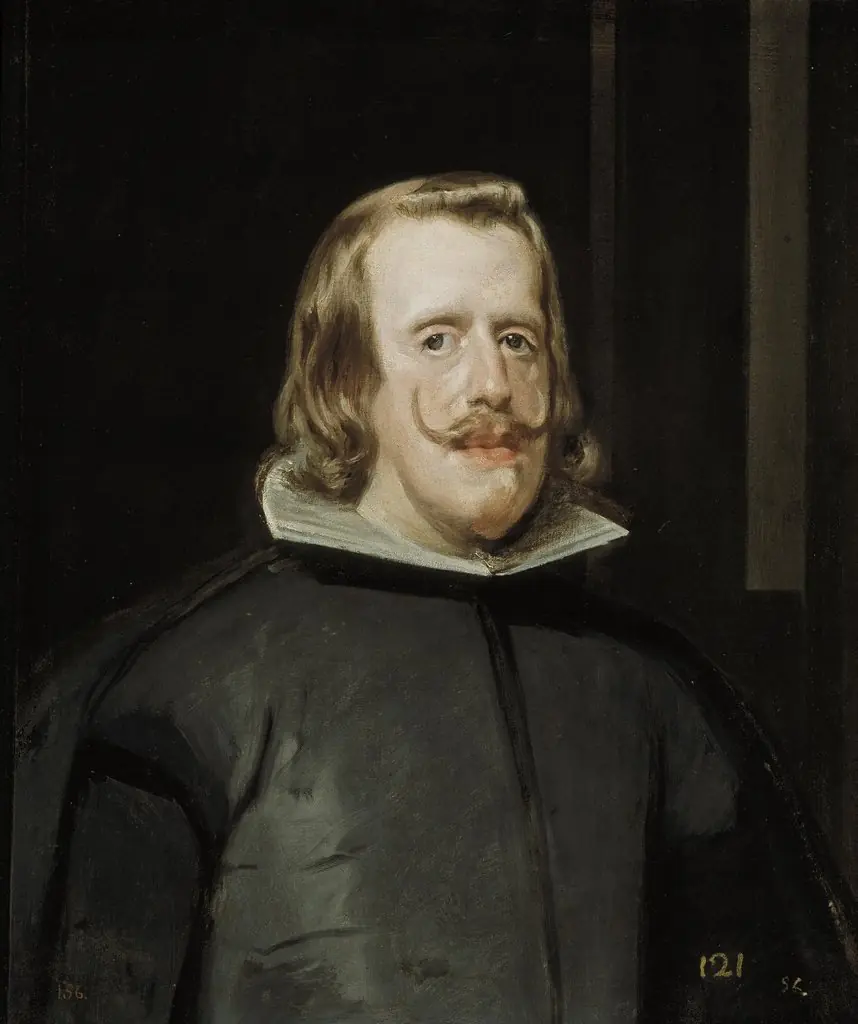
Artist & collection

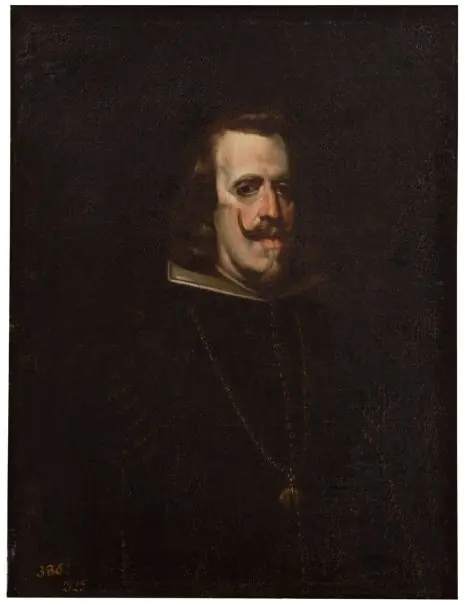 King Philip IV at half-length
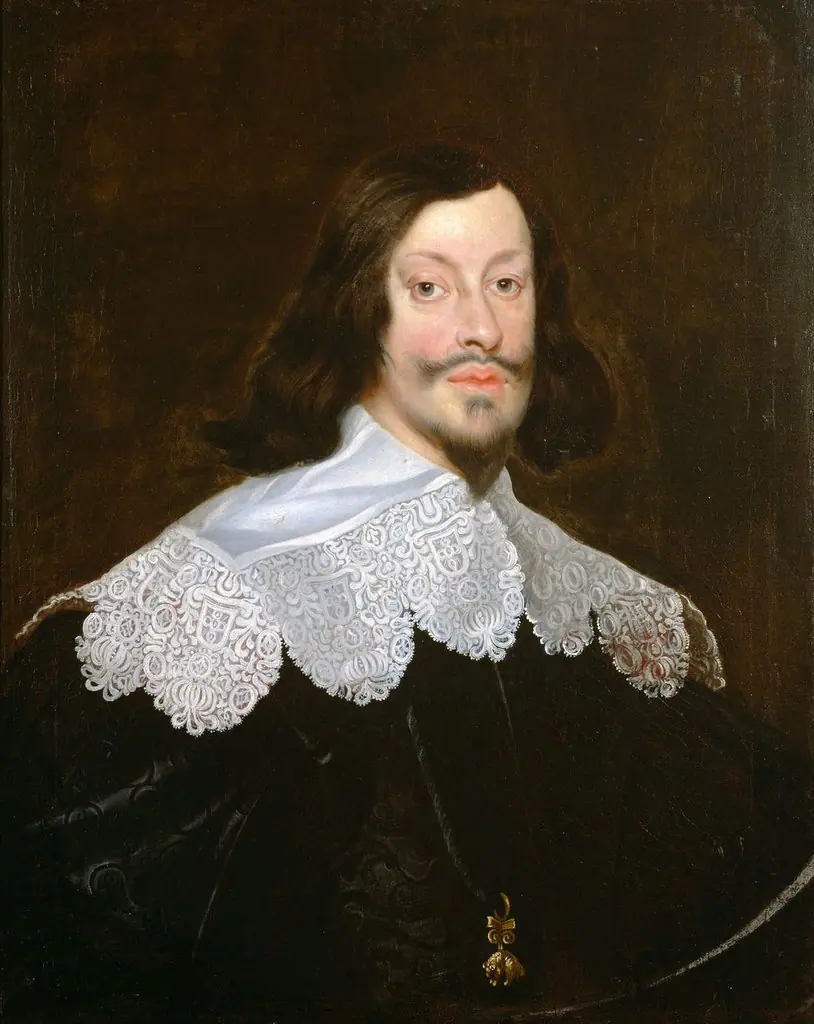 Kaiser Ferdinand III. (1608-1657), Brustbild
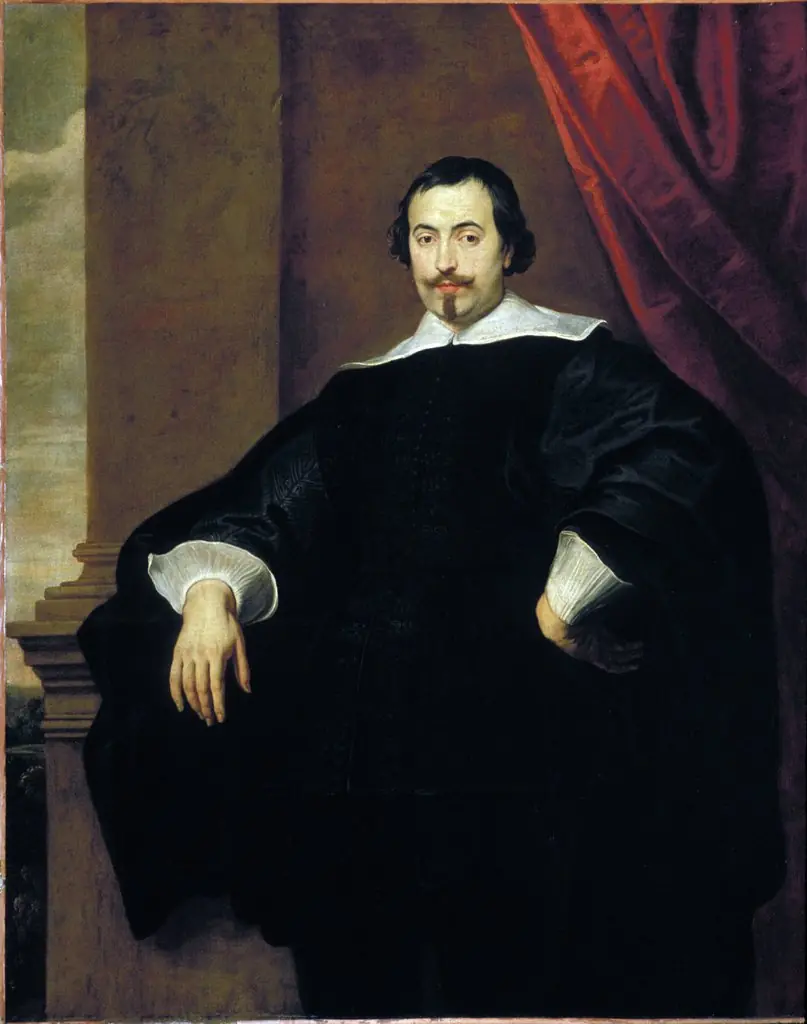 Portrait of a Man
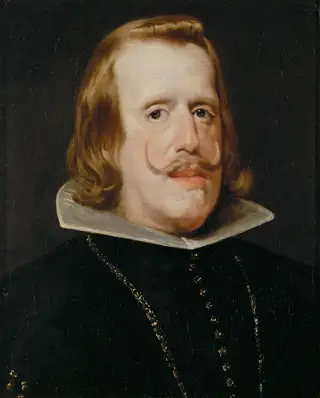 Portrait of King Philip IV of Spain
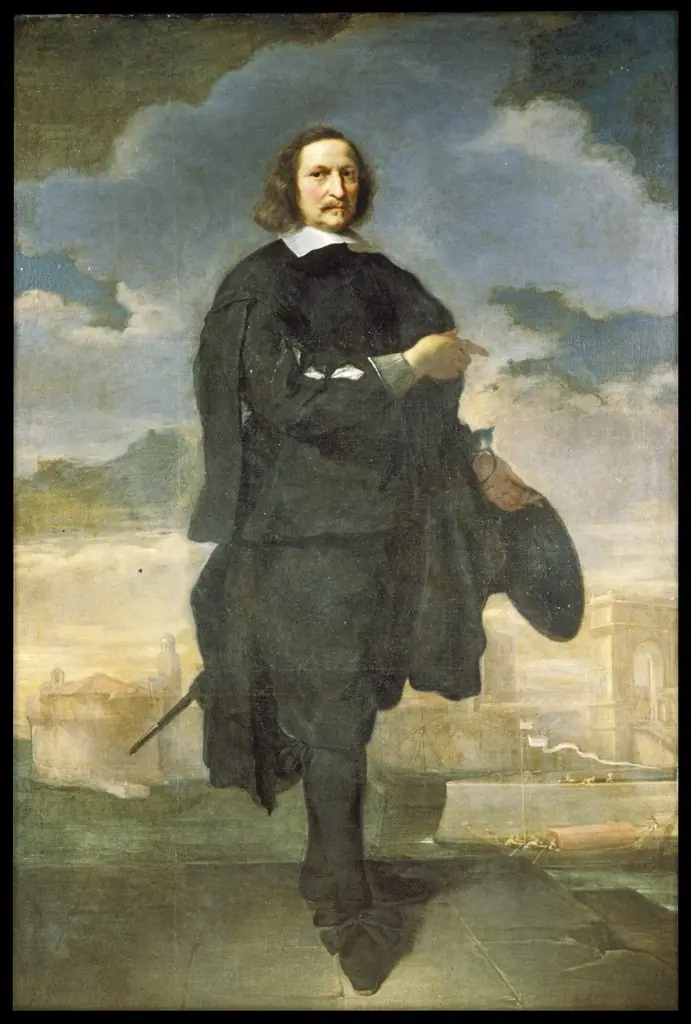 Portrait of Balthasar van der Goes
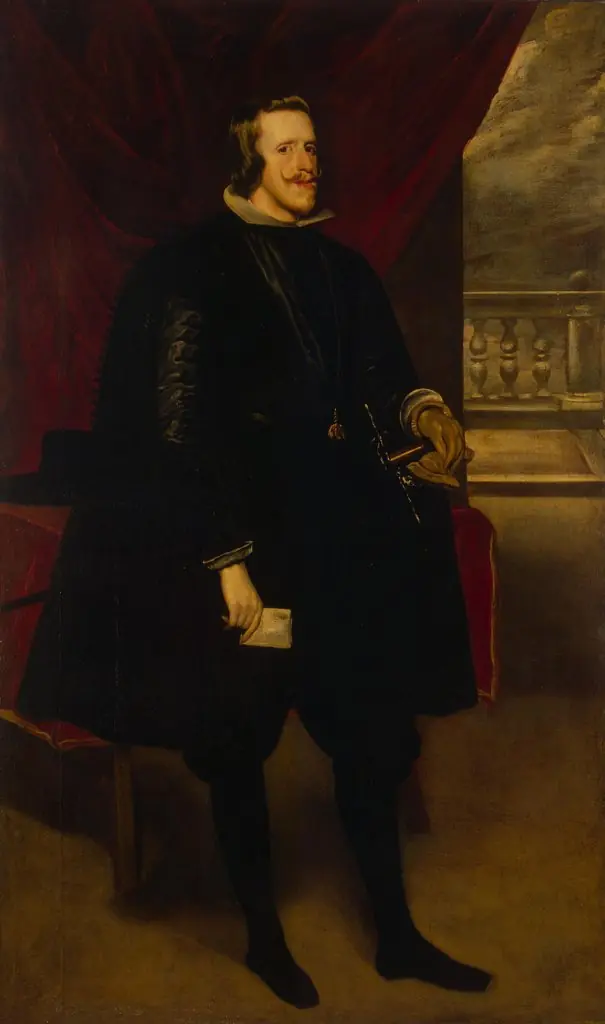 Portrait of Philip IV, King of Spain
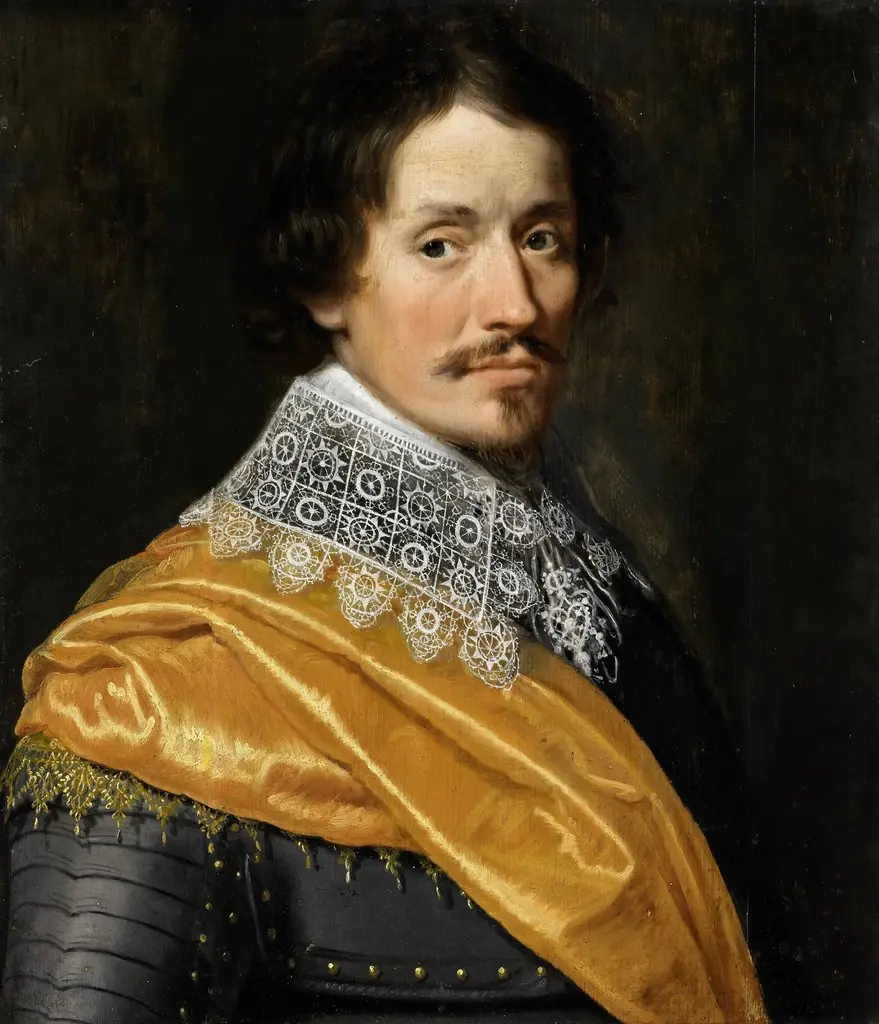 Portrait of an officer
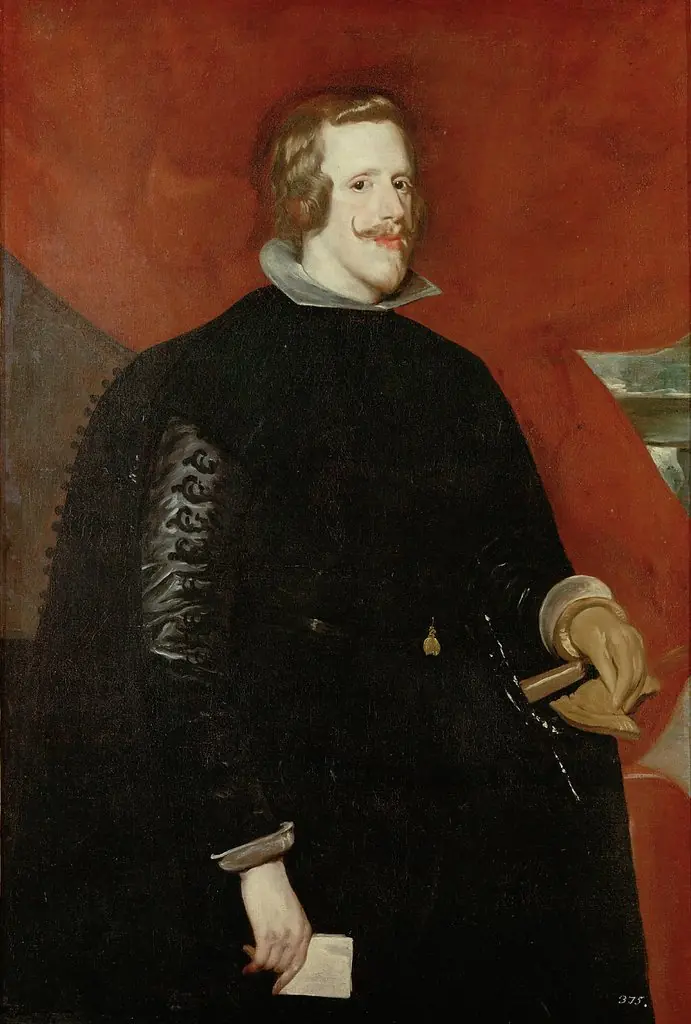 Portrait of Phillip IV of Spain, at three-quarter length
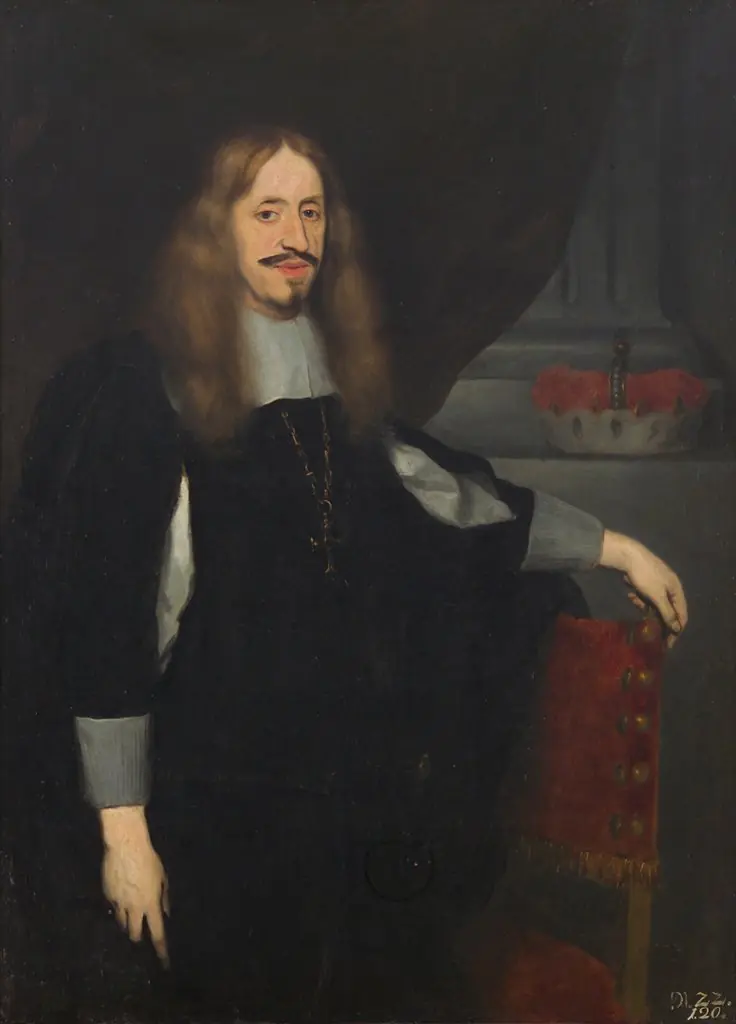 Portrait of archduke Leopold Wilhelm (1614-1662)
 Untitled
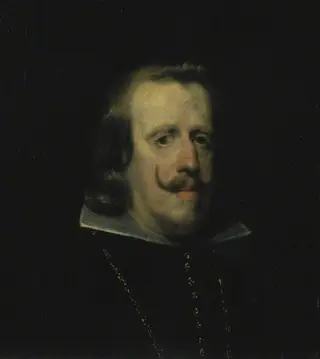 King Philip IV of Spain (1605 - 1665)
- Philip IV in old age