Artwork
Philip IV in old age
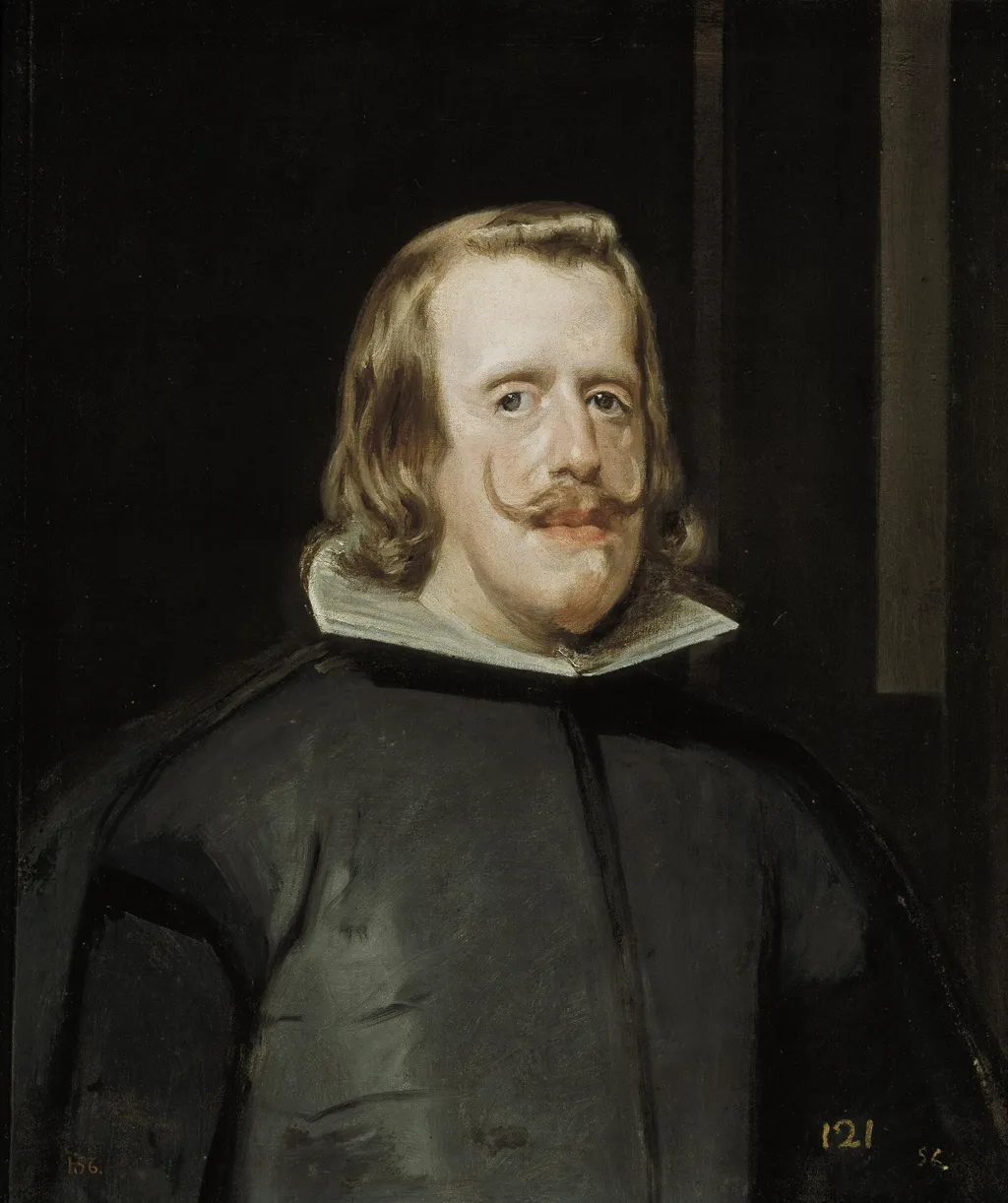
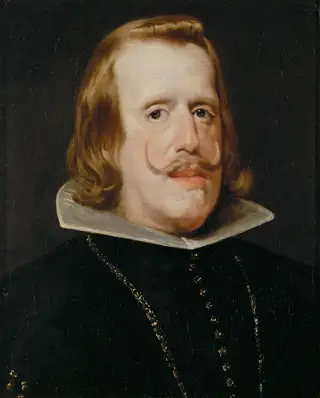
Philip IV in old age is an oil painting by the Baroque artist Diego Velázquez. It dates from 1653 and is held in the collection of the Museo del Prado.
About this work
Subject & Meaning
This unfinished bust study depicts Philip IV of Spain at approximately fifty years of age, representing the final portrait the monarch sat for from life.
This unfinished bust study depicts Philip IV of Spain at approximately fifty years of age, representing the final portrait the monarch sat for from life. While the face is carefully modeled, the chest and shoulders are only roughly indicated with economical brushstrokes suggesting silk, confirming its function as a preparatory model for official state portraits rather than a finished display piece.
Art historical interpretation has often viewed the king's expression as a psychological document of royal decline and melancholy. However, scholars argue that the existence of numerous workshop copies and its adaptation into full-length armored portraits suggests it was intended as an authoritative official image. In these derivative works, the perceived sadness often disappears, indicating the bust served as a versatile prototype for projecting royal dignity rather than a subjective impression of the aging ruler's personal state.
Technique & Style
Executed in oil on canvas, this work is an unfinished bust study characterized by a highly economical application of paint. While the ground preparation resembles that used in Las Meninas, the king's face is more fully modeled than the rest of the composition, where the chest and shoulders are only roughly indicated. Velázquez employed long, sparse strokes of intense black to define folds and limits, adding occasional lighter touches over the dark ground to simulate the sheen of silk fabric.
This spectacularly simple technique highlights the work's function as a life study intended to serve as a prototype for official portraits, contrasting the detailed rendering of the monarch's features with the summary handling of his attire.
History & Provenance
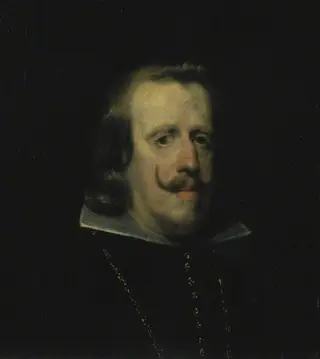
The painting was created in 1653 while Philip IV sat for Velázquez, as indicated by the king’s letter of 8 July 1653 expressing reluctance to be portrayed again after nine years and by the use of the head as a model for official portraits the following year. It remained in the royal collection until 1745, when it entered the duke of Arco’s collection, and was later acquired by the royal academy in 1816 before being transferred to the Museo del Prado in 1827. The work served as the prototype for numerous copies, including versions in the National Gallery, London, and at the Kunsthistorisches Museum in Vienna, some of which added insignia such as the Order of the Golden Fleece.
The Prado version is described as an unfinished bust study of the king’s head, with only the chest and shoulders indicated, painted on a black satin ground to emphasize the silk’s sheen, while the remainder of the canvas is loosely handled.
The painting is housed in the Museo del Prado in Madrid, where it has been part of the museum's collection since 1827. Its inventory number is 161, and it was acquired from the Duke of Arco in 1745 before entering the royal collections and later being displayed at the Real Academia de Bellas Artes de San Fernando in 1816. The work has been featured in exhibitions including the 1990 Museo del Prado retrospective on Velázquez and has inspired numerous copies, such as the version held at the National Gallery in London and the portrait of Philip IV with a lion at his feet in the Prado.
The painting served as the model for official portraits of the king, with copies appearing in institutions like the Museo de Bellas Artes de San Fernando, the Hermitage, and the Kunsthistorisches Museum in Vienna.
Context
The work is recognized as a pivotal study in the evolution of court portraiture, embodying both the technical refinement of Spanish Baroque painting and the political symbolism embedded in the representation of Philip IV. Scholarship emphasizes its function as a preparatory study for official state portraits, with the king's age approximated at fifty years during its execution. Comparative analysis of the Prado and London versions highlights divergent interpretations of the monarch's portrayal, with Jonathan Brown noting the proliferation of copies as evidence of its official rather than subjective intent.
The painting's integration into later works, such as the portrait of Philip IV with a lion, underscores its role in shaping visual narratives of royal authority. Its provenance, documented from 1745 onward in royal collections and later acquired by the Museo del Prado in 1827, reflects its enduring significance within institutional art histories. The work's influence extends to subsequent artistic practices, as evidenced by its use as a model for multiple copies and adaptations across European collections.
Legacy
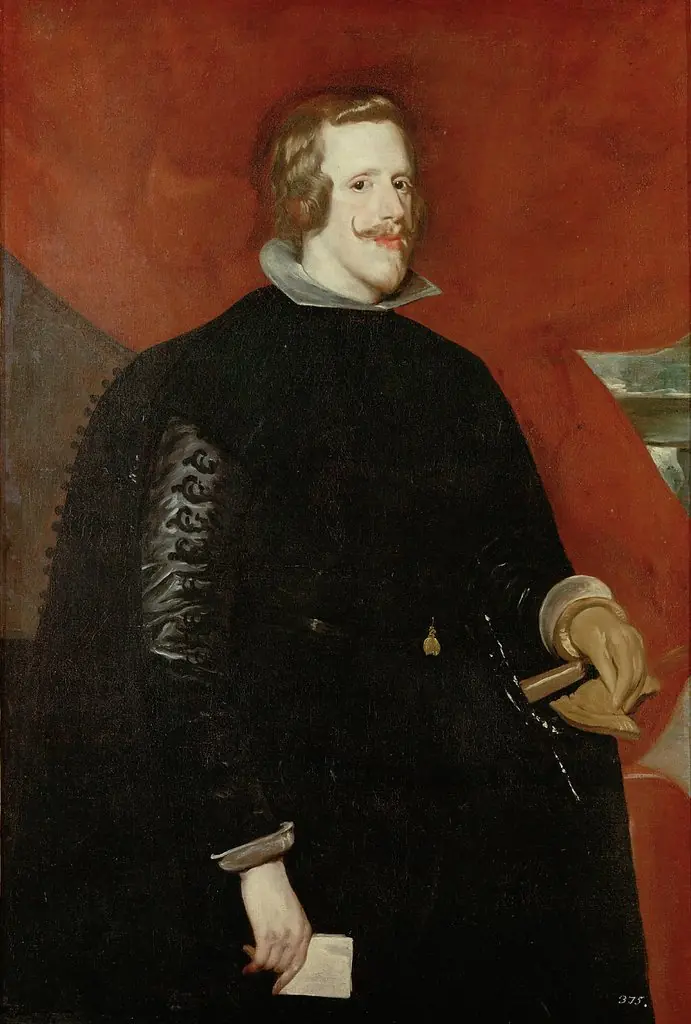
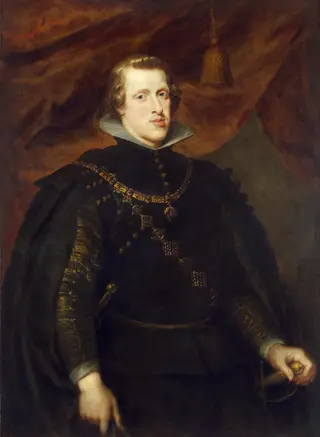
The Prado portrait served as the primary prototype for numerous official copies distributed to institutions such as the Hermitage, the Kunsthistorisches Museum in Vienna, and the Spanish embassy in Buenos Aires. These derivatives often added the collar of the Order of the Golden Fleece, reinforcing the image's status as a state icon rather than a subjective study of the monarch's melancholy. The composition's head was also adapted for full-length ceremonial portraits, including Philip IV with a Lion at His Feet.
Scholarly debate regarding the work's legacy centers on a related version in the National Gallery, London. While some experts classify it as a workshop copy, others argue it is an independent original by Velázquez painted slightly later, which itself generated a significant number of subsequent engravings and replicas.
Overview
Diego Velázquez’s oil portrait, titled Philip IV in old age, was completed in 1653. The work presents the Spanish monarch in his later years, rendered in a restrained composition that emphasizes the sitter’s facial features against a dark, unadorned backdrop. The painting is part of the collection of the Museo del Prado in Madrid.
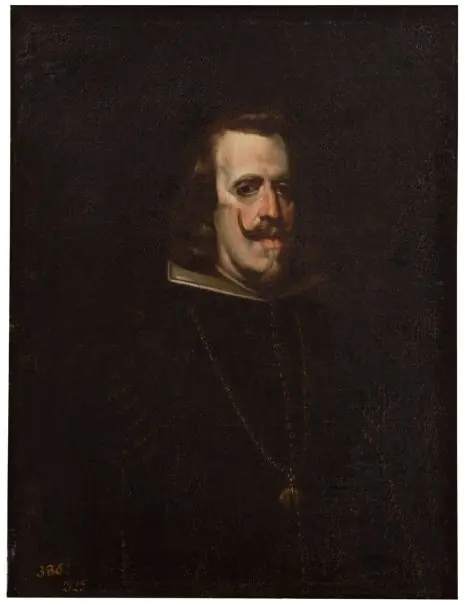
Own this work as a print
Artist & collection
Artist
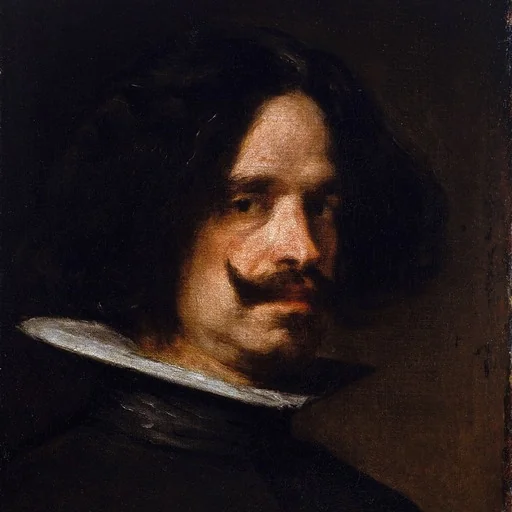
Diego Rodríguez de Silva y Velázquez was a Spanish Baroque painter, the leading artist in the court of King Philip IV of Spain and Portugal, and of the Spanish Golden Age.

- King Philip IV at half-length
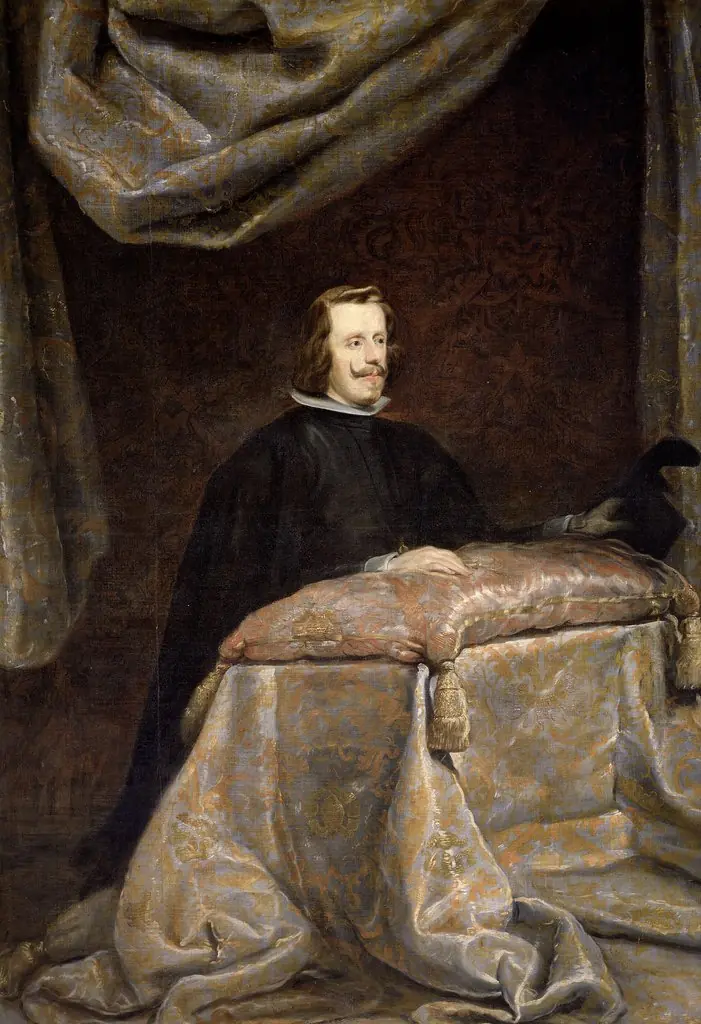 Philip IV in prayer
 Portrait of King Philip IV of Spain
 Portrait of Phillip IV of Spain, at three-quarter length
 King Philip IV of Spain (1605 - 1665)
 Portrait of Philip IV, King of Spain
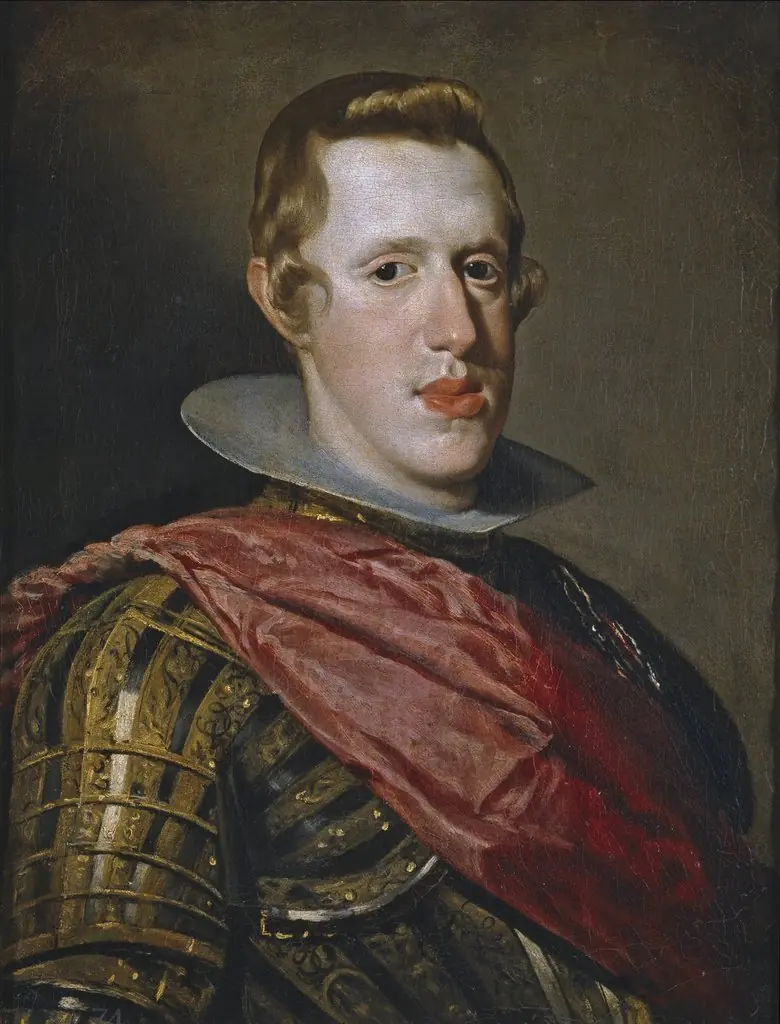 Portrait of Philip IV in Armour
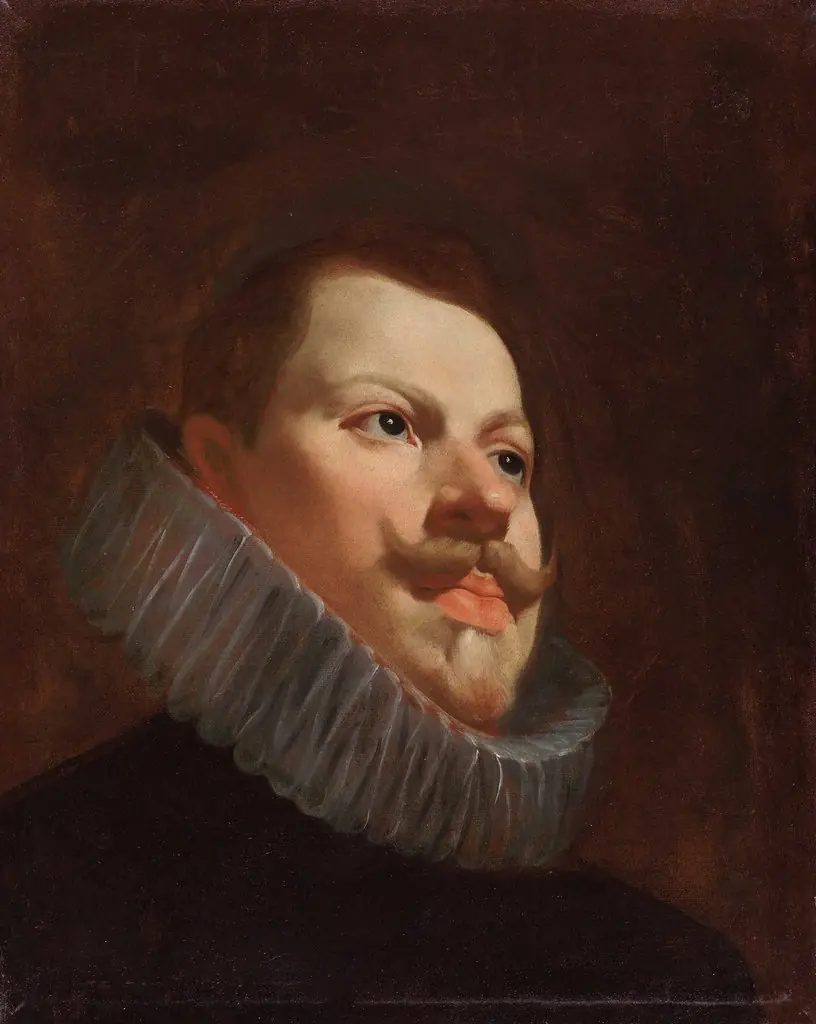 Philip III
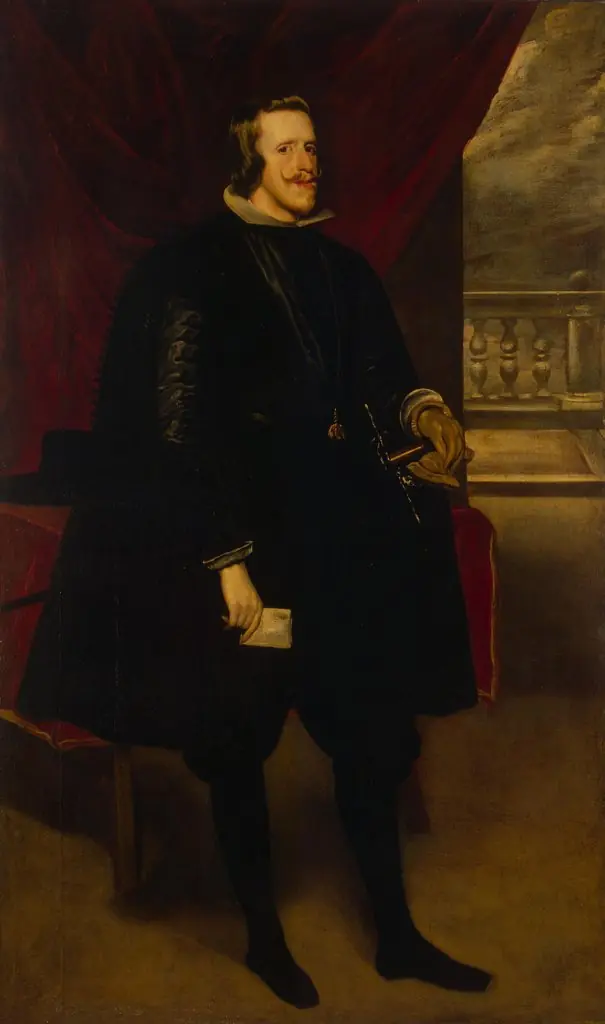 Portrait of Philip IV, King of Spain
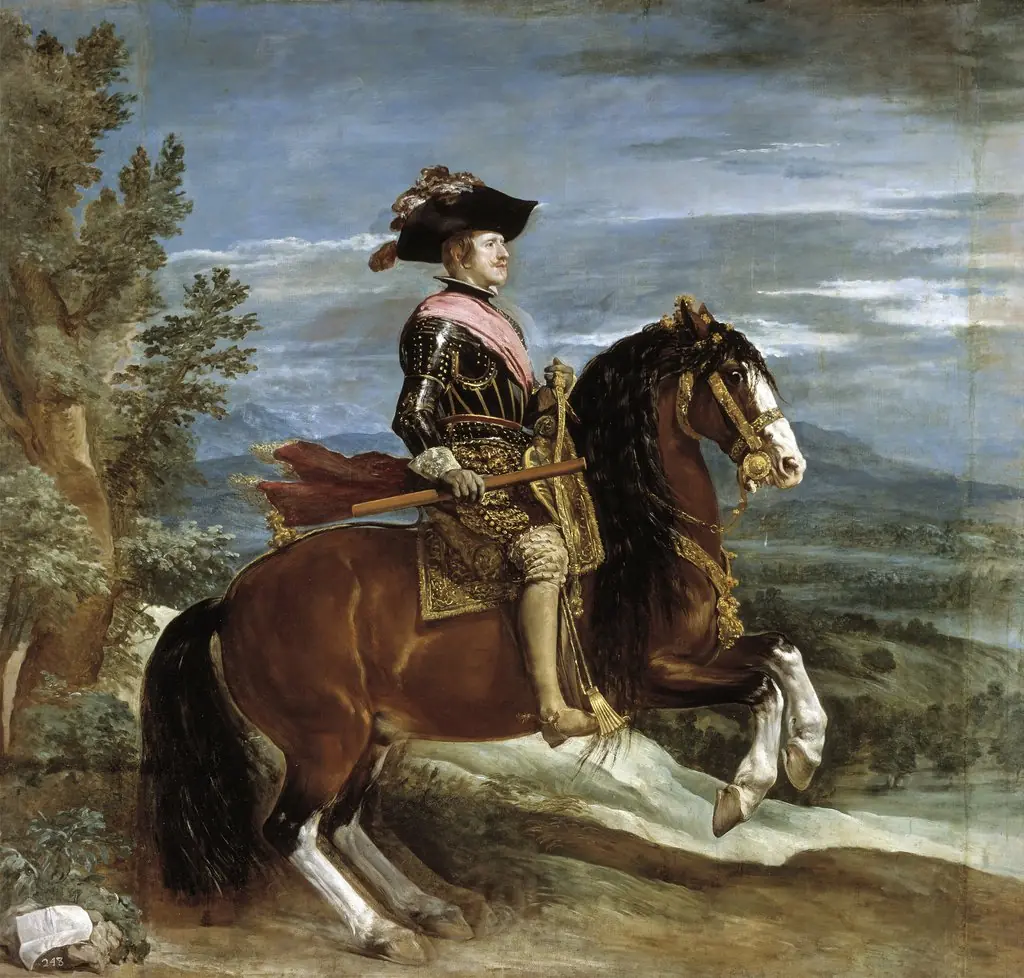 Equestrian Portrait of Philip IV