Artwork
Portrait Miniature of the Marquis de Lafayette
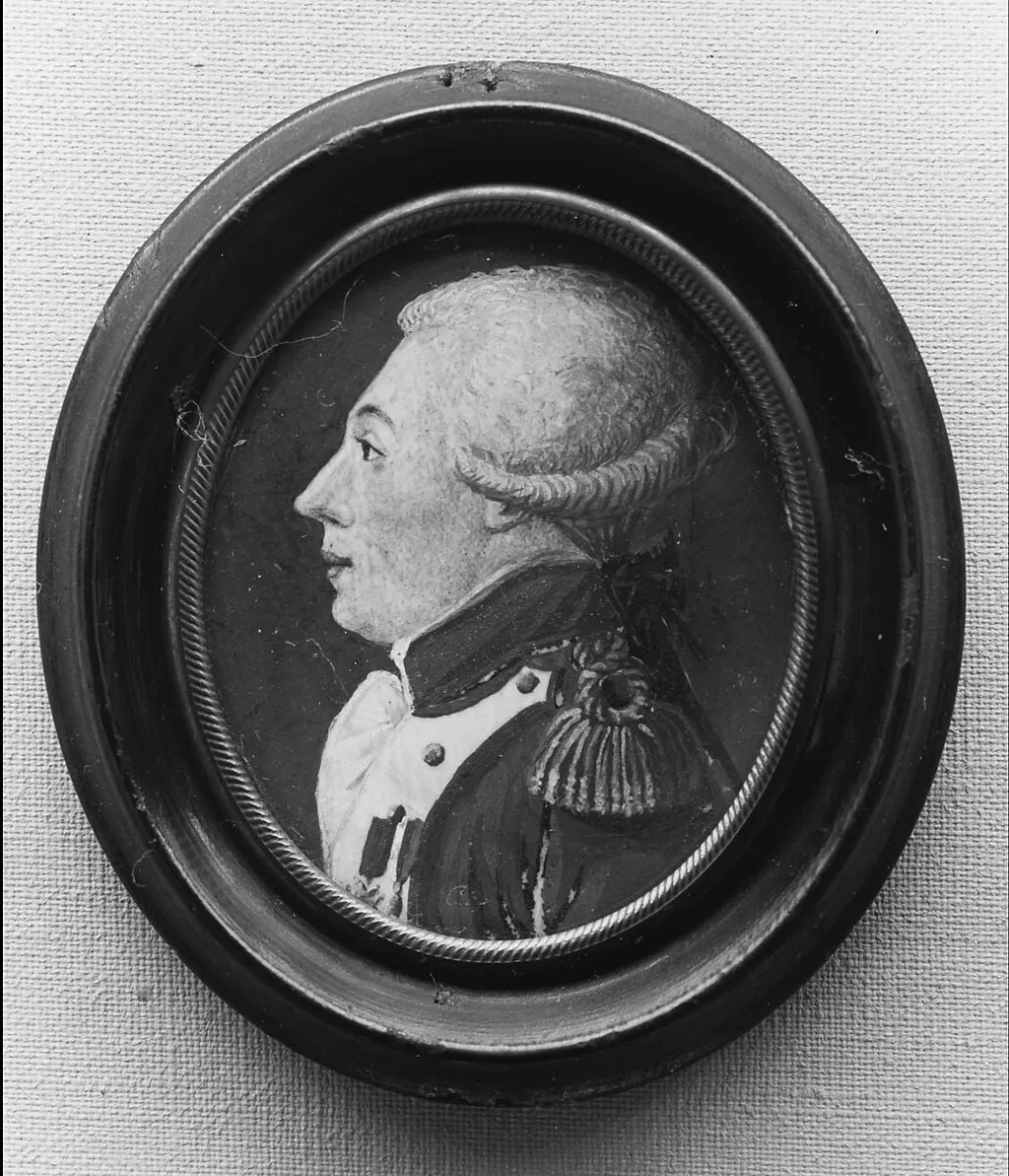
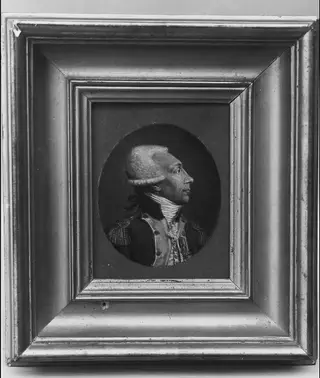
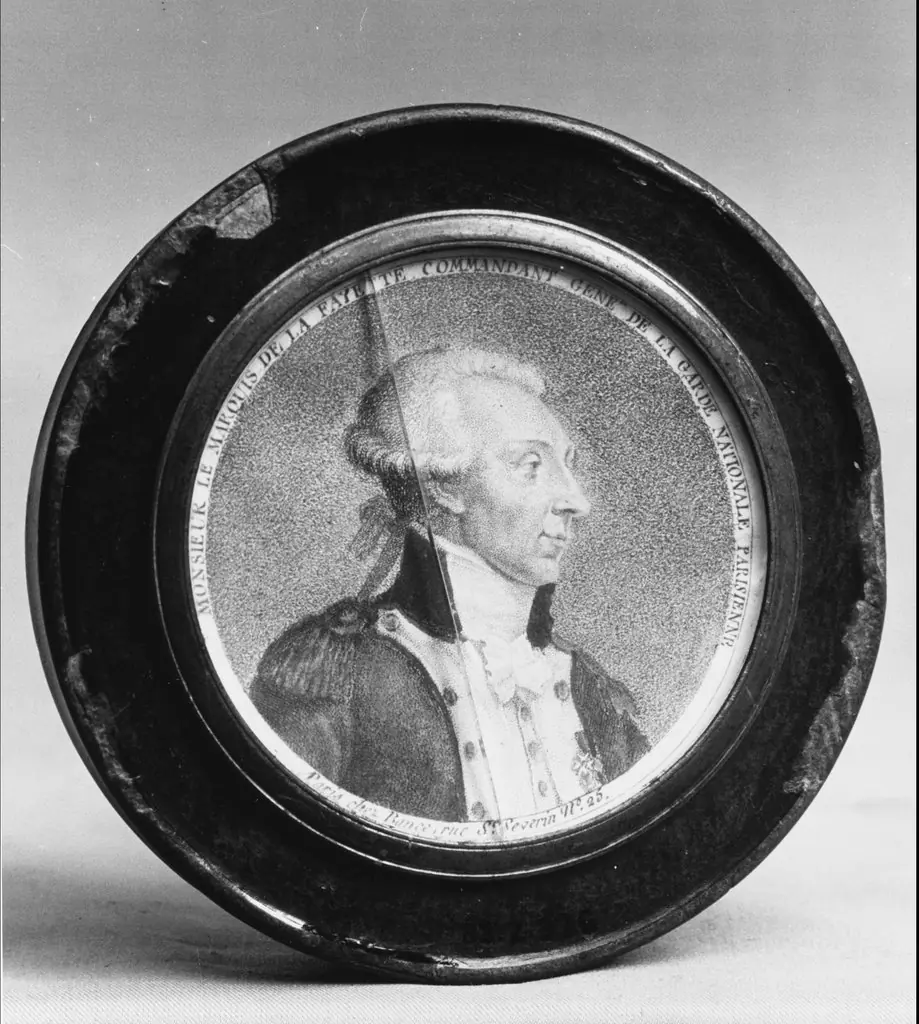
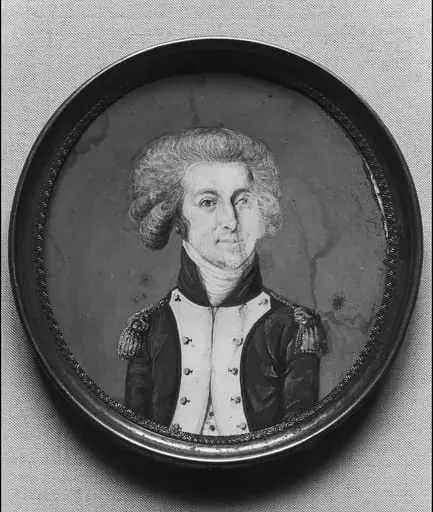
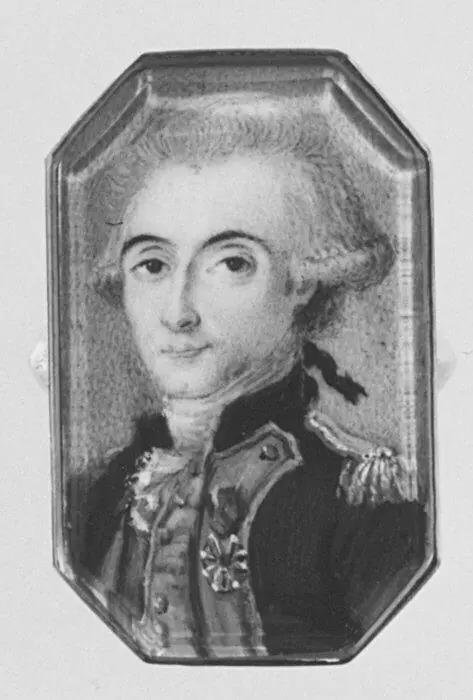
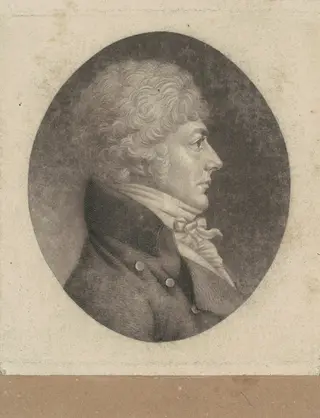
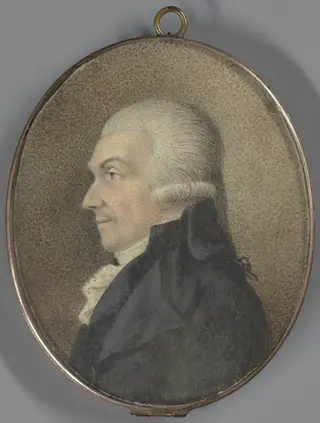
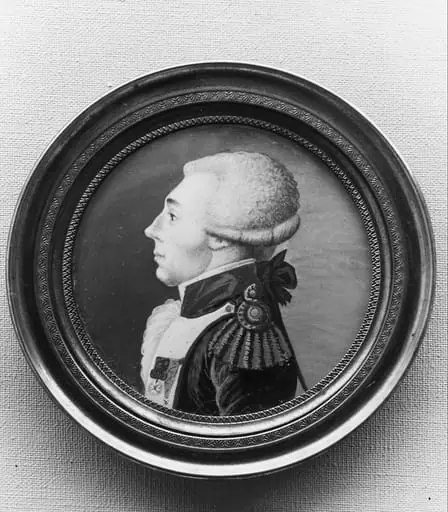
Portrait Miniature of the Marquis de Lafayette is an unspecified painting. It dates from 1829 and is held in the collection of the Metropolitan Museum of Art. This small oval portrait depicts the Marquis de Lafayette, a French aristocrat who played a significant role in the American Revolution.
- Accession no.
- 83.2.325
- Credit line
- Gift of William H. Huntington, 1883
About this work
A small oval portrait of a man in a dark coat, face turned to the side, the paint thin enough to show the parchment beneath. Miniatures like this were carried in lockets or pockets. Lafayette was a French nobleman who fought in the American Revolution, so this 1829 piece may have been a gift for a friend or ally.
Subject & Meaning
As the primary subject, Lafayette is rendered with a focus on his likeness rather than through elaborate allegorical symbols or complex iconography.
Created in 1829 by an anonymous artist, this parchment miniature depicts Gilbert du Motier, the Marquis de Lafayette. The work functions as a formal portrait, presenting the French aristocrat and American Revolutionary War hero in profile. As the primary subject, Lafayette is rendered with a focus on his likeness rather than through elaborate allegorical symbols or complex iconography.
The piece serves as a commemorative object, representing the enduring reverence for Lafayette's legacy during the early nineteenth century. Its classification within the American Wing underscores its significance to United States history, capturing the image of a key figure who bridged American and French revolutionary ideals. The straightforward presentation emphasizes the sitter's identity and historical stature over decorative embellishment.
Technique & Style
The work is a portrait miniature on parchment, executed by an anonymous painter in 1829. The support is parchment, and the medium is described as a painting on that substrate. Stylistically, it presents a profile view of Gilbert du Motier, Marquis de Lafayette, conforming to the conventions of miniature portraiture of the period. The sources do not provide information on the painting technique, handling details, or current condition.
History & Provenance
The Portrait Miniature of the Marquis de Lafayette was created in 1829, the year recorded as its inception, and is executed on parchment by an unidentified artist. The work entered the Metropolitan Museum of Art's collection, where it is catalogued under accession number 83.2.325, and is now held in the museum's American Wing. No information is available regarding the circumstances of its commissioning, the original patron, or the chain of ownership preceding its acquisition by the Metropolitan Museum of Art.
The Portrait Miniature of the Marquis de Lafayette is held in the collection of the Metropolitan Museum of Art, classified within The American Wing. Its accession number is 83.2.325, indicating it entered the museum's holdings in 1983. The work is catalogued as a painting by an anonymous artist. No exhibition history is recorded in the available documentation.
Overview
This small oval portrait depicts the Marquis de Lafayette, a French aristocrat who played a significant role in the American Revolution. Rendered on parchment, the miniature was designed for portability, often carried as a personal memento. Its delicate execution and intimate scale reflect a common practice of the era, offering a close-up view of a prominent historical figure.
Context
Portrait miniatures were popular during the 18th and 19th centuries, serving as highly personal and portable forms of portraiture. Their small size made them ideal for carrying in lockets, pockets, or small cases, enabling individuals to keep images of loved ones or esteemed figures close at hand. This particular example, featuring a notable historical personality, exemplifies the genre's role in personal remembrance and social exchange.
Artist & collection