Artwork
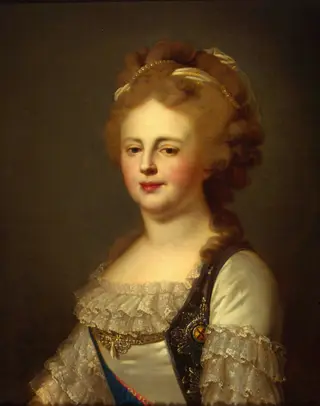
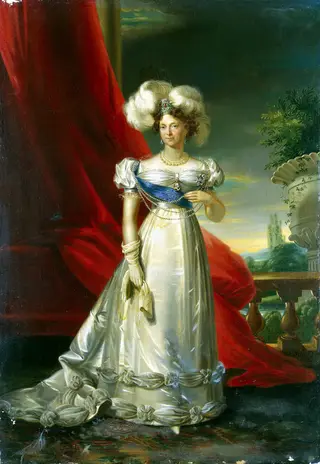
Portrait of Empress Maria Feodorovna, née Princess Sophie Dorothea of Württemberg (1759-1828), Wife of Emperor Paul I of Russia ( Type of Gerhard von Kügelgen)
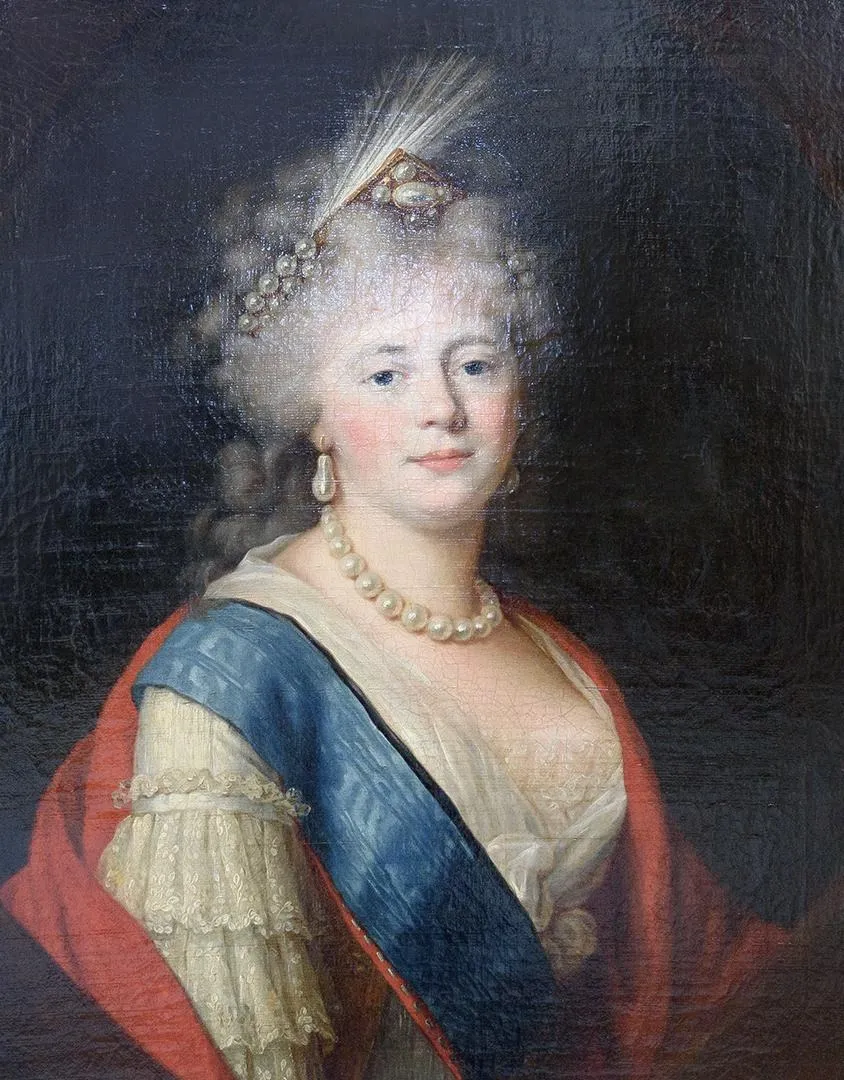
Portrait of Empress Maria Feodorovna, née Princess Sophie Dorothea of Württemberg (1759-1828), Wife of Emperor Paul I of Russia ( Type of Gerhard von Kügelgen) is an oil painting. It dates from 1798 and is held in the collection of the Hermitage Museum.
About this work
Subject & Meaning
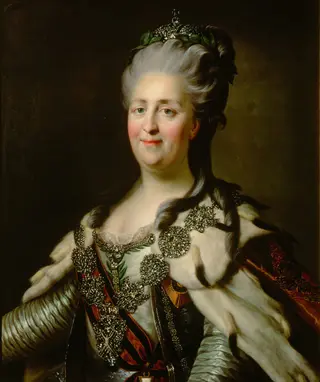
This late 18th-century oil painting depicts Sophie Dorothea of Württemberg, who became Empress Maria Feodorovna upon her marriage to Emperor Paul I of Russia.
This late 18th-century oil painting depicts Sophie Dorothea of Württemberg, who became Empress Maria Feodorovna upon her marriage to Emperor Paul I of Russia. Created in 1795, the work functions as a formal royal portrait, capturing the sitter adorned with specific regalia that signifies her imperial status. The iconography prominently features a tiara and a pearl necklace, traditional symbols of nobility and purity associated with European royalty of the era.
These elements collectively represent her position within the Russian court and her lineage as a German princess integrated into the Romanov dynasty.
Technique & Style
The work is executed in oil on canvas, a standard support for formal portraiture in late 18th‑century Russia. The brushwork displays the refined modeling characteristic of Gerhard von Kügelgen’s courtly style, while the composition emphasizes the sitter’s aristocratic status through the inclusion of a pearl necklace and tiara. The handling of light and drapery reflects the neoclassical aesthetic prevalent in imperial portraiture of the period.
History & Provenance
The portrait was created in 1795, according to the cataloguing record, which dates the work to that year and identifies it as an oil painting. The Wikidata entry for the work corroborates this dating, listing the inception as 1795 and noting that it was produced in Russia.
The piece is held in the collection of the Hermitage Museum, where it is currently located. No information is provided regarding the original commissioner, the circumstances of the initial commission, or the chain of ownership prior to its accession by the Hermitage.
The work is described as a portrait type based on a composition by Gerhard von Kügelgen, though the sources do not specify when or by whom this particular version was painted, nor do they document any intermediate owners between the original creation and the museum's holdings.
The painting is held in the collection of the Hermitage Museum, where it is located. Created in 1795, the work depicts Sophie Dorothee of Württemberg wearing a pearl necklace and tiara. The provided sources do not contain specific inventory numbers, accession codes, or a record of exhibition history for this portrait.
Overview
Gerhard von Kügelgen’s oil portrait depicts Empress Maria Feodorovna, born Princess Sophie Dorothea of Württemberg, the consort of Emperor Paul I of Russia. The composition centers the empress against a dark, unadorned backdrop, emphasizing her facial features, attire, and jewelry. Light falls softly across her skin and pearls, creating a tranquil, dignified presence that reflects her status within the Russian imperial court.
Context
The work reflects the broader European trend of intimate, psychologically nuanced royal portraits that emerged after the Enlightenment, moving away from overtly propagandistic imagery. Kügelgen, a German‑born artist active in Dresden and St. Petersburg, blended German academic training with Russian court expectations, producing a portrait that aligns with contemporary tastes for refined realism.
Artist & collection

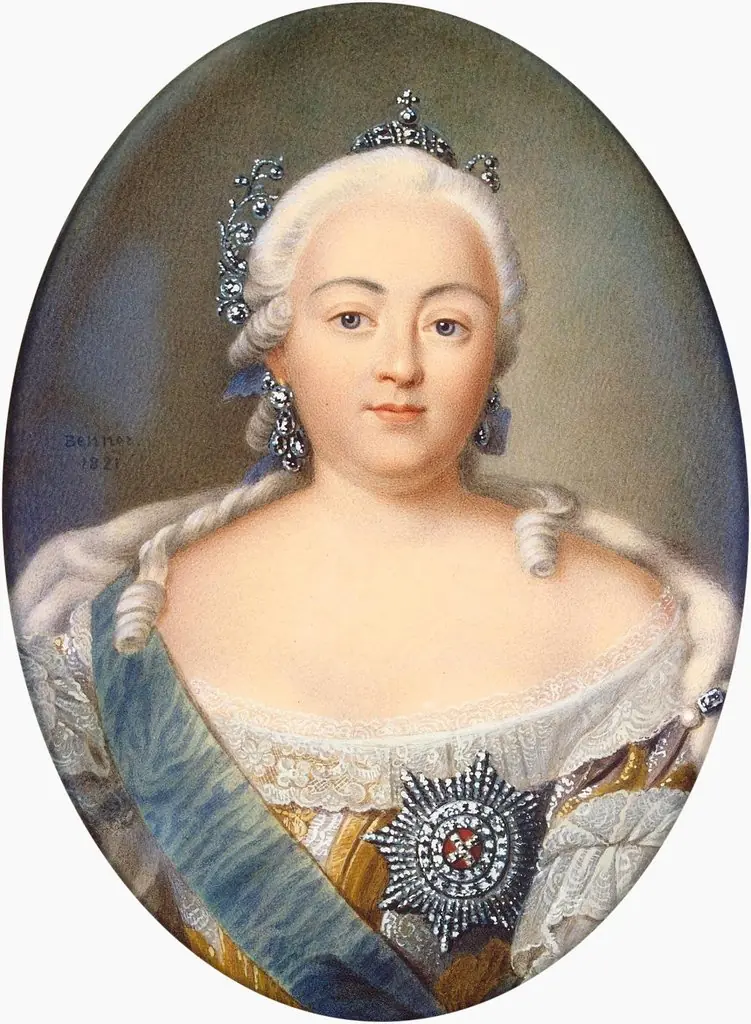 Portrait of Elizabeth of Russia
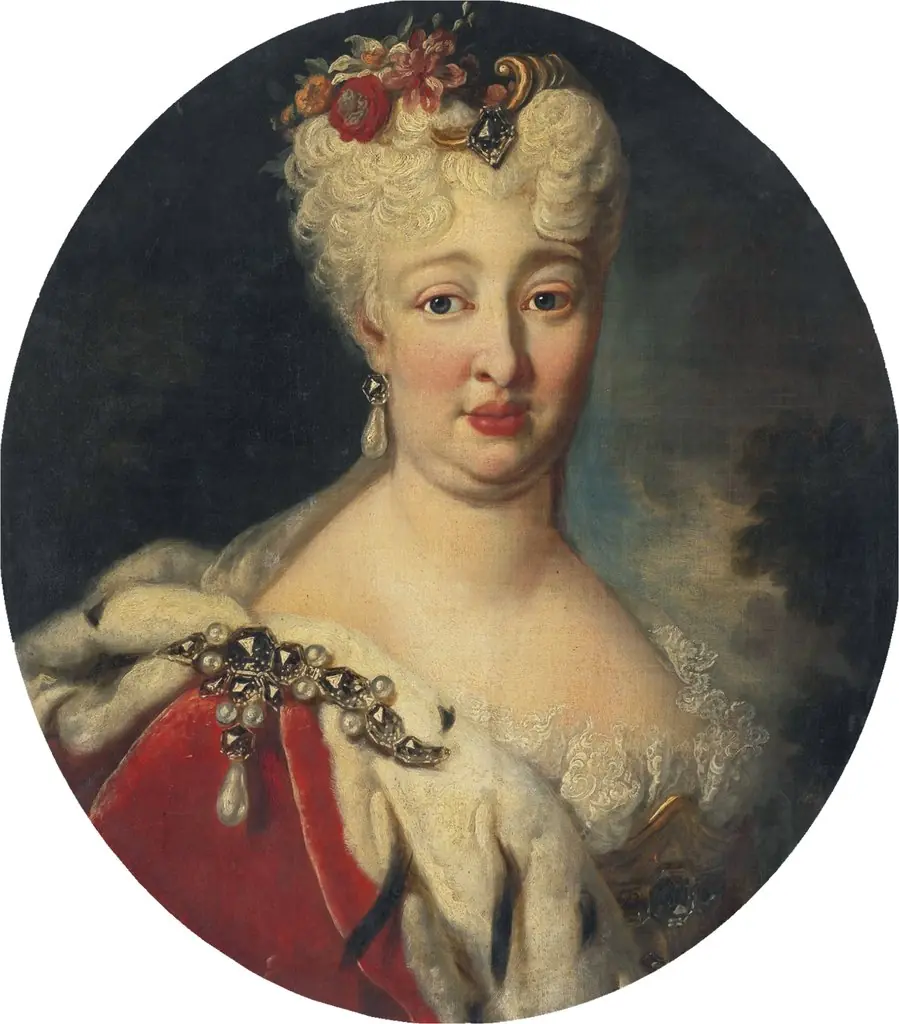 Portrait of Countess Palatine Elisabeth Auguste Sofie of Neuburg (1693 - 1728)
 Portrait of Elizaveta Petrovna
 Frederika Sophia Wilhelmina of Prussia (1751-1820), Wife of Prince Willem V
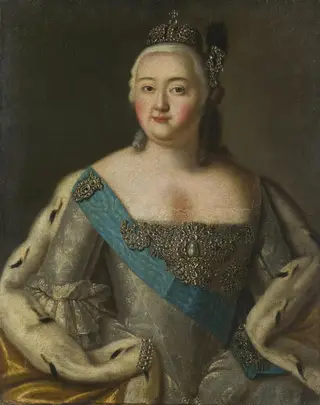 Portrait of Empress Elizabeth Petrovna
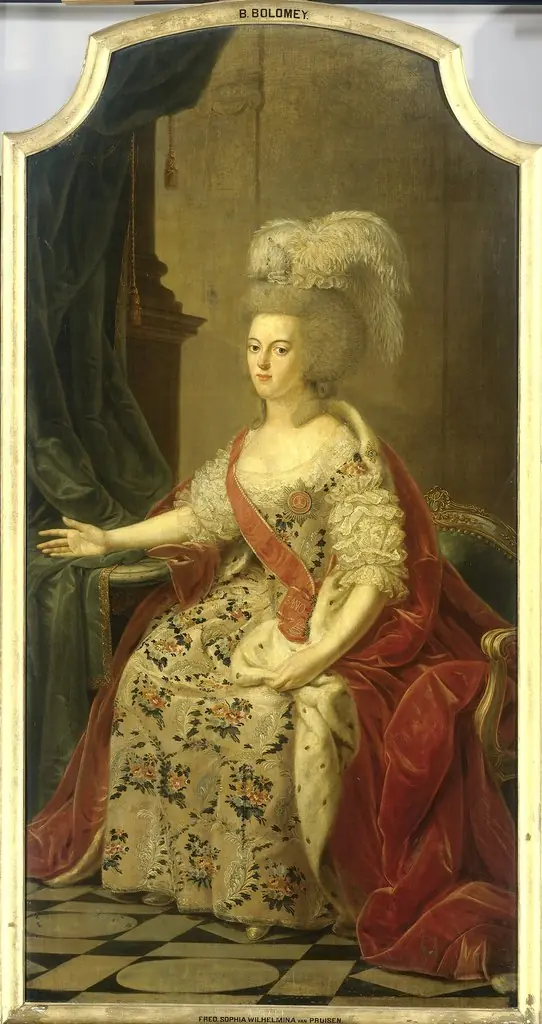 Frederika Sophia Wilhelmina of Prussia (1751-1820), Wife of Prince Willem V
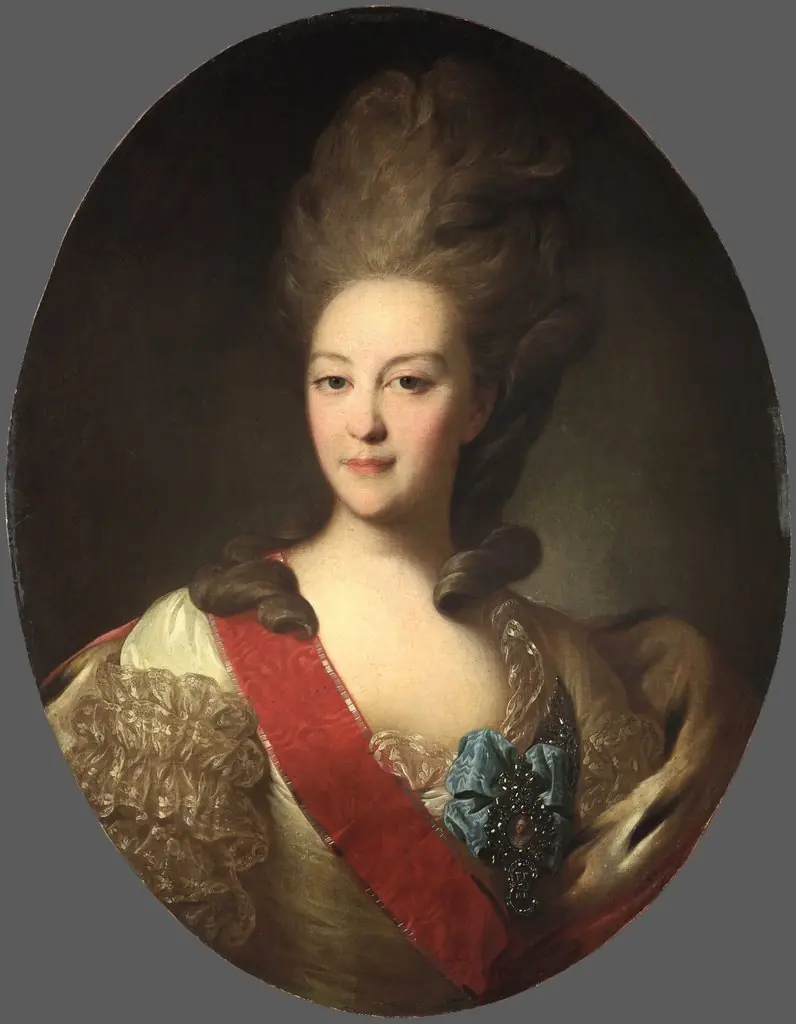 Portrait of Catherine Orlova (1758-1781)
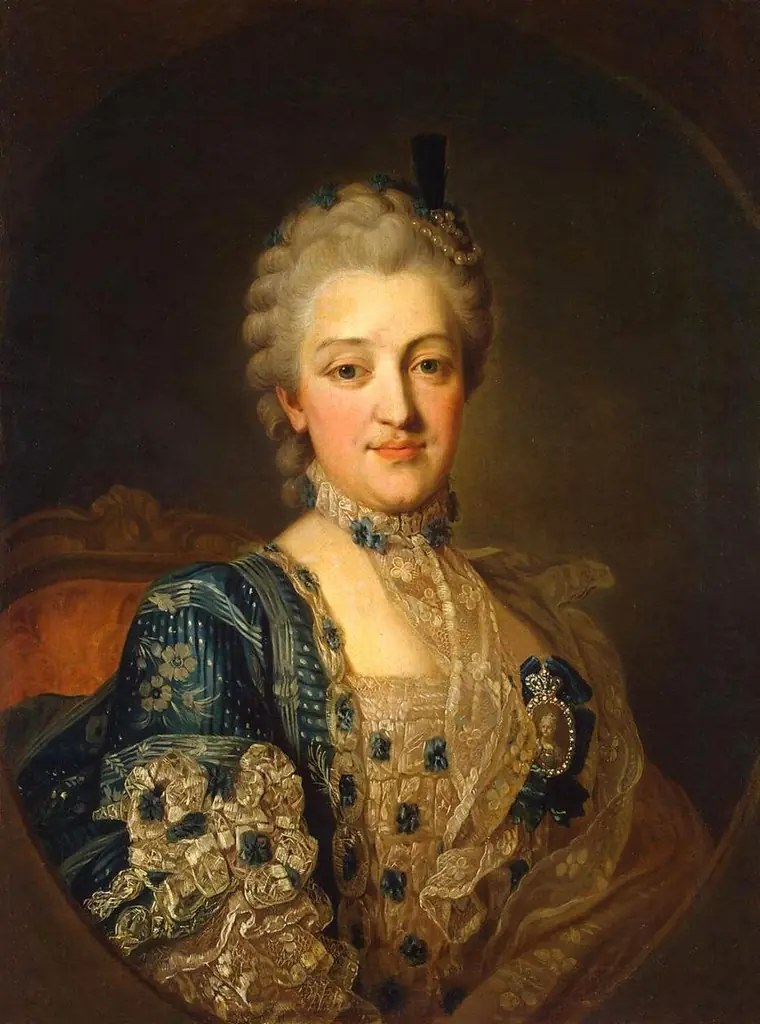 Portrait of Natalia Alexandrovna Repnina
 Portrait of Catherine II of Russia (1729-1796)