Artwork
Portrait of Maria Carré (d1613)
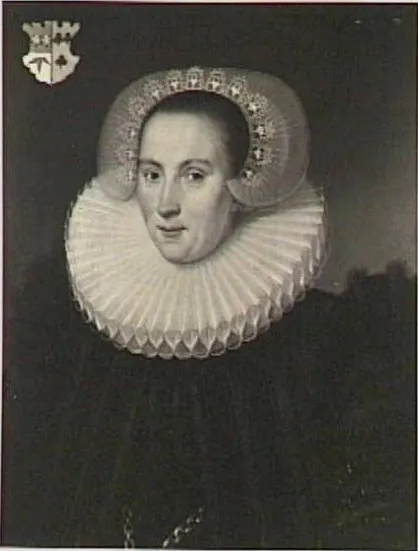
Portrait of Maria Carré (d1613) is an oil painting. It dates from 1575 and is held in the collection of the Rijksmuseum. The work is an oil painting titled Portrait of Maria Carré (d.
About this work
Subject & Meaning
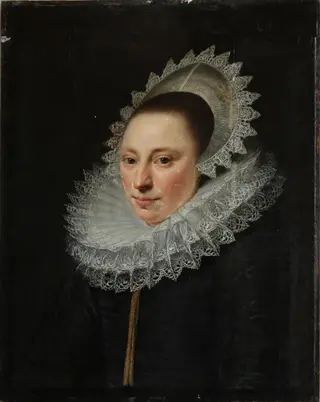
Atop her head she wears a diadem cap, a distinctive lace or linen headdress also linked to Anabaptist women's dress in the sixteenth-century Low Countries.
The portrait depicts Maria Carré, who died in 1613 and is named as the painting's main subject. She is shown wearing a millstone collar, a broad metal neckpiece historically associated with women of the Dutch Anabaptist tradition, particularly Mennonites and related communities, where it signified marital status and religious adherence. Atop her head she wears a diadem cap, a distinctive lace or linen headdress also linked to Anabaptist women's dress in the sixteenth-century Low Countries.
Together, the millstone collar and diadem cap serve as the principal iconographic markers of the work, identifying the sitter not only by name but also by her confessional and cultural identity. The portrait thus functions as both a personal likeness and a visual statement of Carré's religious community and its prescribed female attire.
Technique & Style
An oil painting on wooden panel dated 1575, this work presents Maria Carré in a millstone collar and diadem cap. Executed in the portrait genre, it measures 68 cm in height by 57.5 cm in width and is housed in the collection of Museum Mr. S. van Gijn at the Rijksmuseum.
History & Provenance
Portrait of Maria Carré was created in 1575 as an oil painting on panel, commissioned within the artistic milieu of the Dutch Republic during the late 16th century. The work depicts Maria Carré wearing a millstone collar and diadem cap, reflecting contemporary portrait conventions. It entered the collection of Huis Van Gijn and is presently housed at Museum Mr. S. van Gijn, forming part of the Rijksmuseum's holdings.
The painting measures 68 cm in height and 57.5 cm in width, and is classified as a portrait genre work.
The artwork's creation history is anchored to its 1575 inception date, with technical analysis confirming its execution in oil paint on wooden panel. Its attribution to an anonymous artist was established through stylistic and documentary evidence within the Rijksmuseum's collection records.
The painting is held in the collection of Museum Mr. S. van Gijn (Huis Van Gijn), a Dordrechts Museum institution associated with the Rijksmuseum. According to the Wikidata record for the work, this is its current location, and no separate inventory or accession number is provided in the available sources.
No exhibition history is recorded in the sources supplied for this facet.
Context
The portrait of Maria Carré (d1613), painted in 1575, exemplifies the stylistic refinement of Dutch Renaissance portraiture, particularly in its rendering of elite attire such as the millstone collar and diadem cap. Its formal qualities and symbolic details have been noted in scholarly analyses of portraiture within the artistic milieu of the late 16th century, situating it within the broader context of portrait painting traditions in the Netherlands. The work is housed in the collection of Huis Van Gijn, part of the Rijksmuseum, where it is studied as a representative example of portraiture from this period.
Legacy
Portrait of Maria Carré (d1613) has influenced subsequent portraiture through its distinctive compositional treatment of elite women in early Dutch painting. The work's depiction of Maria Carré in a millstone collar and diadem cap established visual conventions later adopted by artists documenting merchant-class subjects in the Dutch Republic. Its technical approach to rendering textile textures and jewelry became a reference point for contemporary portrait painters seeking to convey social status through dress.
The painting's inclusion in the Huis Van Gijn collection at Museum Mr. S. van Gijn ensured continued scholarly attention to this period of portraiture during the 19th century.
Overview
The work is an oil painting titled Portrait of Maria Carré (d. 1613). It presents a seated woman whose dark hair is gathered back, dressed in a black garment accented by a prominent white ruffled collar. A sheer, lace‑like veil covers her head, and her gaze is directed downward, conveying a composed and reflective demeanor.
Artist & collection

- Portrait of Cornelia Bot, wife of Gottfried Houtappel
 Portrait of a Young Lady
 Portrait of a Lady
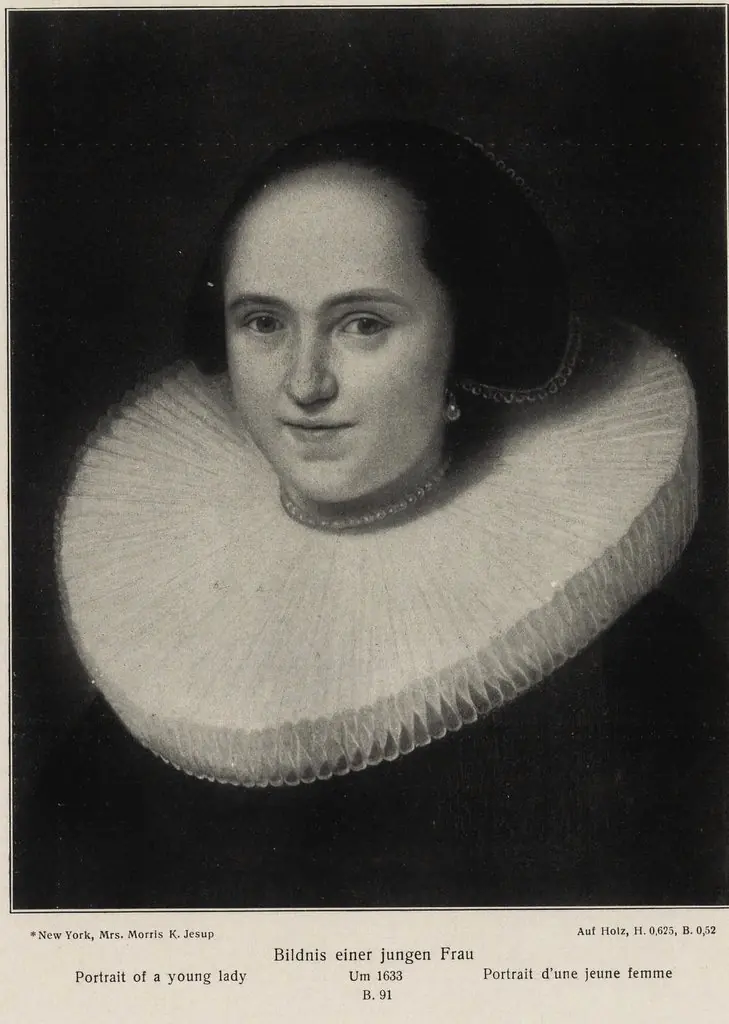 Portrait of a Young Woman wrongly called Wife of Burgomaster Six
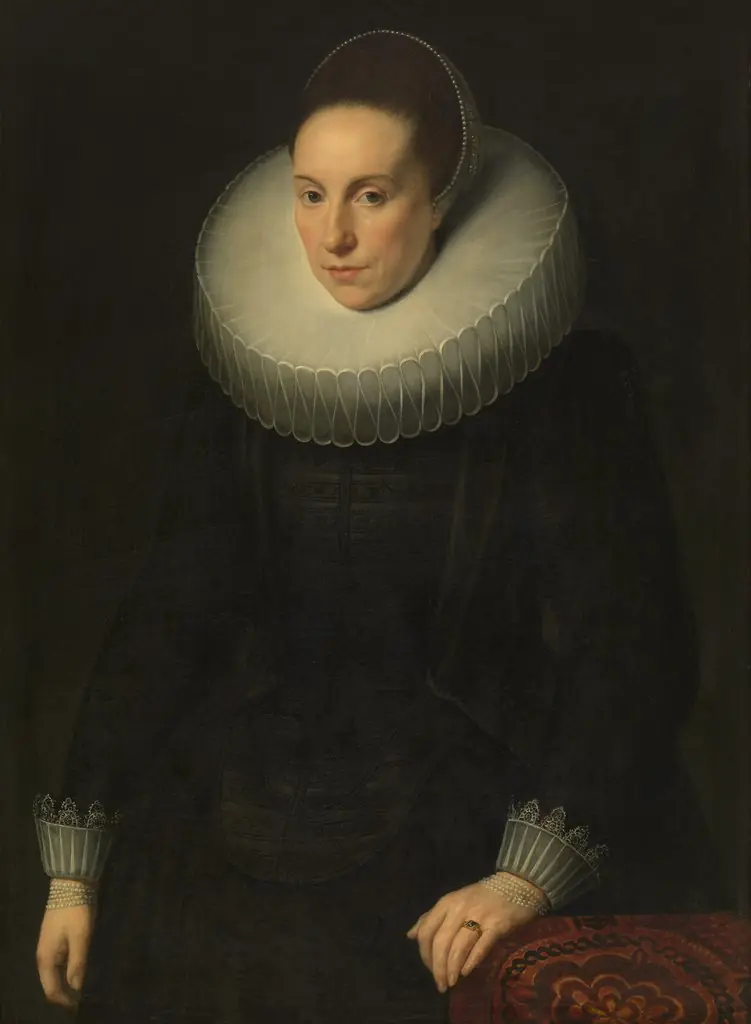 Portret van een vrouw
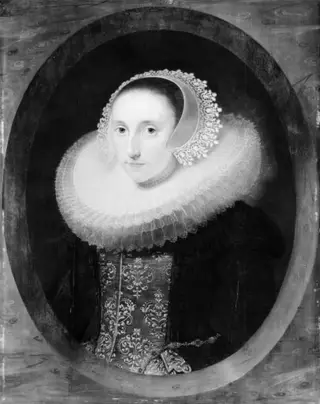 Portrait of a Young Lady
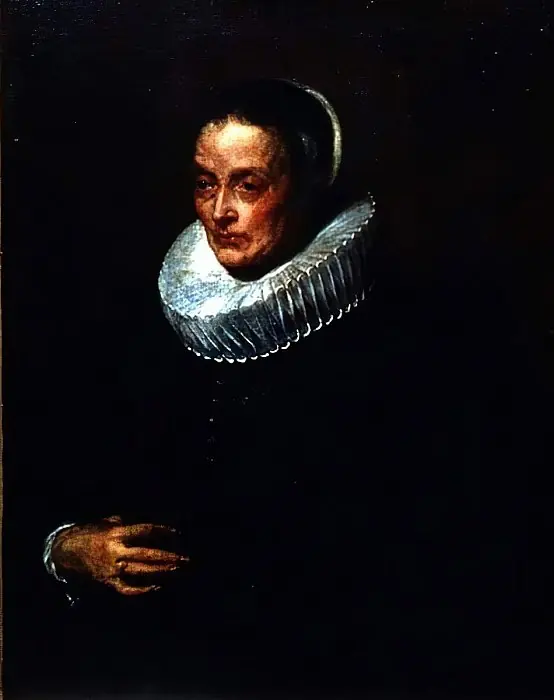 Portrait of the mother of the artist Justus Sustermans
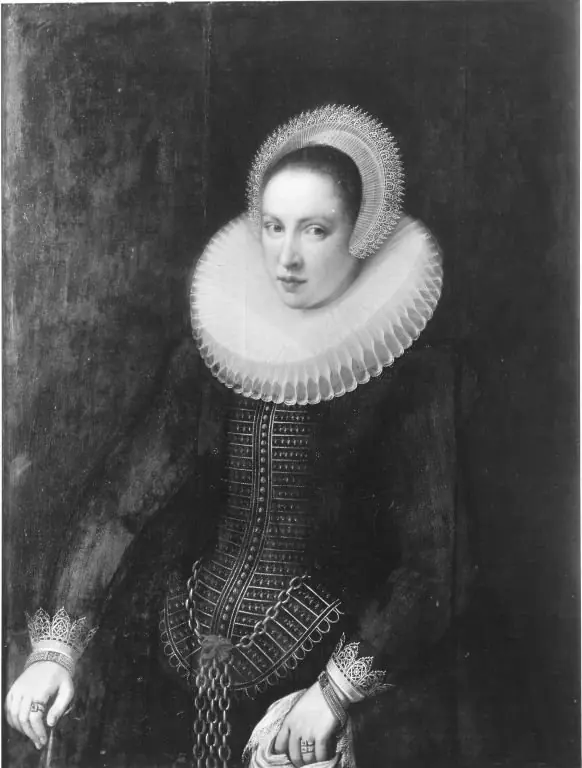 Portrait of an unknown woman aged 28 year
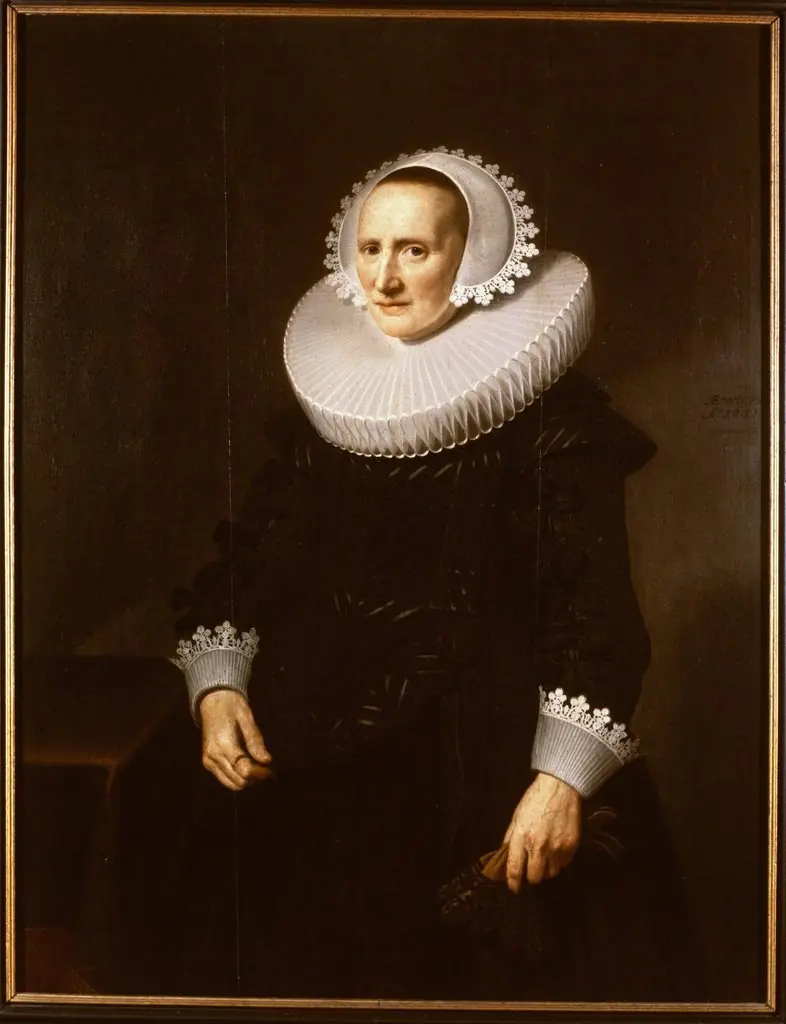 Portrait of Catharina Wielant (1572-1633)
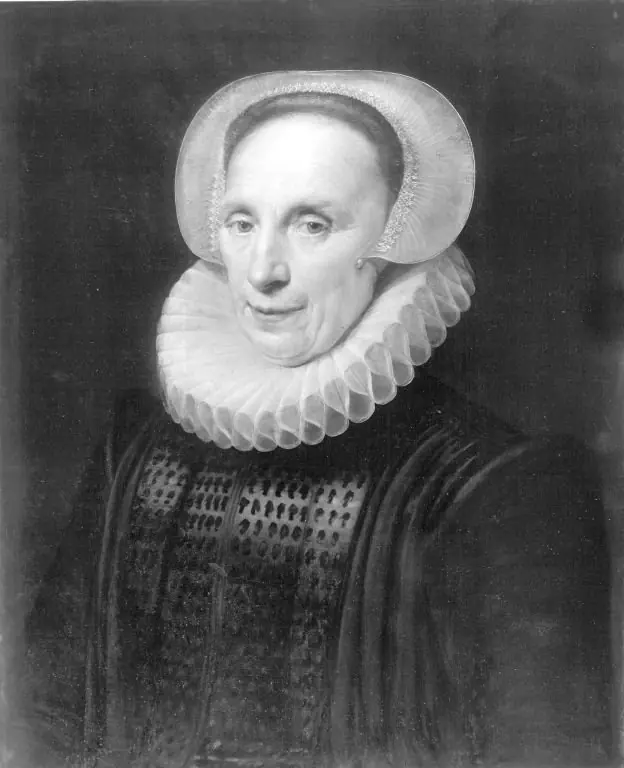 Portrait of a Woman
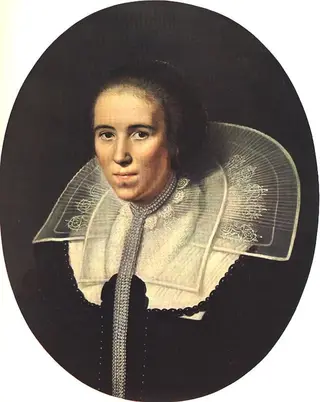 Portrait of a young woman with a pearl chain
 Portrait of woman