Artwork
Radha and Krishna Caught in a Storm
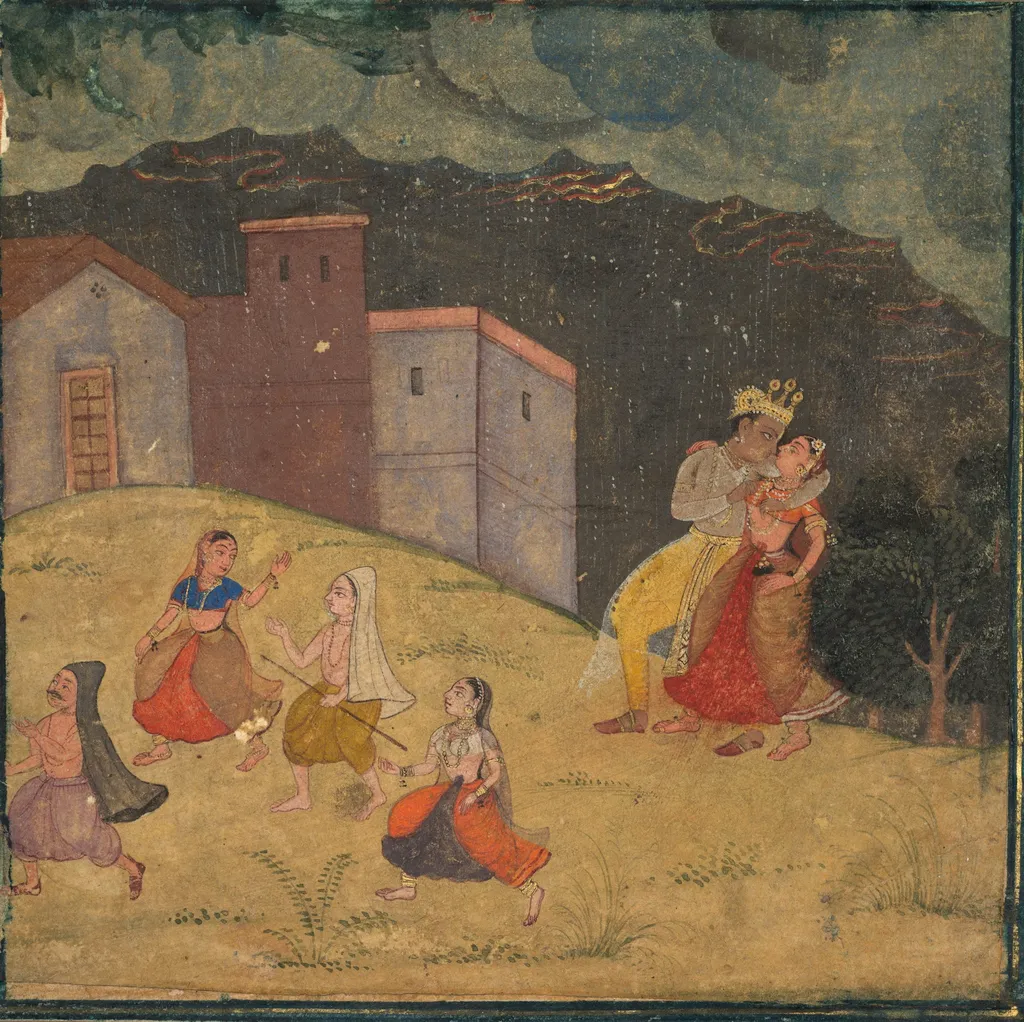
Radha and Krishna Caught in a Storm is an unspecified painting. It dates from 1617 and is held in the collection of the Cleveland Museum of Art.
About this work
History & Provenance
Radha and Krishna Caught in a Storm is dated 1617, aligning with the early seventeenth century under Mughal patronage.
Radha and Krishna Caught in a Storm is dated 1617, aligning with the early seventeenth century under Mughal patronage. The painting entered the Cleveland Museum of Art in 1947 as accession 1947.503, where it has remained in the permanent collection. Its creation coincides with the height of Mughal miniature production, when such devotional themes were commissioned for elite audiences and integrated into courtly albums.
Radha and Krishna Caught in a Storm is held in the collection of the Cleveland Museum of Art in Cleveland. The work is cataloged under the accession number 1947.503. As a painting created in 1617 within the Mughal Empire, it remains part of the museum's holdings. No specific exhibition history is provided in the available records.
Overview
The painting "Radha and Krishna Caught in a Storm" illustrates a dramatic moment featuring the divine couple amidst a natural upheaval. Set within a village landscape, the scene captures various figures reacting to the sudden weather. The artwork employs a palette of vibrant yet softened reds, yellows, and earthy hues, contributing to its narrative depth and visual character.
Subject & Meaning
This work centers on Radha and Krishna, prominent figures in Hindu mythology whose love story embodies spiritual devotion. Their embrace under a darkening sky, as a storm gathers, suggests a moment of profound intimacy and connection, often interpreted as the human soul's yearning for the divine. Surrounding villagers respond to the sudden change in weather, underscoring the narrative's dramatic tension.
Technique & Style
The artist employs a distinct visual language, characterized by a palette of bright, though now softened, reds, yellows, and natural earth tones. Figures are rendered expressively, with various gestures conveying their reactions to the unfolding event. The background features unadorned village architecture, including plain buildings with flat roofs and small windows, establishing a rustic and relatable setting for the divine narrative.
Artist & collection

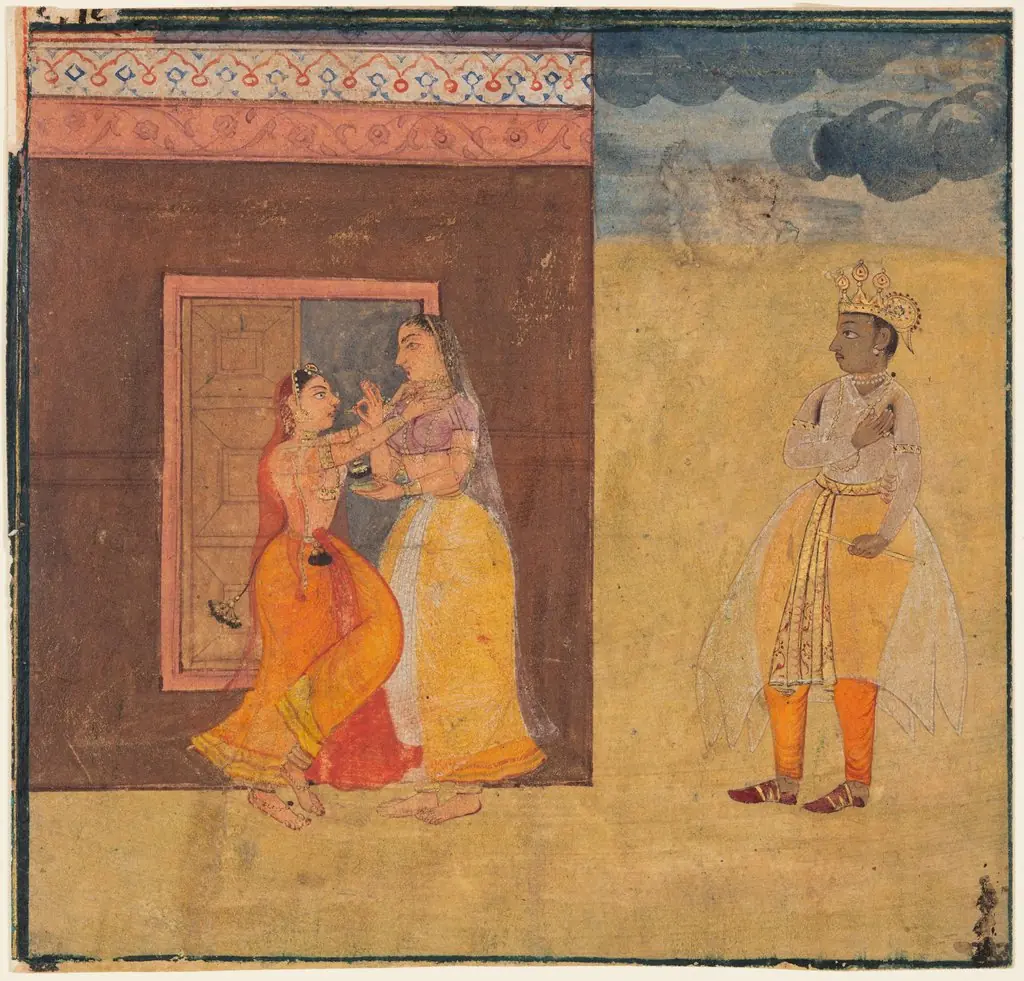 Krishna Abhisarika Nayika, from a Rasikapriya manuscript
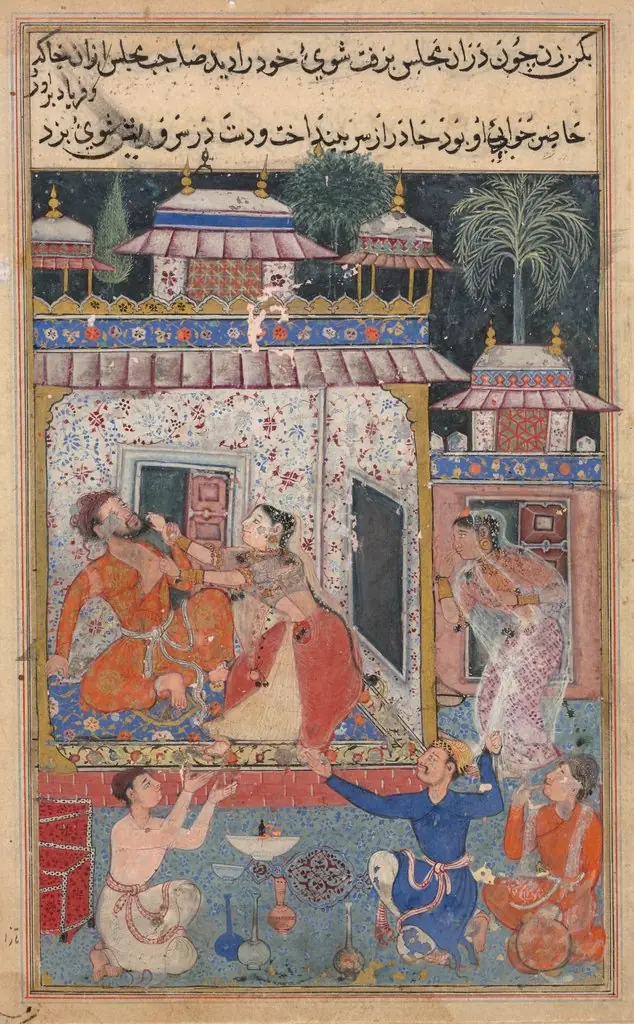 Page from Tales of a Parrot (Tuti-nama): text page
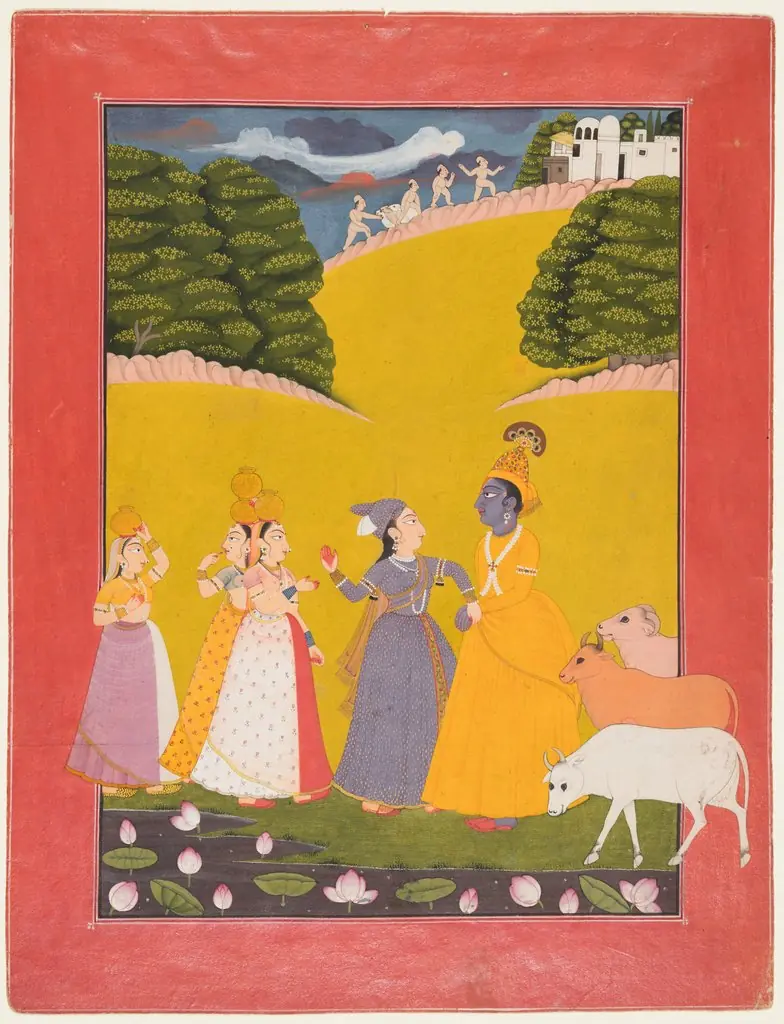 Taking of the Toll, Dana-Lila
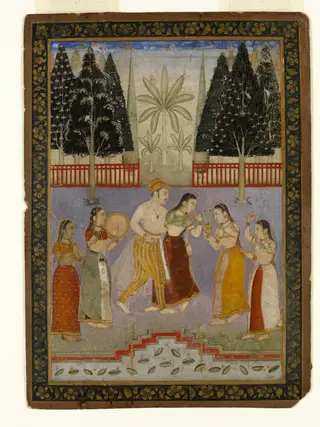 Vasanta Raga
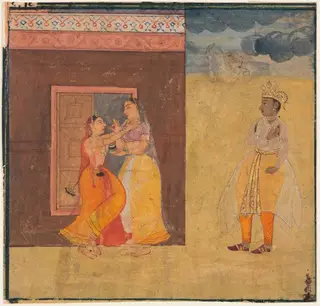 Krishna Abhisarika Nayika, from a Rasikapriya manuscript
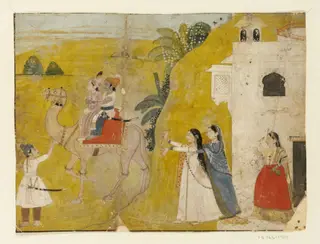 Sassi and Punun
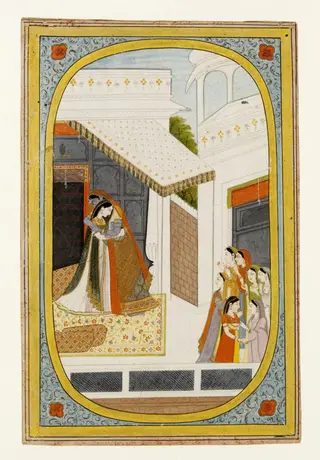 Krishna and Radha
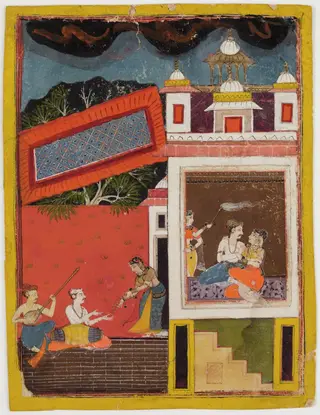 Prince and Lady in Palace Scene with Musicians
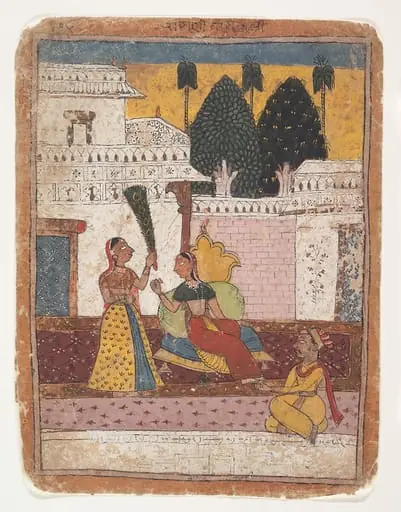 Untitled
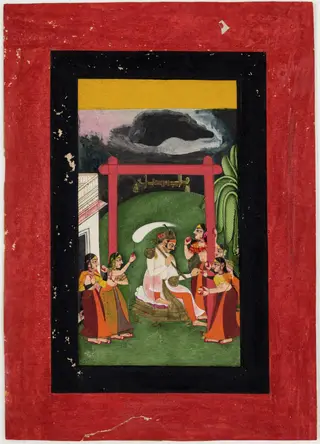 Hindala Raga (The Swing)