Artwork
Page from Tales of a Parrot (Tuti-nama): text page
Page from Tales of a Parrot (Tuti-nama): text page is an unspecified painting. It dates from 1560 and is held in the collection of the Cleveland Museum of Art.
About this work
Subject & Meaning
The text itself functions as the primary subject, conveying the literary and instructional content of the Tuti-nama manuscript.
This folio from the Tales of a Parrot (Tuti-nama), dated to 1560, is a text page rather than a pictorial illustration. It contains Persian calligraphic script, presenting a segment of the narrative, which recounts moral and didactic stories told by a parrot to its owner, Khujasta, to prevent her from meeting her lover during her husband’s absence. The text itself functions as the primary subject, conveying the literary and instructional content of the Tuti-nama manuscript.
The Tuti-nama is a Persian adaptation of the Sanskrit Śukasaptati, and its tales often employ animal fables to explore themes of loyalty, cunning, and moral conduct. While this specific page lacks figurative iconography, the broader manuscript’s symbolism centers on the parrot as a wise and persuasive storyteller, embodying the power of rhetoric and narrative to guide human behavior.
History & Provenance
This text page from the Tuti-nama (Tales of a Parrot) was created in 1560 within the Mughal Empire. Although the specific artist remains unidentified, the work is classified as a painting from this significant period of Indian art history. The manuscript page eventually entered the collection of the Cleveland Museum of Art, where it is held under the accession number 1962.279.60.a. The museum's records indicate the work was acquired in 1962, establishing its modern provenance.
The Page from Tales of a Parrot (Tuti-nama) is housed in the Cleveland Museum of Art, where it bears the accession number 1962.279.60.a. The work remains there as part of the museum’s holdings of Mughal manuscript paintings. The folio, dated to circa 1560, contains calligraphic text from the Persian tale collection.
The sources consulted do not record any exhibition history for this folio, so no known public showings are documented.
Overview
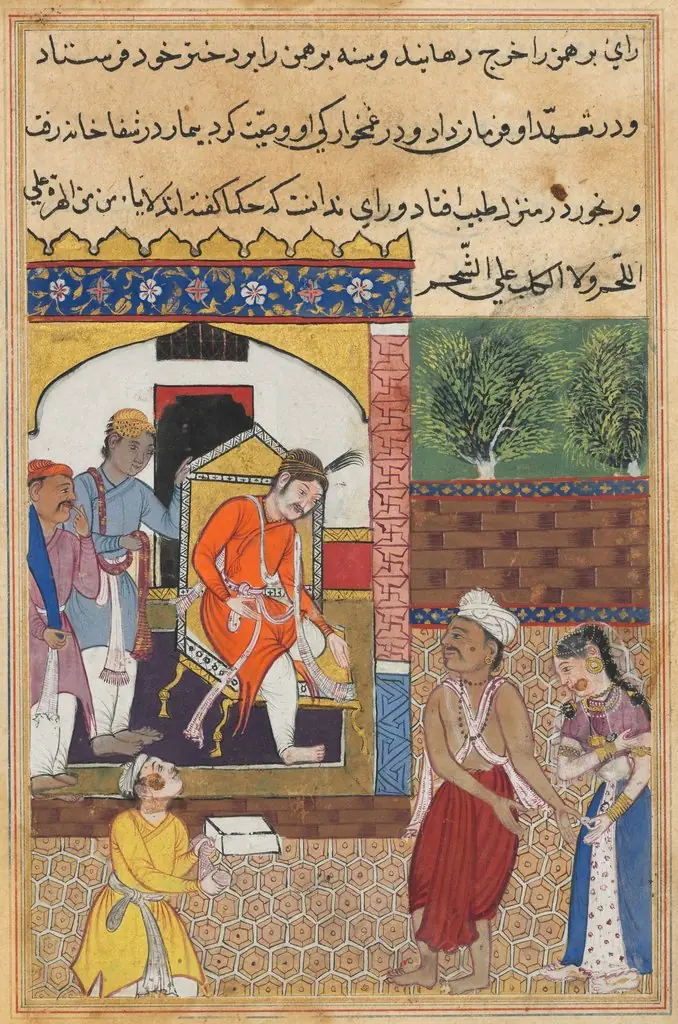
This illuminated page from the Persian manuscript Tuti‑nama (The Parrot’s Tale) presents a bustling domestic scene rendered in vivid pigments. The composition is divided into left and right sections populated by figures in richly colored garments, set against a backdrop of miniature pavilions, palm trees, and decorative gold detailing.
Technique & Style
Executed with fine brushwork on paper, the page combines watercolor washes with intricate gold leaf application. The artist employs bold primary hues, reds, blues, and golds, alongside delicate floral motifs that decorate the walls and pavilions, characteristic of 16th‑century Persian miniature painting.
Context
Tuti‑nama is a literary work that uses the parrot’s voice to relay moral tales. Illustrated copies were commissioned by elite patrons, reflecting the era’s taste for lavishly decorated books that combined poetry, prose, and visual storytelling.
Legacy
The page exemplifies the high level of artistic skill achieved in Persian manuscript illumination, influencing subsequent generations of miniature painters in the region. Its preservation allows scholars to study Safavid aesthetics, courtly culture, and the interplay of text and image in Islamic art.
Artist & collection

- Page from Tales of a Parrot (Tuti-nama): text page
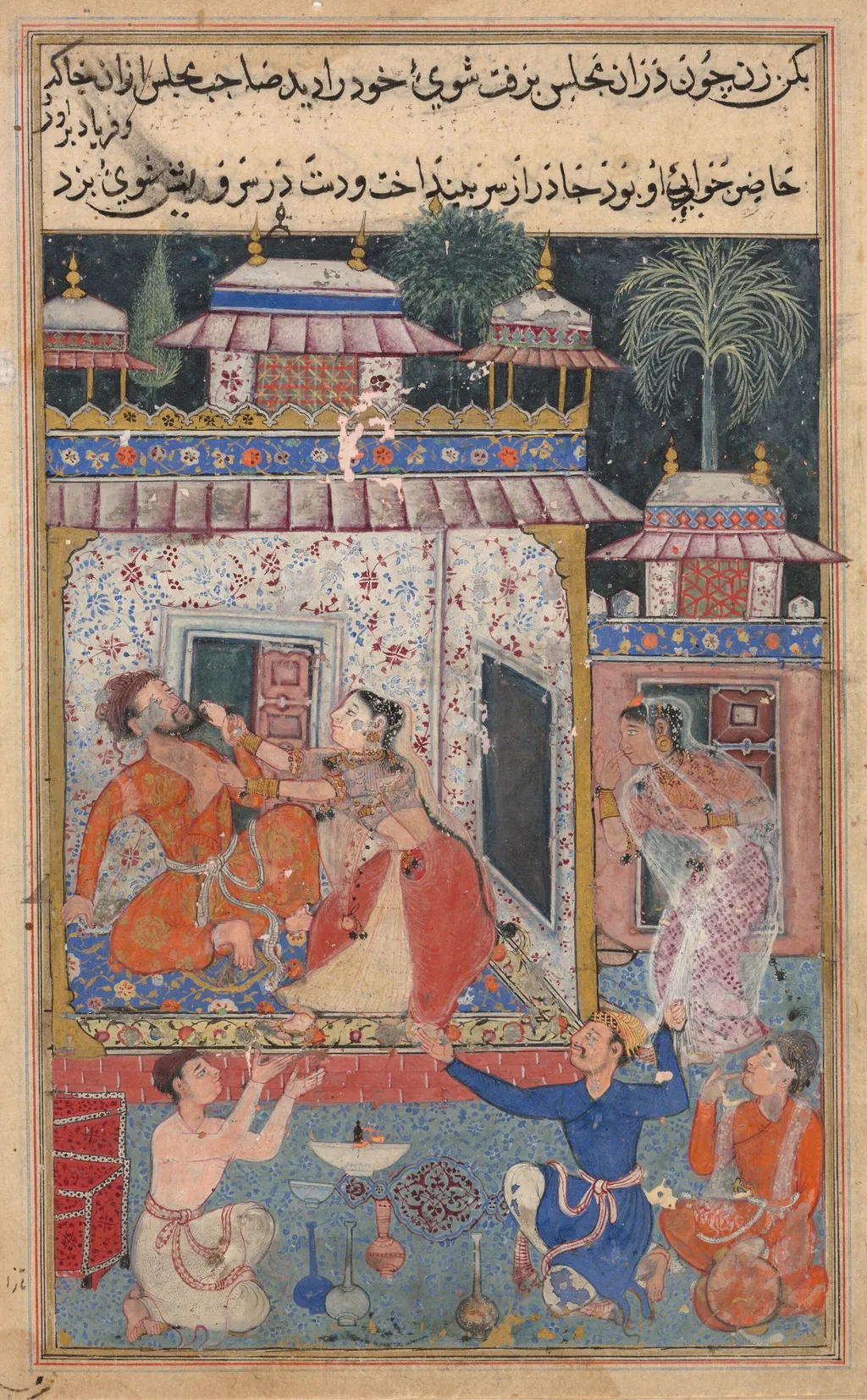
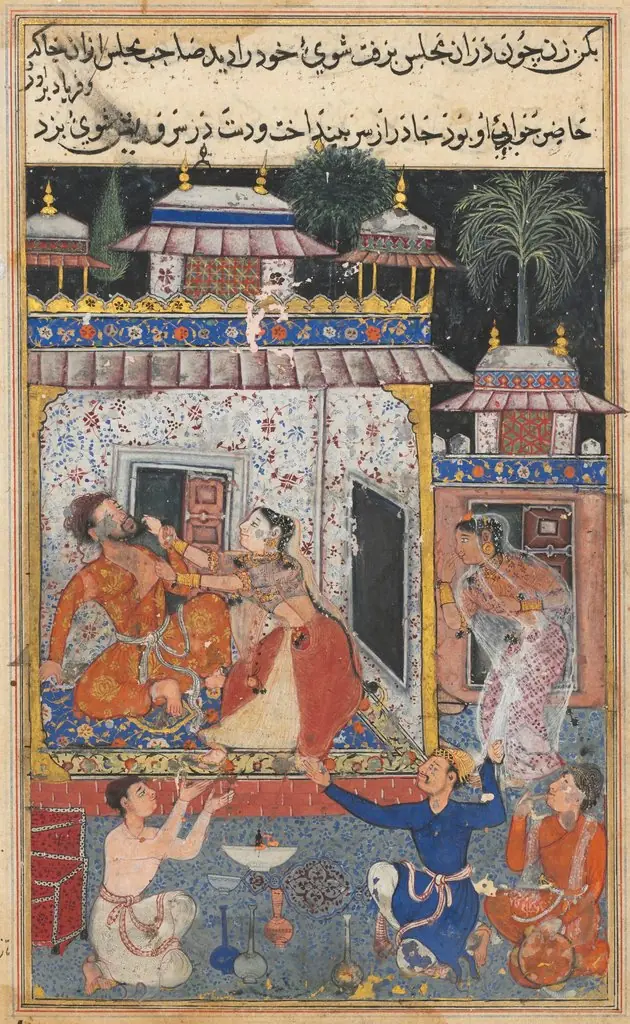 The deceitful wife assaults her erring husband, from a Tuti-nama (Tales of a Parrot): Eighth Night
 The deceitful wife assaults her erring husband, from a Tuti-nama (Tales of a Parrot): Eighth Night
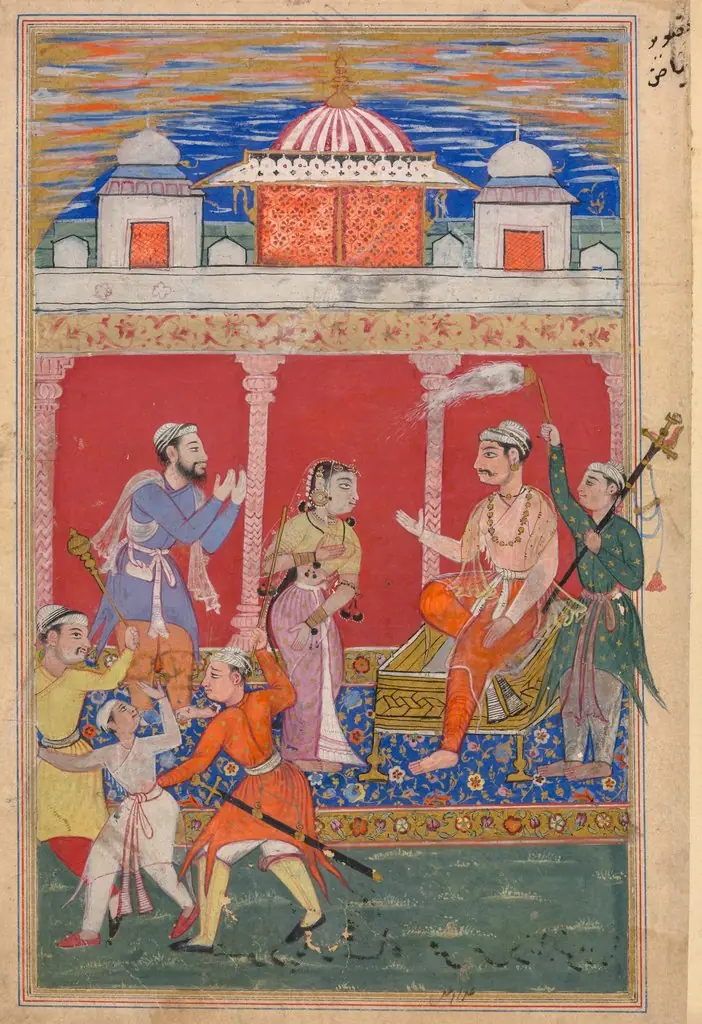
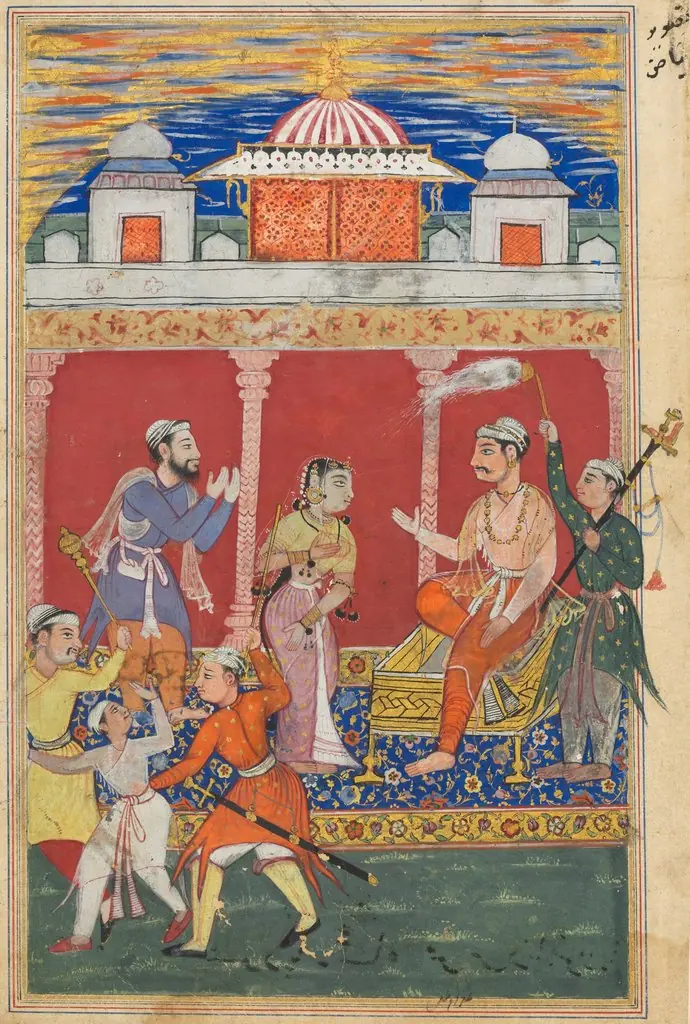 The prince’s ordeal continues, he is ordered away to be executed for the fifth time, from a Tuti-nama (Tales of a Parrot): Eighth Night
 The prince’s ordeal continues, he is ordered away to be executed for the fifth time, from a Tuti-nama (Tales of a Parrot): Eighth Night
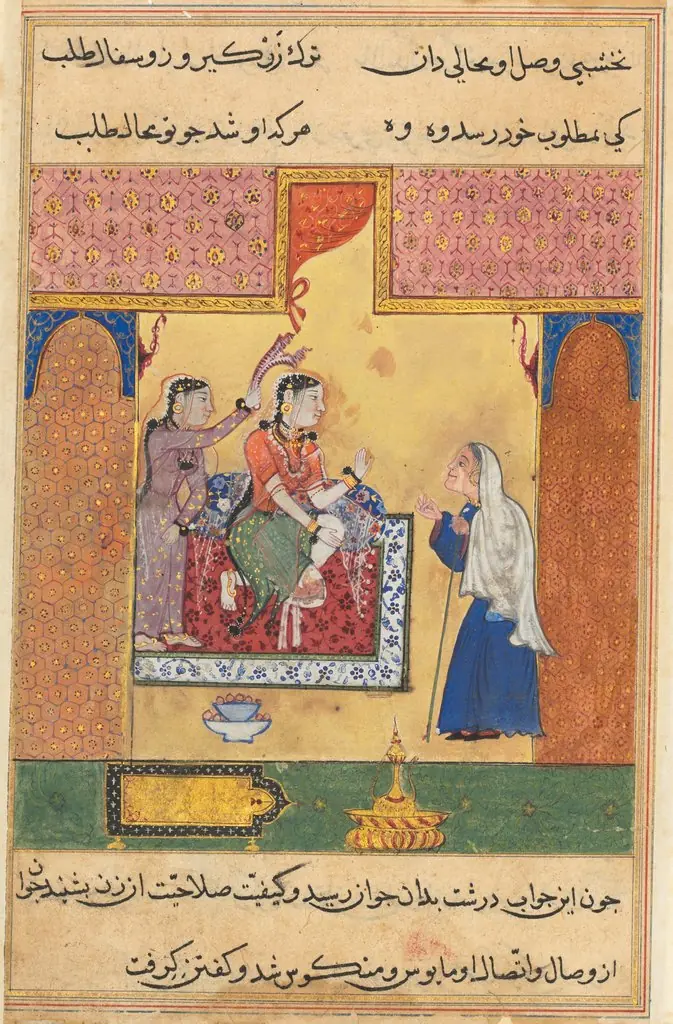 The old procuress conveys the young man’s message of love to Mansur’s wife, from a Tuti-nama (Tales of a Parrot: Seventeenth Night
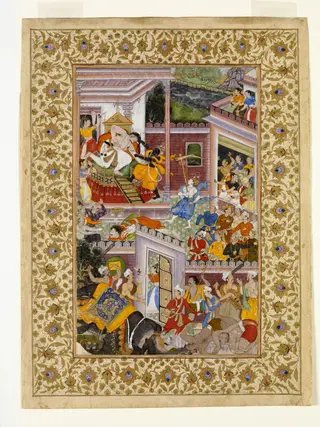 Krishna kills his uncle, the tyrant ruler Kamsa
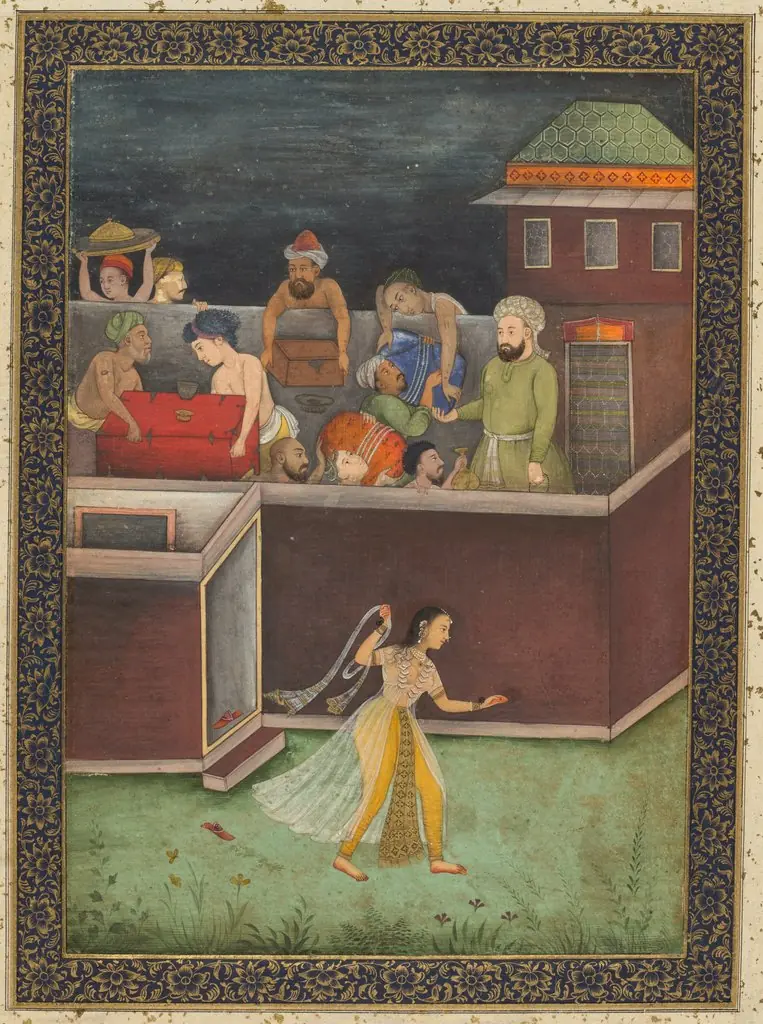 A House Burgled at Night
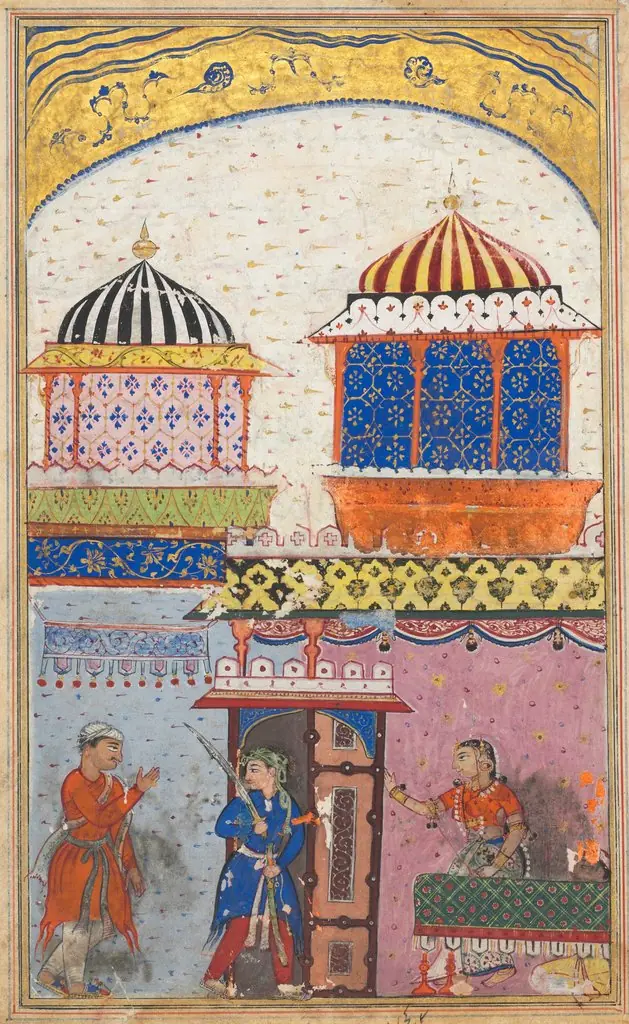 A woman asks her lover to leave her house, brandishing his sword and feigning rage in order to deceive her husband who has just arrived, from a Tuti-nama (Tales of a Parrot): Eighth Night
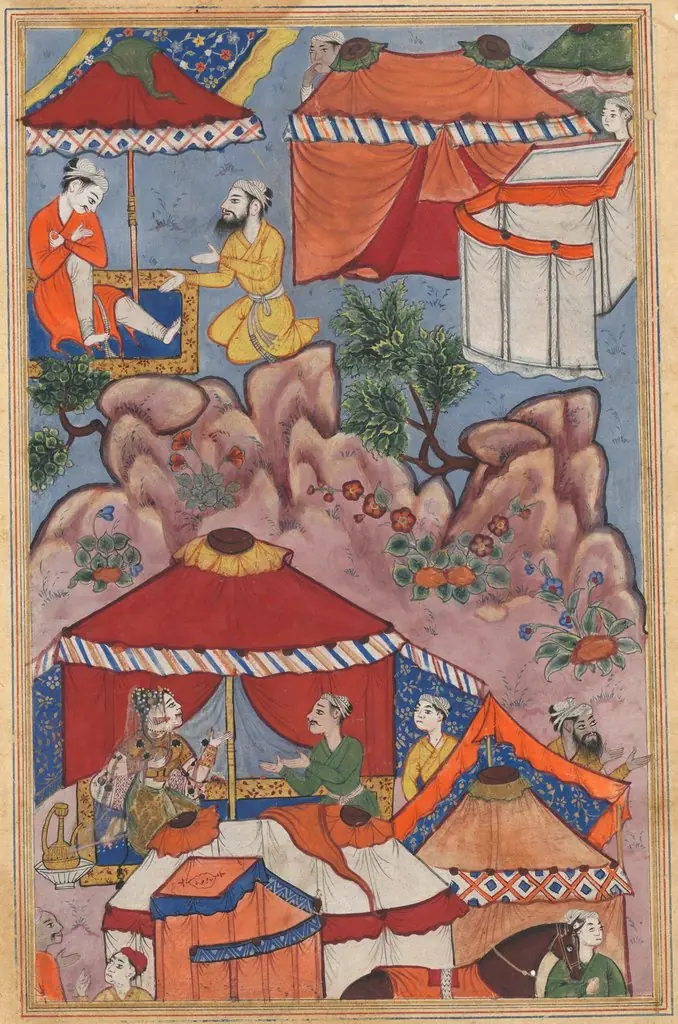 Bashir confides his love for Habbaza to an Arab friend, and sends him to her with a message, from a Tuti-nama (Tales of a Parrot): Twenty-fourth Night
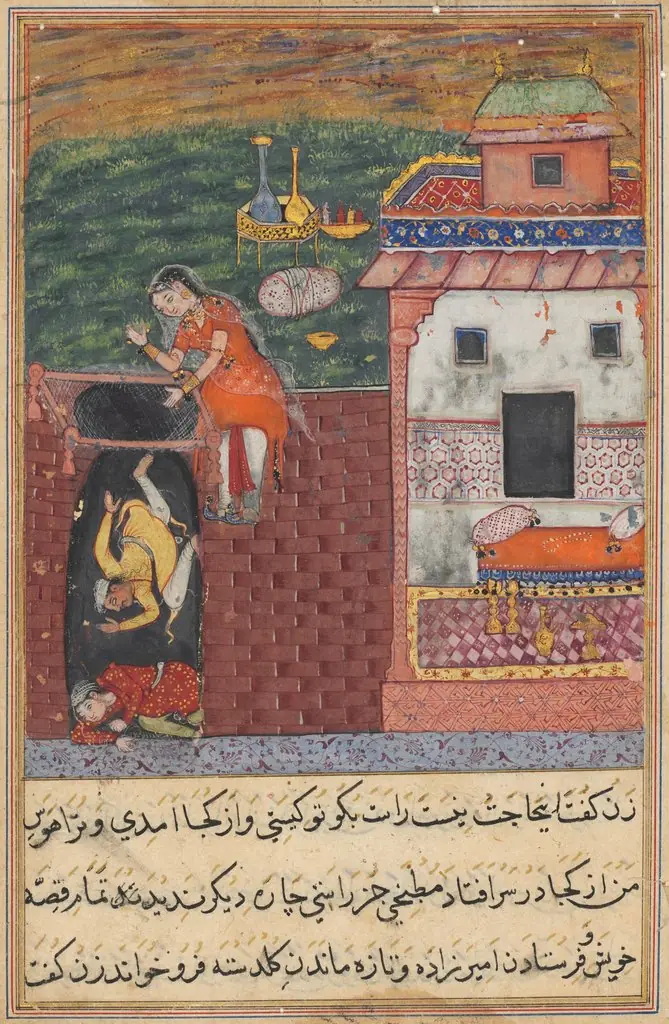 The two cooks, who attempt to seduce the warrior’s loyal wife, are trapped by her in a cellar, from a Tuti-nama (Tales of a Parrot): Fourth Night
 The magician, disguised as a Brahman, visits the king of Babylon, from a Tuti-nama (Tales of a Parrot): Thirty-fifth Night