Artwork
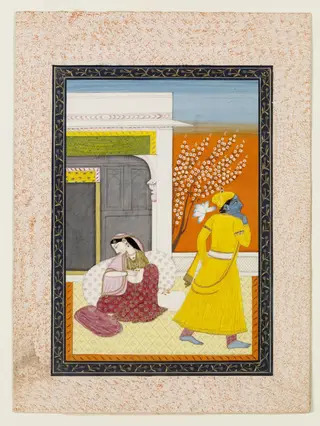
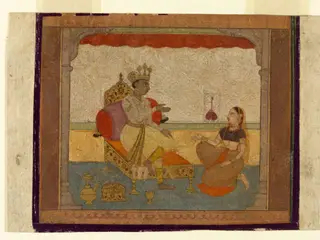
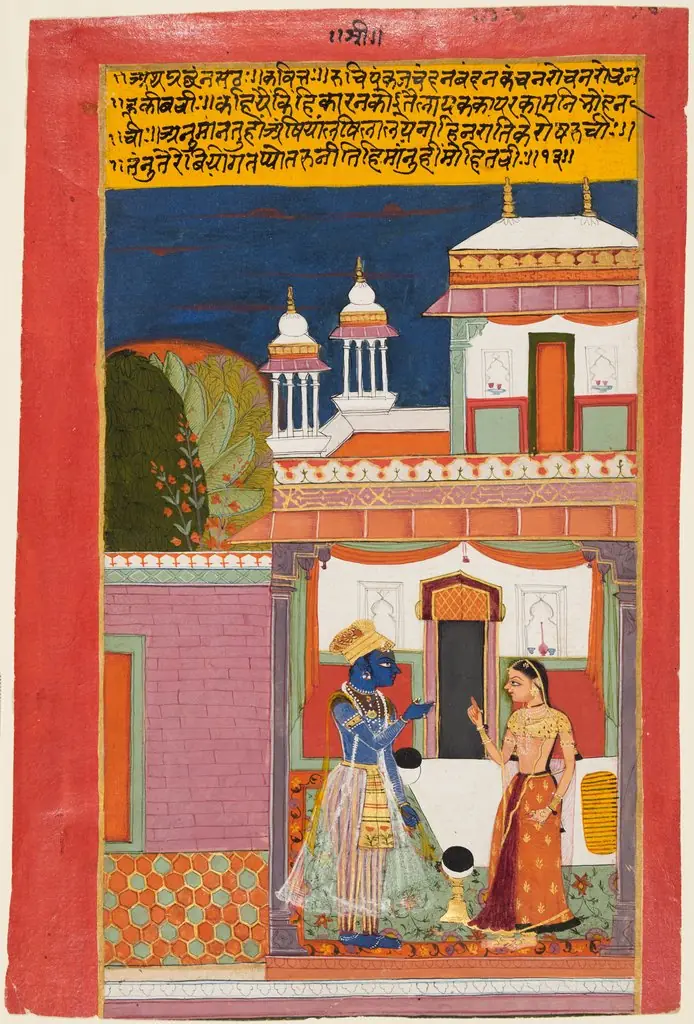
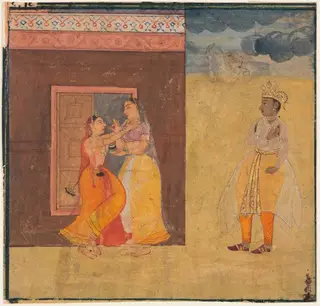
Krishna Abhisarika Nayika, from a Rasikapriya manuscript
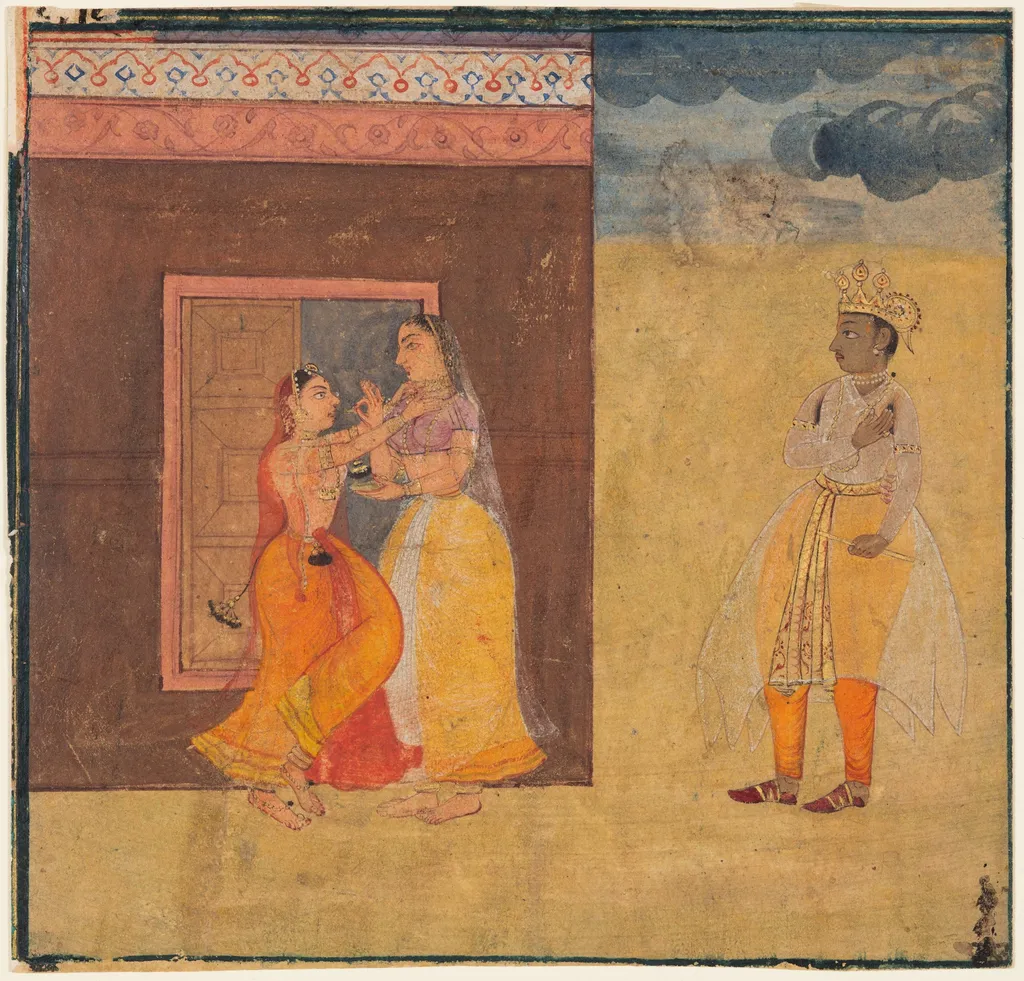
Krishna Abhisarika Nayika, from a Rasikapriya manuscript is an unspecified painting. It dates from 1620 and is held in the collection of the Cleveland Museum of Art. This painting, titled Krishna Abhisarika Nayika, depicts a narrative scene likely drawn from a poetic tradition.
About this work
Subject & Meaning
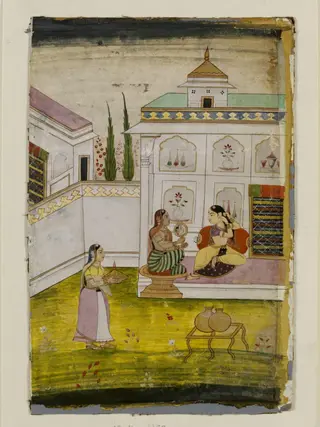
She is shown at twilight, holding a lamp in her right hand to light her path, her left hand lifting the hem of her translucent sari as she steps forward.
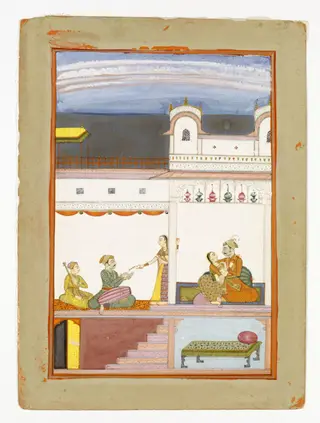
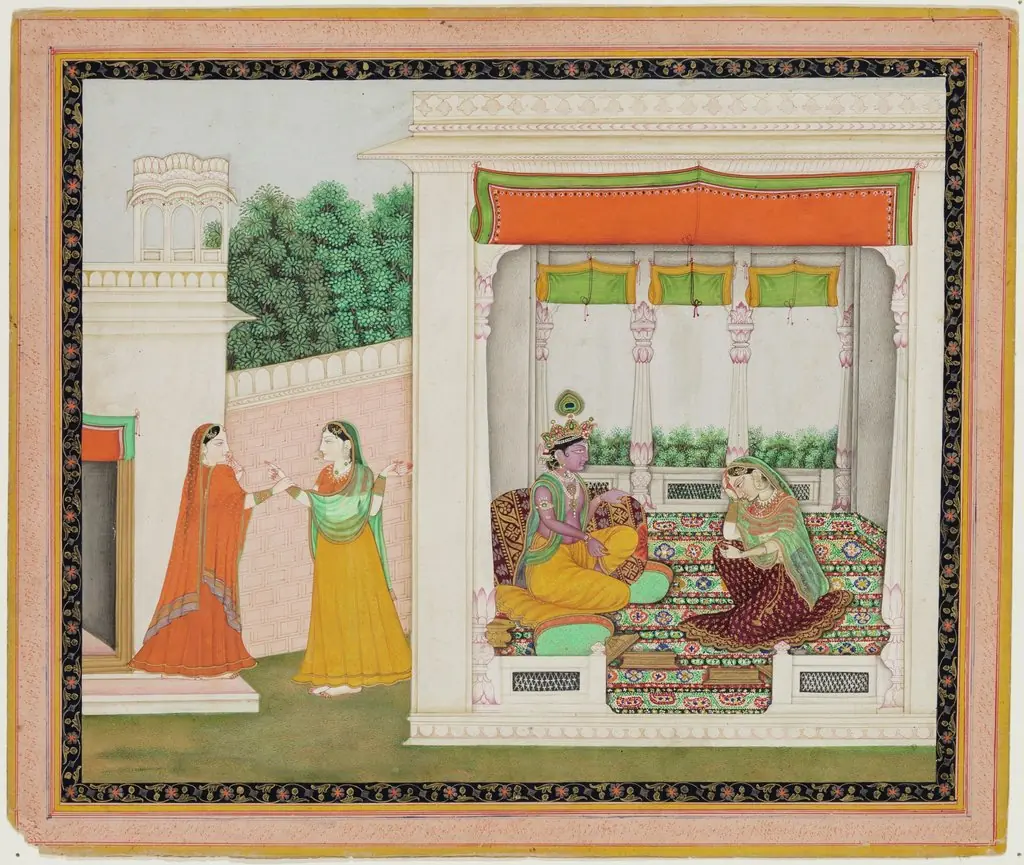
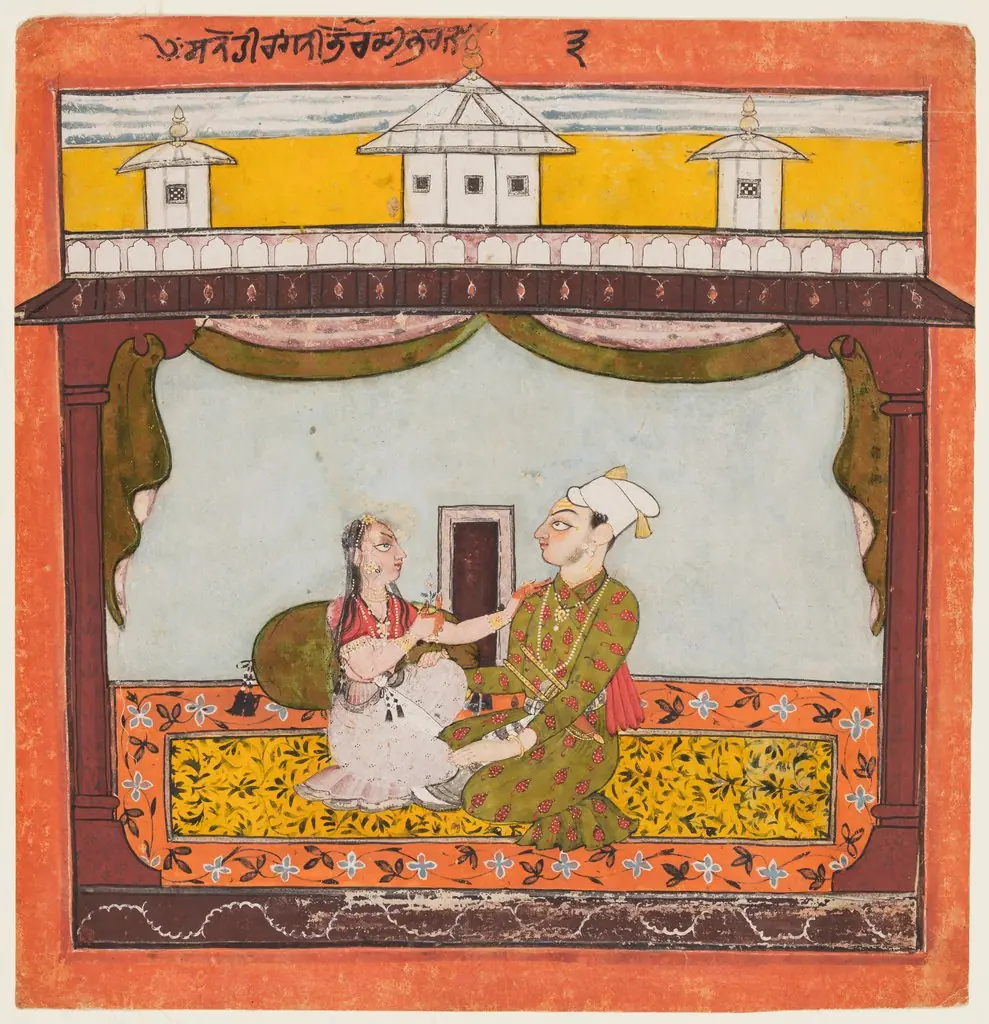
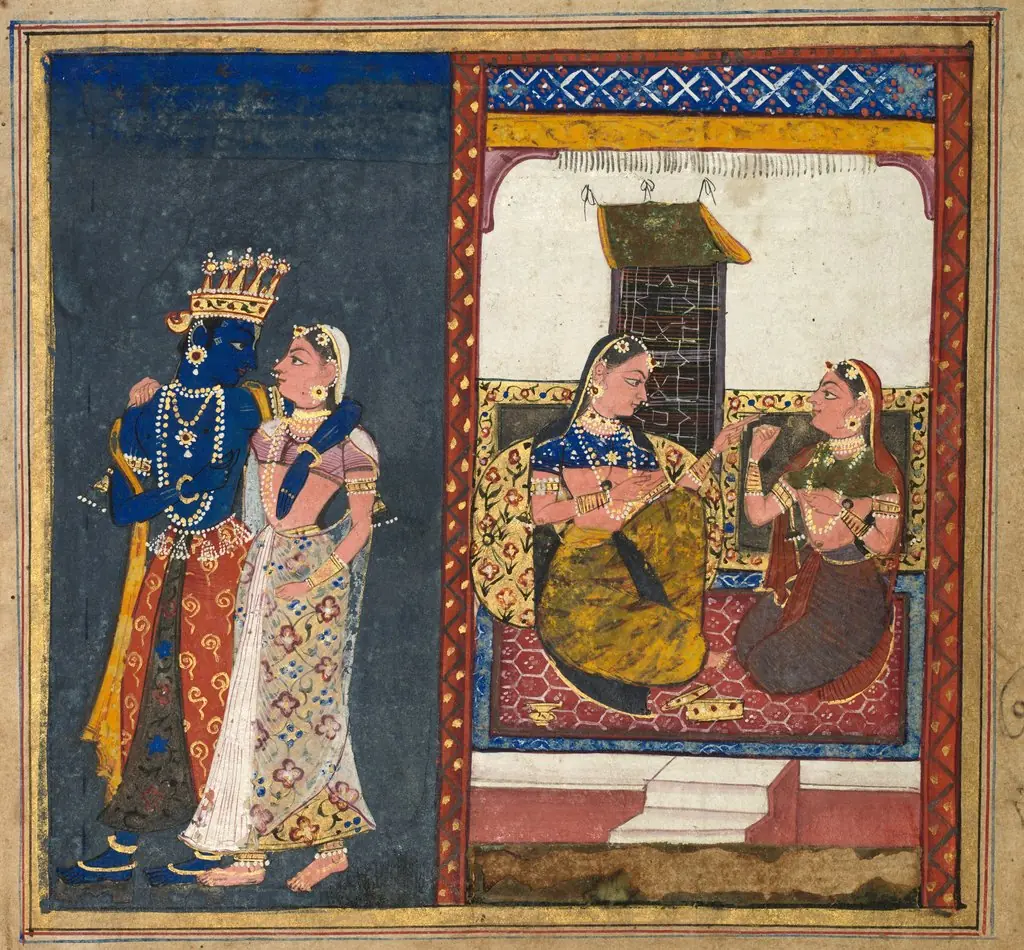
This folio depicts the nayika known as the ‘abhisarika’, a heroine who ventures out at night to meet her beloved. She is shown at twilight, holding a lamp in her right hand to light her path, her left hand lifting the hem of her translucent sari as she steps forward. A peacock feather adorns her coiffure, and a dark monsoon sky looms behind her, signaling the charged atmosphere of secret trysts.
The scene visualizes the Rasikapriya’s poetic evocation of a heroine’s restless journey through wind and rain to unite with Krishna. By rendering her solitary figure against a brooding sky, the painting embodies the tension between devotion and social constraint, while the lamp’s fragile flame symbolizes both guidance and peril.
Technique & Style
The work is a painted illustration executed on a paper leaf from a Rasikapriya manuscript, dating to 1620. As a painting, it employs pigment on paper as medium, with the manuscript leaf serving as support; handling follows standard conservation practice for delicate folios. The composition depicts the narrative of Krishna Abhisarika Nayika, showing the heroine’s daring approach to Krishna, a motif recurring in Indian miniature traditions.
The piece is part of the Cleveland Museum of Art’s collection, where it is catalogued under the accession number 2018.166. No specific condition notes are recorded in the available documentation.
History & Provenance
Krishna Abhisarika Nayika is a 1620 painting originating from a Rasikapriya manuscript, classified as a work of Indian miniature painting. The piece is attributed to an unknown artist and portrays the divine lover Krishna. It entered the collection of the Cleveland Museum of Art, where it is catalogued under accession number 2018.166.
No further details about its commission or previous owners are recorded in the available sources; the dating of 1620 is taken from the manuscript’s colophon and corroborated by the museum’s metadata. The work remains part of the museum’s permanent collection, displayed in its South Asian art galleries.
The painting is held by the Cleveland Museum of Art, where it carries the accession number 2018.166.
It has been exhibited once since entering the collection, appearing in the museum’s 2022 presentation “For the Love of Krishna: Pichvai Painting from Nathdwara.”
Overview
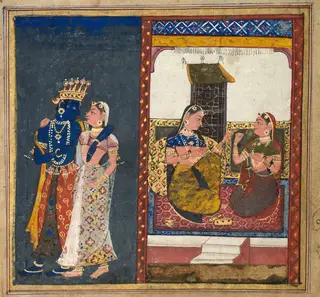
This painting, titled Krishna Abhisarika Nayika, depicts a narrative scene likely drawn from a poetic tradition. Inside a chamber, two women are shown, one prominently dressed in a vibrant red sari near a wooden door, while another faces her. Outside, a regal male figure, adorned with a crown and necklace, stands on sandy ground beneath a cloudy sky, holding a fan. The composition suggests an impending encounter or a moment of anticipation within a larger story.
Artist & collection