Artwork
Rama and Lakshmana Fighting Ravana, from a Dashavatara (Ten Incarnations [of Vishnu]) series
![Rama and Lakshmana Fighting Ravana, from a Dashavatara (Ten Incarnations [of Vishnu]) series, unspecified, 1765](https://artifactworldgallery.com/img/rama-and-lakshmana-fighting-ravana-from-a-dashavatara-ten-in--44f1c99a2c65cc54-w1024.webp)
Rama and Lakshmana Fighting Ravana, from a Dashavatara (Ten Incarnations [of Vishnu]) series is an unspecified painting. It dates from 1765 and is held in the collection of the Cleveland Museum of Art.
About this work
Subject & Meaning
As part of a Dashavatara series illustrating the ten incarnations of Vishnu, this work represents the triumph of divine order (dharma) over chaos and evil.
The painting depicts the climactic war between Rama and Ravana, the central conflict of the Hindu epic Ramayana. Rama and his brother Lakshmana are shown battling the demon king Ravana, a pivotal episode in the narrative of Vishnu's seventh incarnation as Rama. As part of a Dashavatara series illustrating the ten incarnations of Vishnu, this work represents the triumph of divine order (dharma) over chaos and evil.
The inclusion of flowers in the imagery may carry additional symbolic resonance within the devotional context of the series.
History & Provenance
Rama and Lakshmana Fighting Ravana is a painting from a Dashavatara series dated to 1765, as indicated by the work’s inception. The artist remains unidentified. The painting entered the Cleveland Museum of Art in 1953, receiving the accession number 1953.357, and has remained in the museum’s collection since.
No earlier provenance or commission details are recorded in the available sources. The work illustrates the battle between Rama and Ravana, a scene drawn from the Ramayana, and forms one of the ten Vishnu avatars depicted in the series.
Overview
This painting, titled Rama and Lakshmana Fighting Ravana, originates from a larger Dashavatara series, illustrating the ten incarnations of the Hindu deity Vishnu. It depicts a dramatic confrontation between three central figures, rendered in vivid hues against a somber backdrop. The artwork captures a moment of intense action, characteristic of narrative religious painting traditions.
Technique & Style
The composition features three dynamic figures prominently displayed against a dark, unadorned background, which serves to amplify the brilliance of their attire. The two protagonists on the left are clad in yellow and white, one poised with a bow, while the multi-armed antagonist on the right is distinguished by a crown and vibrant orange robes. A tree with red blossoms and a river at the base add contextual elements, with gold accents further enriching the visual impact.
![Rama and Lakshmana Fighting Ravana, from a Dashavatara (Ten Incarnations [of Vishnu]) series](https://artifactworldgallery.com/img/rama-and-lakshmana-fighting-ravana-from-a-dashavatara-ten-in--5e1e27c9fffbe47d-w320.webp)
Artist & collection

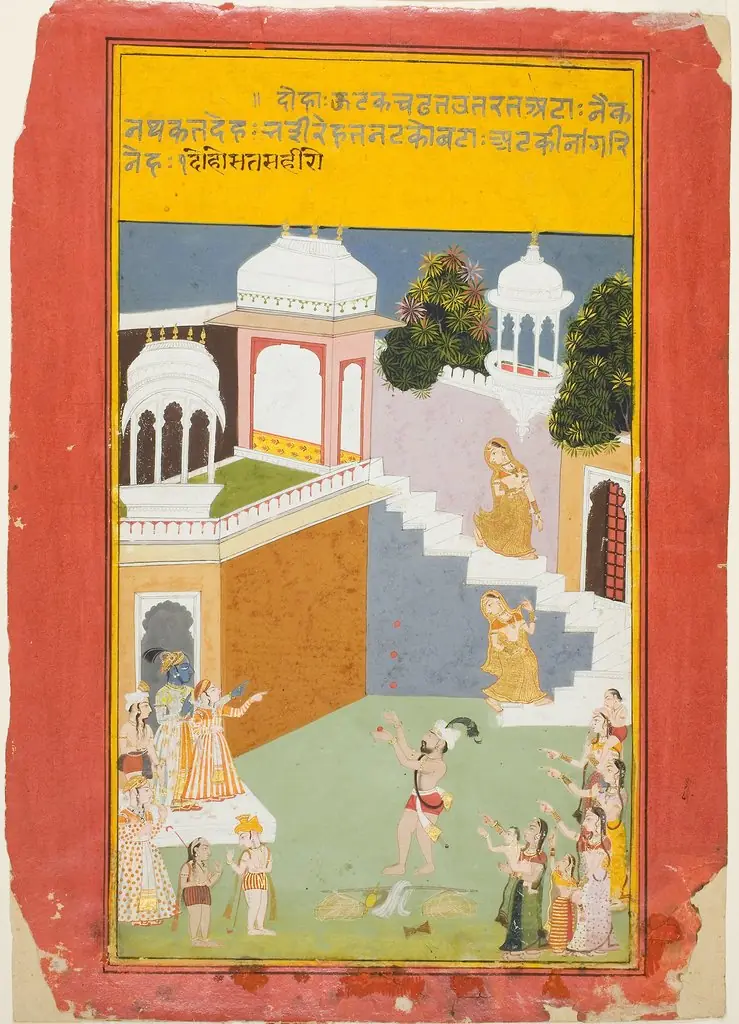 Krishna Watches A Juggler, from a copy of Bihari's Sat Sai
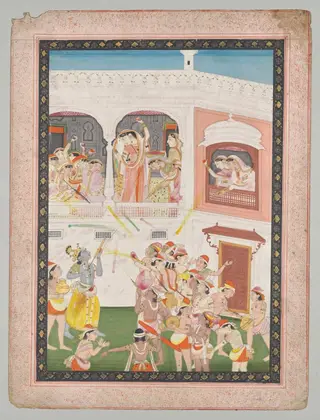 Radha and Hindu God Krishna celebrating the festival Holi
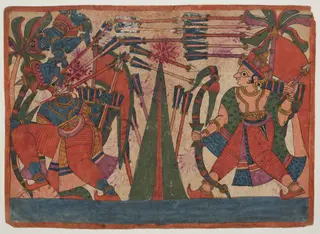 Scene from the Ramayana
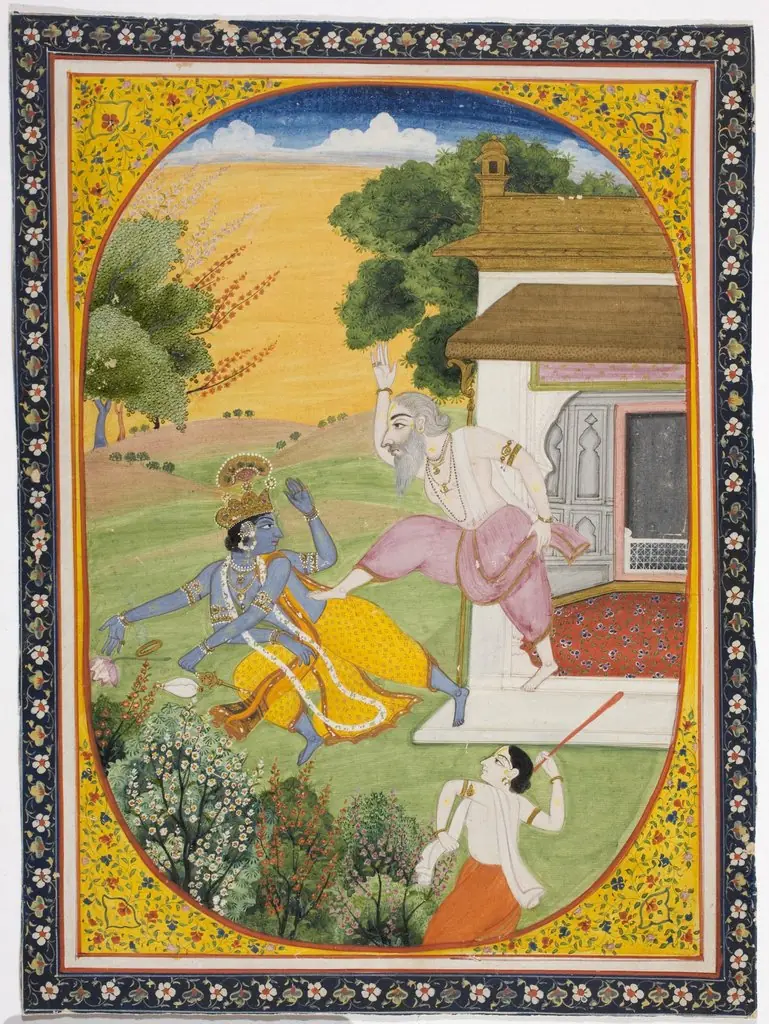 Krishna Rebuked by a Priest
 Ragini Madhumadhavi, Page from a Jaipur Ragamala Set
 Krishna's Fifth and Sixth Avatars, page from a copy of the Gitagovinda of Jayaveda
 Three Musicians Perform Before a King: Shri Raga, from a Ragamala
- Rama and Lakshmana Fighting Ravana, from a Dashavatara (Ten Incarnations [of Vishnu]) series
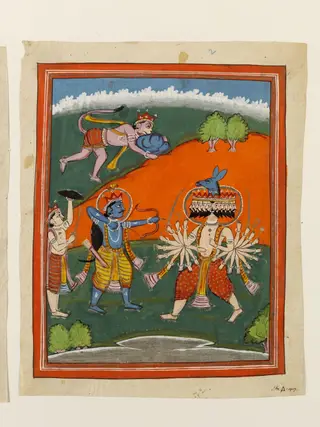 Rama and Ravana
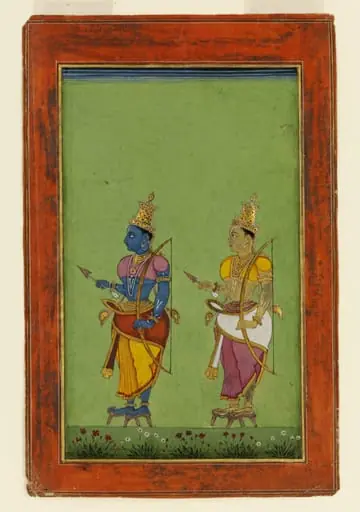 Rama and Lakshmana
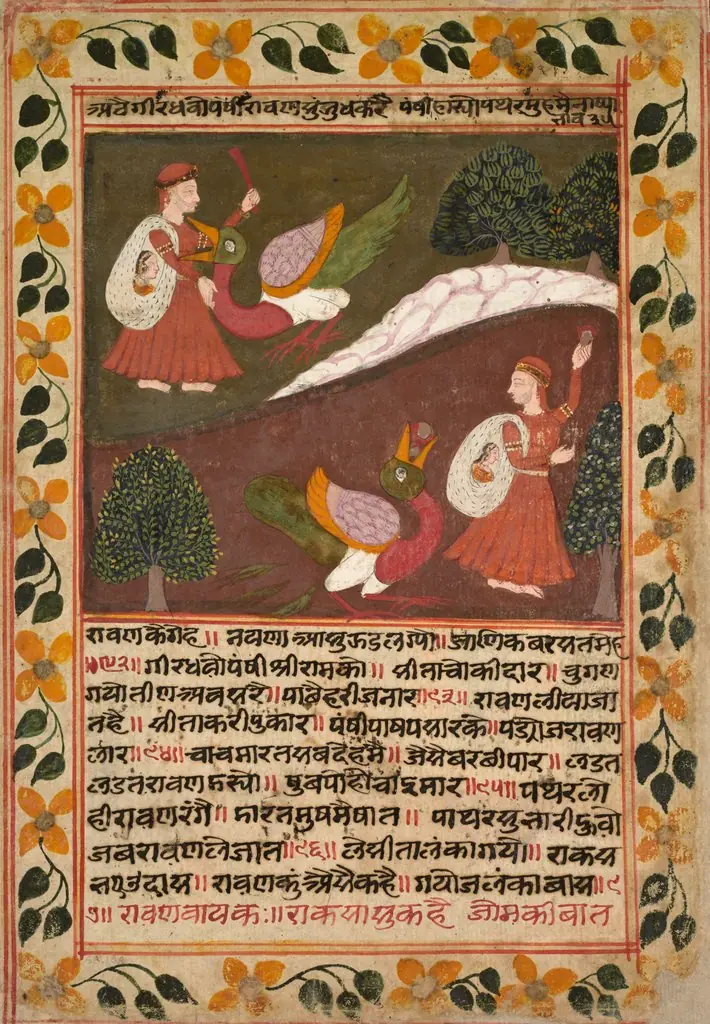 Folio 18 from a Chandana Malayagiri Varta (Story of King Chandana and Queen Malayagiri) of Karamachand: Ravana battles the great vulture Jatayu and defeats him by throwing stones in his mouth (recto); Jatayu approaches Rama and Lakshmana who are wond
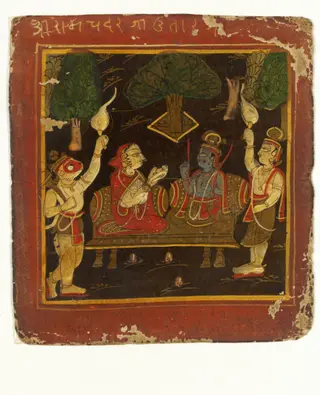 Rama and Sita, Lakshman and Hanuman