Artwork
Relief of a Bishop
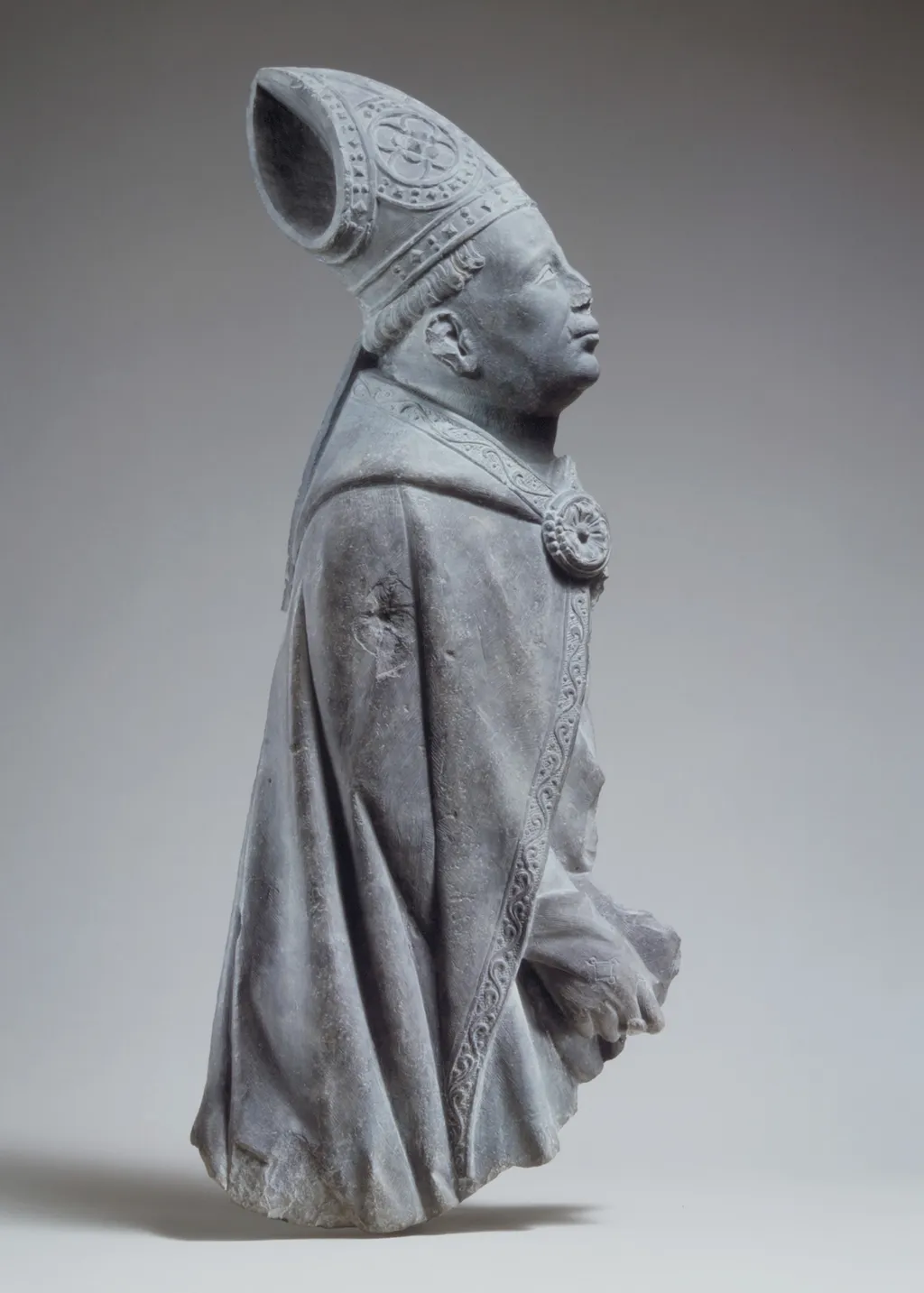
Relief of a Bishop is an unspecified painting. It dates from 1400 and is held in the collection of the Metropolitan Museum of Art.
About this work
Subject & Meaning
Such imagery typically represents episcopal authority, pastoral care, and apostolic succession within the Church.
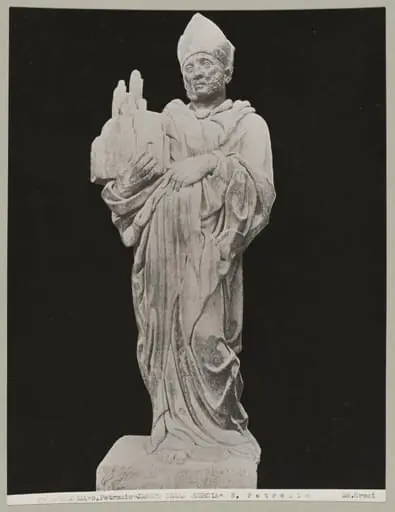
The relief depicts a bishop, a senior ecclesiastical figure within the Christian Church; the subject is identified simply as a bishop, with no further iconographic attributes specified in the available sources.
In medieval Christian art, a bishop is conventionally rendered with attributes that signify his office: the mitre, a tall cleft headdress; the crozier, a hooked pastoral staff symbolizing his role as shepherd of his flock; and liturgical vestments. Such imagery typically represents episcopal authority, pastoral care, and apostolic succession within the Church.
Dated to 1400, the figure reflects the iconographic conventions of late medieval ecclesiastical imagery, an era when sculpted bishops commonly appeared on tomb monuments, church portals, and devotional panels to commemorate clerical patrons or embody institutional piety. The sources do not specify which particular bishop is portrayed.
History & Provenance
The anonymous Relief of a Bishop, dated to 1400, is held in the collection of the Metropolitan Museum of Art. The work is a carved relief depicting a bishop. No specific accession number or exhibition history is provided in the available records.
Context
The Relief of a Bishop (c. 1400) occupies a contested position in late medieval scholarship. Initially classified as a painting, its material and stylistic traits, particularly the shallow carving and polychromy, align it with devotional reliefs produced in the Rhineland or Southern Netherlands during the International Gothic period. Art historians have debated its attribution, with recent technical analyses suggesting it may belong to a workshop specializing in small-scale ecclesiastical commissions rather than a named master.
Its inclusion in the Metropolitan Museum of Art’s collection has facilitated comparative studies, situating it within a broader corpus of anonymous late 14th- and early 15th-century episcopal imagery used for private devotion or chapel decoration.
The work’s modest scale and functional context reflect the period’s demand for portable, didactic objects among clergy and patrons. While not revolutionary in iconography, its craftsmanship exemplifies the era’s emphasis on tactile piety, bridging sculptural and painted traditions. Scholarship has increasingly focused on such hybrid objects to challenge rigid medium-based classifications in pre-Renaissance art.
Overview
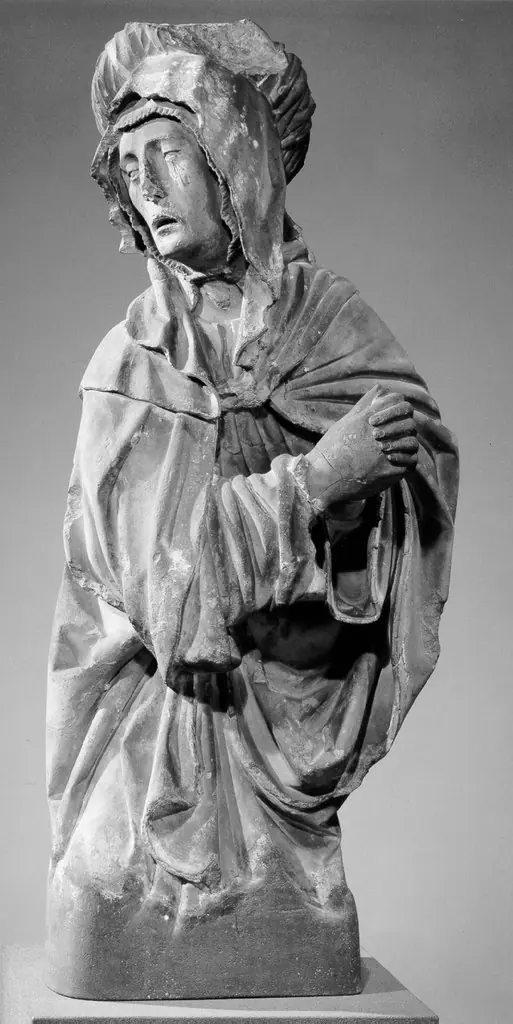
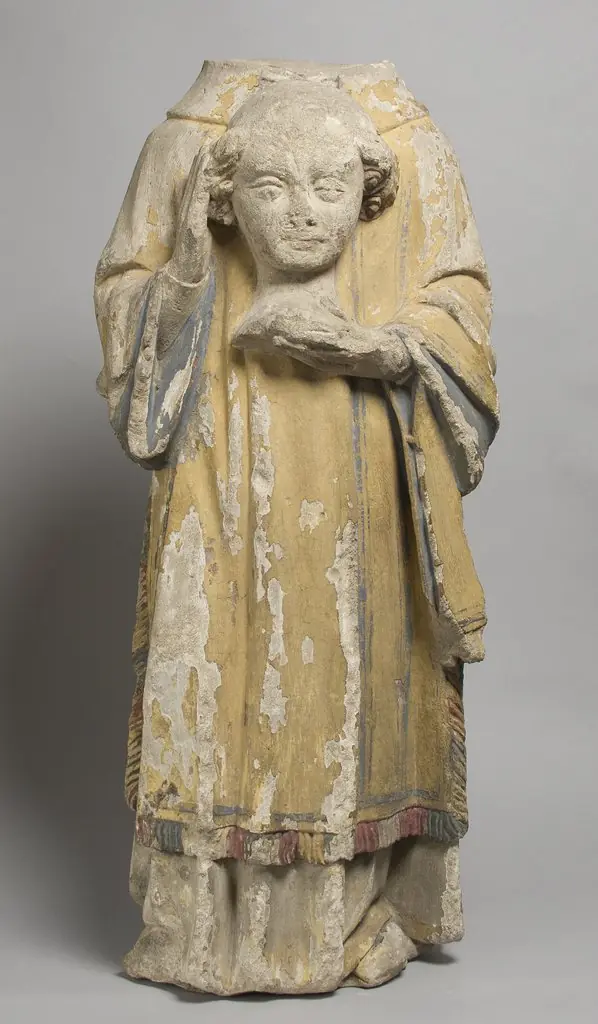
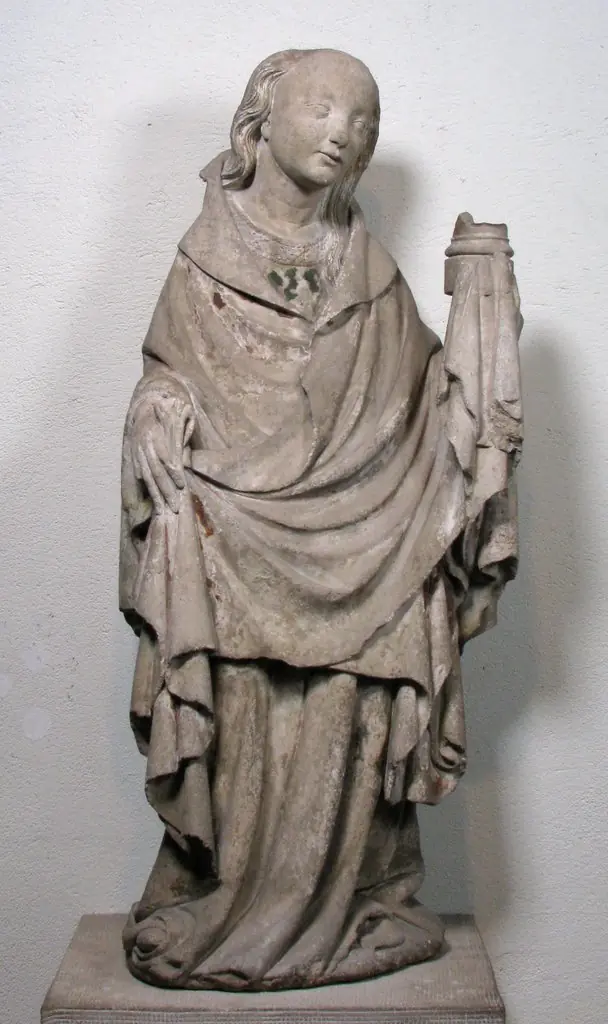
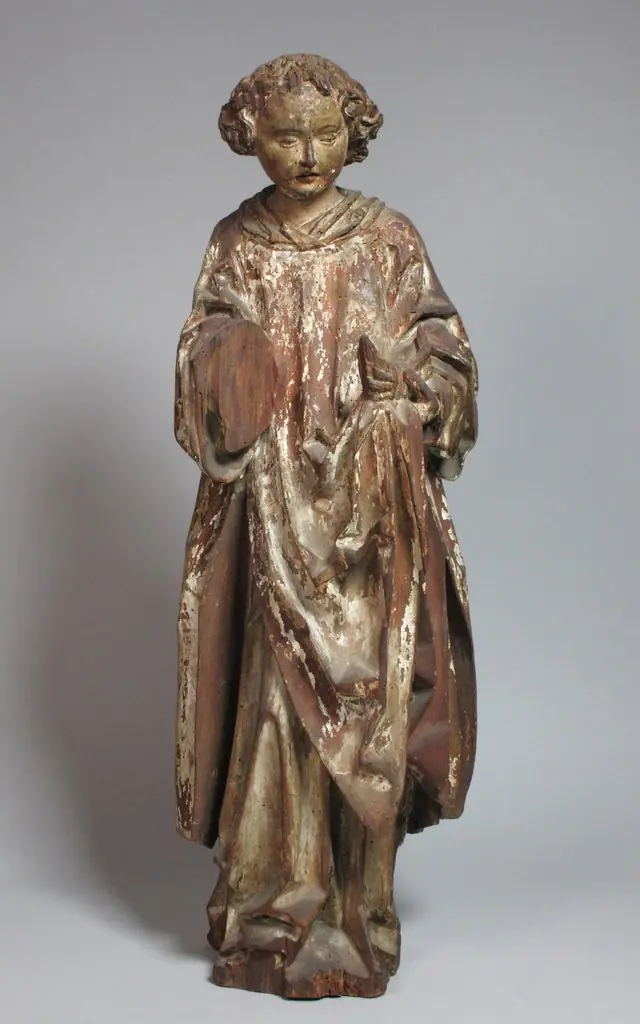
This artwork, titled Relief of a Bishop, is a sculptural piece depicting a male figure in ecclesiastical vestments. The subject is shown in profile, looking towards the right. Although the specific material is not identified, its appearance suggests it is carved from stone or marble.
The relief exhibits a high degree of artistic skill, evident in the detailed rendering of the figure's attire and features.
Technique & Style
The creation of this relief demonstrates considerable craftsmanship. The unidentified medium, likely stone or marble, has been worked with precision to achieve fine details. The artist meticulously rendered the elaborate designs on the bishop's robe and the circular motif on his mitre.
This attention to detail suggests a skilled hand capable of transforming a raw material into a refined and expressive form.
Artist & collection