Artwork
River View with a Village Church
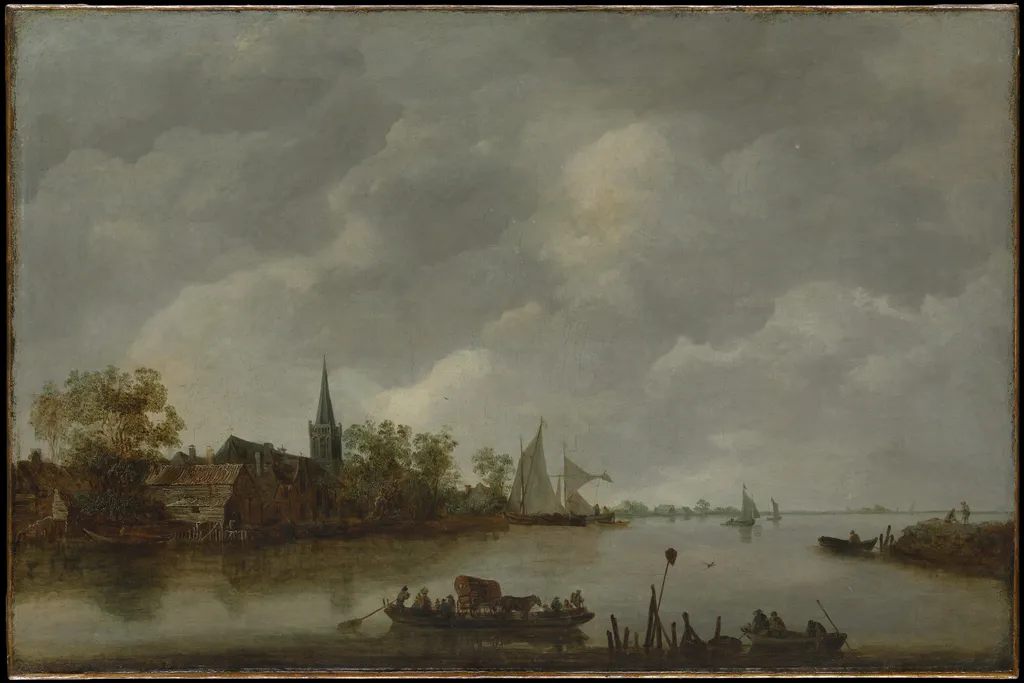
River View with a Village Church is an oil painting. It dates from 1700 and is held in the collection of the Metropolitan Museum of Art.
About this work
Subject & Meaning
The composition emphasizes the relationship between the built structures of the village and the flowing river, populated by maritime activity.
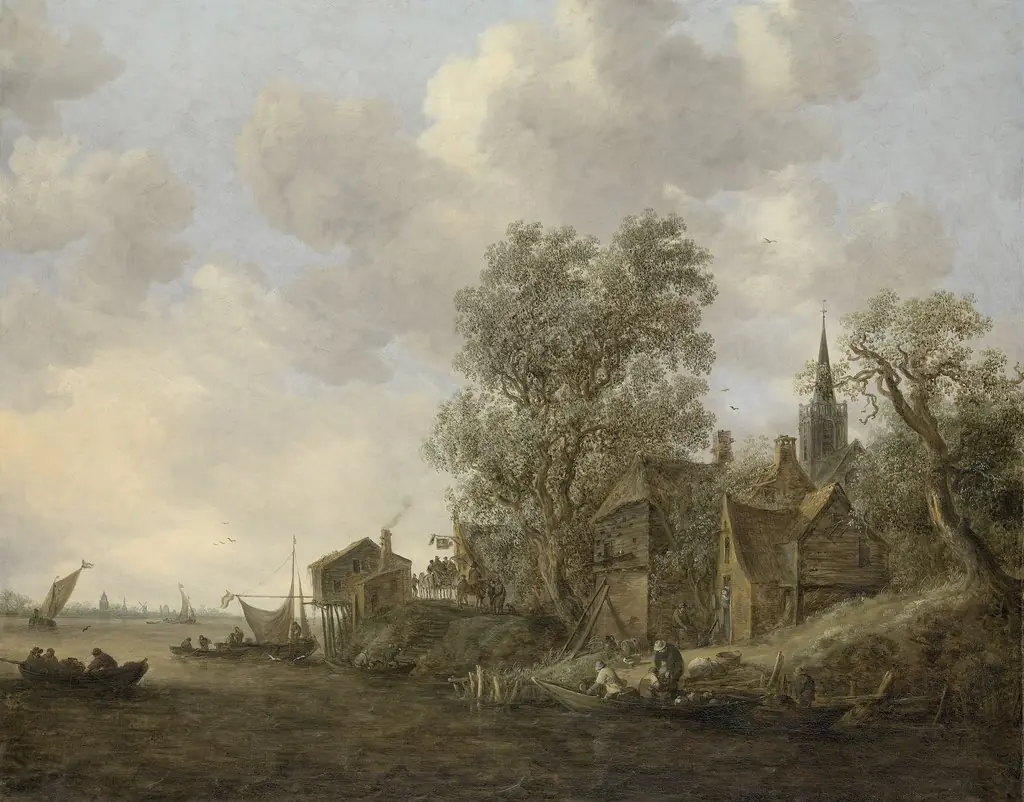
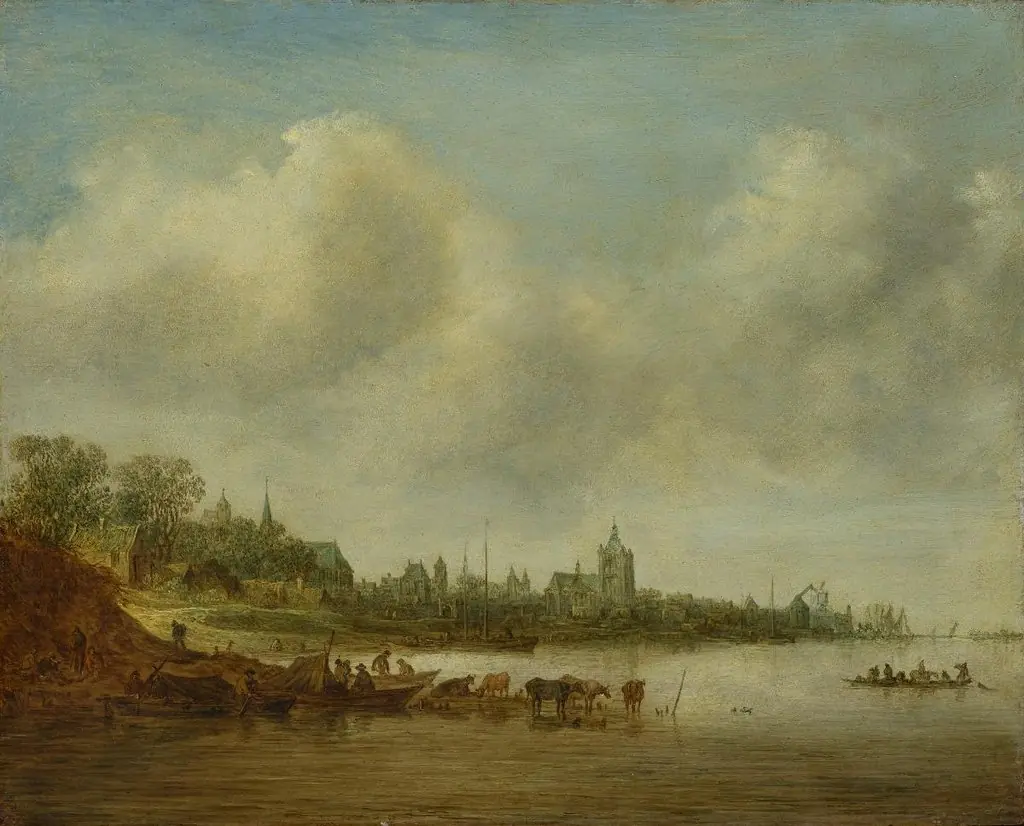
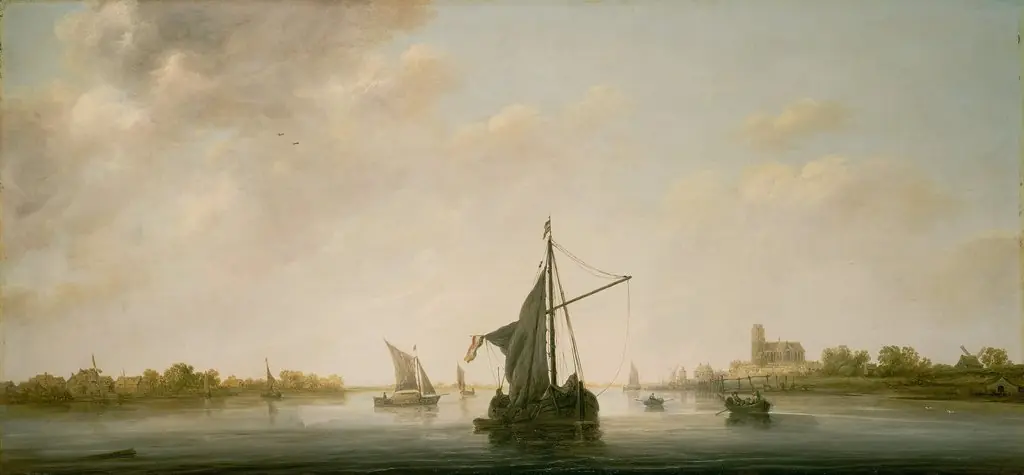
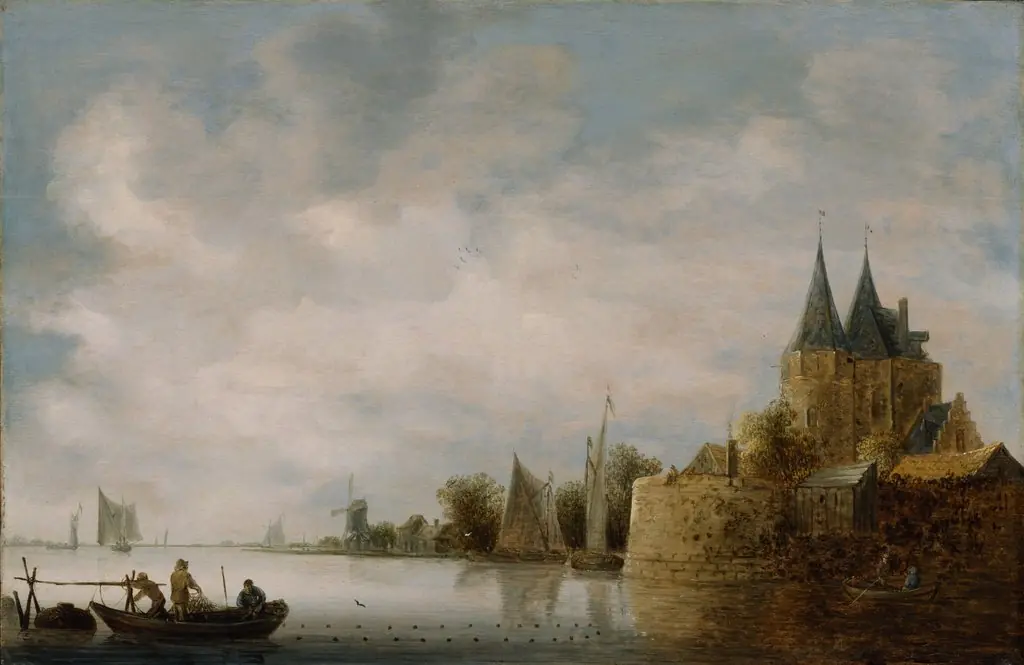
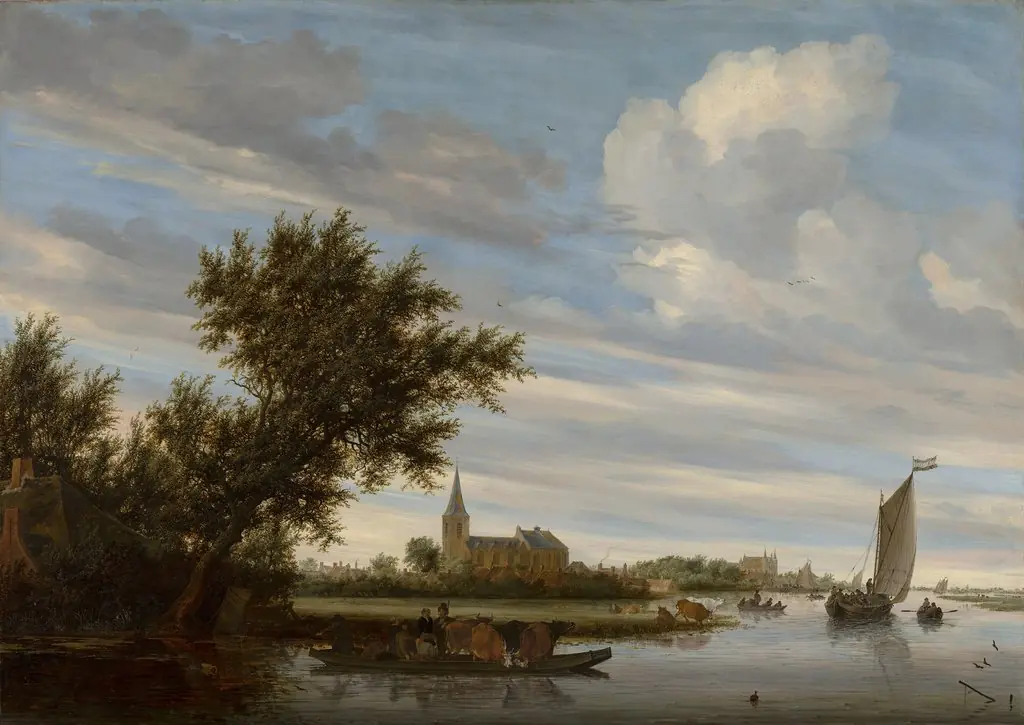
The artwork depicts a tranquil river landscape featuring a village church, boats, and sailboats navigating the water. Created in the style of Jan van Goyen around 1700, the painting presents a typical Dutch scene where the church serves as a central architectural landmark within the natural environment. The composition emphasizes the relationship between the built structures of the village and the flowing river, populated by maritime activity.
While the work functions primarily as a landscape genre piece, the inclusion of the church building suggests a representation of daily life and community within a riverside setting. The scene captures a moment of calm on the water, highlighting the integration of human settlement with the surrounding waterways.
Technique & Style
Executed in 1700, River View with a Village Church is an oil painting on canvas, a standard support for landscape works of this period. The work is stylistically aligned with the manner of Jan van Goyen, characterized by its depiction of a riverside scene featuring a village church, boats, and sailboats. The physical dimensions of the canvas measure 64.8 centimeters in height and 97.8 centimeters in width.
As a landscape painting, the composition utilizes oil paint to render the specific architectural and nautical elements described in its visual record. The piece remains part of the collection at the Metropolitan Museum of Art, where it is cataloged as a painting in the style of the noted Dutch master.
History & Provenance
River View with a Village Church is an oil-on-canvas landscape dated to 1700, attributed to an artist working in the manner of Jan van Goyen. The documented ownership chain begins with Robert Hutcheson, from whom the painting passed to Christopher Beckett Denison. It was subsequently acquired by Adolph Lewisohn, the New York collector who assembled a notable group of seventeenth-century Dutch paintings in the early twentieth century.
Following Adolph Lewisohn's death, the work entered the holdings of his daughter Adele Lewisohn Lehman. From the Lehman collection it was transferred to the Metropolitan Museum of Art, where it is currently held. No commission or first-purchase circumstances are recorded in the available documentation, and the inception date of 1700 is given without further specification of the circumstances of creation.
River View with a Village Church is held by the Metropolitan Museum of Art in New York. The museum’s collection records identify it as part of its holdings, but the accession number is not specified in the available documentation. The work entered the collection through the bequests of Robert Hutcheson, Christopher Beckett Denison, Adolph Lewisohn, and Adele Lewisohn Lehman. No exhibition history is recorded in the sources consulted to date.
Overview
"River View with a Village Church" is an oil painting depicting a tranquil landscape. The composition centers on a village nestled along a riverbank, dominated by a prominent church steeple. The atmosphere is rendered through a dynamic sky and the interplay of light and shadow across the water and land, conveying a sense of serene activity within the natural setting.
Artist & collection