Artwork
Roundel with the Nativity
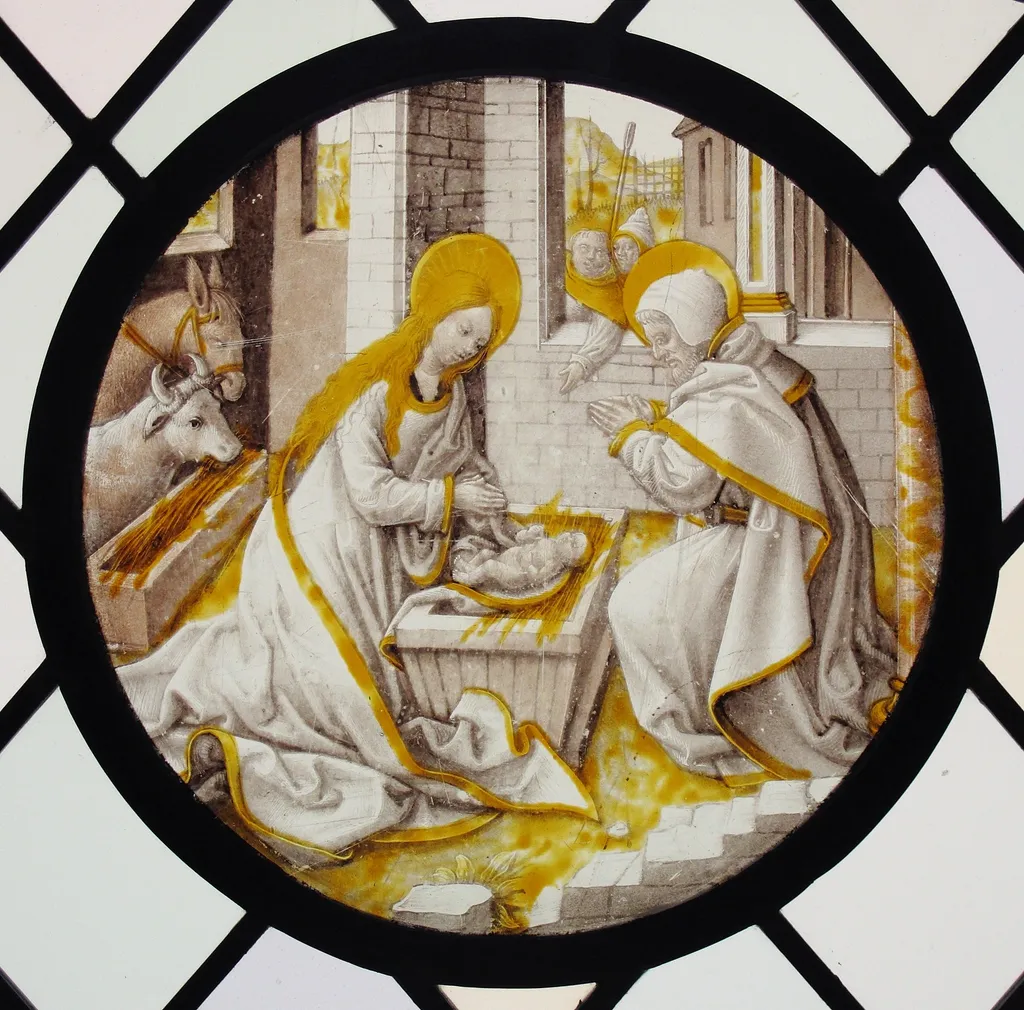
Roundel with the Nativity is an unspecified painting. It dates from 1515 and is held in the collection of the Metropolitan Museum of Art. This circular painting depicts a serene nocturnal scene within a rustic stone stable.
About this work
History & Provenance
It is currently housed in the Metropolitan Museum of Art, where it has been catalogued as a religious painting depicting the Nativity.
The roundel is an anonymous work dated to 1515, as indicated by its inception year in both the museum record and Wikidata entry. It is currently housed in the Metropolitan Museum of Art, where it has been catalogued as a religious painting depicting the Nativity. No earlier ownership, commission, or provenance details are provided in the available sources, leaving the work’s chain of custody prior to its acquisition by the Met undocumented.
Context
The roundel titled Nativity, dated to 1515, exemplifies early sixteenth‑century devotional painting in the religious genre. Attributed to an anonymous hand, the work features a donkey, oxen, the Virgin Mary, and the infant Jesus, a composition documented in the Metropolitan Museum of Art’s collection. Its presence in a major museum underscores the continued veneration of the Nativity theme in Northern European art and provides a point of reference for scholars examining anonymous workshop practices of the period.
The piece is frequently cited in studies of early Renaissance visual narratives, highlighting its role in the evolution of sacred imagery.
Overview
This circular painting depicts a serene nocturnal scene within a rustic stone stable. At its center, a woman in a white robe gently holds an infant wrapped in cloth, while a man in a long garment kneels beside them, touching the baby's feet. In the background, a cow and a donkey are visible, their heads emerging from distinct circular frames, observing the central figures. The composition emphasizes a quiet intimacy.
Subject & Meaning
The artwork portrays the Nativity, a pivotal event in Christian tradition. The central figures are identified as the Virgin Mary and the Christ Child, indicated by their luminous golden halos. The man kneeling is likely Saint Joseph.
The presence of the ox and ass, traditional companions in Nativity scenes, further reinforces the biblical narrative, emphasizing the sacred birth in humble surroundings.
Technique & Style
The artist employs a restrained palette dominated by gold, white, and gray, contributing to the painting's subdued atmosphere. Soft brushstrokes seamlessly blend the figures into their surroundings, while the rough texture of the stable walls and minimal furnishings direct attention to the sacred group. Despite the prevalent dark tones, a warm glow emanates from the golden lighting, creating a sense of intimacy and reverence, characteristic of chiaroscuro effects.
Artist & collection

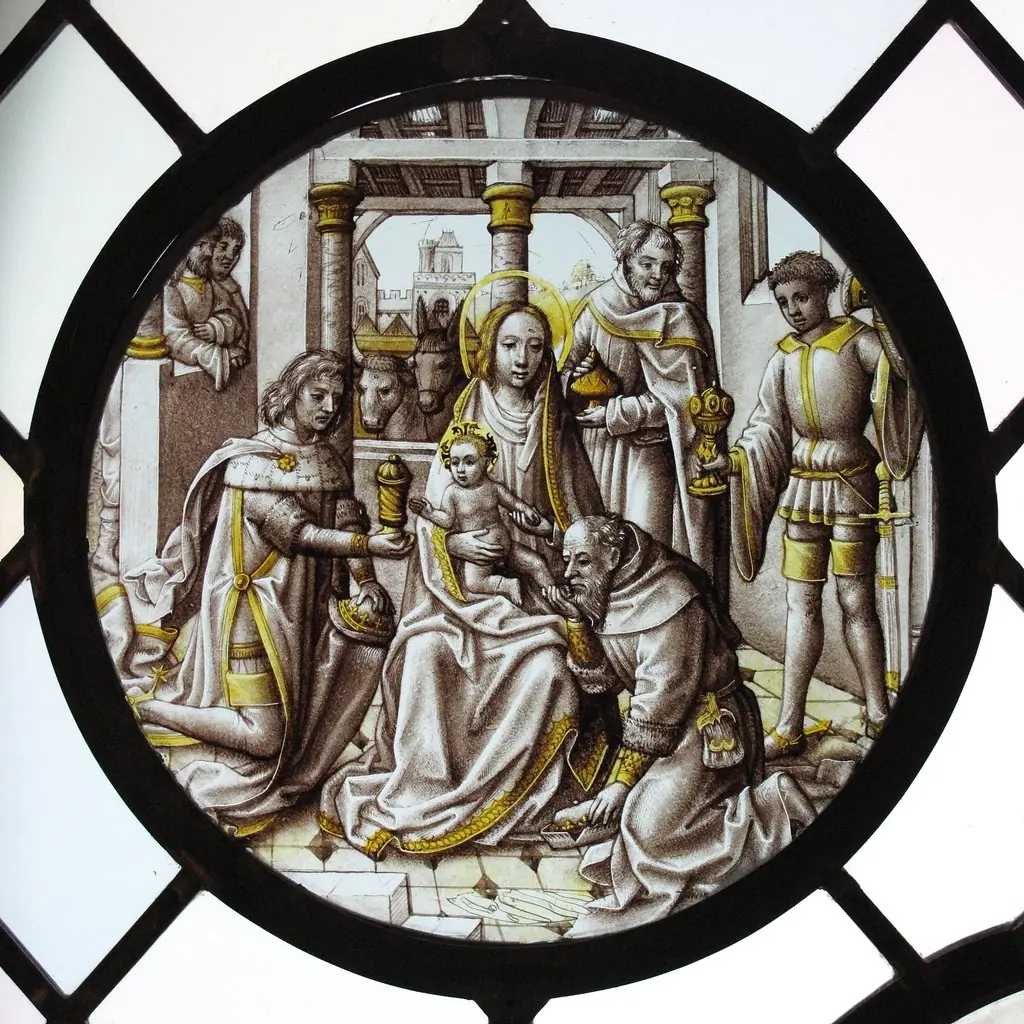 Roundel with the Adoration of the Magi
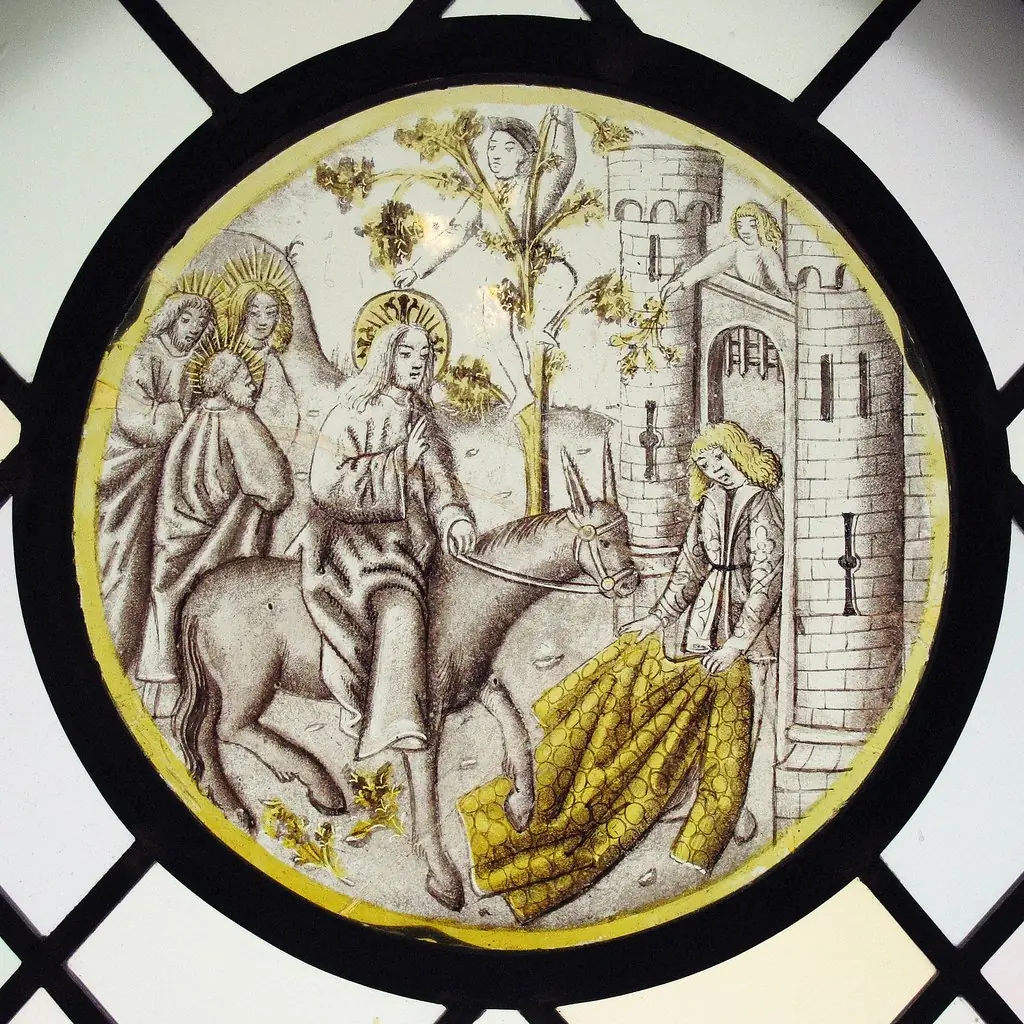 Roundel with Entry into Jerusalem
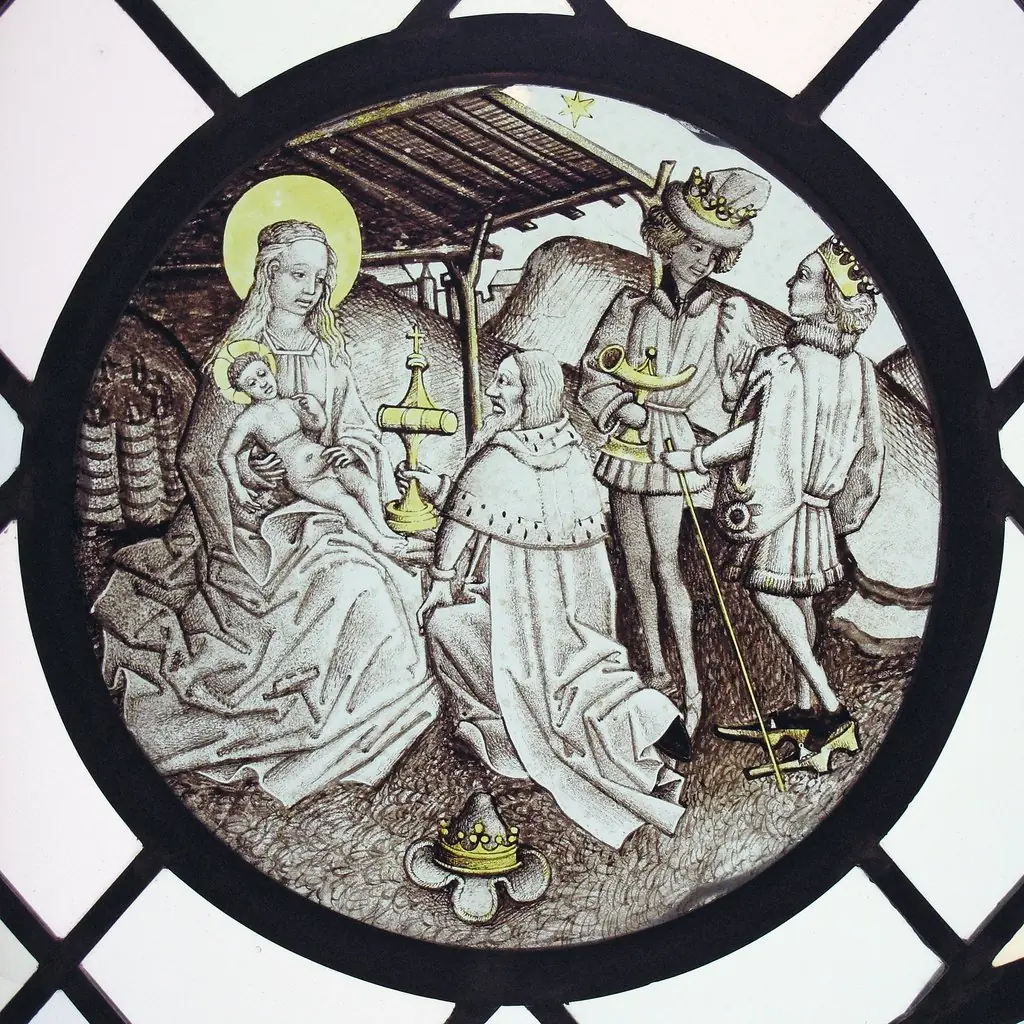 Roundel with Adoration of the Magi
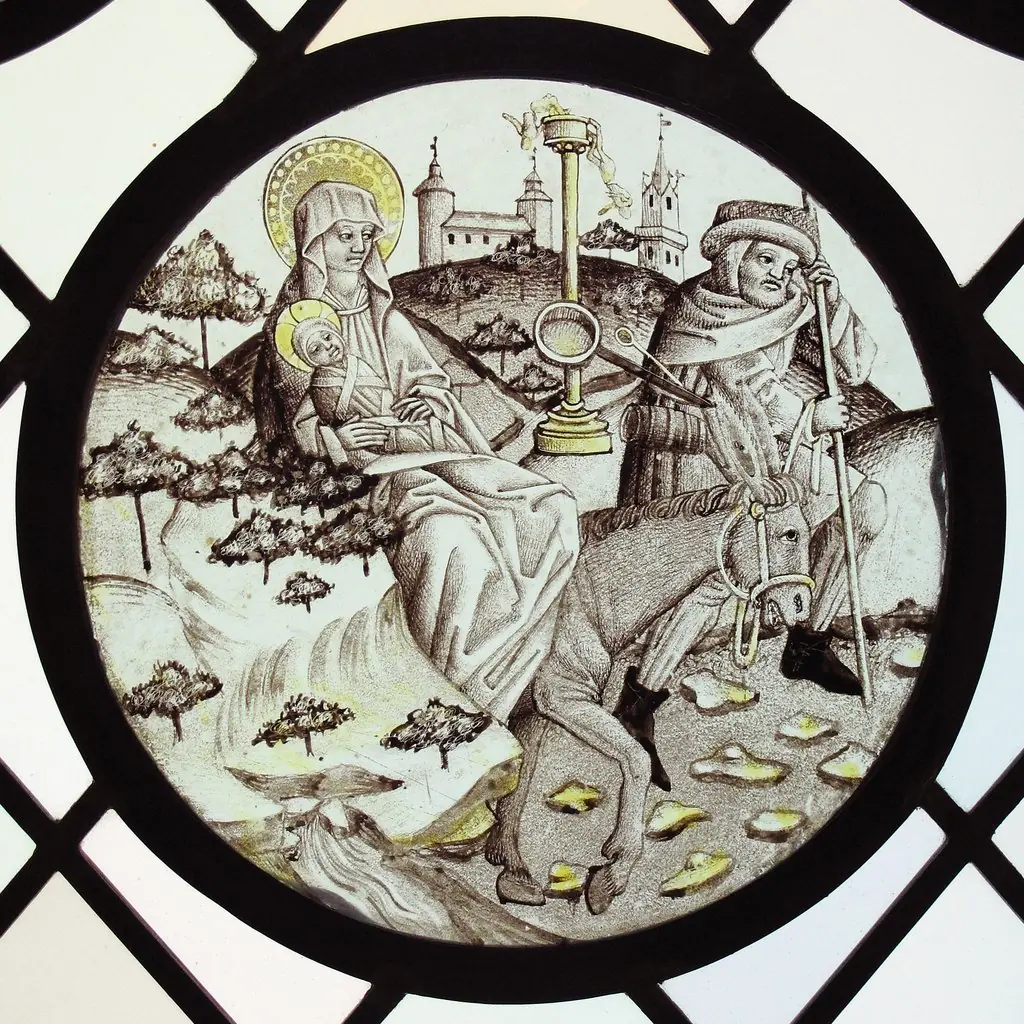 Roundel with the Flight into Egypt
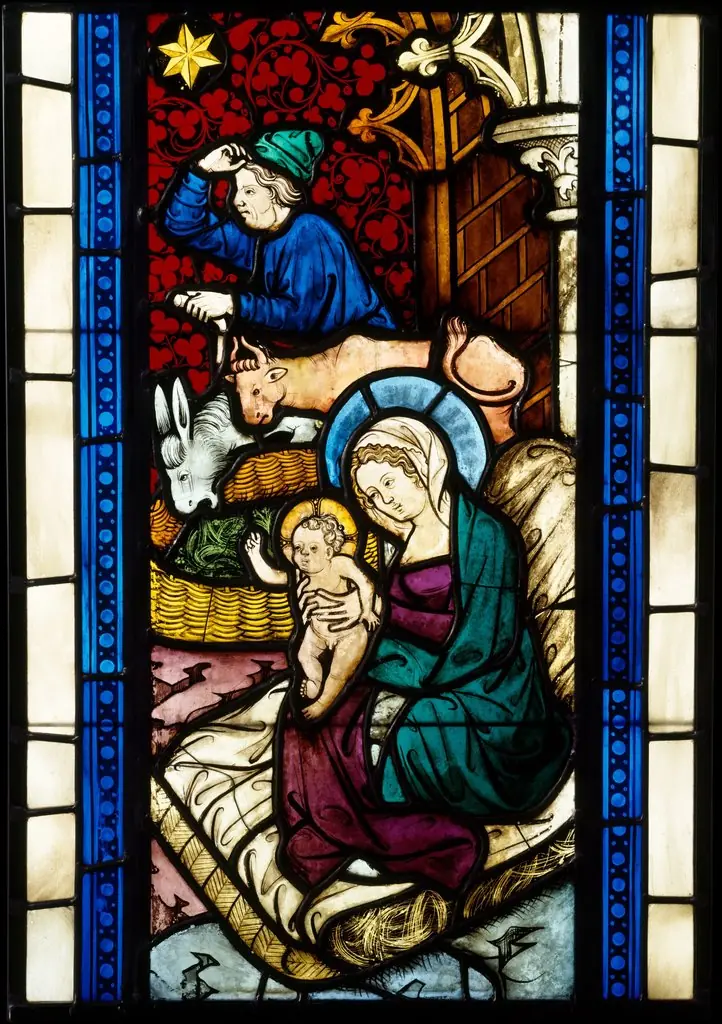 Adoration of the Magi from Seven Scenes from the Life of Christ
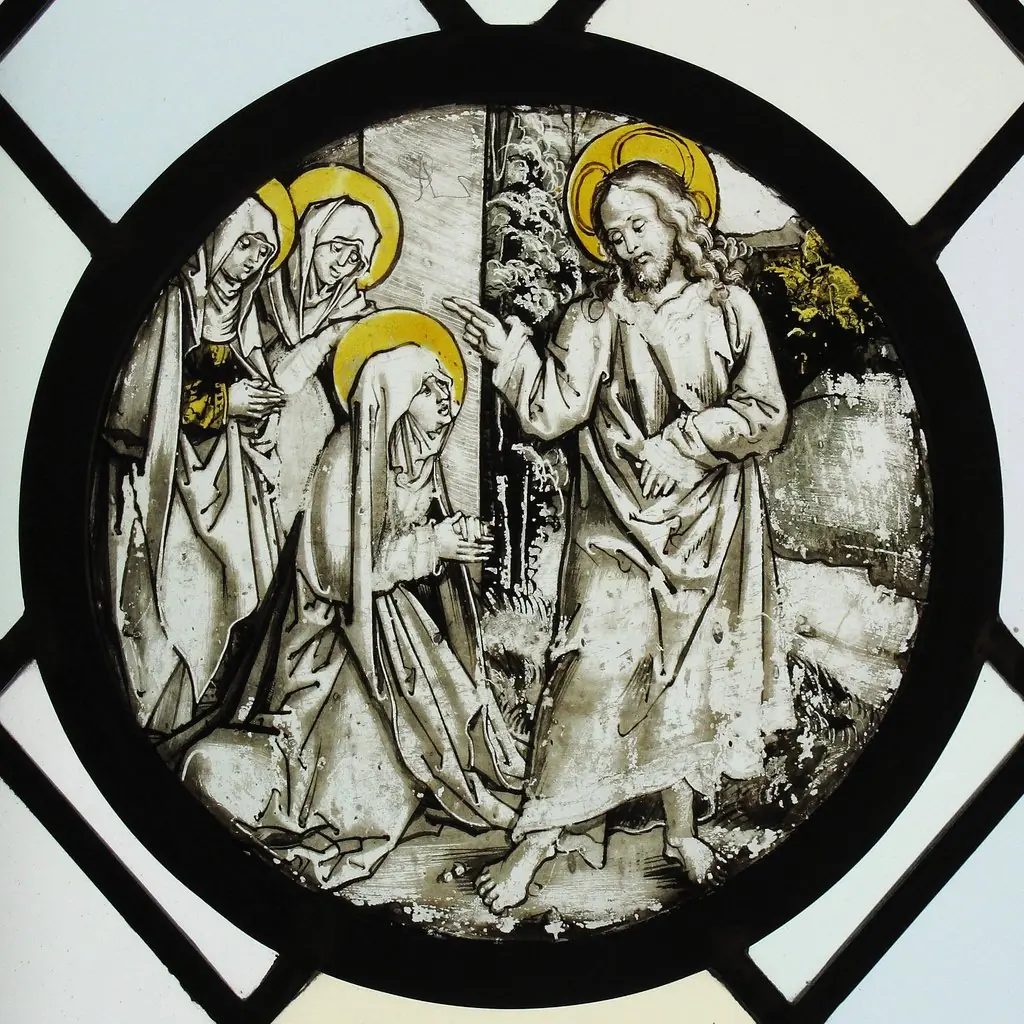 Roundel with Christ Taking Leave of His Mother
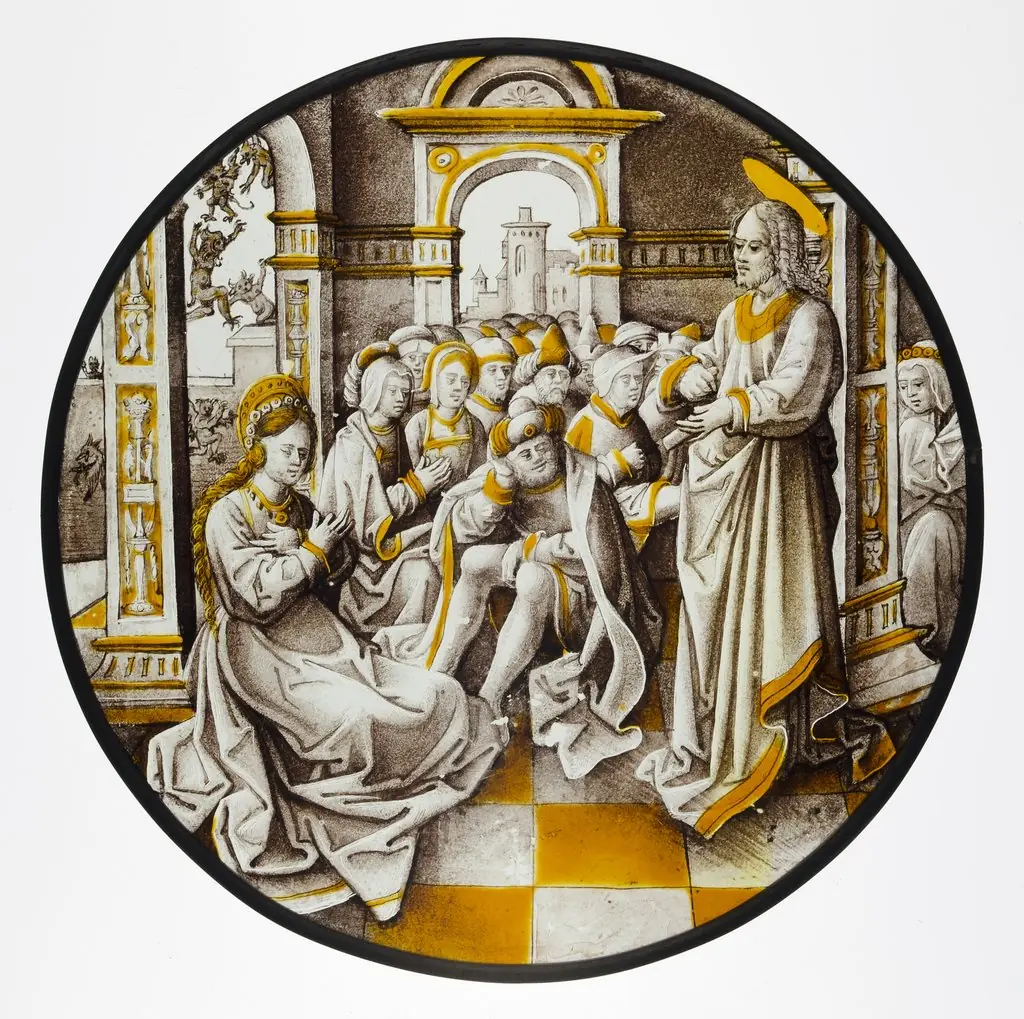 Roundel with Christ and the Adulterous Woman
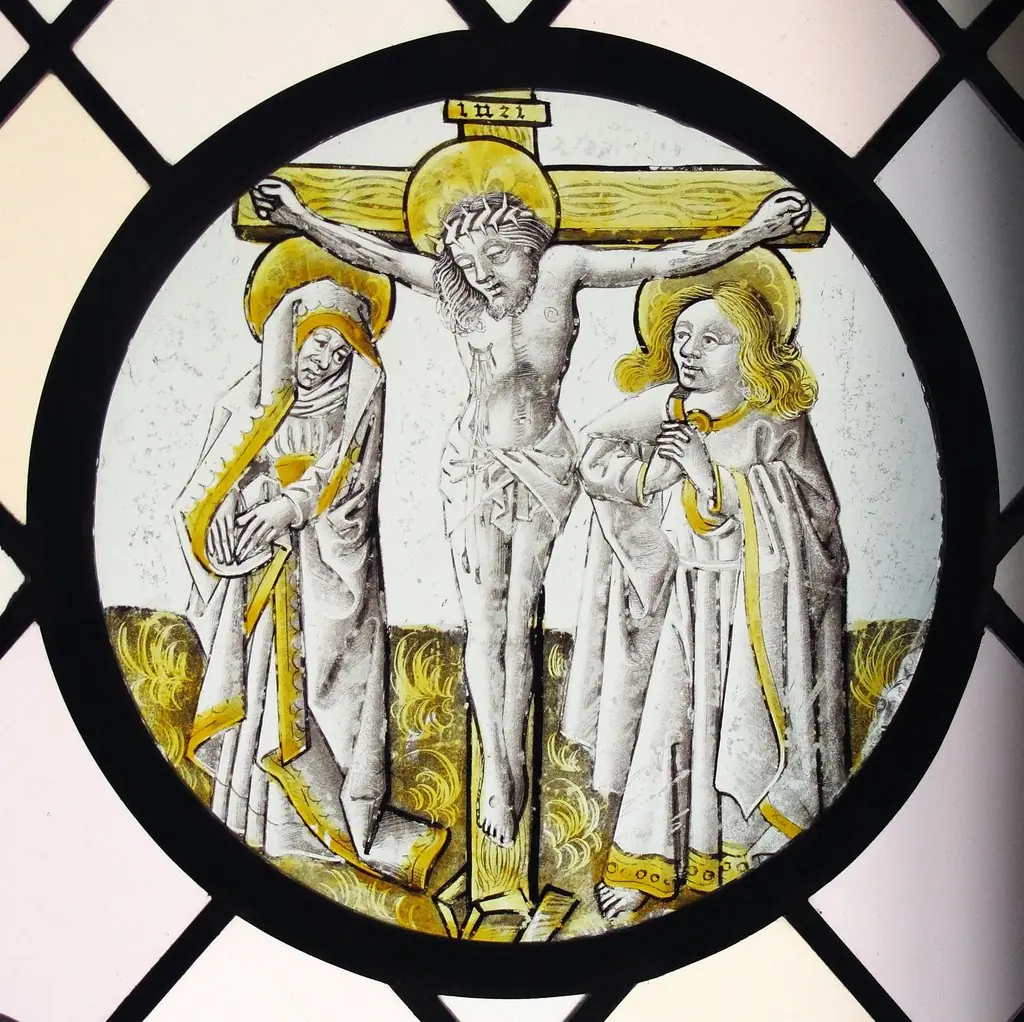 Roundel with Crucifixion, the Virgin and Saint John
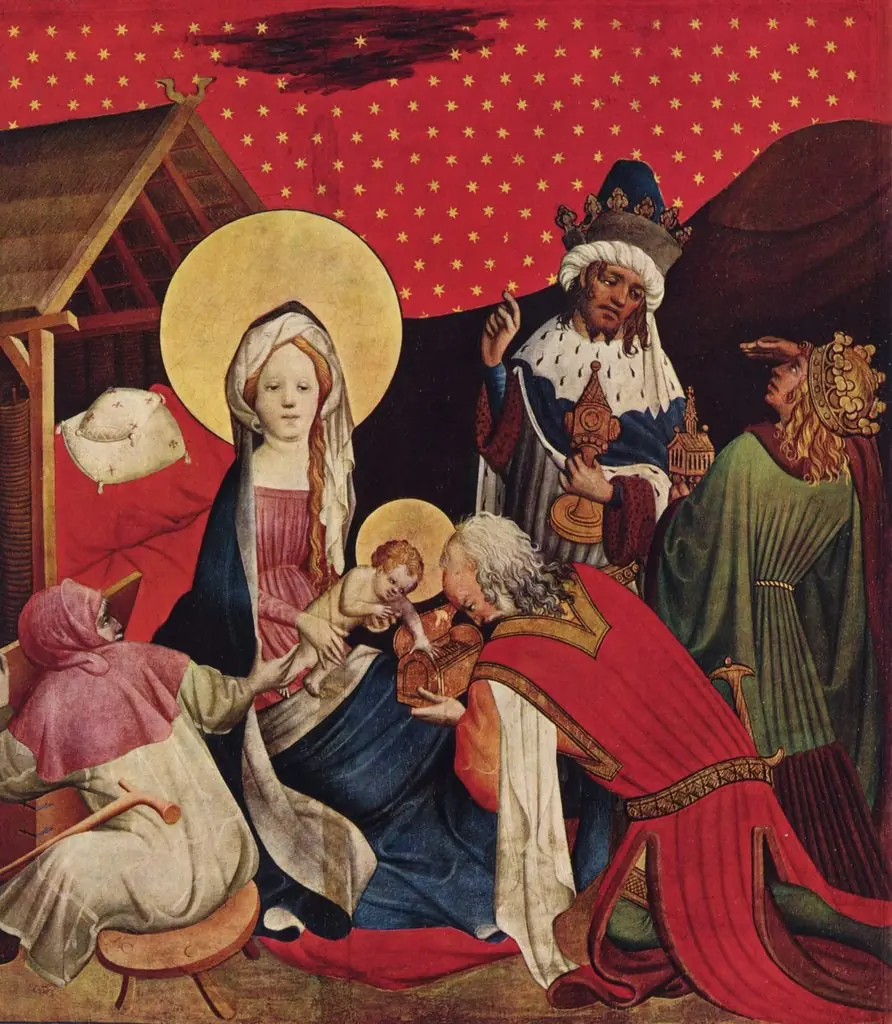 Thomasaltar, Fragment des rechten äußeren Flügels, Szene oben: Anbetung der Könige