Artwork
Salvator Mundi
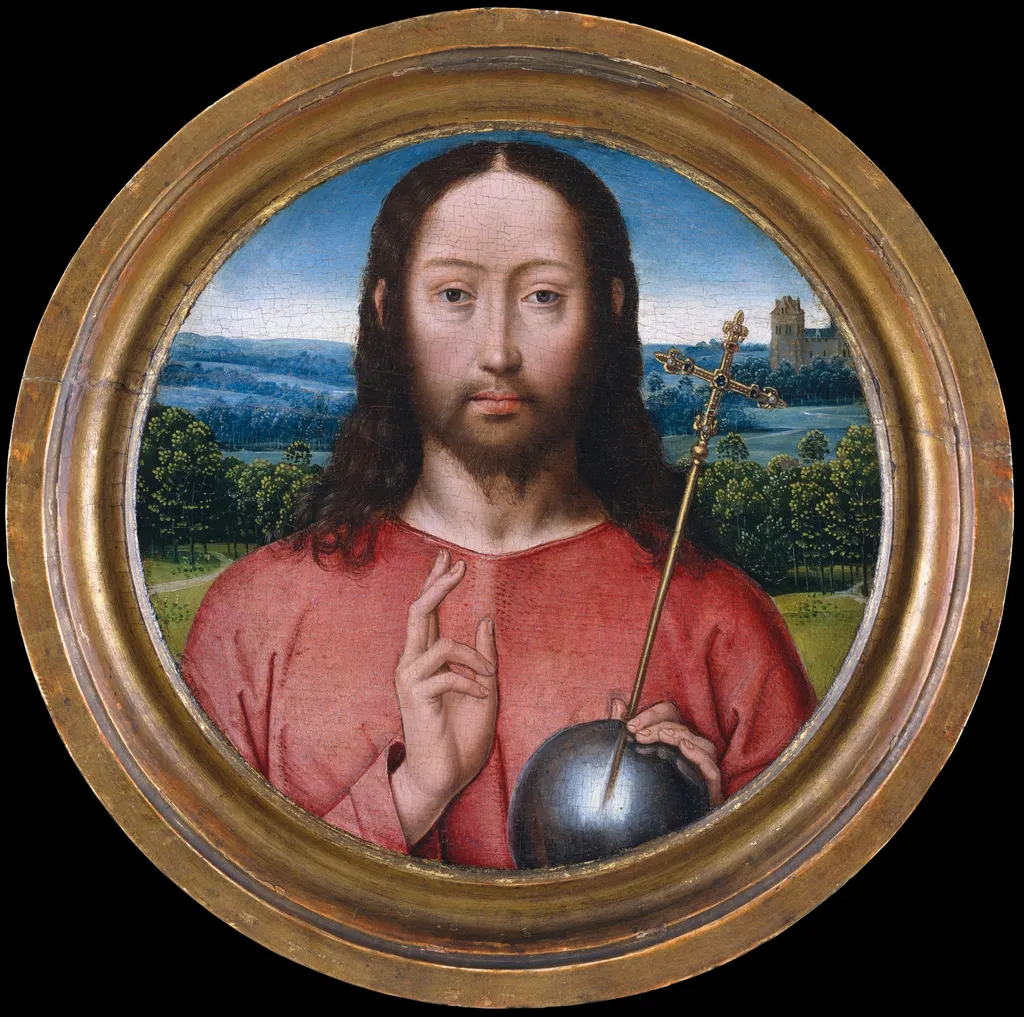
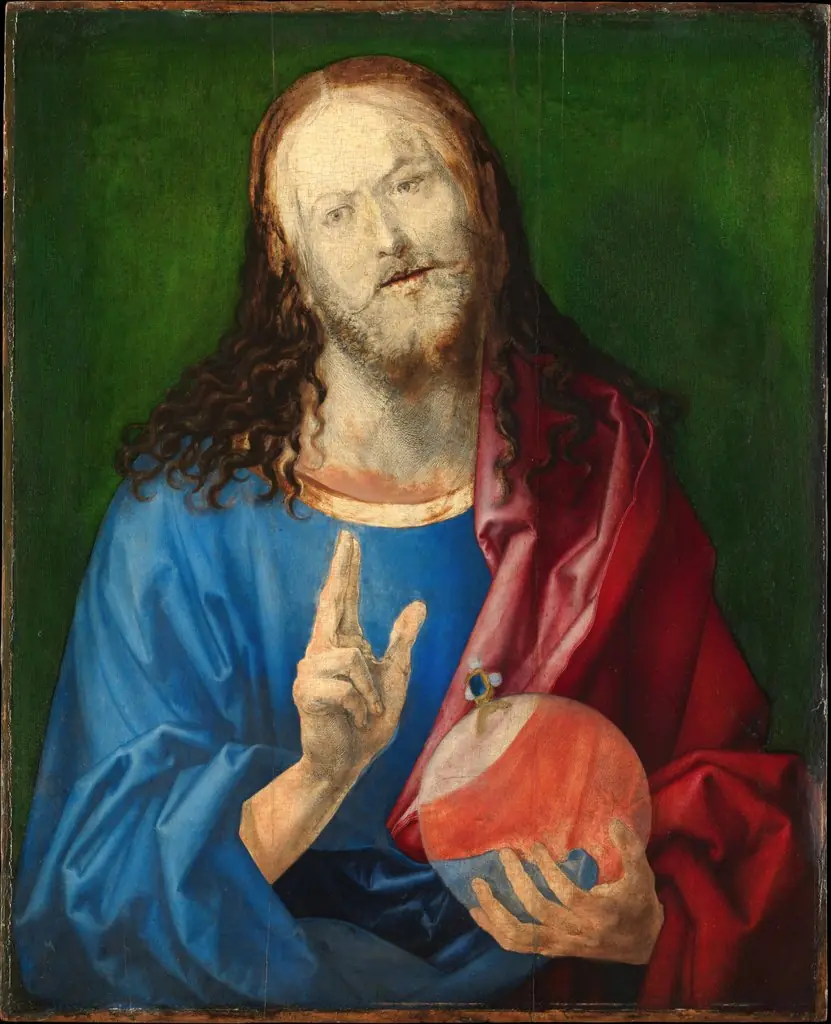
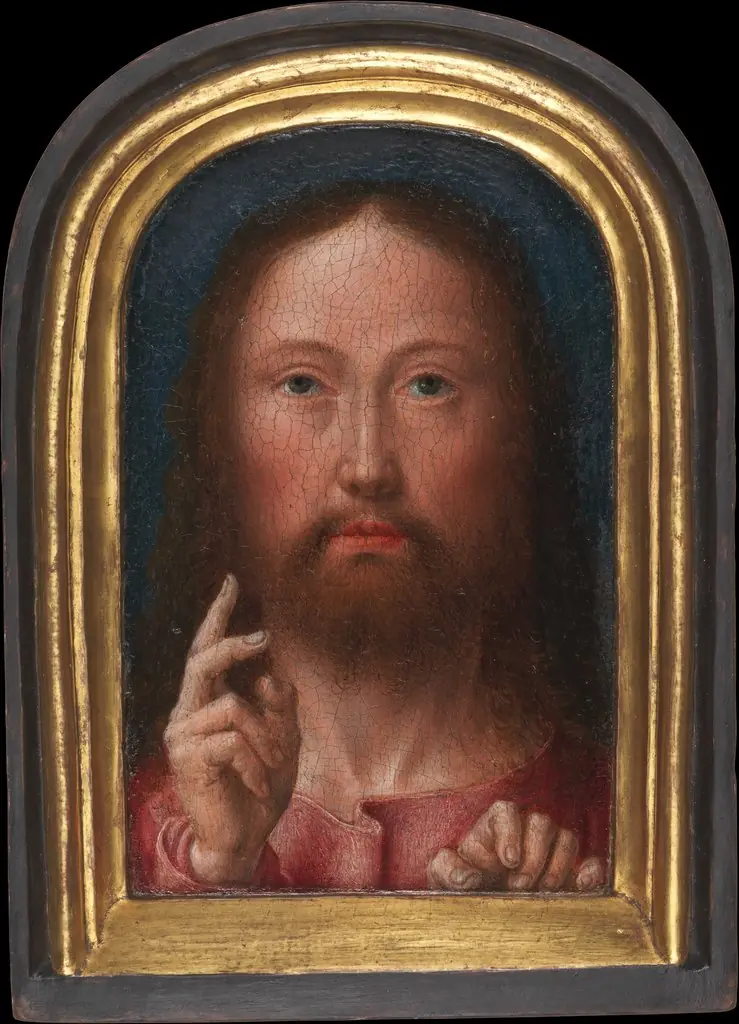
Salvator Mundi is an oil painting. It dates from 1475 and is held in the collection of the Metropolitan Museum of Art.
About this work
Overview
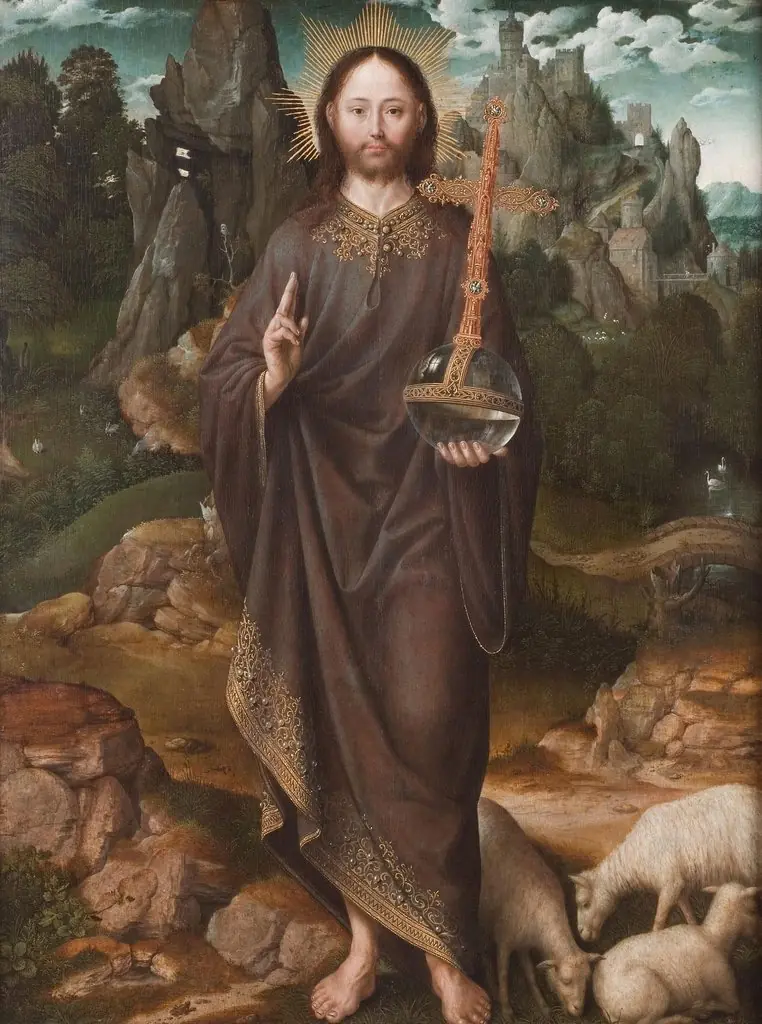
A serene landscape of rolling green hills beneath a blue sky forms the backdrop, establishing a sense of depth and tranquility behind the central figure.
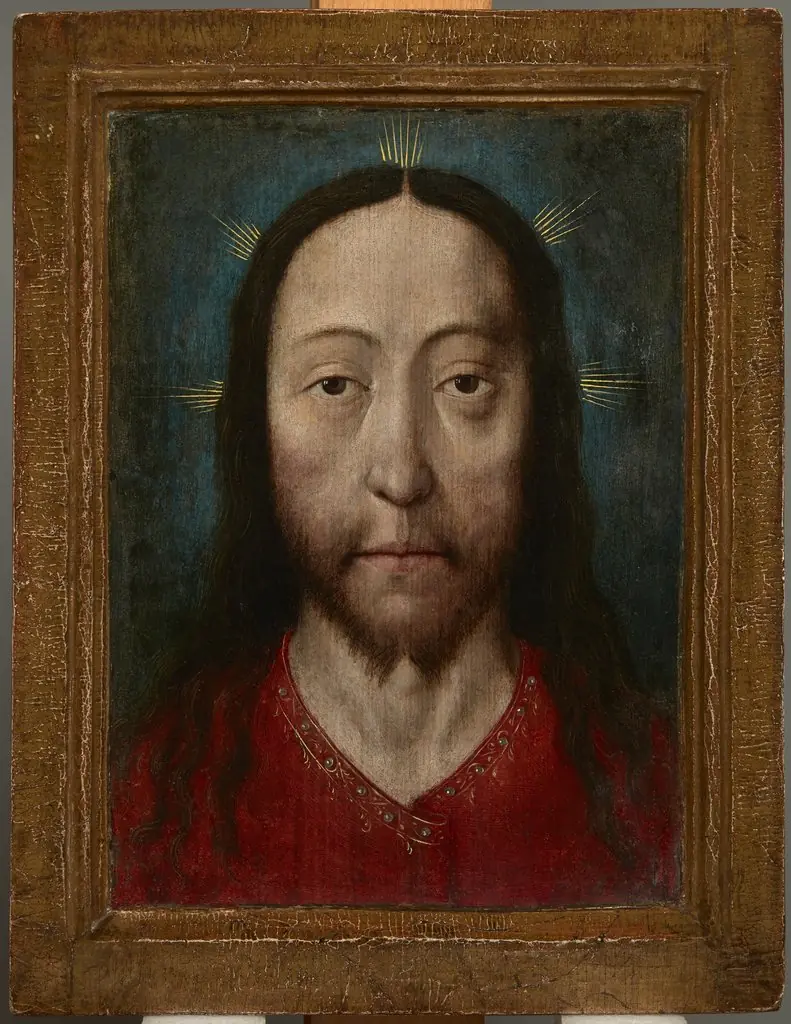
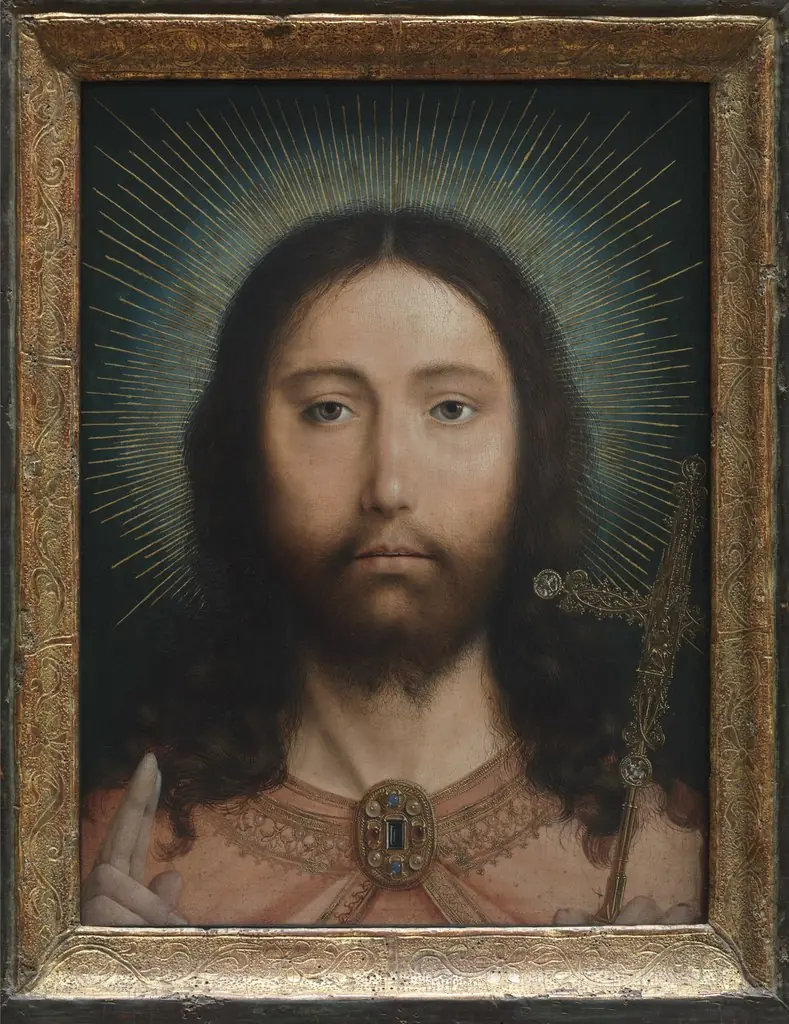
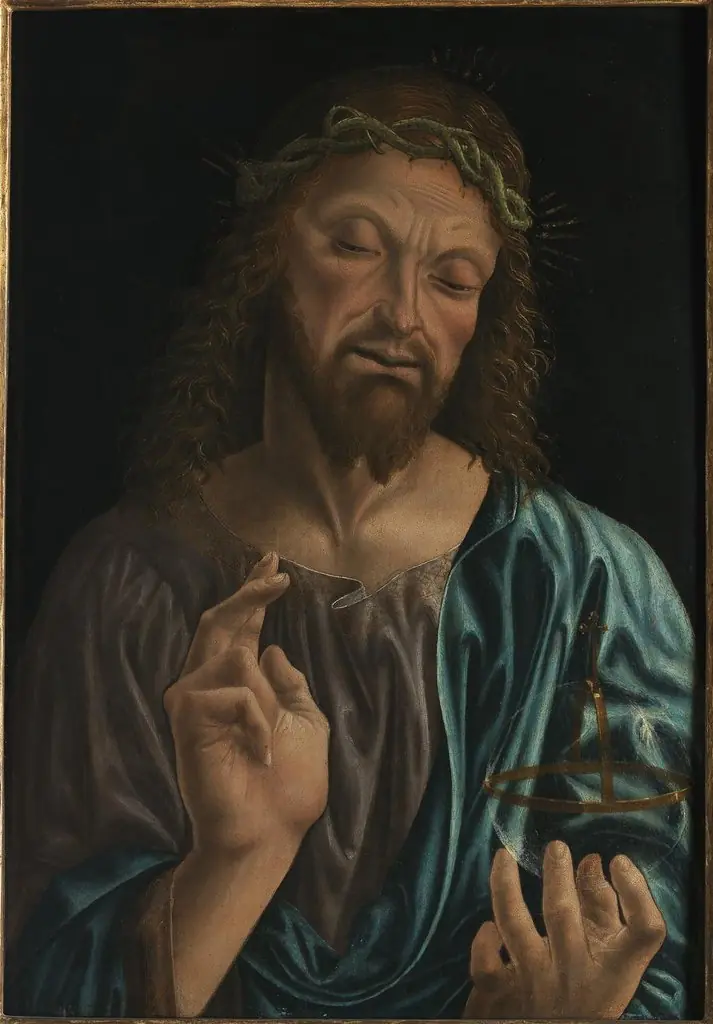
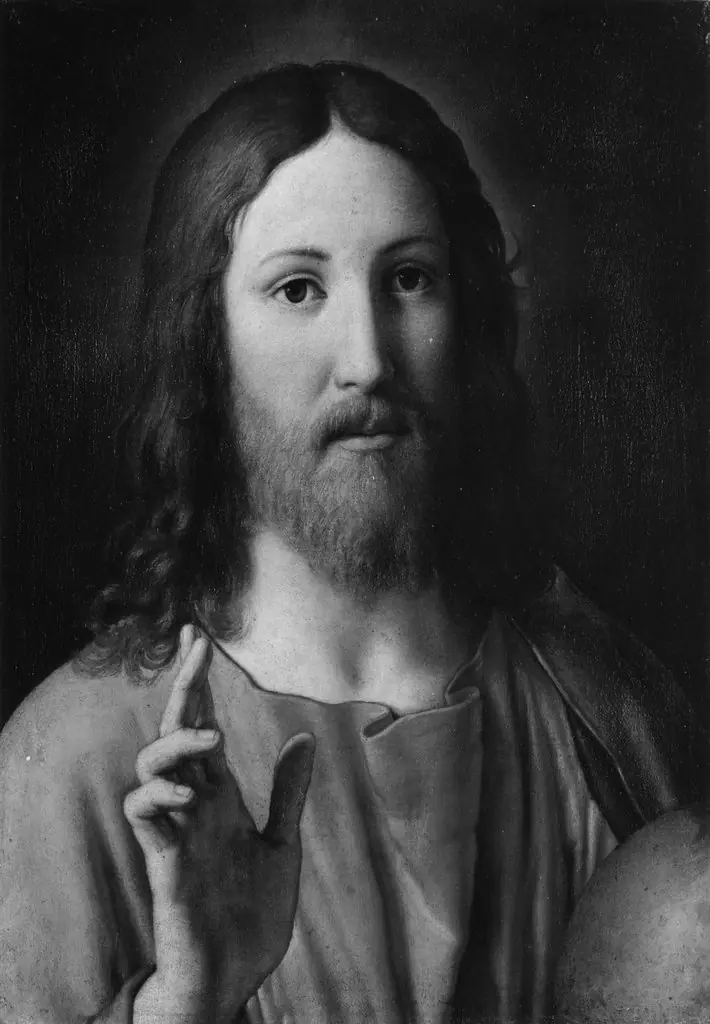
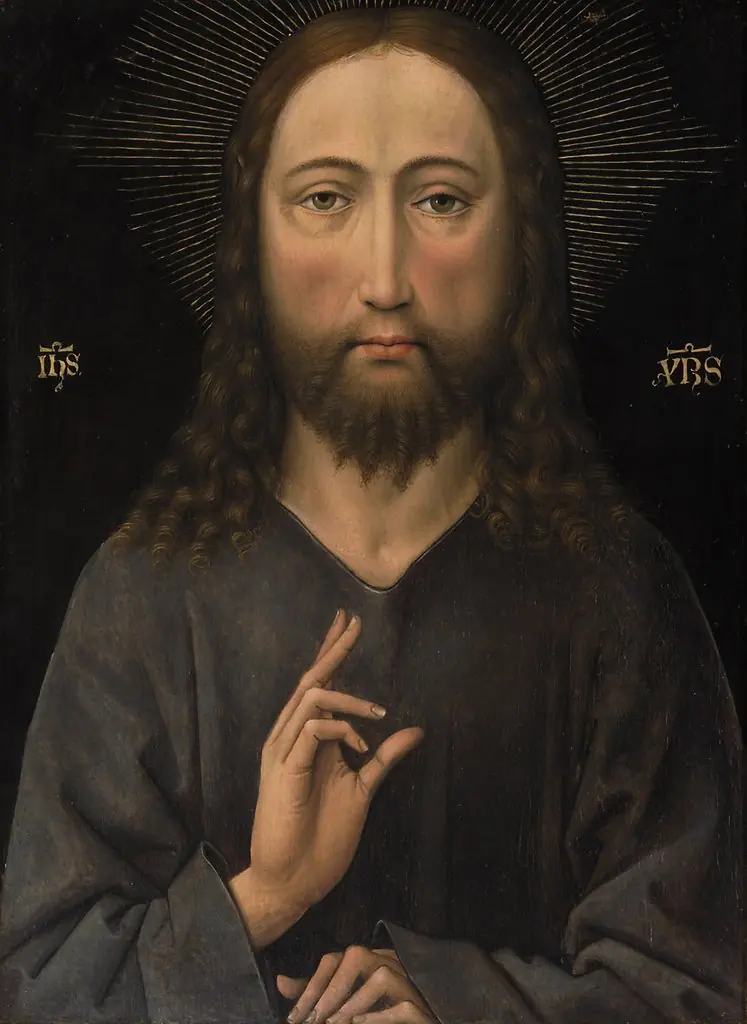
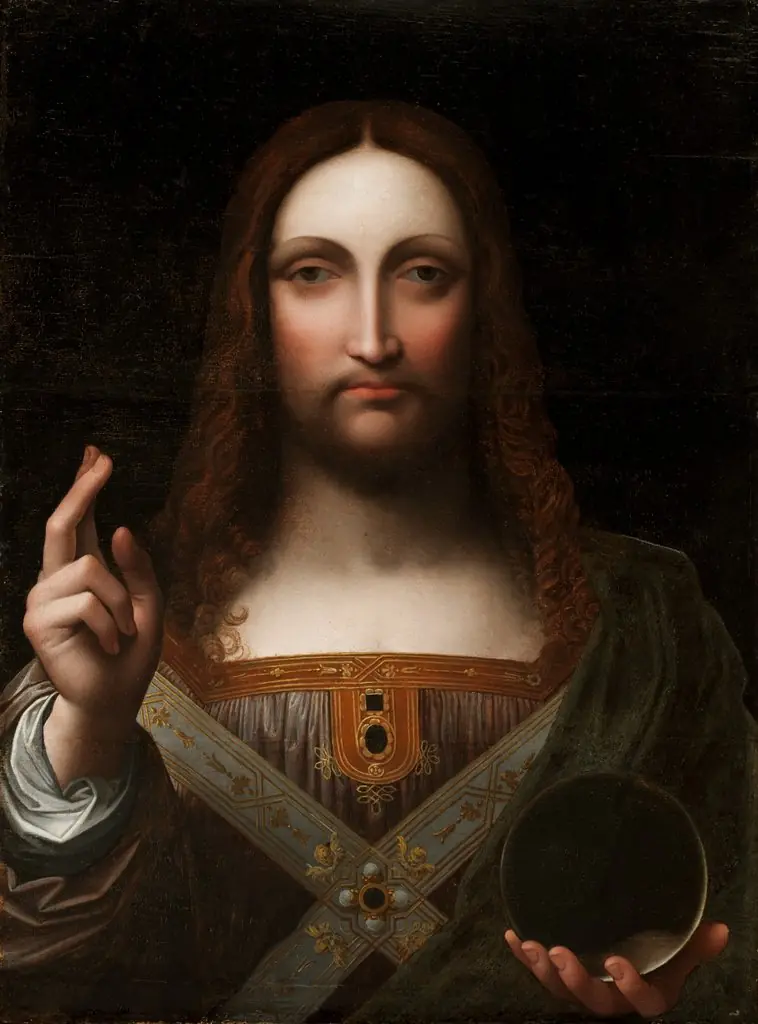
This oil painting, titled Salvator Mundi, depicts a solemn male figure presented frontally. He is shown with a beard and draped in a red robe, holding a transparent orb in one hand and a slender cross in the other. His other hand is gently raised in a gesture of benediction.
A serene landscape of rolling green hills beneath a blue sky forms the backdrop, establishing a sense of depth and tranquility behind the central figure.
Subject & Meaning
The central figure in Salvator Mundi embodies Christ as the "Savior of the World," a concept directly referenced by the painting's title. The crystal orb he cradles symbolizes his dominion over the terrestrial sphere, reinforcing his role as a universal redeemer. The cross, though subtle, further identifies him with Christian iconography, presenting a traditional representation of divine authority and grace.
Technique & Style
The artist employed oil paint to achieve a refined visual quality in Salvator Mundi. The work is characterized by its smooth transitions of color and meticulous shading, which contribute to the figure's three-dimensional presence. This careful manipulation of light and shadow, often referred to as chiaroscuro, enhances the depth and volume of the subject, making the figure emerge distinctly from the background.
Artist & collection