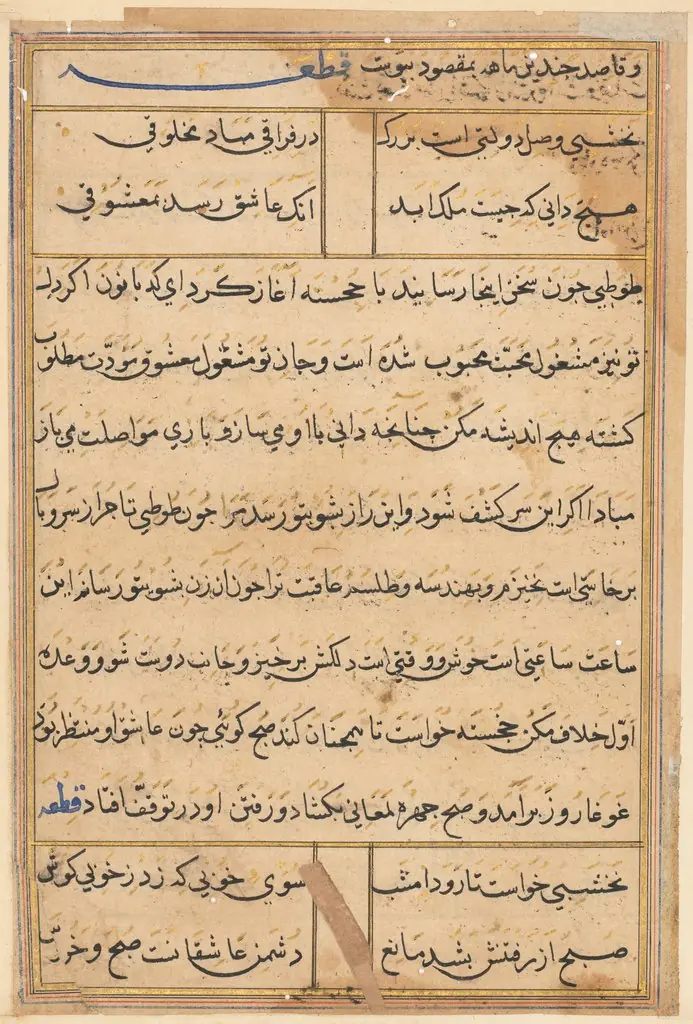
Artwork
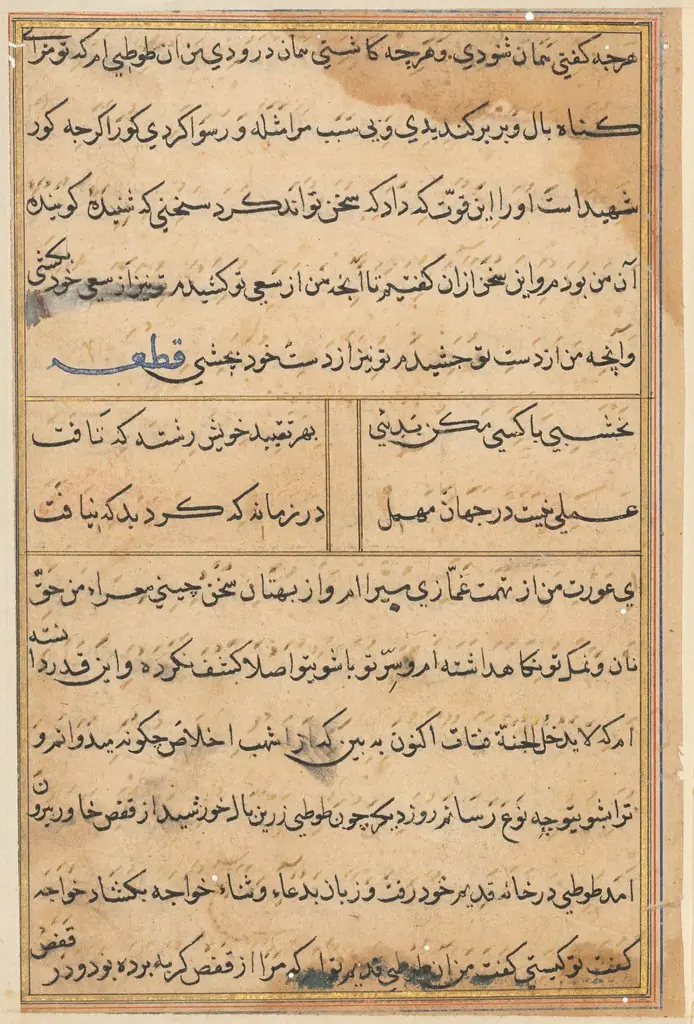
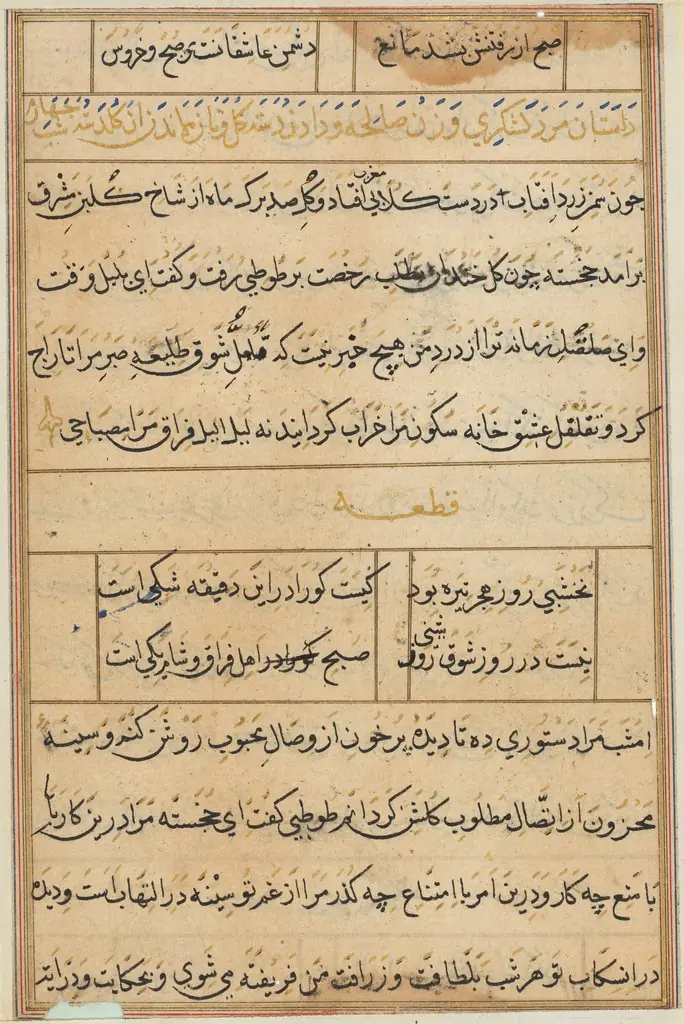
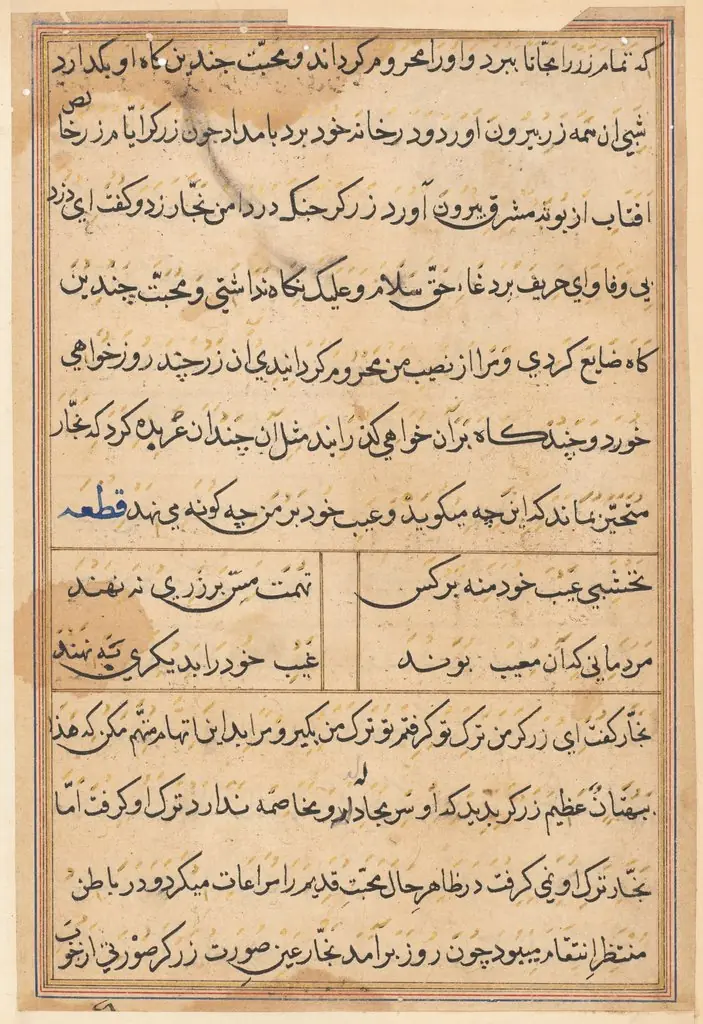
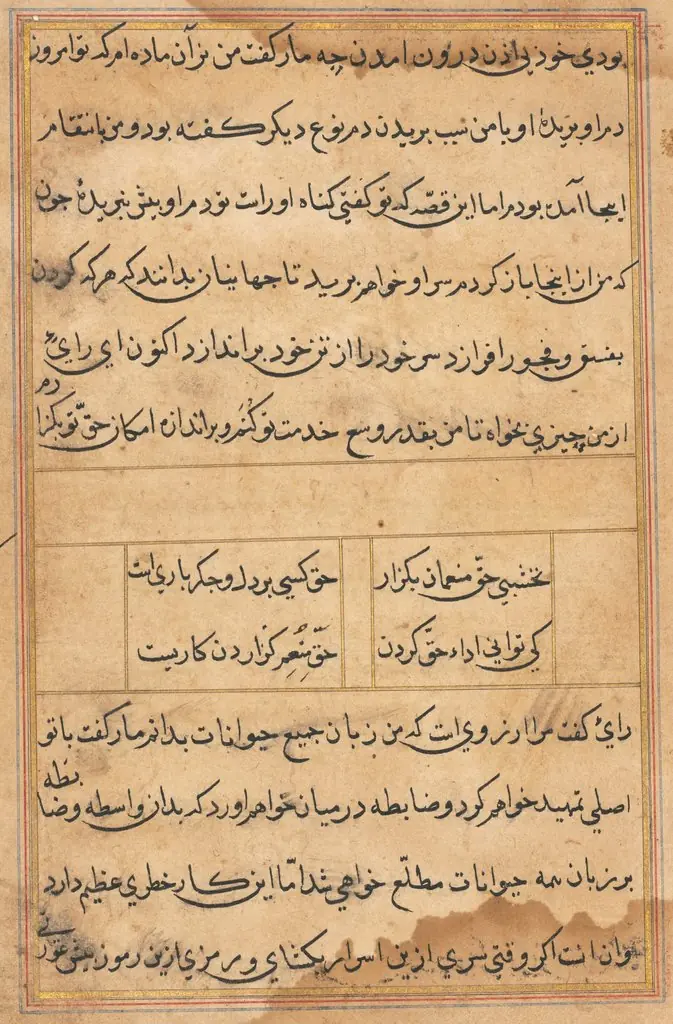
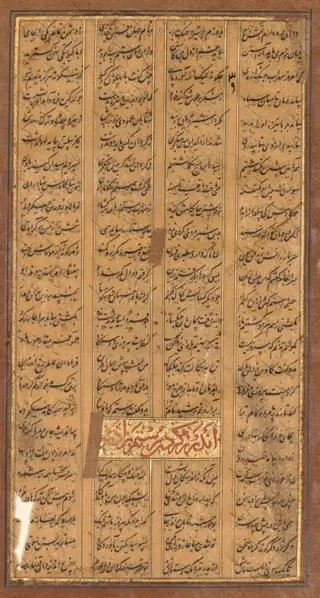
Text of Rustam and Suhrab, from the Shah-nama of Firdausi (Persian, c. 934–1020) (recto)
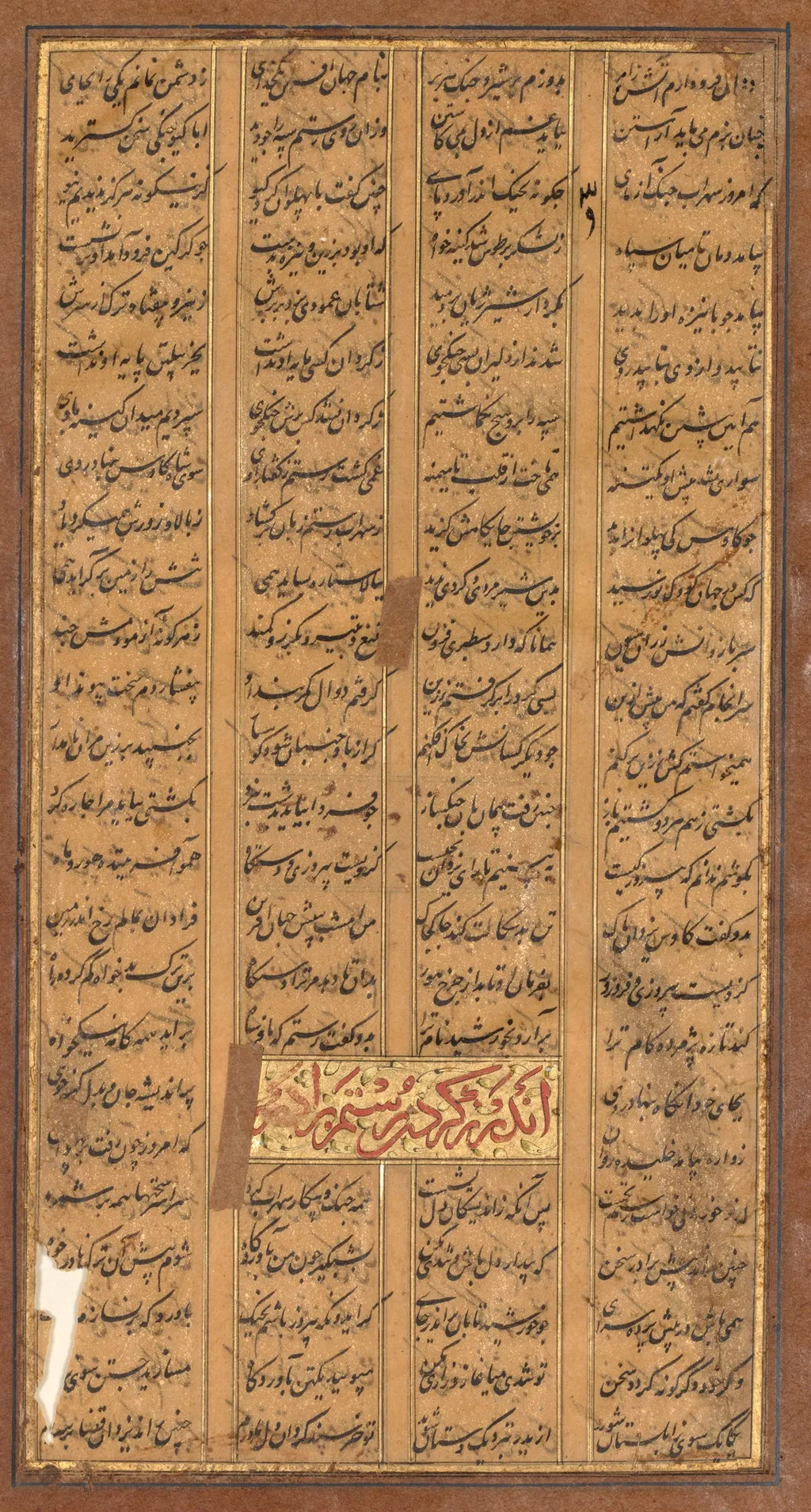
Text of Rustam and Suhrab, from the Shah-nama of Firdausi (Persian, c. 934–1020) (recto) is an unspecified painting. It dates from 1610 and is held in the collection of the Cleveland Museum of Art. This illuminated page presents a passage from the Shah‑namah, the epic poem by the Persian poet Firdausi (c.
About this work
Subject & Meaning
The recto carries the text of the tragic episode of Rustam and Suhrab, in which the hero Rustam unknowingly fights and mortally wounds his own long-lost son.
This folio belongs to a Shah-nama (Book of Kings) of Firdausi, the foundational Persian epic completed around 1010. The recto carries the text of the tragic episode of Rustam and Suhrab, in which the hero Rustam unknowingly fights and mortally wounds his own long-lost son. The narrative is among the most celebrated in Persian literature for its themes of fate, identity, and tragic misrecognition.
As a text page, the folio transmits Firdausi's verse rather than a pictorial scene, situating the work within the manuscript tradition of the Shah-nama.
History & Provenance
The folio dates to 1610 and is classified as a work by an unknown artist. It is held in the collection of the Cleveland Museum of Art in Cleveland, where it is catalogued under accession number 2013.283.2.a. The sources do not provide further information about its commission, earlier ownership, or chain of custody prior to its acquisition by the museum, and they do not list any specific exhibition history for the object.
Legacy
The folio bearing the text of Rustam and Suhrab from the Shah-nama of Firdausi, dated 1610, has been part of the Cleveland Museum of Art's collection since its acquisition, ensuring its continued visibility and scholarly attention. Its presence in a major museum's permanent holdings supports ongoing study of Safavid-era Persian manuscript production and the enduring transmission of Firdausi's epic, maintaining the work's relevance within art-historical scholarship on the Shah-nama.
Overview
This illuminated page presents a passage from the Shah‑namah, the epic poem by the Persian poet Firdausi (c. 934–1020). Executed as a manuscript leaf, the recto side is densely filled with black ink script arranged in tight columns, punctuated by a small red rectangle near the bottom that contains larger, multicolored lettering in gold and pink. The page was commissioned for a patron named Prince Salim.
Technique & Style
The calligraphy is rendered in a refined, precise hand, using dark, clean ink that fills each line uniformly. The decorative red rectangle employs a contrasting script with larger characters, highlighted by gold and pink pigments, indicating a hierarchical emphasis or marginal note. The overall aesthetic reflects the high‑quality manuscript production of the medieval Persian court, where meticulous pen work and selective color accents were prized.
Context
During the 10th and 11th centuries, Persian courts commissioned lavishly illustrated copies of the Shah‑namah to affirm cultural identity and royal legitimacy. The text’s emphasis on heroic lineage resonated with princely patrons, who saw parallels between their own dynastic aspirations and the epic’s protagonists. Such manuscripts served both literary and diplomatic functions within the Islamic world.
Artist & collection

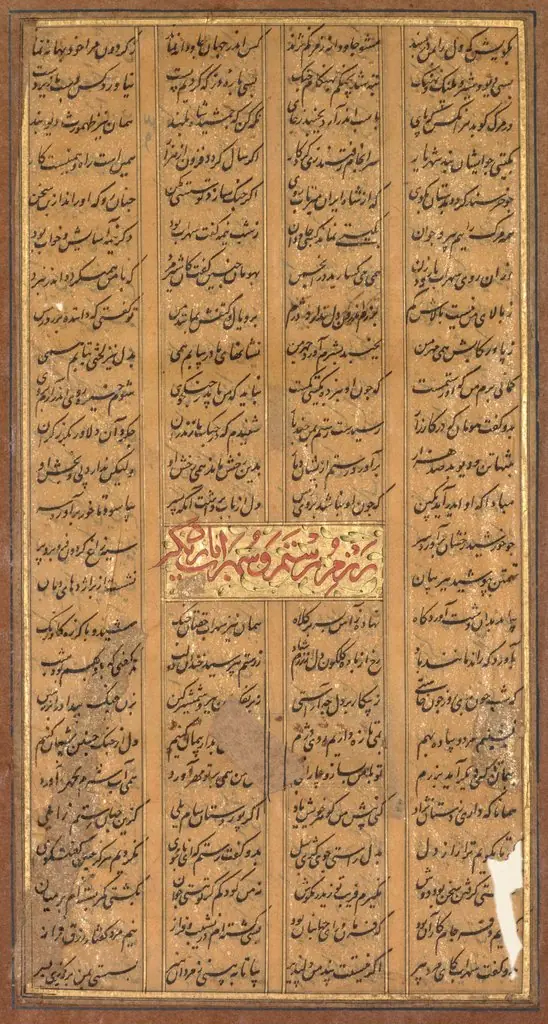
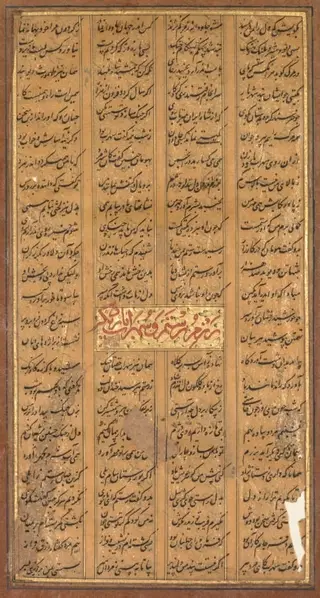
- Text of Rustam and Suhrab, from the Shah-nama of Firdausi (Persian, c. 934–1020) (verso)
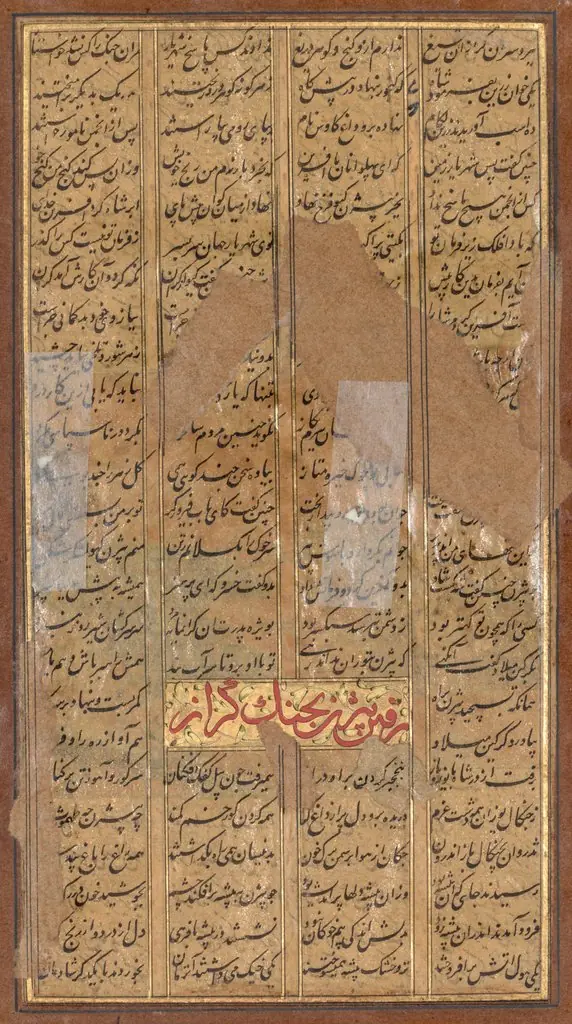 Bijan killing the wild boars of Irman, from a Shah-nama (Book of Kings) of Firdausi (Persian, about 934–1020), (recto)
 Text of Rustam and Suhrab, from the Shah-nama of Firdausi (Persian, c. 934–1020) (recto)
 Text of Rustam and Suhrab, from the Shah-nama of Firdausi (Persian, c. 934–1020) (verso)
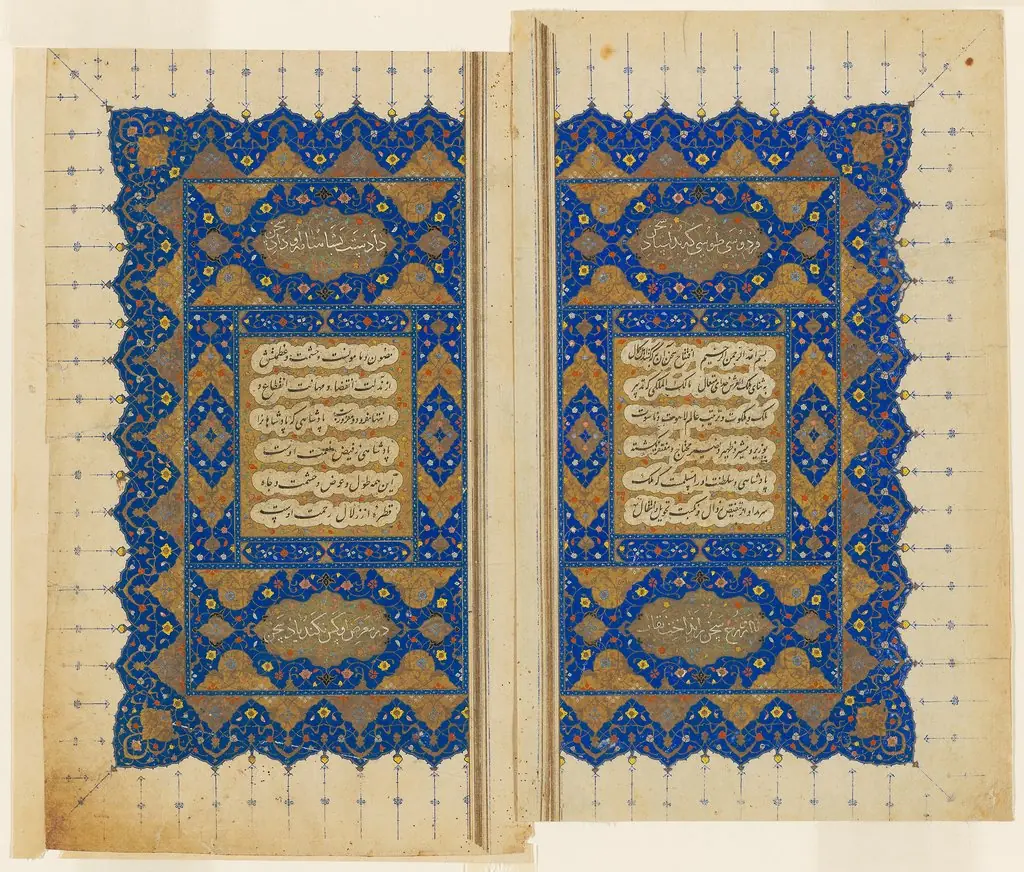 Double Title Page of a copy of the Shahnama of Firdausi