Movement
Persian Miniature
Persian Miniature is an art movement. The gallery holds 47 works in this movement, including works by Reza `Abbasi, 'Aliquli Jabbadar and Sadiqi Beg. Browse Persian Miniature paintings, portraits, pictures and artworks from the world's public-domain museum collections.
Persian miniature painting is the tradition of small, intricately detailed images that illustrated manuscripts and albums across the Iranian world from the thirteenth century onward. Its earliest great flowering came under the Mongol Ilkhanate (1256–1335), whose Tabriz scriptorium absorbed Chinese motifs—dragons, swirling clouds, jagged rock formations—brought west along the Mongol trade routes. The illustrated copies of Rashid al-Din's Jami al-tavarikh ("Compendium of Chronicles"), produced around 1314, count among the most important surviving examples of Ilkhanid art and the largest body of early Persian miniatures; the catalogue's Chingiz-nama page depicting the siege of Arbela belongs to this world-history tradition.
The classic style crystallised in the fifteenth century under the Timurids, when royal ateliers at Herat and Samarkand perfected the art of the illustrated book. Painters worked in opaque watercolour and gold on paper, building luminous, jewel-toned scenes governed by a high viewpoint, flattened space, and an almost obsessive ornamental precision rather than European-style perspective. The supreme master of this period was Kamal al-Din Behzad (c. 1455–1535), who headed the Herat academy from 1486 under Sultan Husayn Bayqara and brought new naturalism of gesture and crowd composition to the form.
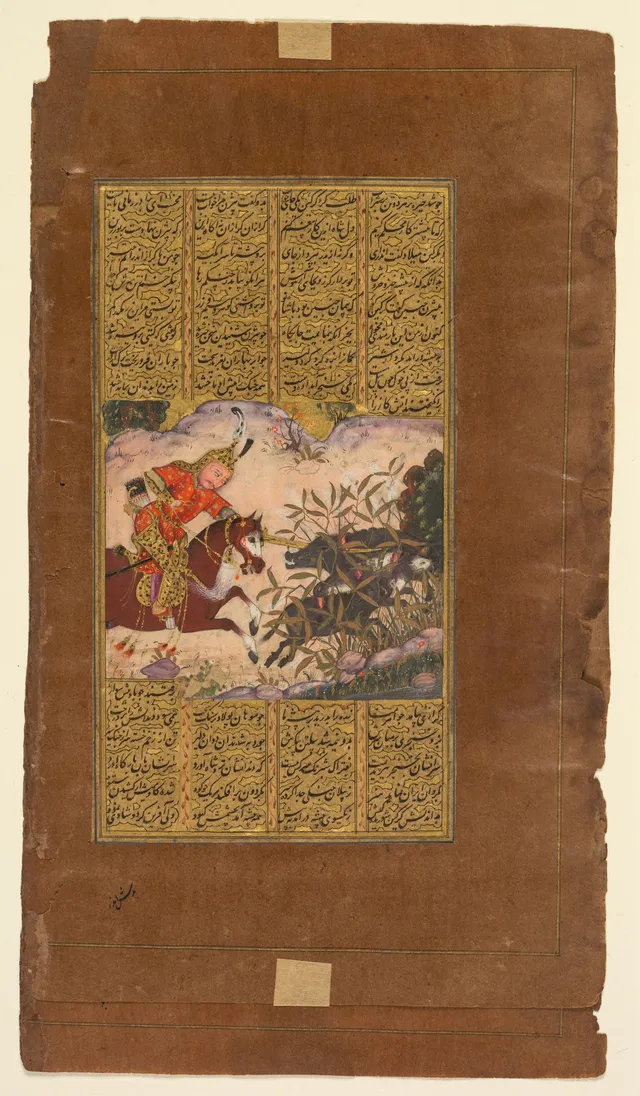
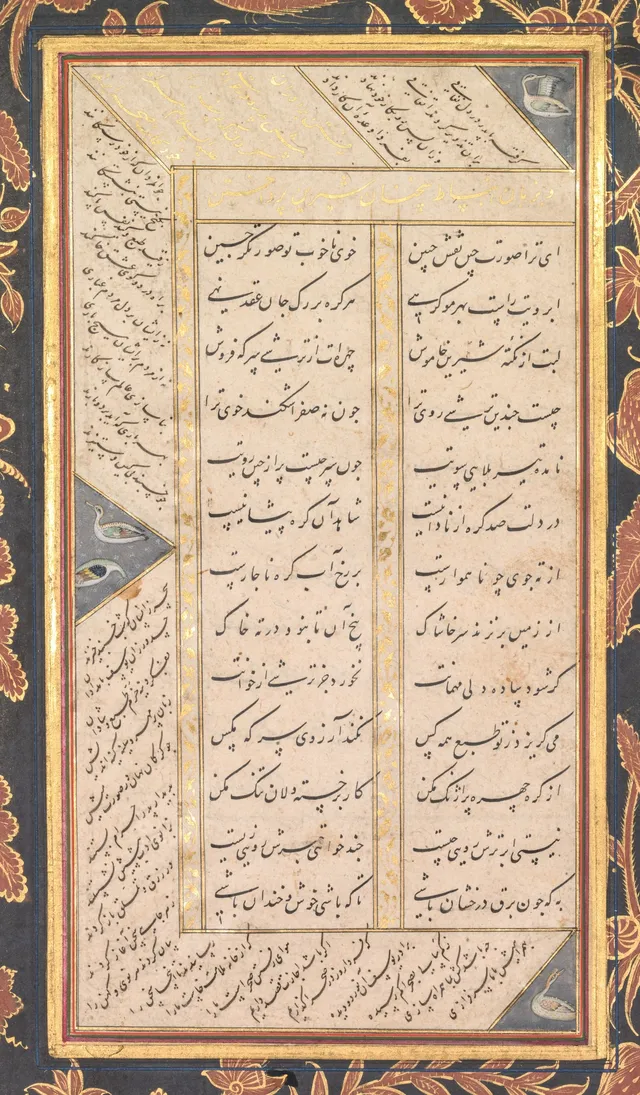
Under the Safavids (1501–1736) the tradition reached its zenith at the Tabriz court. The Shahnama of Shah Tahmasp, with 258 paintings across 759 folios, is the most lavishly illustrated copy of Firdausi's epic ever made; its director Sultan Muhammad fused the Herat, Shiraz, and Tabriz manners, as in his celebrated "Court of Gayumars." The catalogue's Shah-nama leaves—Rustam taking aim at Ashkabus, Bijan slaying the boars of Irman—descend directly from this epic-illustration culture, as do the folios from Jami's Panj Ganj ("Five Treasures").
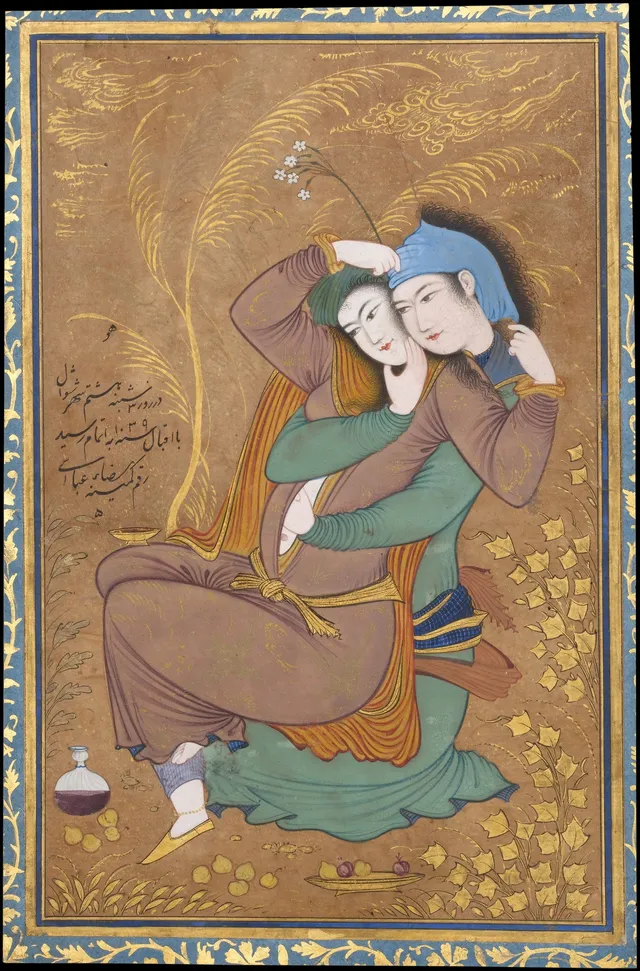
As Tahmasp's enthusiasm waned and the atelier dispersed around mid-century, the art shifted toward single-figure album drawings. Reza Abbasi (c. 1565–1635), working for Shah Abbas I in Isfahan, became the last great master, famed for sensuous studies of languid youths and lovers such as the collection's "The Lovers." Persian masters who migrated to India seeded the closely related Mughal painting tradition, ensuring the style's reach far beyond Iran.
Key artists
Works
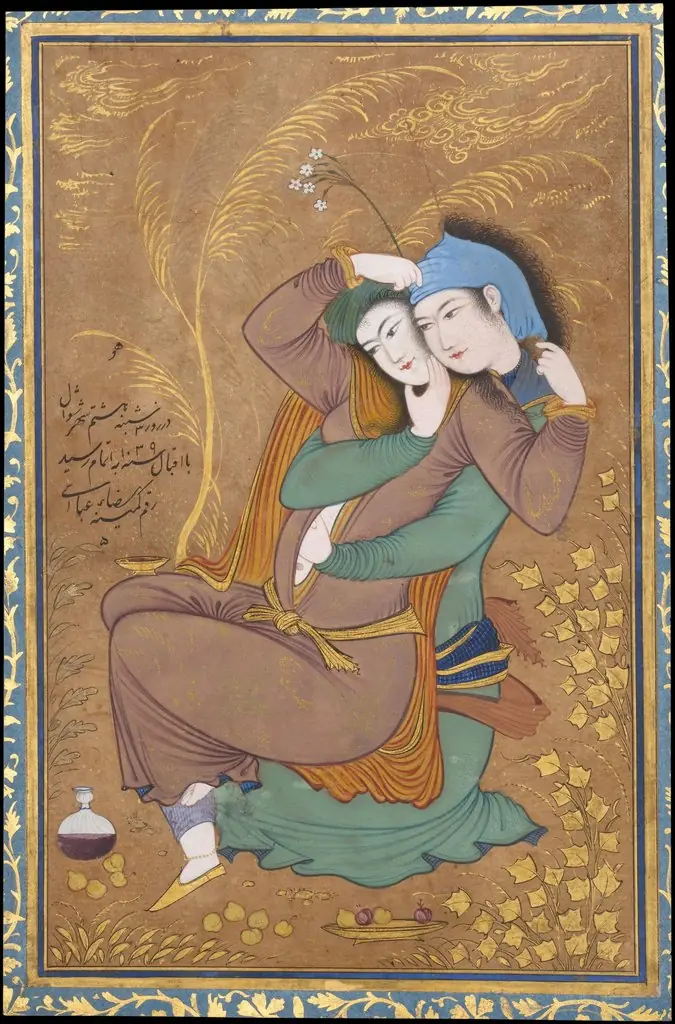 The Lovers
 Rustam Takes Aim at Ashkabus, from a Shah-nama (Book of Kings)
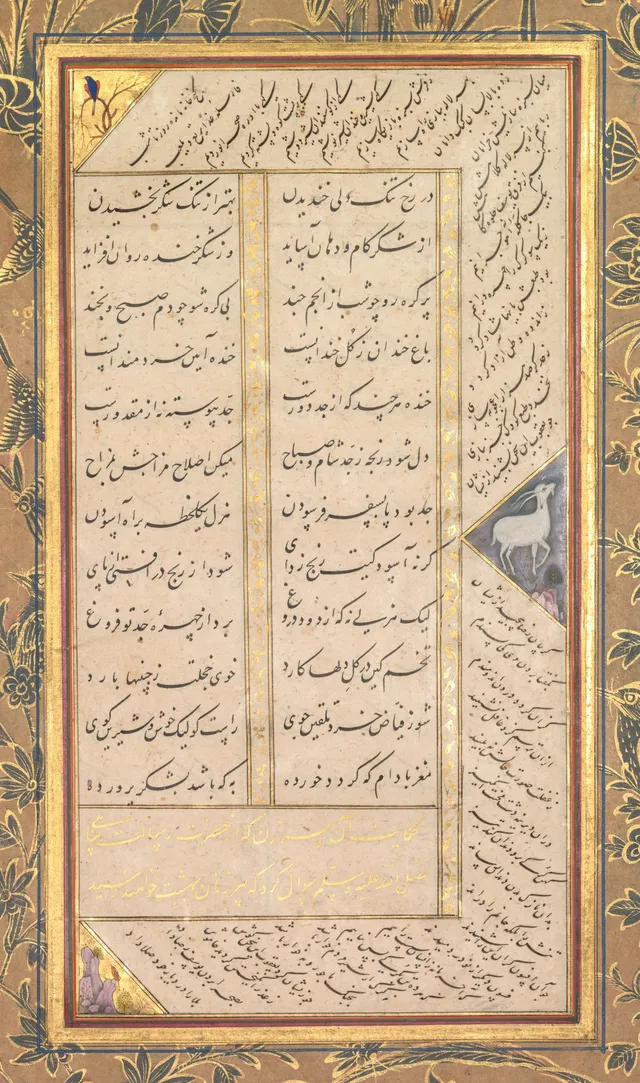
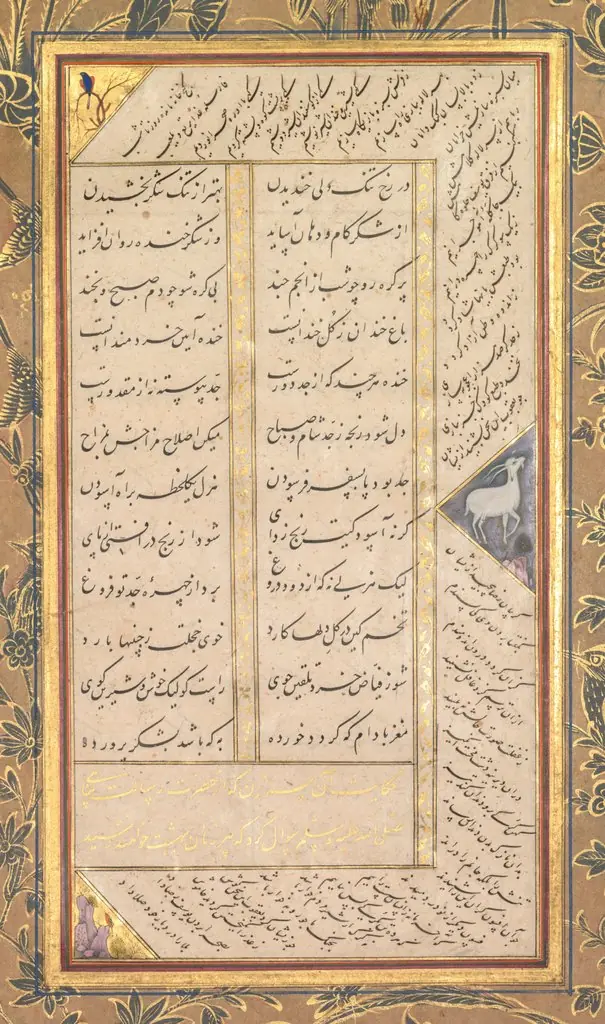 Page from a Panj Ganj (Five Treasures) of Abd al-Rahman Jami (Persian, 1414–1492), with two Persian masnavis: Yusuf va Zulaykha (Joseph and Zulaykha) and Subhat al-abrar (Rosary of the Righteous) (verso)
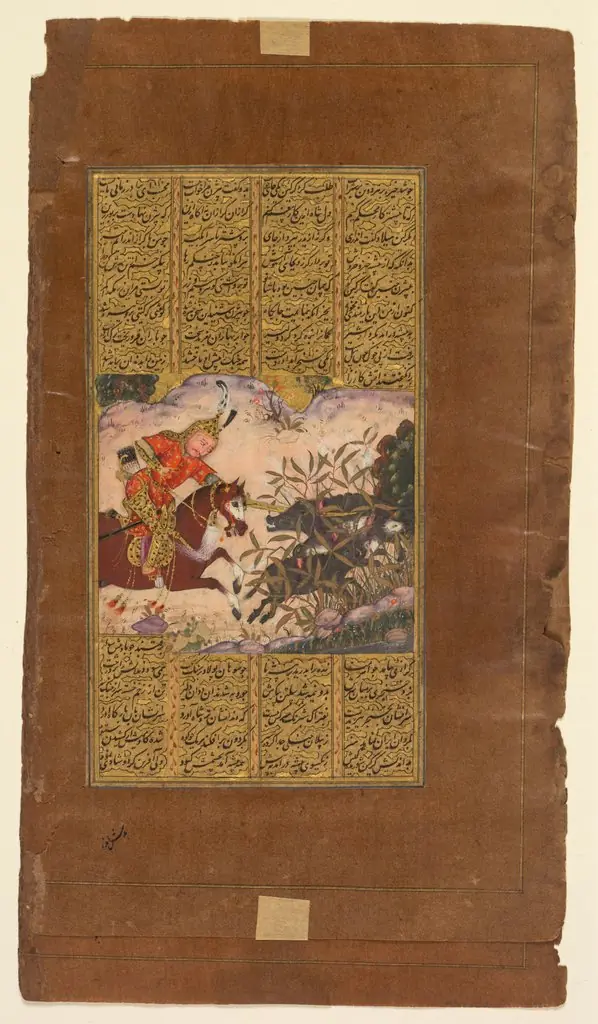 Bijan killing the wild boars of Irman, from a Shah-nama (Book of Kings) of Firdausi (Persian, about 934–1020) (verso)
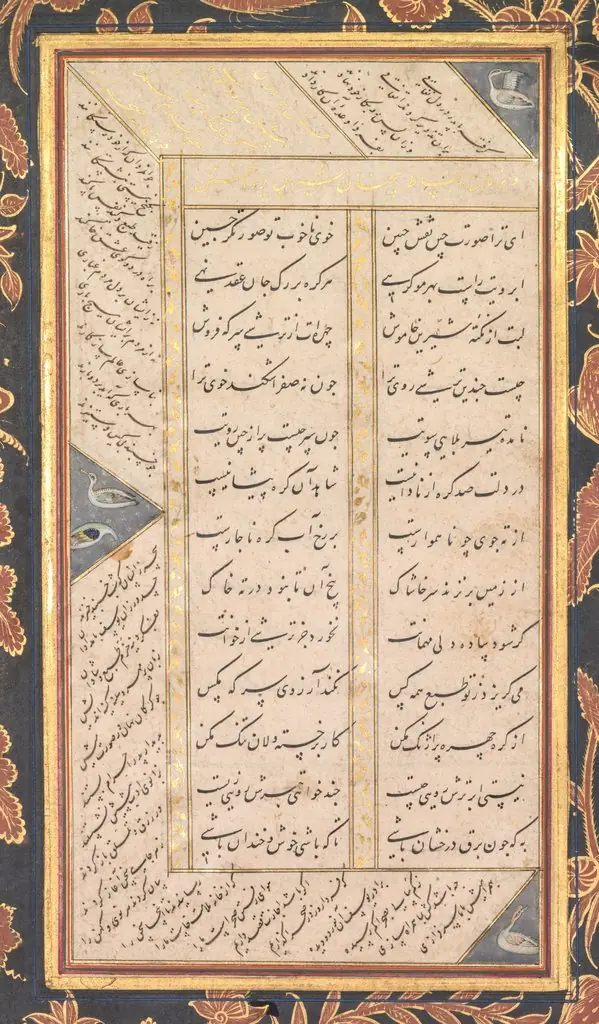 Folio B: Folio from the "Five Treasures" (Panj Ganj) of Jami (recto)
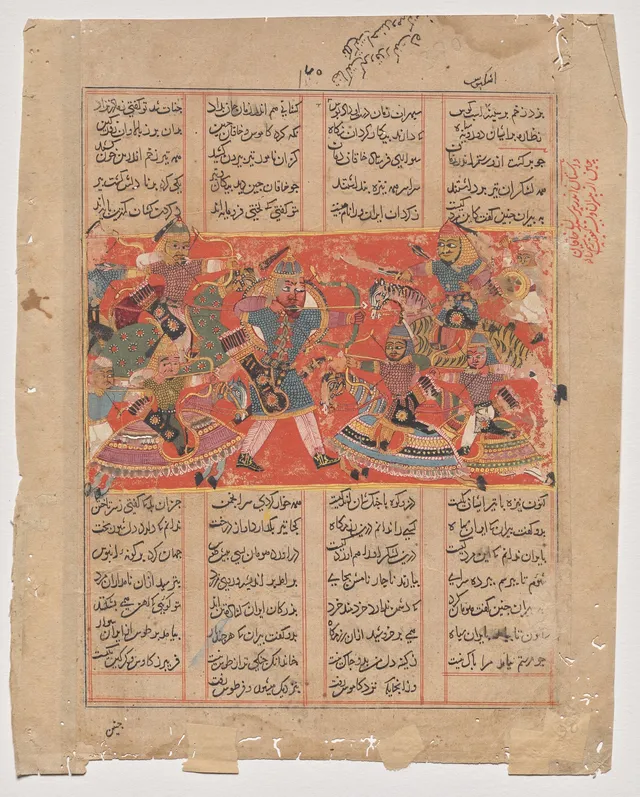
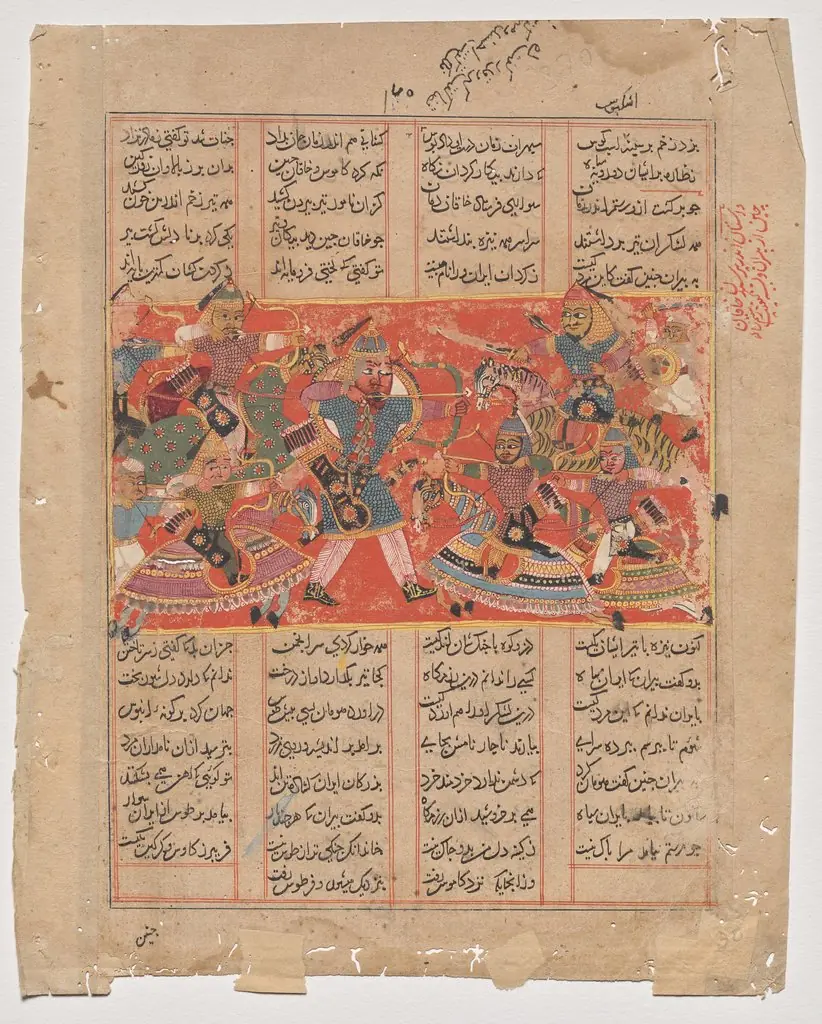
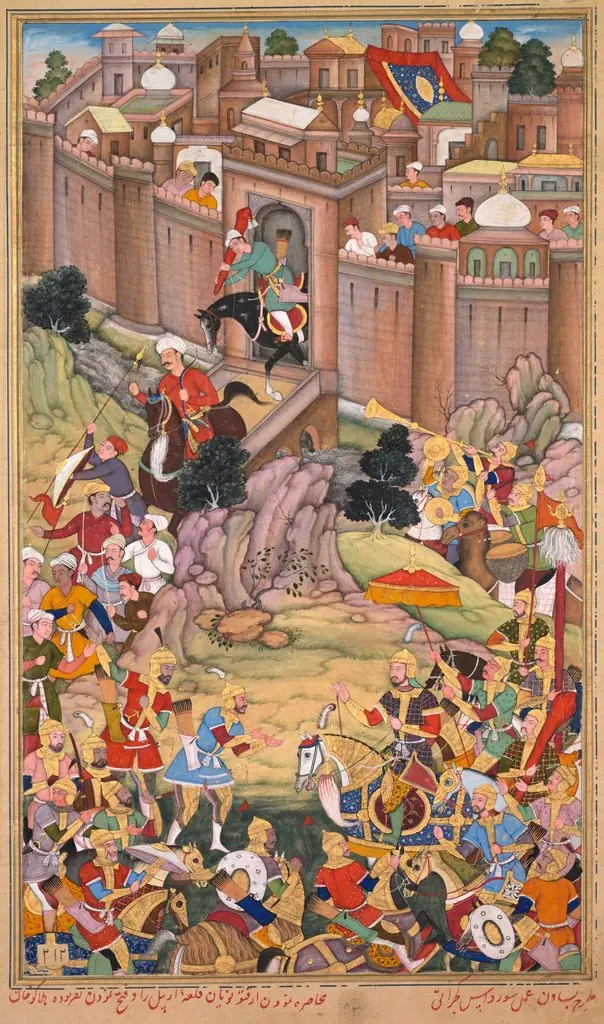 The siege of Arbela in the era of Hulagu Khan, page from a Chingiz-nama (Book of Chingiz Khan) of the Jami al-tavarikh (Compendium of Chronicles) of Rashid al-Din (Persian,1247–1318)
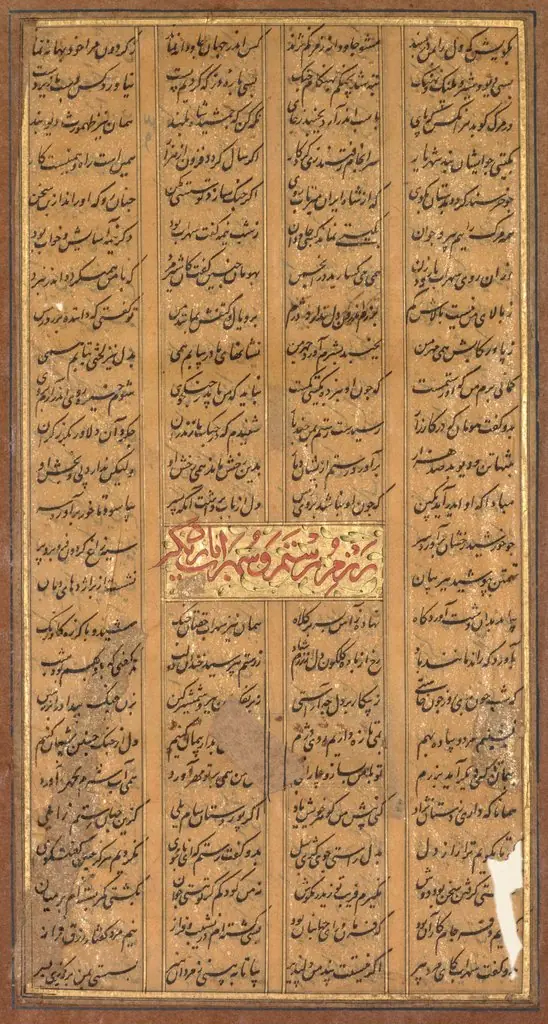 Text of Rustam and Suhrab, from the Shah-nama of Firdausi (Persian, c. 934–1020) (verso)
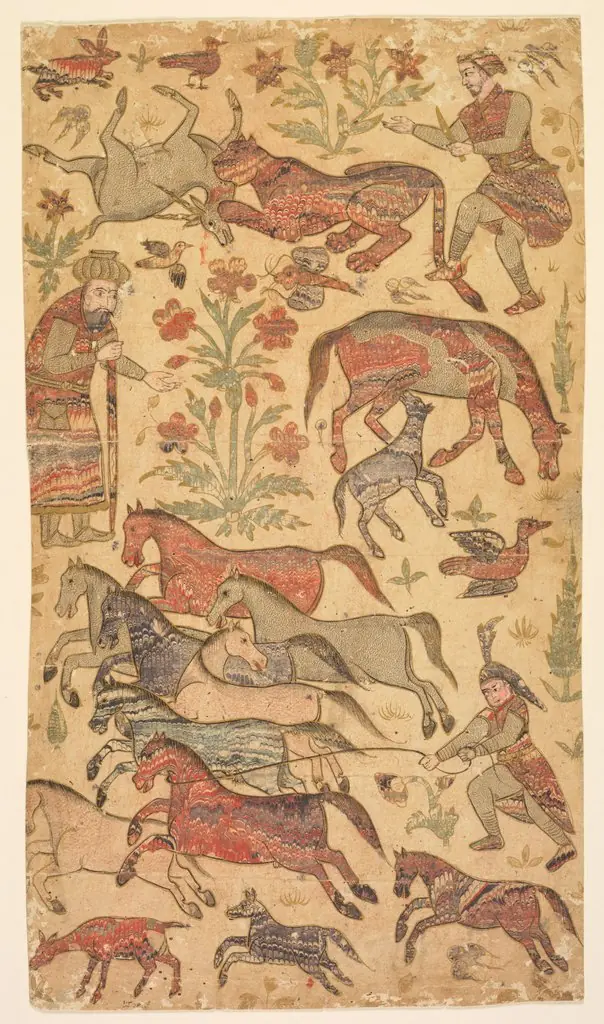 A marbled picture of Rustam catching Rakhsh
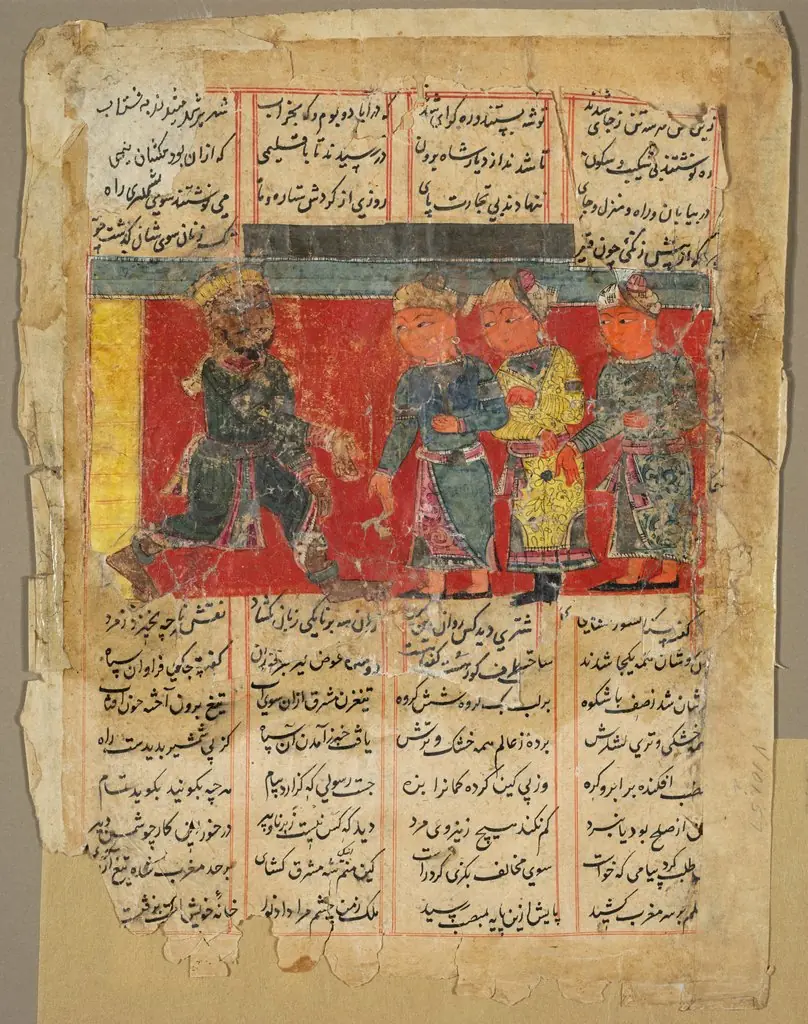 An East African King Receives Three Emissaries, from a Khamsa of Amir Khusrau Dihlavi
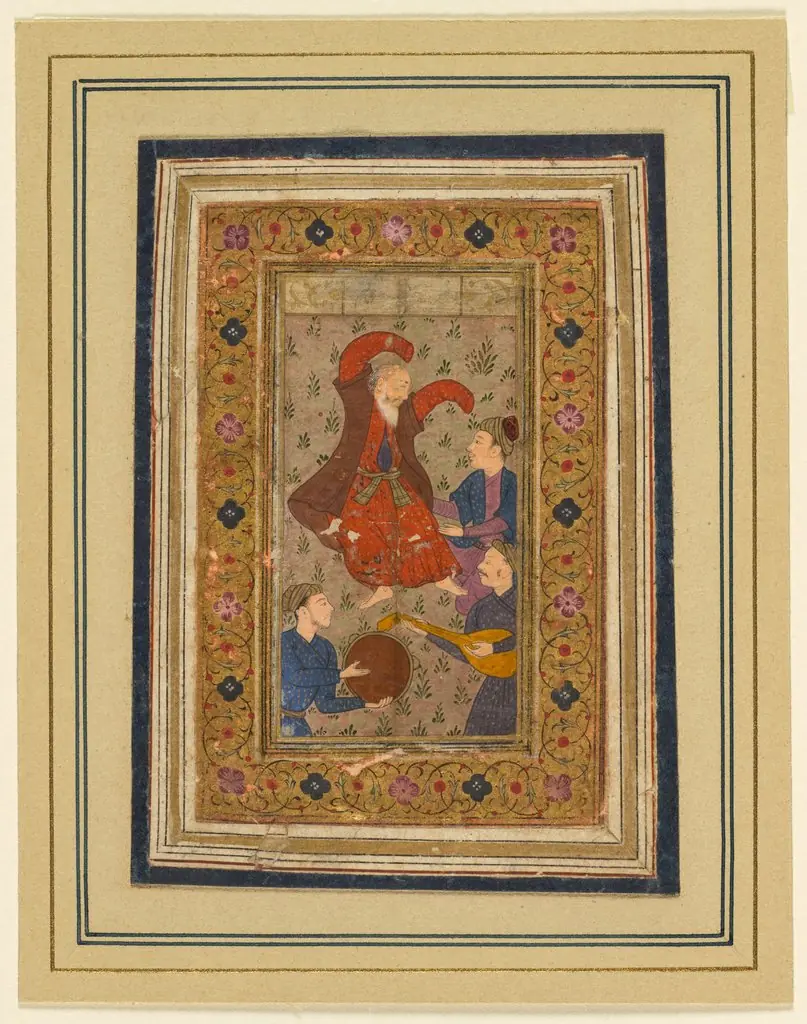 A dancing dervish and three musicians, from a Divan (Collected Poems) of Urfi (Persian, 1555–1591)
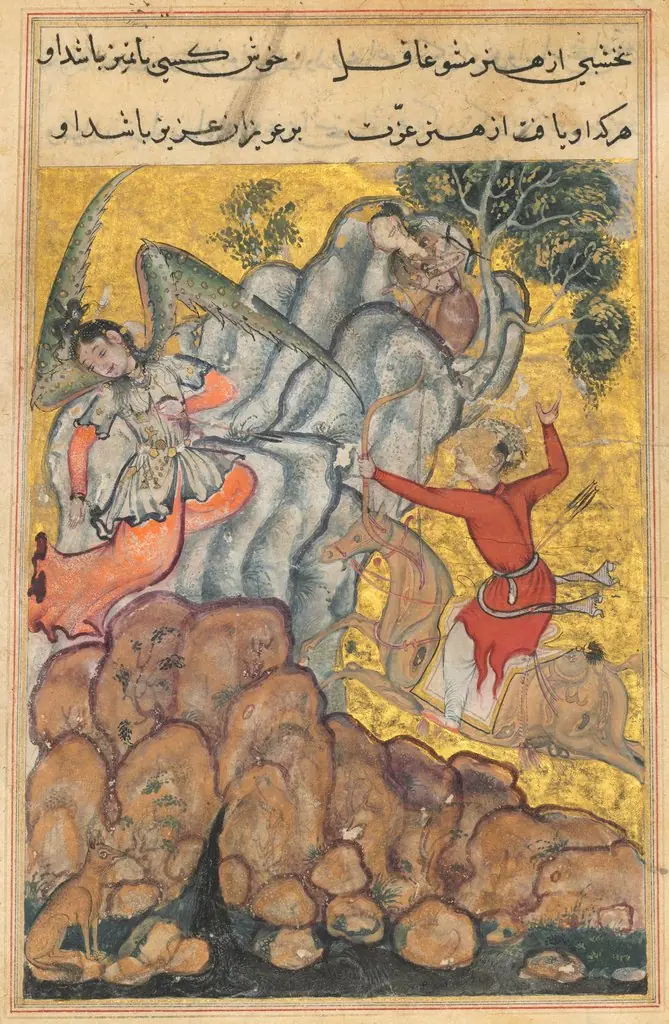 The third suitor, who is an archer, shoots the wicked fairy who has imprisoned Zuhra. He rides on a magic horse prepared by the second suitor and is led to the spot by the divining prowess of the first, from a Tuti-nama (Tales of a Parrot): Thirty-fo
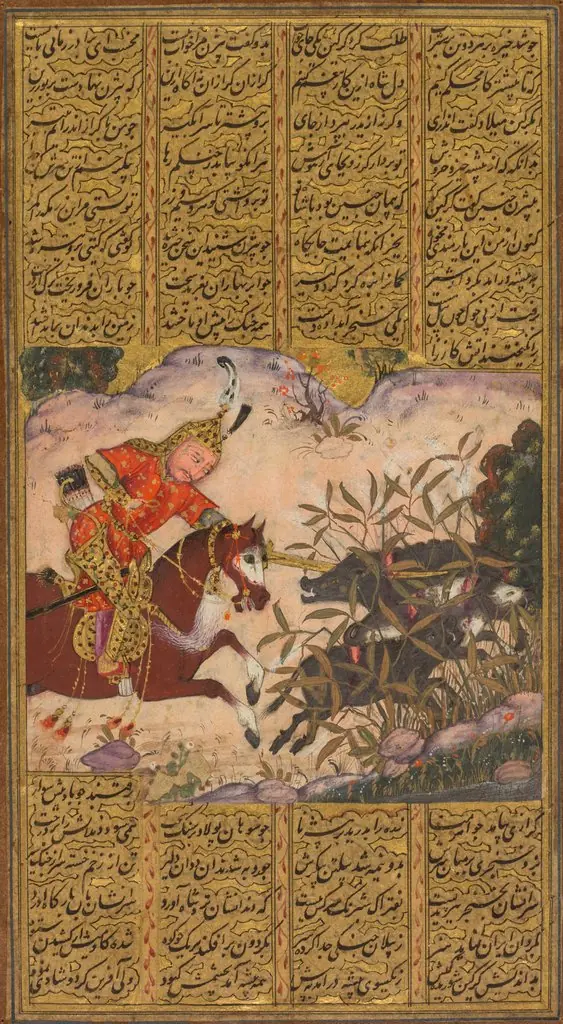 Bijan killing the wild boars of Irman, from a Shah-nama (Book of Kings) of Firdausi (Persian, about 934–1020)
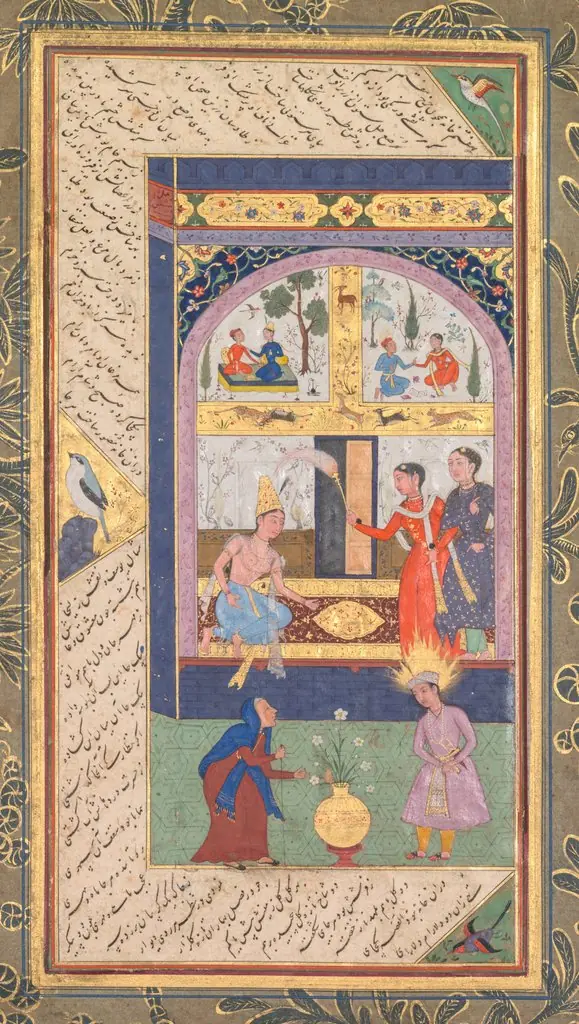 Zulaykha in her palace and as an elderly woman with Joseph (recto), from a Panj Ganj (Five Treasures) of Abd al- Rahman Jami (Persian, 1414–1492)
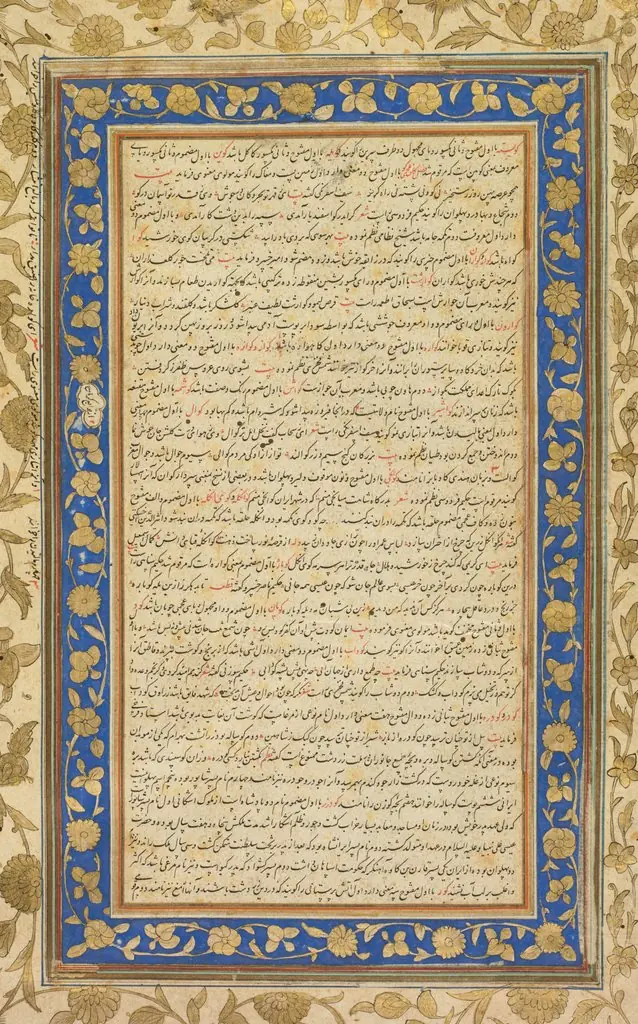 From the Farhang-i Jahangiri (Persian-language Dictionary) compiled by Mir Jamal al-Din Husayn Inju of Shiraz (Persian, d. 1626)
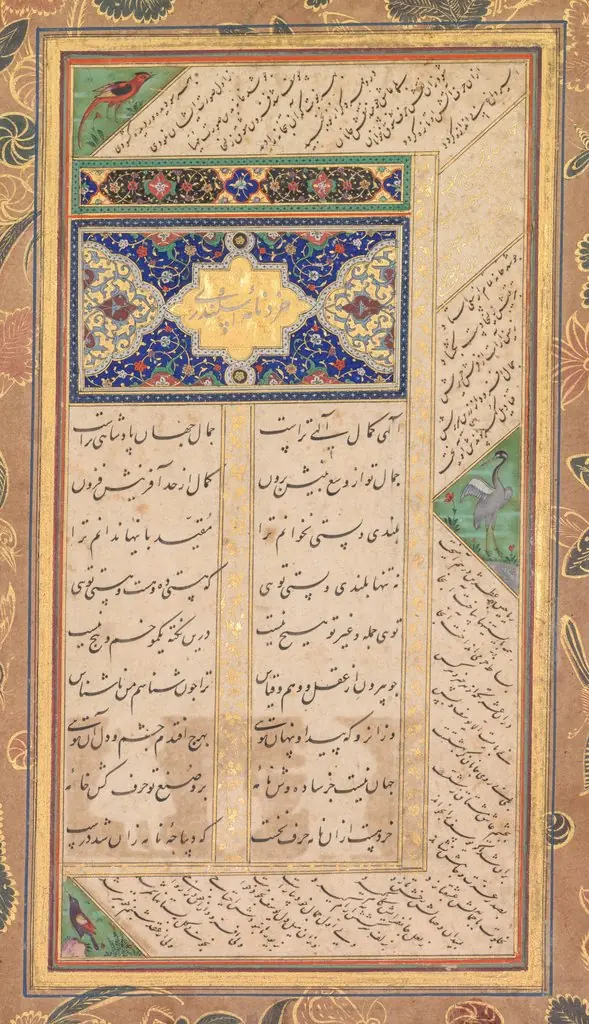 Illuminated page (verso), from a Panj Ganj (Five Treasures) of Abd al- Rahman Jami (Persian, 1414–1492) with two Persian masnavis: Yusuf va Zulaykha (Joseph and Zulaykha) and Khirad-nama-i Iskandari (Alexander’s Book of Wisdom)
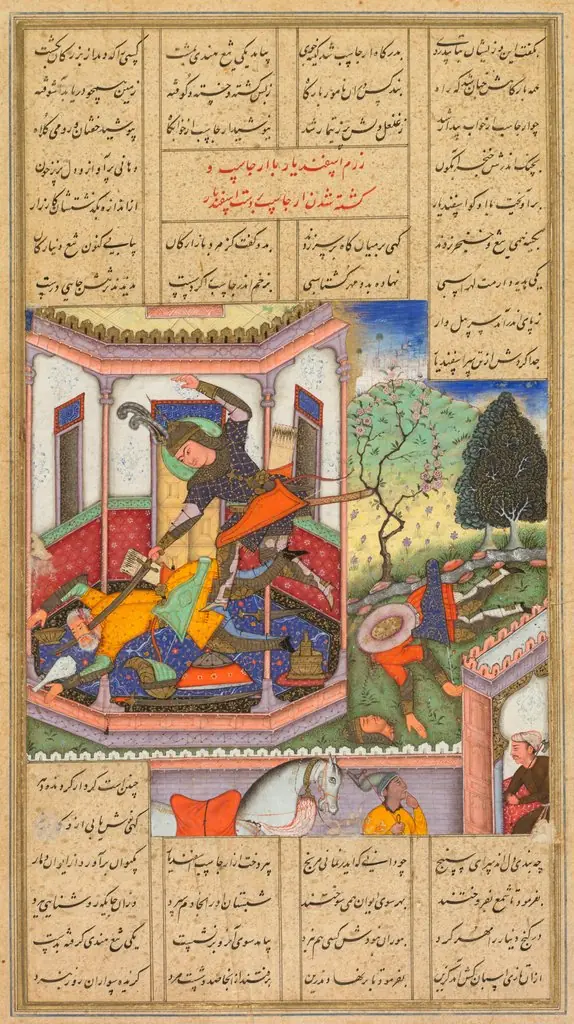 Isfandiyar slays Arjasp, the king of Turan, from a Shah-nama (Book of Kings) of Firdausi (Persian, about 934–1020)
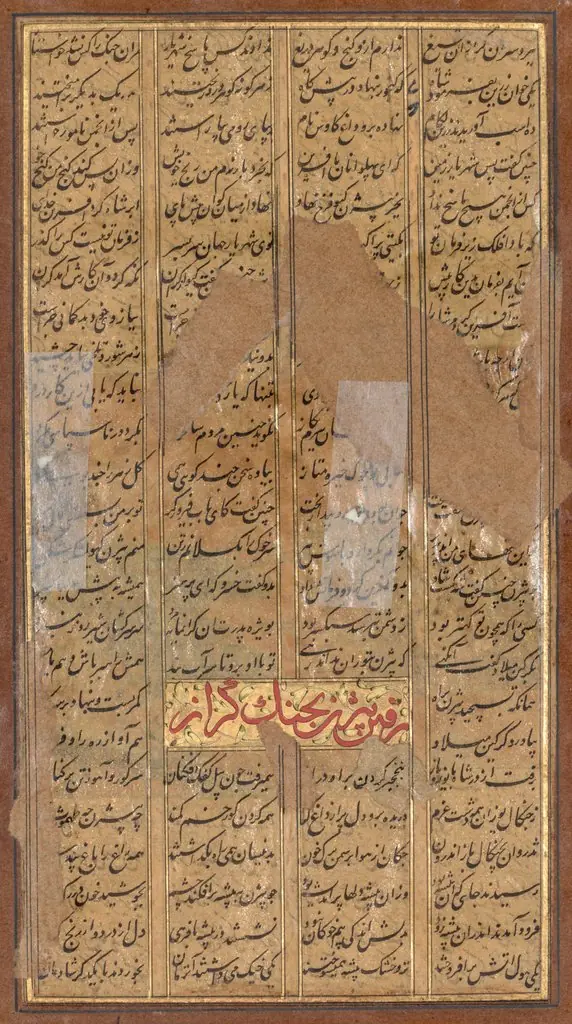 Bijan killing the wild boars of Irman, from a Shah-nama (Book of Kings) of Firdausi (Persian, about 934–1020), (recto)
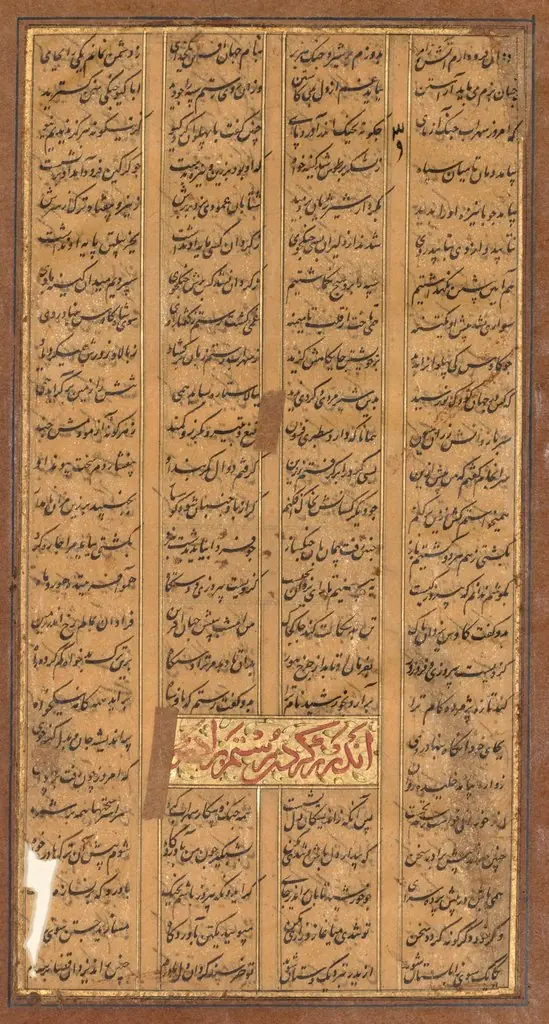 Text of Rustam and Suhrab, from the Shah-nama of Firdausi (Persian, c. 934–1020) (recto)
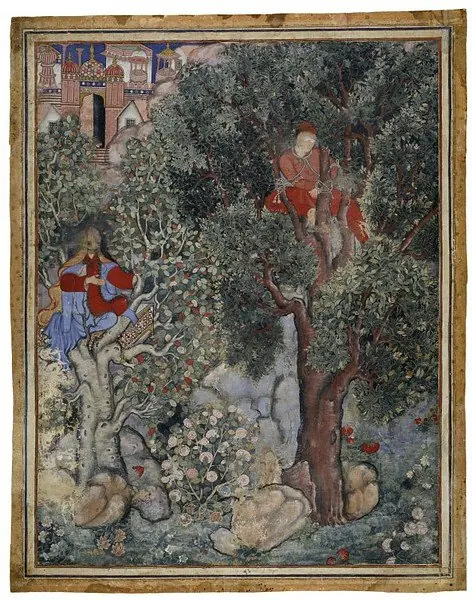 The Witch Anqarut ties Malik Iraj to a tree
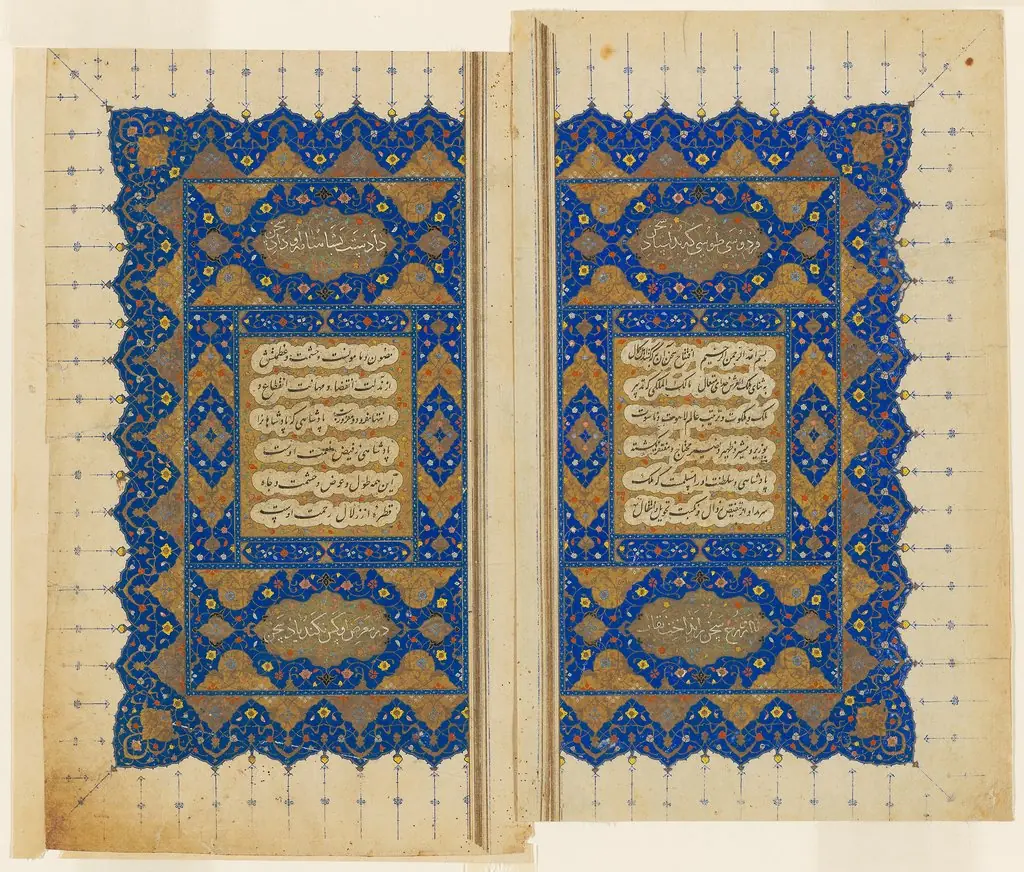 Double Title Page of a copy of the Shahnama of Firdausi
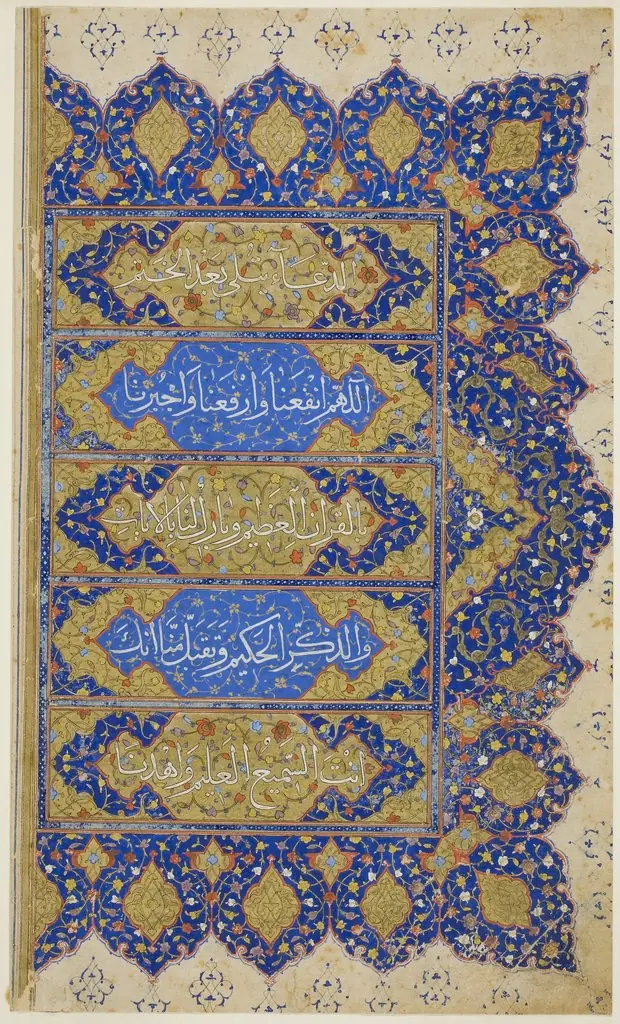 Right-Hand Page from the Qur'an
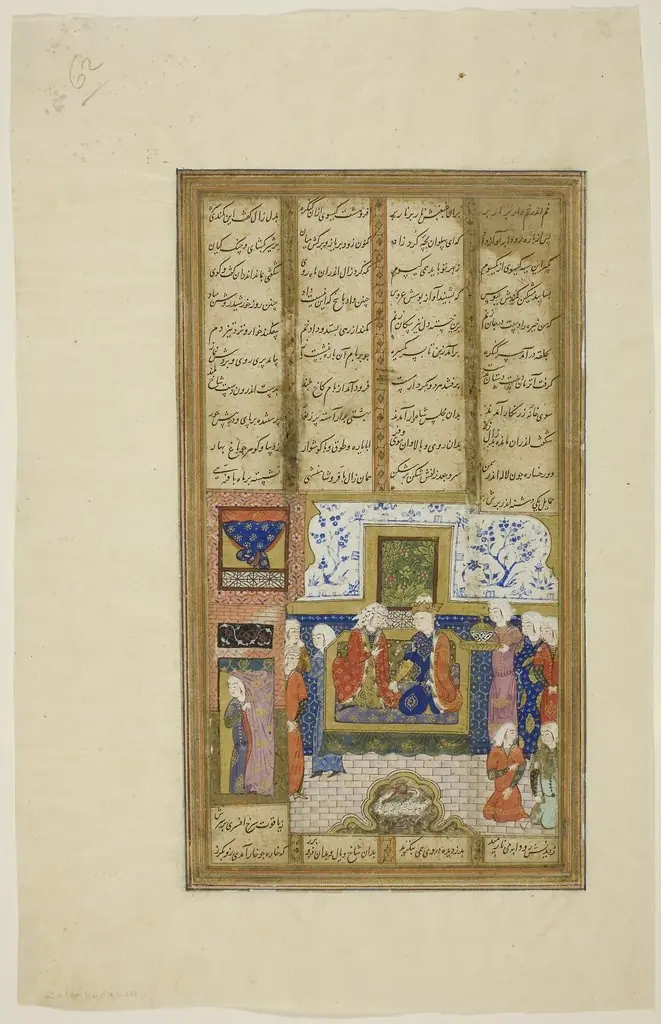 Zal and Rudaba in a Palace, page from a copy of the Shahnama of Firdausi
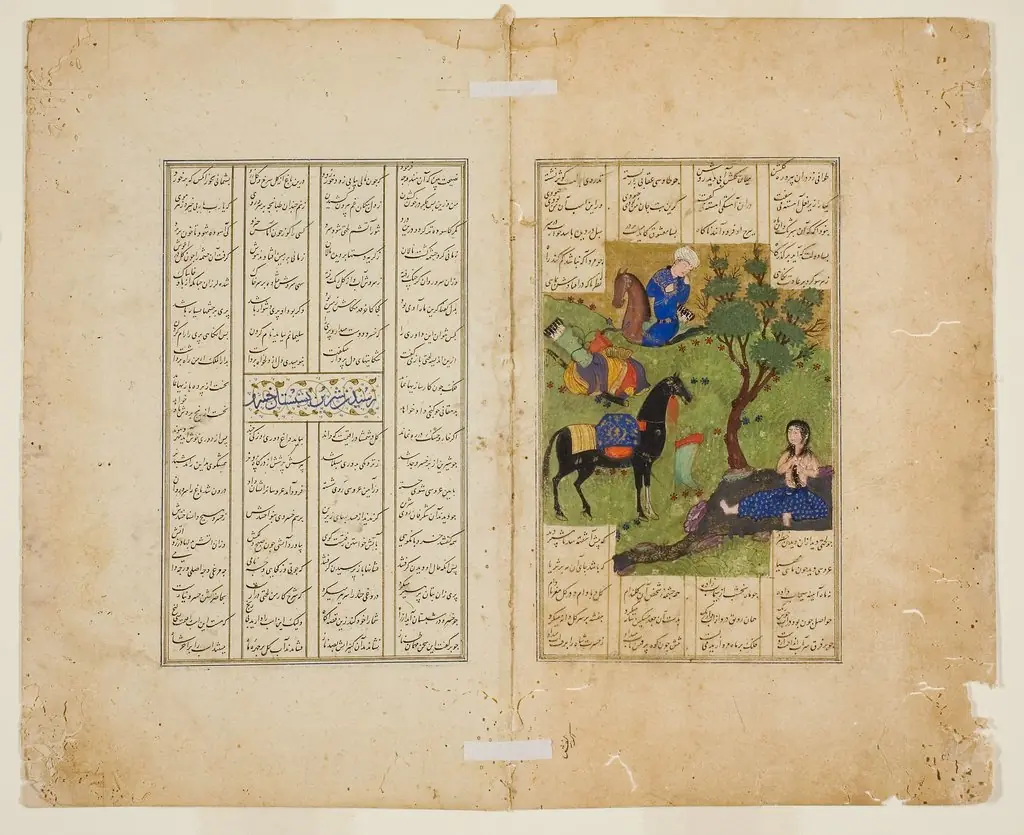 Khusrau Gazing at Shirin, from a copy of the Khamsa of Nizami
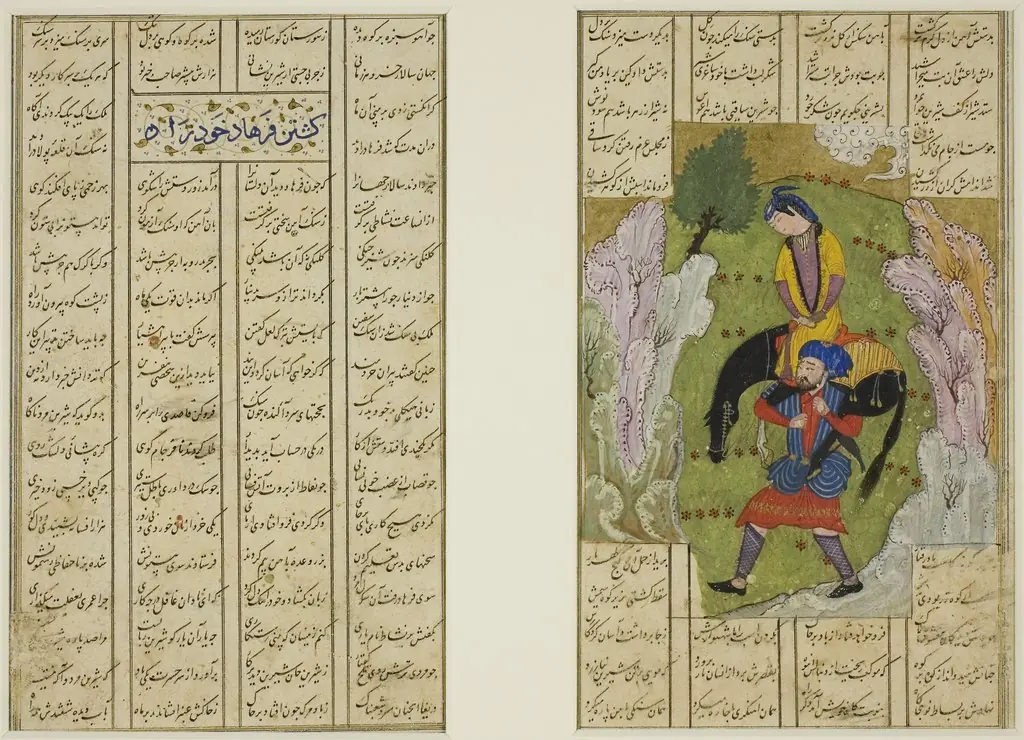 Farhad Carrying Shirin and Her Horse, from a copy of the Khamsa of Nizami
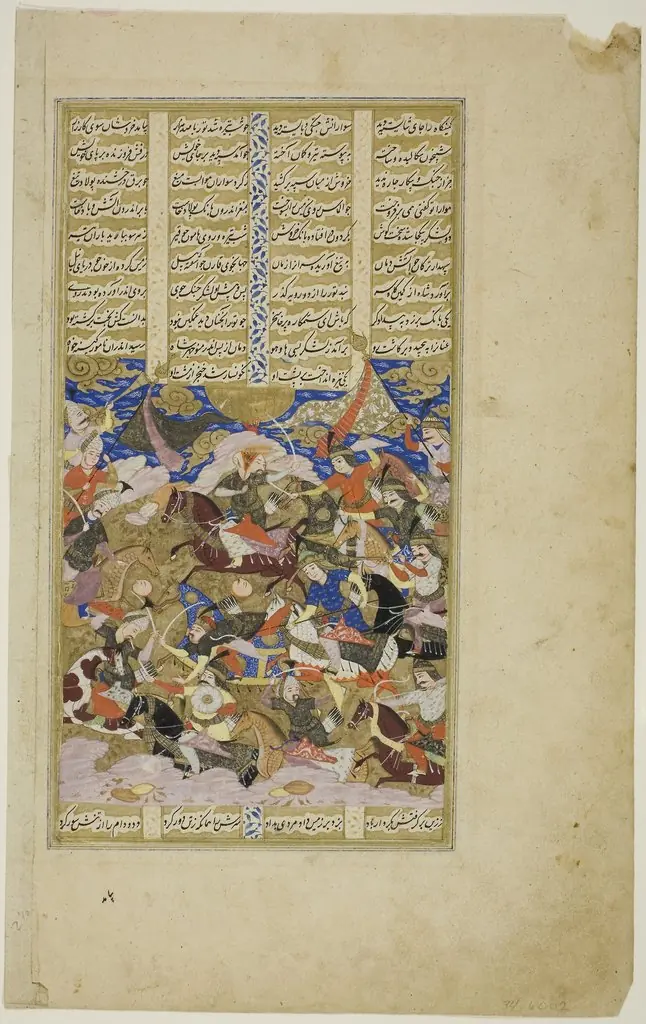 Manuchehr Kills Tur, Manuscript from Shahnama
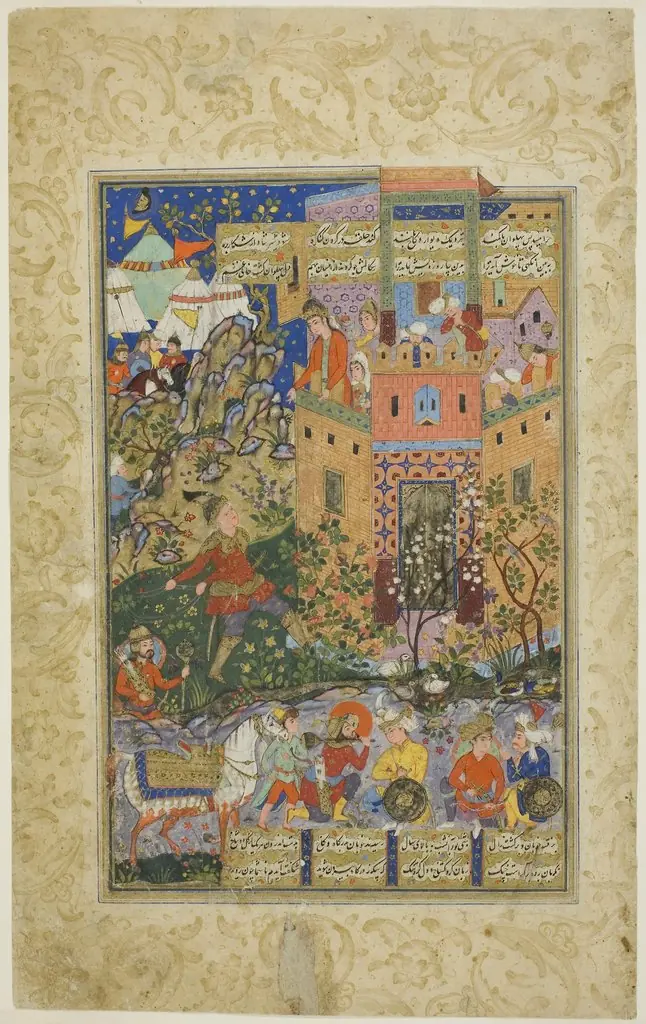 Zal Climbing to Rudaba, page from a copy of the Shahnama of Firdausi
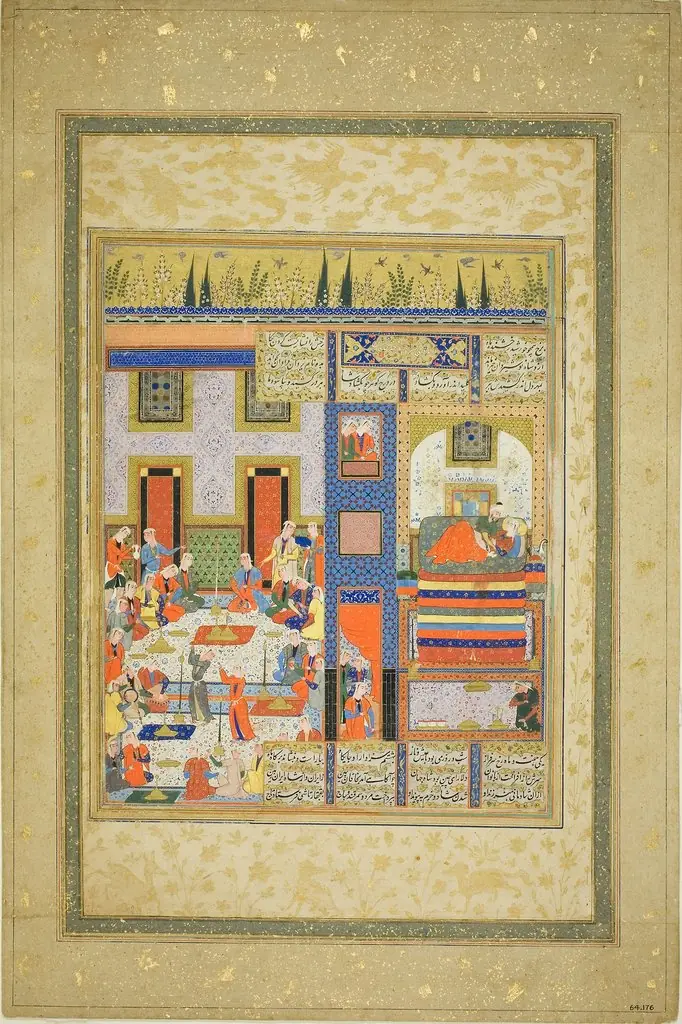 The Wedding Night of Anushirvan and the Khaqan's Daughter (from a copy of Firdausi's Shahnama)
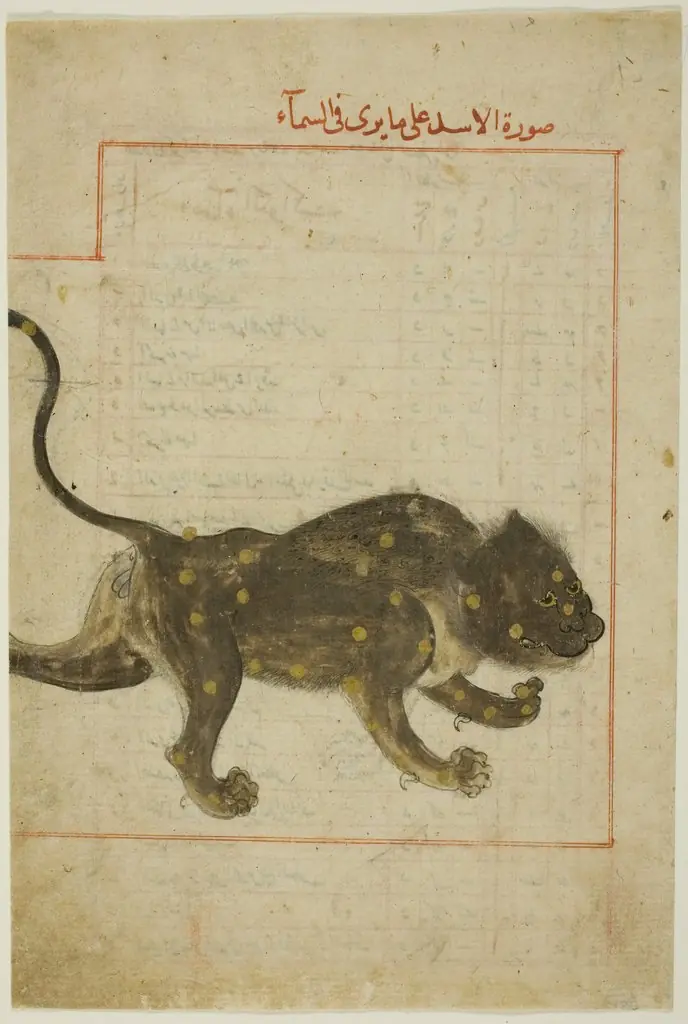 The Constellation Leo, folio probably from the Kitab suwar al-kawakib al-thabita (Book of the Images of the Fixed Stars)
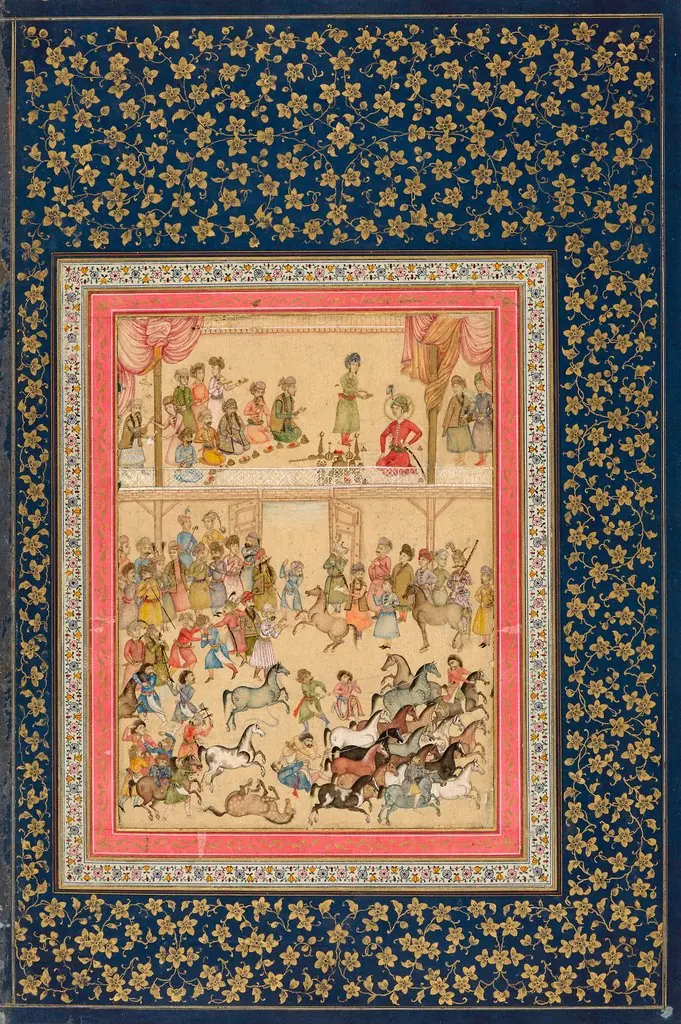 Royal Horse Inspection
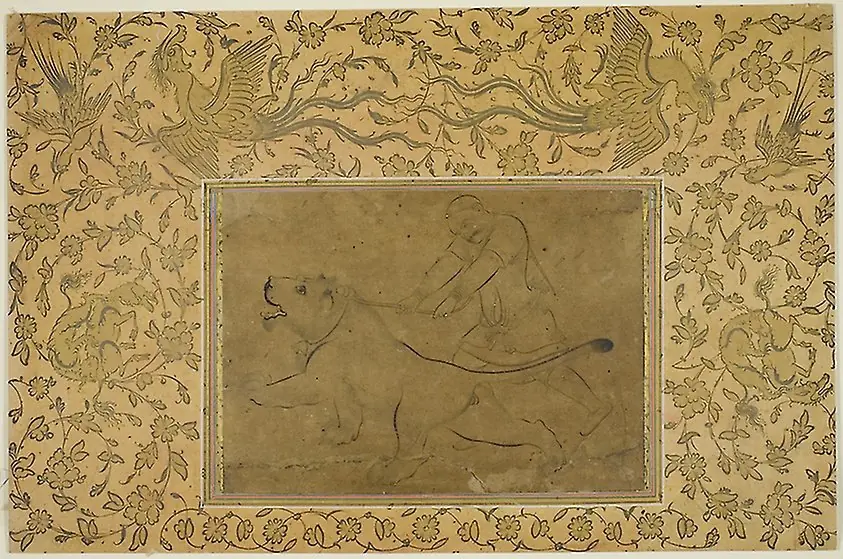 The Lion Tamer
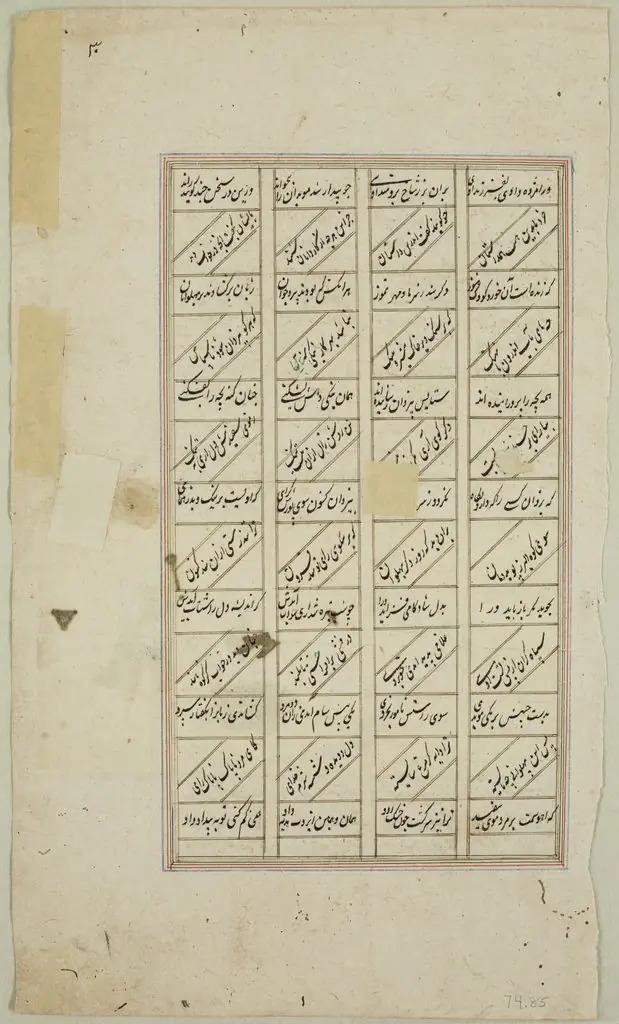 Rustam and the Simurgh
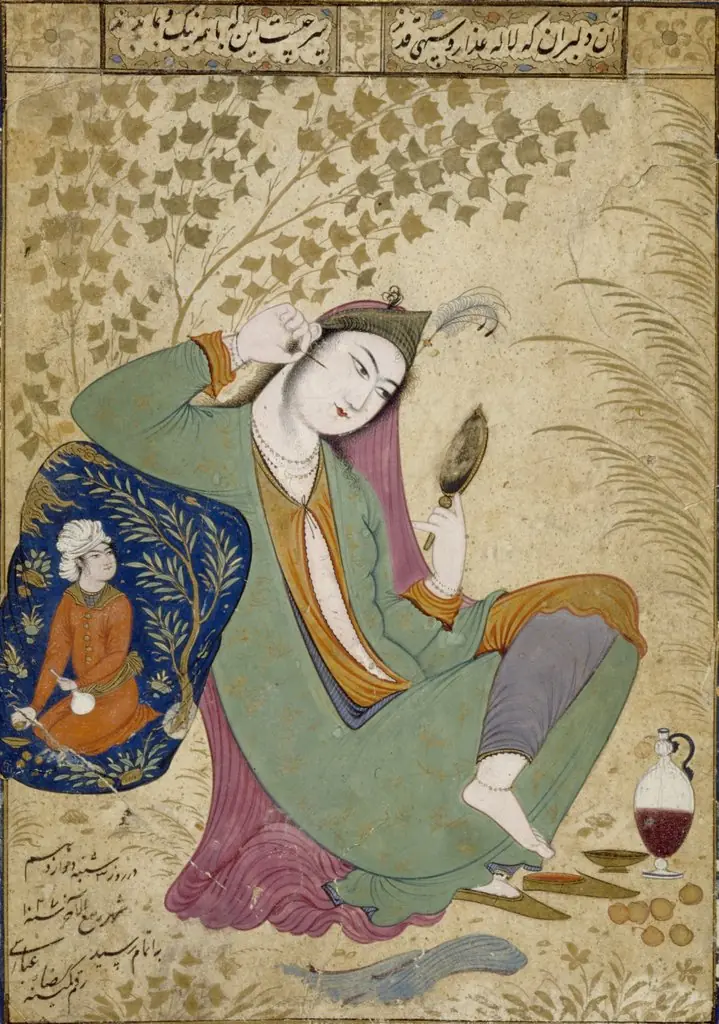 Lady with a Mirror
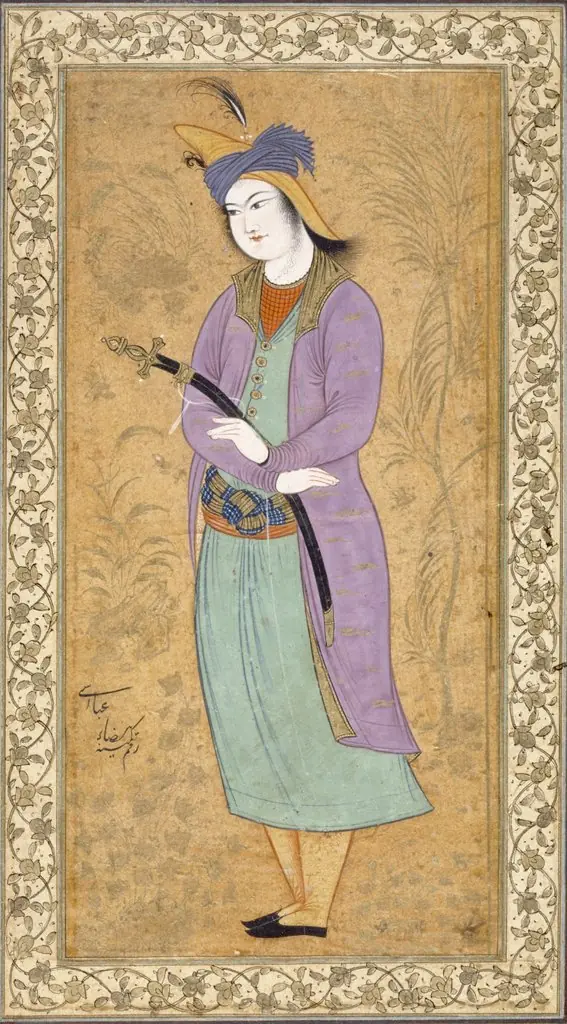 Officer of the Guards
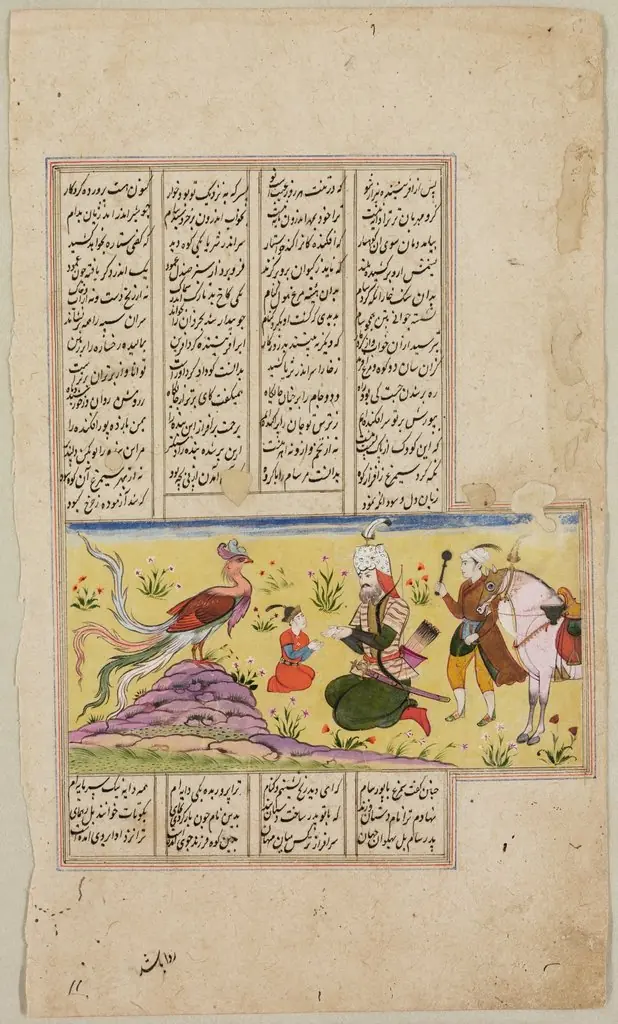 Rustam and the Simurgh
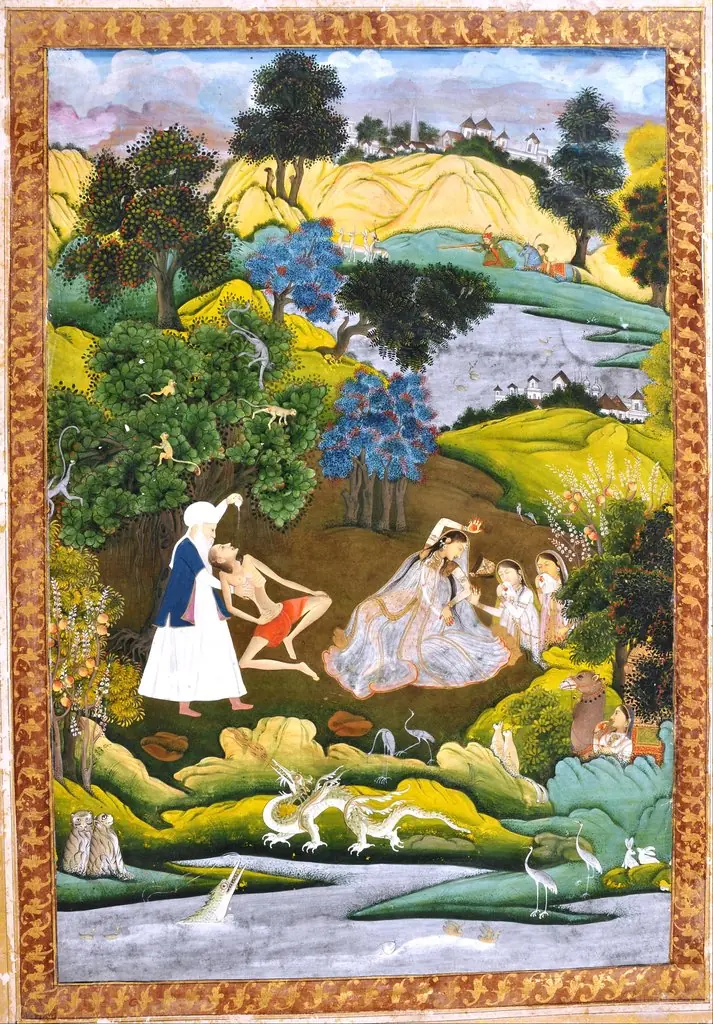 Fainted Laila and Majnun-Based on the Khamsa of Persian poet Nizami
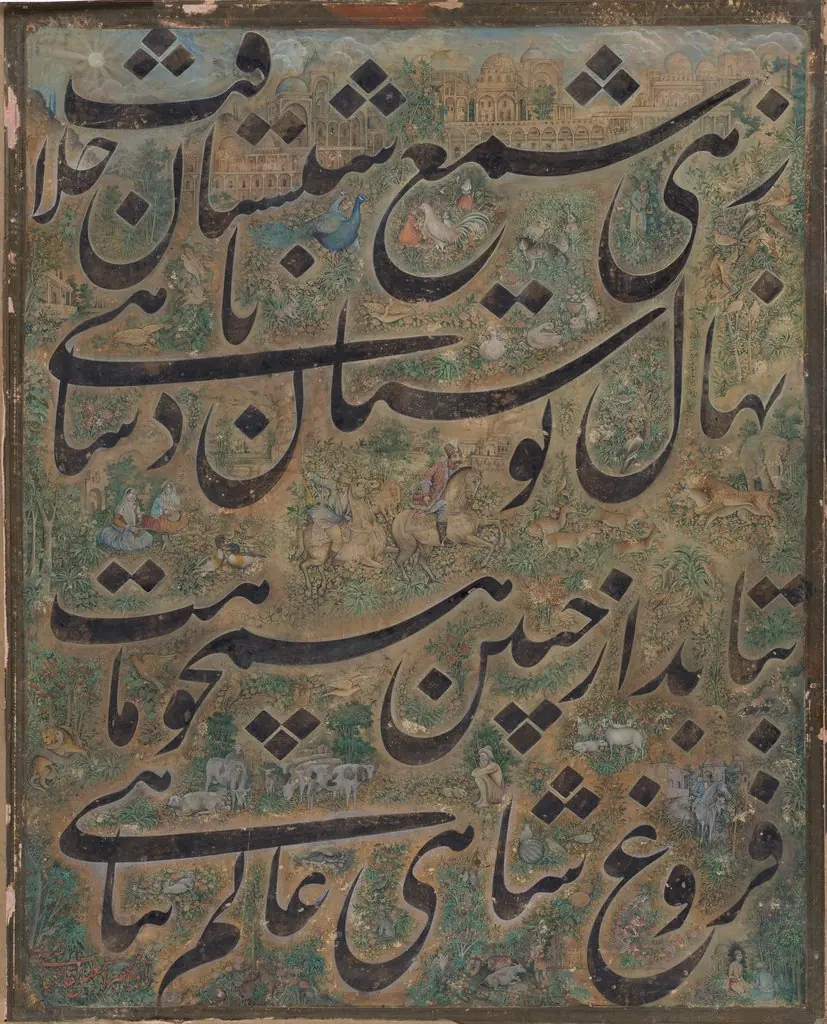 Calligraphy Painting
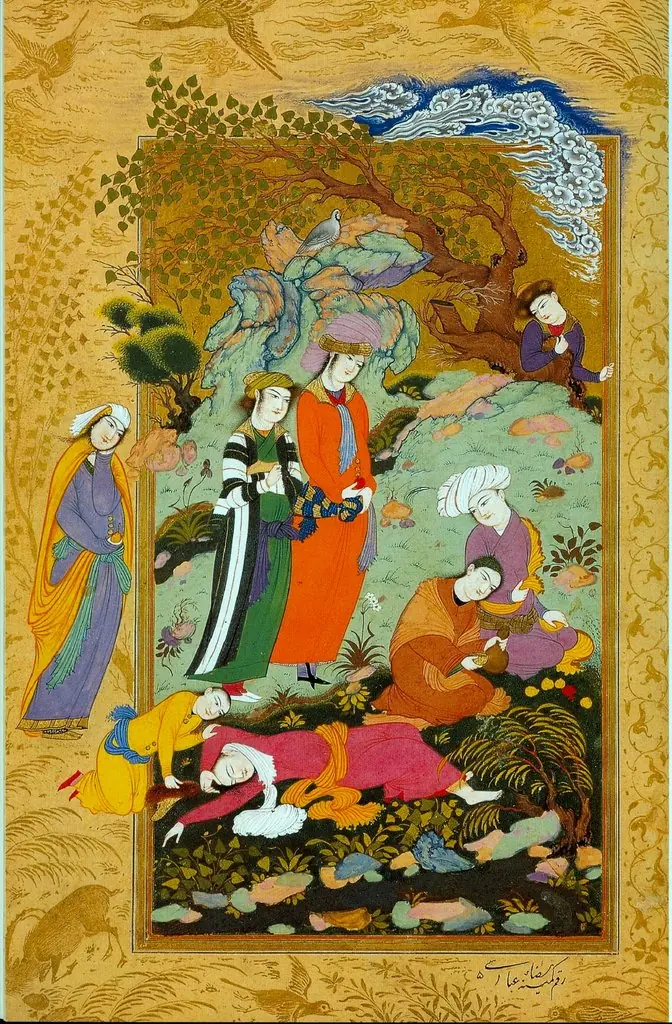 Convivial Party (1)
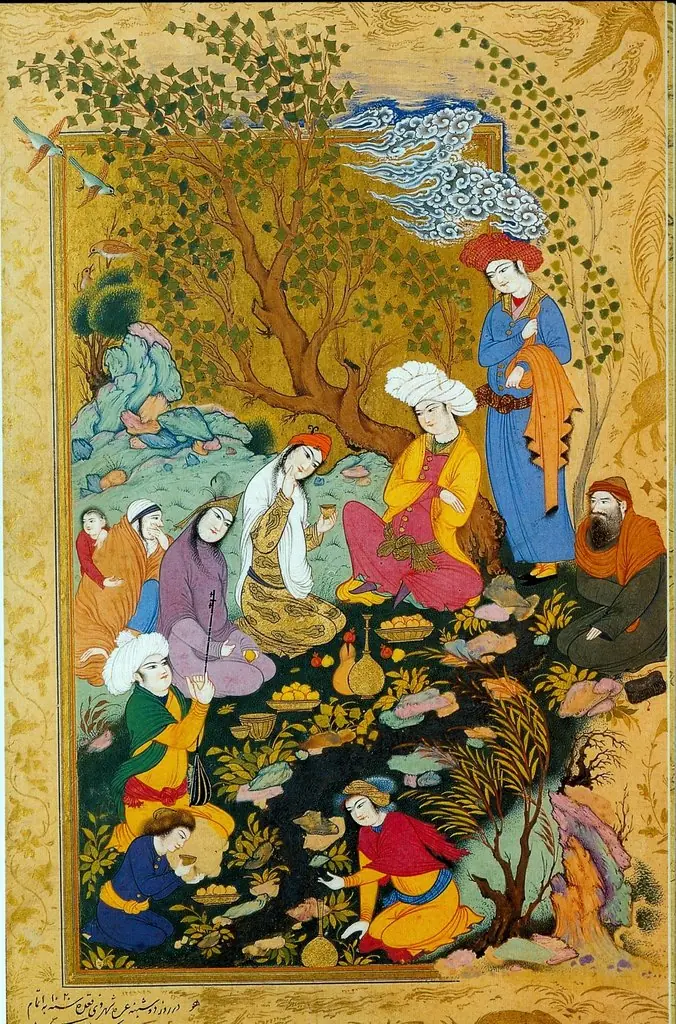 Convivial Party (2)
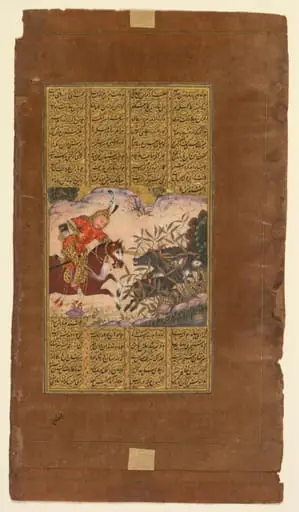 Bijan killing the wild boars of Irman, from a Shah-nama (Book of Kings) of Firdausi (Persian, about 934–1020) (verso)
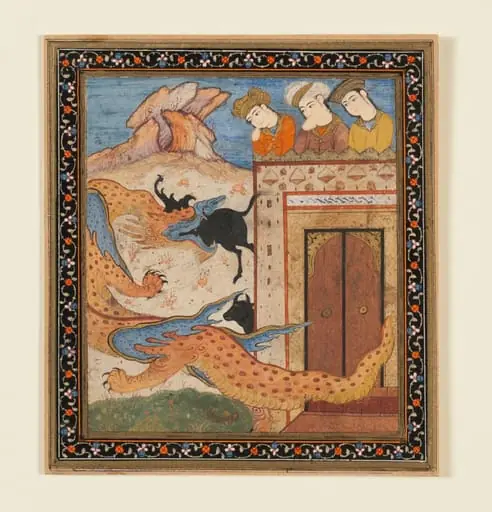 Scenă din epopeea Shah Name
 Untitled
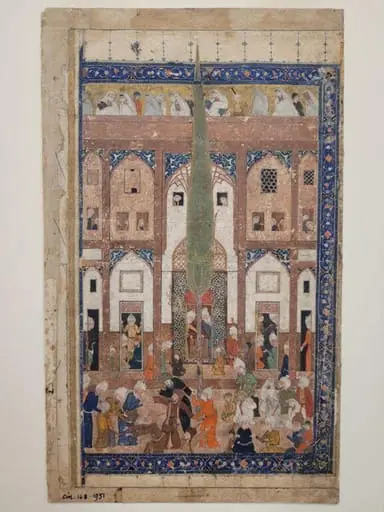 'Sa'di's tomb at Shiraz'
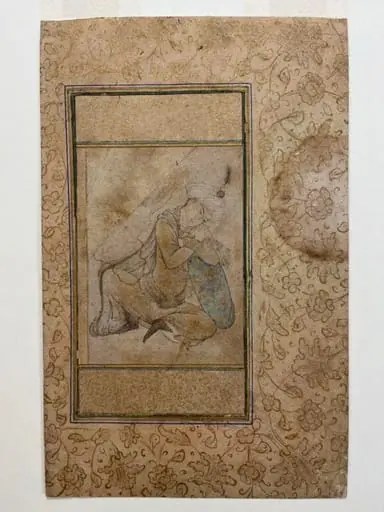 Untitled
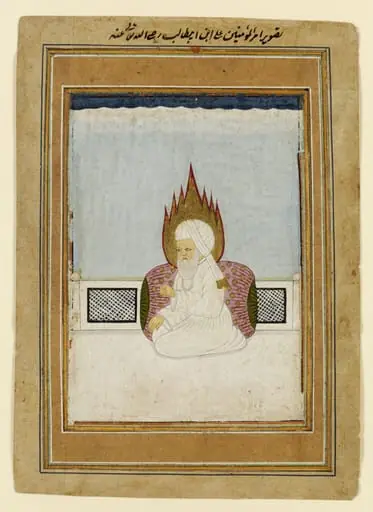 Imam 'Ali
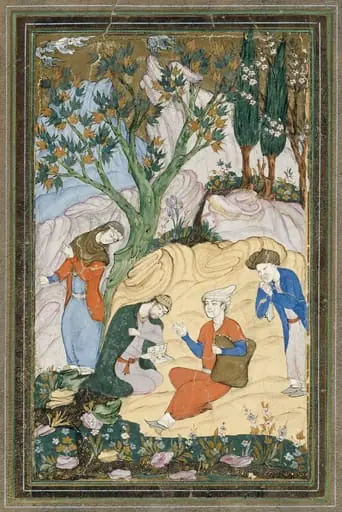 Nuori ruhtinas seurueineen maisemassa, persialainen miniatyyri
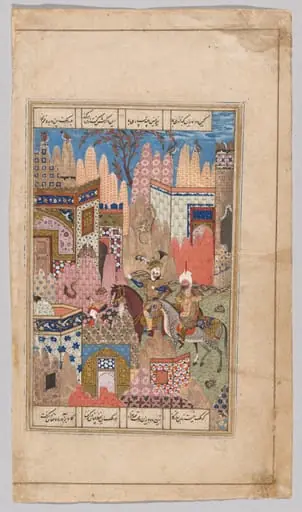 King Anushirwan and the Owls, from the Khamsa of Nizami
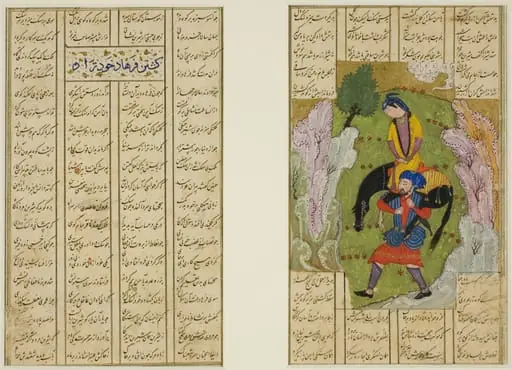 Farhad Carrying Shirin and Her Horse, from a copy of the Khamsa of Nizami
Frequently asked questions
What is Persian Miniature?
Persian Miniature is an art movement. The tradition of small-scale painting in Persia (Iran) from the 13th through 17th centuries, made for illuminated manuscripts of poetry and history.
How many Persian Miniature works does Artifact World Gallery have?
Artifact World Gallery holds 47 public-domain Persian Miniature works, all free to view and download.
Who are the key Persian Miniature artists?
Key Persian Miniature artists in the collection include Reza `Abbasi, 'Aliquli Jabbadar and Sadiqi Beg.
Where can I see Persian Miniature works?
Persian Miniature works in the collection are held by Cleveland Museum of Art, Art Institute of Chicago and Victoria and Albert Museum.