Artwork
Page from Tales of a Parrot (Tuti-nama): text page
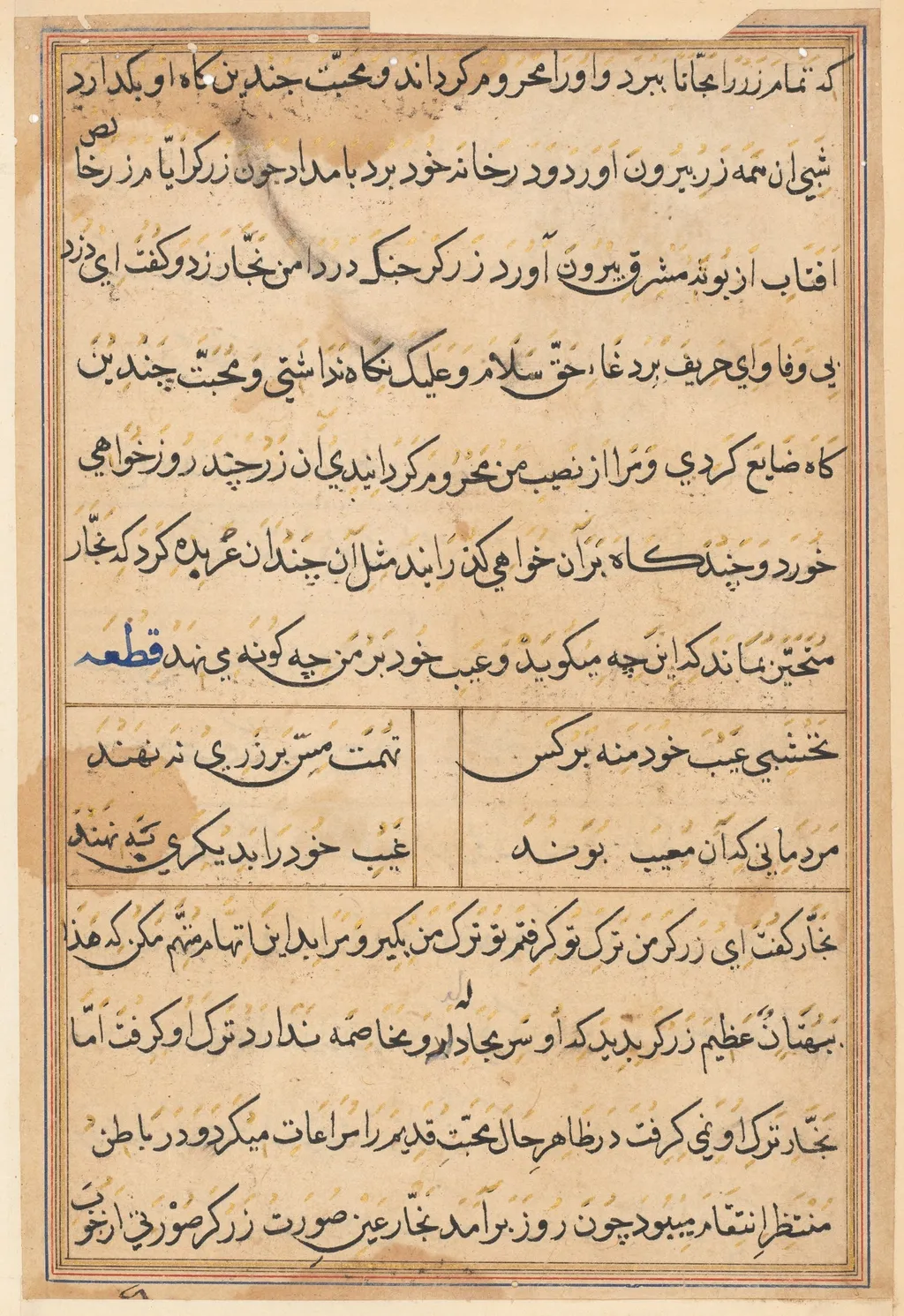
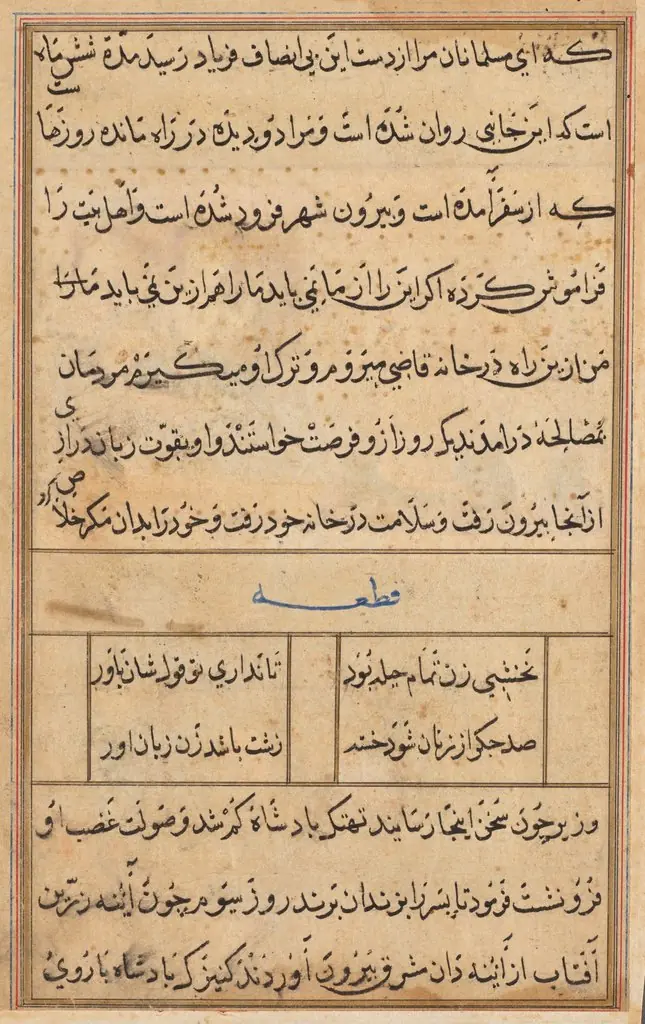
Page from Tales of a Parrot (Tuti-nama): text page is an unspecified painting. It dates from 1560 and is held in the collection of the Cleveland Museum of Art. This object is a single leaf from the illustrated manuscript known as Tuti‑nama (Tales of a Parrot).
About this work
History & Provenance
The page is a text folio from the Tuti-nama (Tales of a Parrot), dated to 1560 and produced in the Mughal Empire by an unknown artist. It is held by the Cleveland Museum of Art under accession number 1962.279.21.b. The sources do not record any earlier ownership, commission, or detailed provenance prior to its entry into the museum's collection.
Context
This folio belongs to the Cleveland Tuti-nama, a manuscript associated with the imperial workshop of the Mughal emperor Akbar in the mid-sixteenth century.
This folio belongs to the Cleveland Tuti-nama, a manuscript associated with the imperial workshop of the Mughal emperor Akbar in the mid-sixteenth century. As a text page, it formed part of a manuscript in which narrative illustration and text combined to convey the didactic stories of the parrot. Its production reflects the early Mughal synthesis of Persian and indigenous Indian painting traditions that shaped later manuscript art across South Asia, characterized by flattened perspective and intricate detail.
Overview
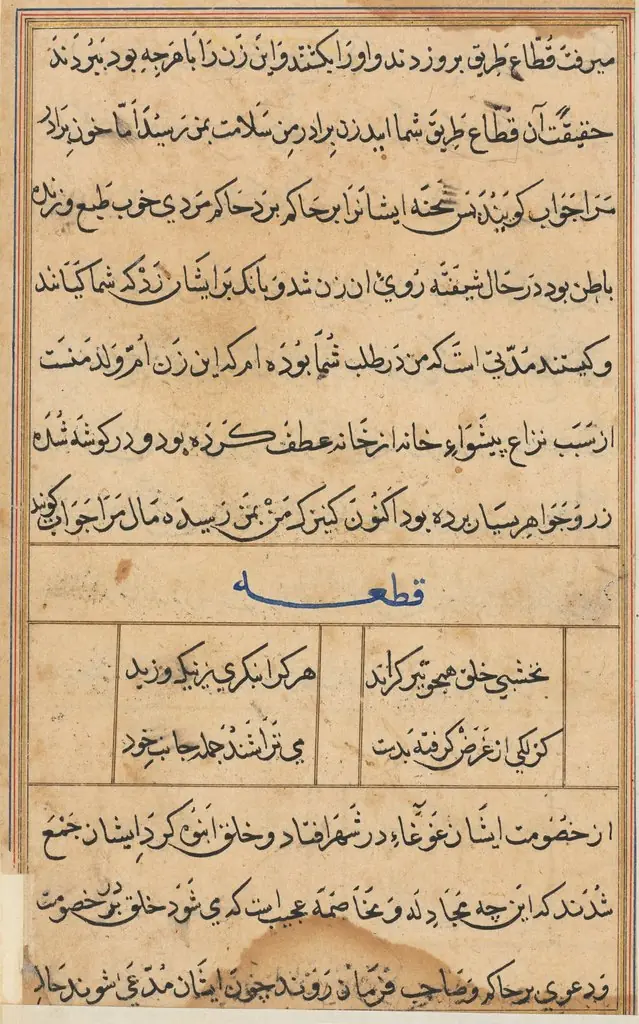
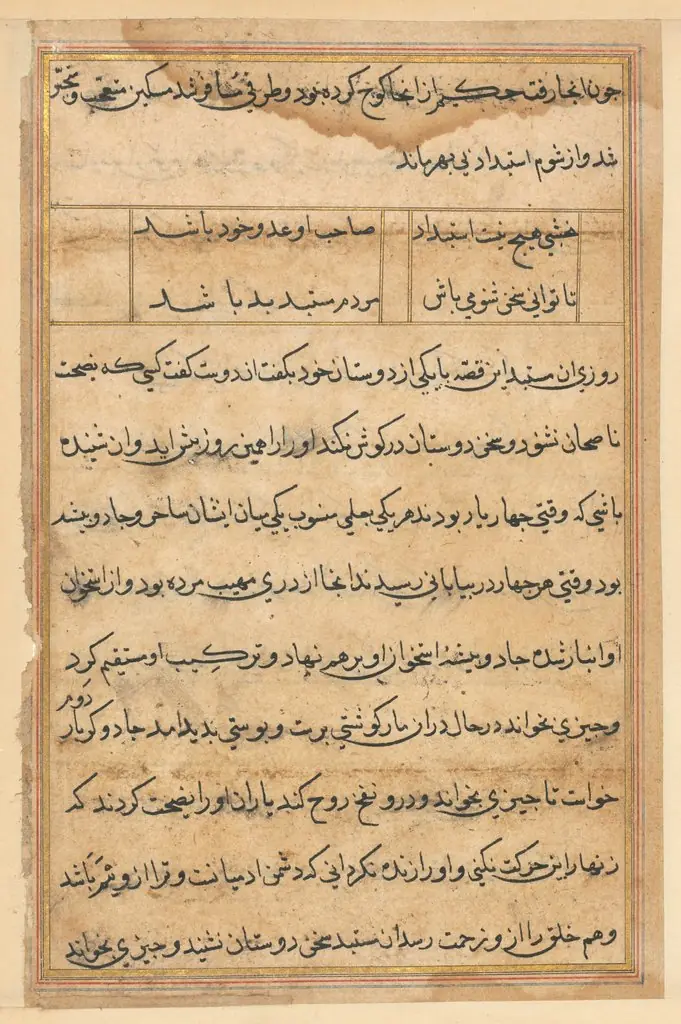
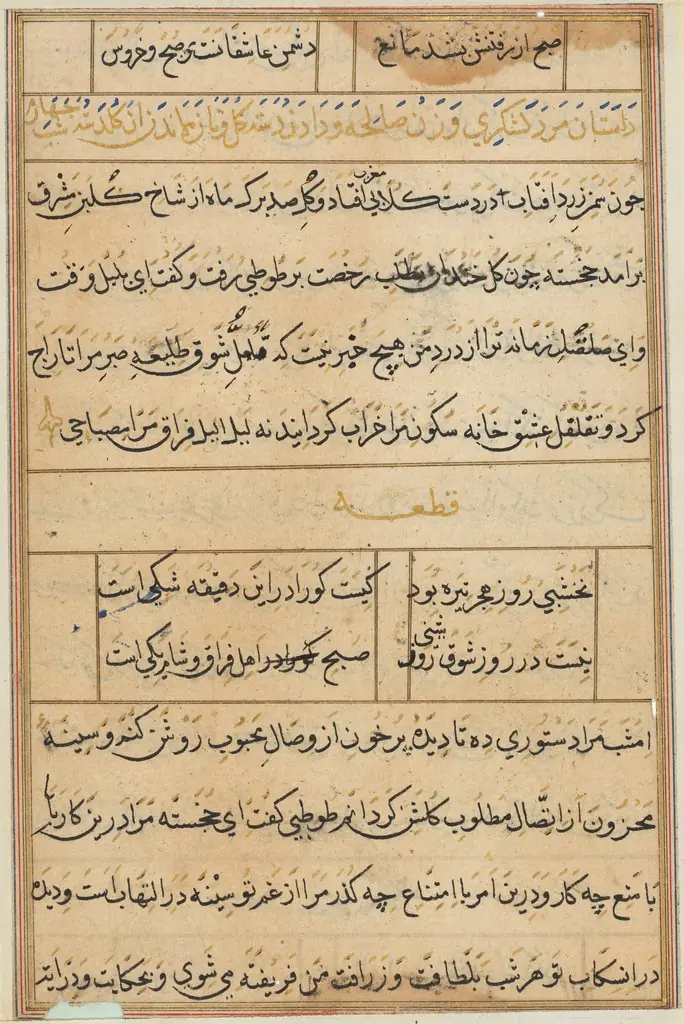
This object is a single leaf from the illustrated manuscript known as Tuti‑nama (Tales of a Parrot). The folio consists of black ink calligraphy on a yellowed paper support, accented with gold lettering and ornamental borders. The composition is organized for vertical reading, with decorative framing that emphasizes the textual content. It is part of the Cleveland Museum of Art’s collection of Persian‑influenced manuscripts.
Subject & Meaning
The page contains a narrative excerpt, likely a poetic or prose passage from the Tuti‑nama, a collection of moral and romantic stories traditionally conveyed through a parrot’s speech. The highlighted gold words suggest emphasis on key themes or moral lessons, a common practice in Persian literary manuscripts to guide the reader’s attention.
Technique & Style
The calligraphic script is executed in a flowing, cursive hand typical of Persian literary manuscripts, rendered in black ink on a slightly translucent, aged paper. Gold leaf or powder is applied to select words and decorative elements, creating contrast and visual hierarchy. The thin inner border and broader outer frame are painted in muted tones, framing the text without overwhelming it.
Legacy
Manuscript pages like this illustrate the transmission of Persian literary culture across regions and centuries. Their preservation in museum collections provides scholars with material evidence of calligraphic practice, book production, and the visual strategies employed to enhance textual meaning in pre‑modern Islamic societies.
Artist & collection

- Page from Tales of a Parrot (Tuti-nama): text page
 Page from Tales of a Parrot (Tuti-nama): text page
 Page from Tales of a Parrot (Tuti-nama): text page
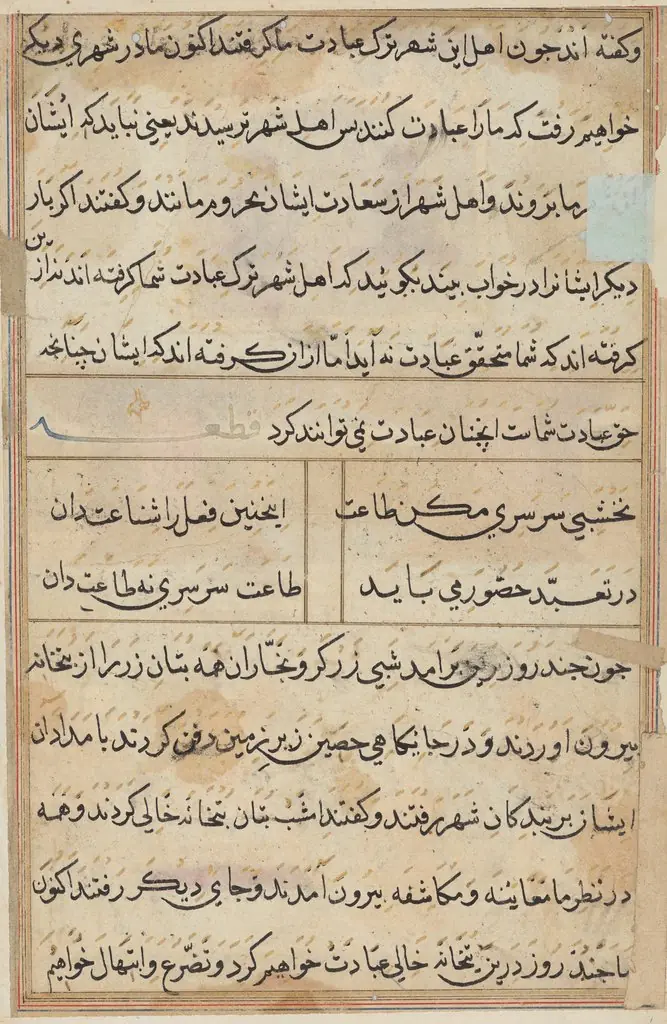 Page from Tales of a Parrot (Tuti-nama): text page
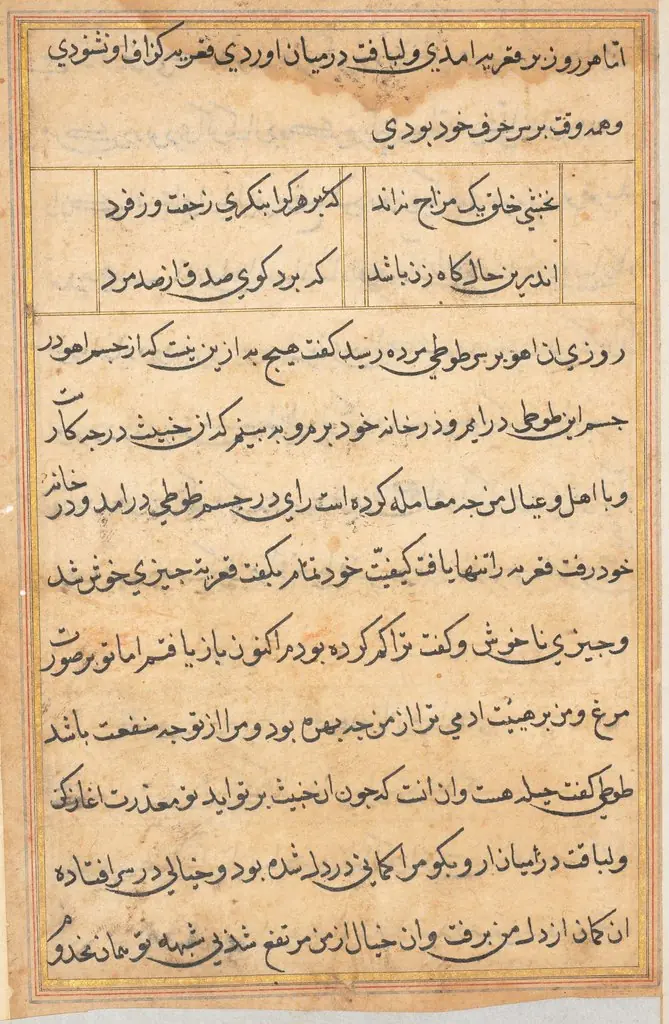 Page from Tales of a Parrot (Tuti-nama): text page
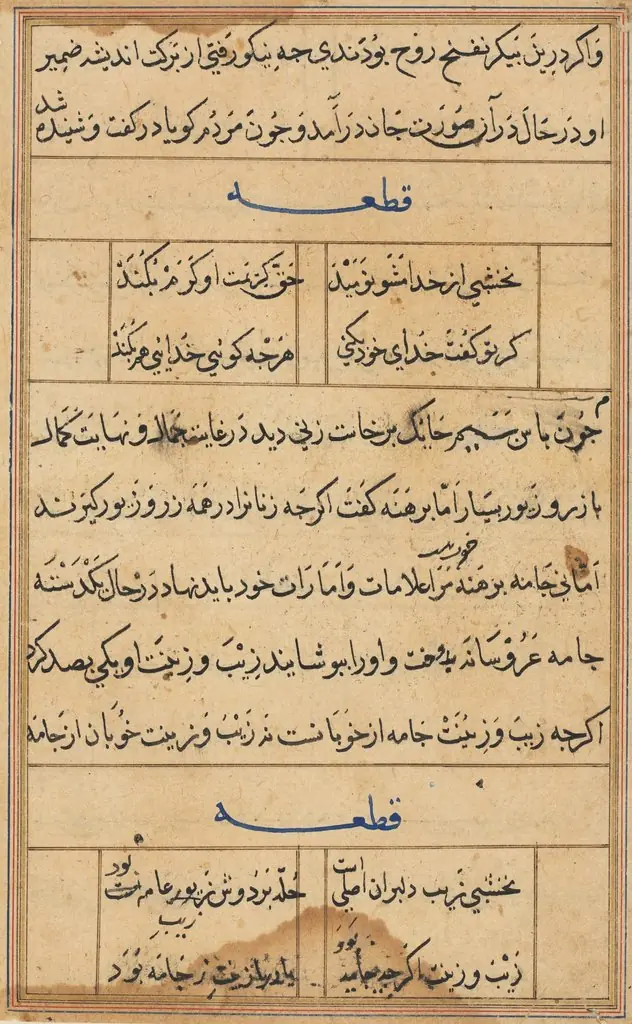 Page from Tales of a Parrot (Tuti-nama): text page
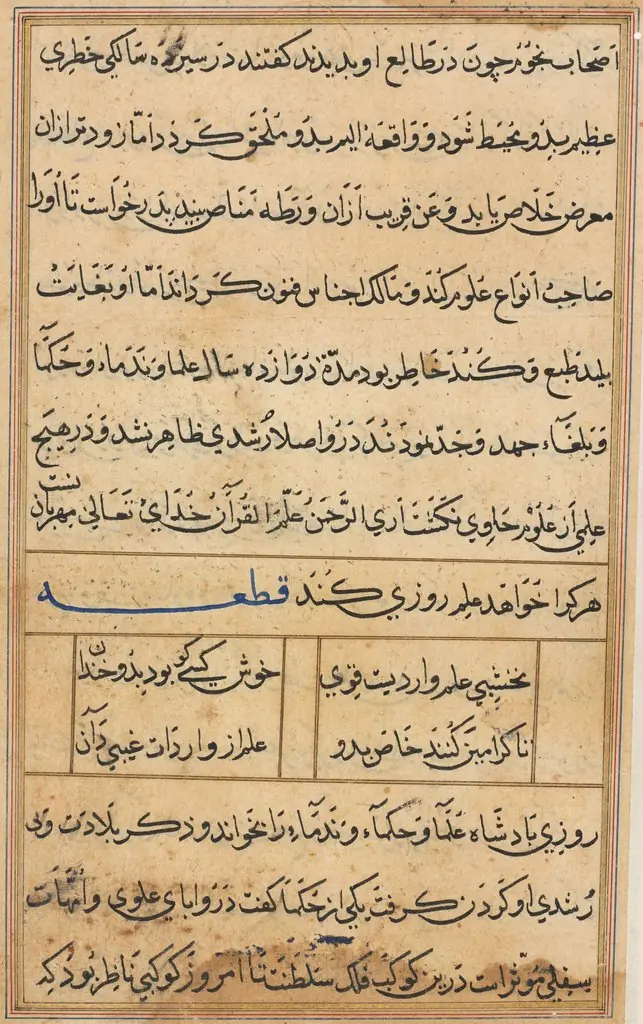 Page from Tales of a Parrot (Tuti-nama): text page
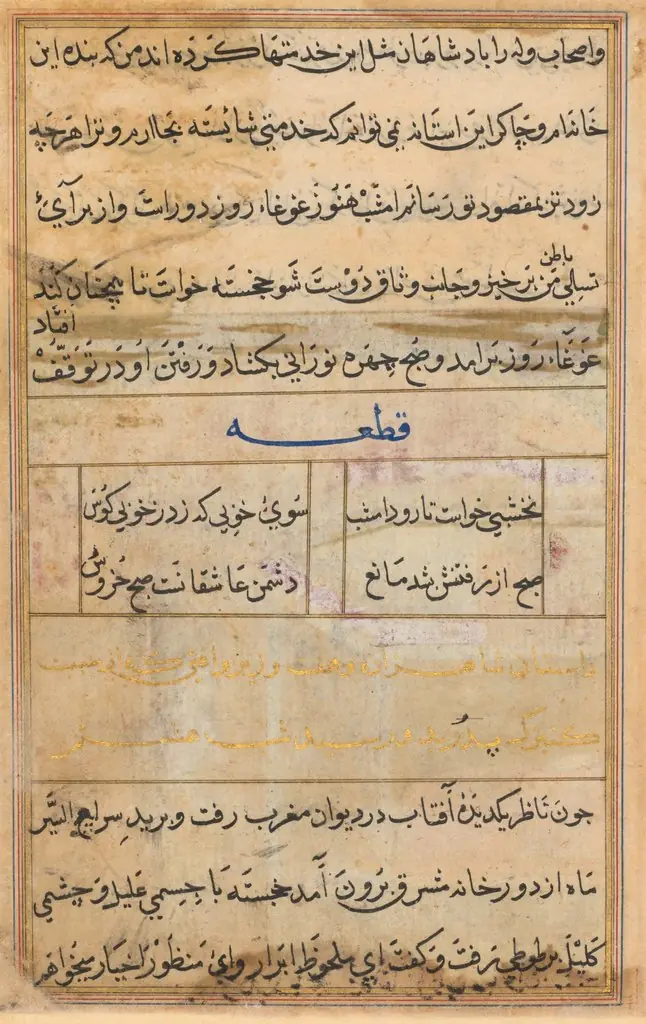 Page from Tales of a Parrot (Tuti-nama): text page
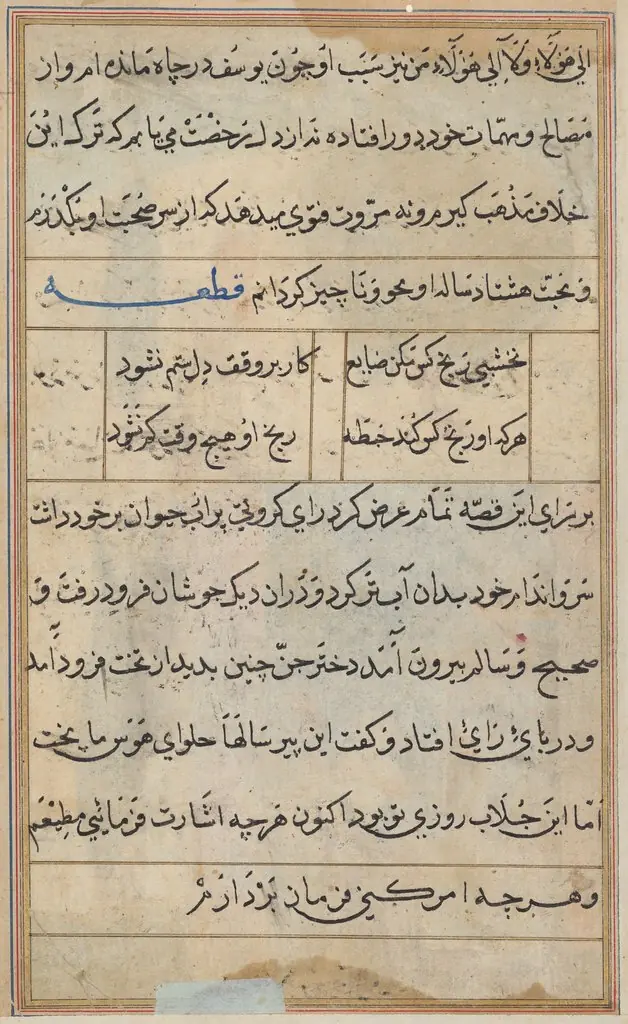 Page from Tales of a Parrot (Tuti-nama): text page
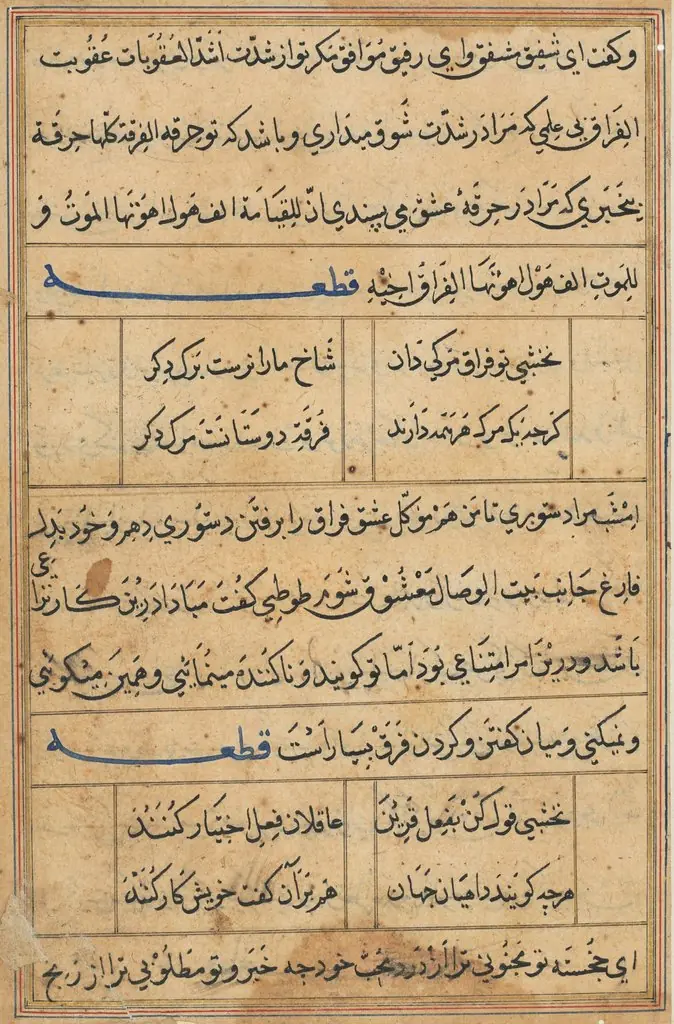 Page from Tales of a Parrot (Tuti-nama): text page
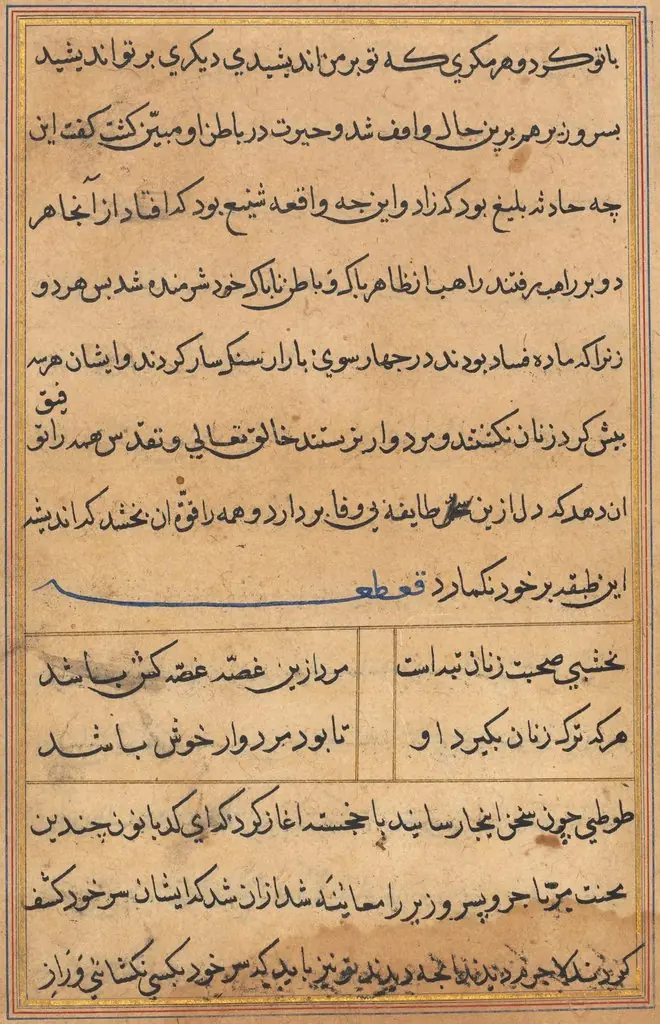 Page from Tales of a Parrot (Tuti-nama): text page
 Page from Tales of a Parrot (Tuti-nama): text page